
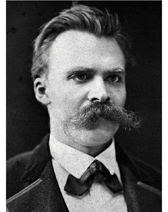
Friedrich Nietzsche
One of the most influential and provocative philosophers in the history of Western thought
Born on October 15, 1844
Died on August 25, 1900
Age at death: 56
Profession: Philosopher, Writer
Place of Birth: Röcken, Prussia (now Germany)
Place of Death: Weimar, Germany
Friedrich Wilhelm Nietzsche was a German philosopher and writer whose radical critique of religion, morality, culture, science, and modernity reshaped Western intellectual history. Writing in a highly distinctive style marked by aphorism, metaphor, irony, and poetic intensity, Nietzsche introduced enduring philosophical concepts such as the “will to power,” “eternal recurrence,” “amor fati,” and the “Übermensch.” Although largely unrecognized during his lifetime, he later became one of the most quoted and debated philosophers of all time, exerting a profound influence on 20th- and 21st-century philosophy, literature, psychology, and cultural theory.
Early Life and Family Background
Friedrich Wilhelm Nietzsche was born on 15 October 1844 in the small Prussian town of Röcken. His father, Karl Ludwig Nietzsche, was a Lutheran pastor at the Röcken Protestant Church and named his son after King Friedrich Wilhelm IV of Prussia, with whom Nietzsche shared the same birthday. His mother, Franziska Ehler Nietzsche, also came from a deeply religious clerical family, ensuring that Christianity played a dominant role in Nietzsche’s early upbringing.
Nietzsche’s childhood was profoundly shaped by tragedy. His father suffered from severe migraines and gradually lost his sight due to what was later identified as a rapidly progressing brain tumor. In 1849, when Nietzsche was only five years old, his father died. The following year, the family relocated to Naumburg, where Nietzsche was raised in a household dominated by women—his mother, sister Elisabeth Förster-Nietzsche, grandmother, and two aunts—under strict moral discipline and religious conservatism. This environment fostered his introspective temperament and early spiritual questioning.
Education and Intellectual Formation
Friedrich Nietzsche excelled academically at the Bürgerschule in Naumburg. From an early age, he began questioning religion’s ability to explain suffering, injustice, and the problem of evil. He also developed a strong passion for music, composing romantic-style pieces influenced by Robert Schumann.
In 1858, Nietzsche received a scholarship to attend Schulpforta, one of Germany’s most prestigious Protestant boarding schools. There, he received an exceptionally rigorous education in Greek and Roman classics. His classmates nicknamed him “the little Protestant pastor” due to his seriousness and moral intensity. He graduated in 1864 and initially enrolled at the University of Bonn to study theology and classical philology.
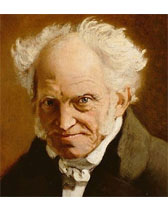
Nietzsche soon abandoned theology, disillusioned with religious dogma, and devoted himself entirely to philology under the guidance of his mentor Friedrich Wilhelm Ritschl. He later transferred to the University of Leipzig, where two decisive experiences transformed his intellectual life: the discovery of Arthur Schopenhauer’s *The World as Will and Representation*, which deeply influenced his early pessimism, and the onset of serious health problems, including a likely contraction of syphilis, though this diagnosis was concealed from him at the time.
Academic Career and Basel Appointment
Despite growing doubts about philology as a discipline detached from existential concerns, Friedrich Nietzsche demonstrated extraordinary scholarly talent. In 1869, at just twenty-four years old and without a completed doctorate, he was appointed Professor of Classical Philology at the University of Basel on the strength of his publications and Ritschl’s recommendation.
At Basel, Nietzsche sought to unite philology and philosophy to diagnose the spiritual and cultural crises of Western civilization. He formed a close intellectual friendship with historian Jacob Burckhardt and developed a pivotal relationship with composer Richard Wagner. Wagner, significantly older and emotionally reminiscent of Nietzsche’s deceased father, became a powerful artistic and personal influence during this period.
Early Works and Wagnerian Phase
During a Christmas visit to Wagner’s home in Tribschen, Nietzsche began work on his first major book, The Birth of Tragedy from the Spirit of Music. The project was interrupted by the Franco-Prussian War in 1870, during which Nietzsche volunteered as a medical orderly. Witnessing the brutality of war left a deep psychological mark on him and contributed to the formation of his later philosophical ideas. Severe illness forced him to abandon service and return to Basel.
Published in 1872, *The Birth of Tragedy* interpreted Greek tragedy through the tension between Apollonian order and Dionysian ecstasy. Although innovative, the book was harshly criticized by academic philologists. Between 1872 and 1876, Nietzsche published the *Untimely Meditations*, including David Strauss: the Confessor and the Writer, On the Use and Abuse of History for Life, Schopenhauer as Educator, and *Richard Wagner in Bayreuth*.
Break with Wagner and Turn to Free Thought
In 1878, Friedrich Nietzsche published Human, All Too Human, marking a decisive intellectual break from both Wagner and Schopenhauer. His thinking shifted toward Enlightenment skepticism, psychological analysis, and a critique of metaphysics. His health continued to deteriorate, leading to his resignation from the University of Basel in 1879.
From this point on, Nietzsche lived as an independent writer, wandering between Switzerland, Italy, and France in search of climates conducive to his fragile health. During this period, he produced Daybreak, The Gay Science, and developed the concept of eternal recurrence.
Thus Spoke Zarathustra and Mature Philosophy
In 1882, Nietzsche met Lou Andreas-Salomé, with whom he became emotionally infatuated. Her rejection of his marriage proposal devastated him. Retreating to Rapallo, he wrote the first part of Thus Spoke Zarathustra, a poetic-philosophical work composed in a prophetic style that introduced the Übermensch and radical critiques of morality.
Although *Zarathustra* later became one of his most influential works, it was largely ignored during his lifetime. Nietzsche nevertheless continued writing with extraordinary intensity, producing Beyond Good and Evil, On the Genealogy of Morals, The Case of Wagner, The Twilight of the Idols, The Antichrist, and his autobiographical reflection Ecce Homo.
Mental Collapse and Final Years
On 3 January 1889, Friedrich Nietzsche suffered a complete mental collapse in Turin after witnessing a horse being beaten—an episode often compared symbolically to themes found in Crime and Punishment. He never recovered his sanity.
Following periods of institutional care, Nietzsche lived under the supervision of his mother and later his sister, Elisabeth Förster-Nietzsche, whose controversial editorial interventions shaped his posthumous reputation. Nietzsche died on 25 August 1900 in Weimar from complications related to pneumonia and was buried in Röcken beside his father.
Legacy and Influence
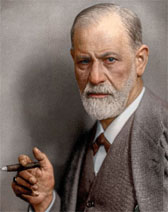
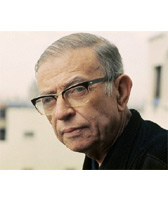
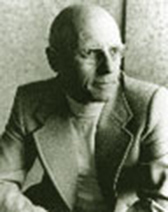
Although misunderstood and marginalized during his lifetime, Friedrich Nietzsche became one of the most influential thinkers in modern intellectual history. His ideas profoundly shaped existentialism, psychoanalysis, post-structuralism, and modern literature, influencing figures such as Sigmund Freud, Carl Jung, Jean-Paul Sartre, Michel Foucault, Albert Camus, and Hermann Hesse.
Source: Biyografiler.com
Frequently asked questions about Friedrich Nietzsche
Who is Friedrich Nietzsche?, Friedrich Nietzsche biography, Friedrich Nietzsche life story, Friedrich Nietzsche age, Friedrich Nietzsche facts, Friedrich Nietzsche birthplace, Friedrich Nietzsche photos, Friedrich Nietzsche videos, Friedrich Nietzsche career
Related Biographies

Lamine Yamal
Professional footballer

Erling Haaland
Professional footballer

Kylian Mbappe
Professional footballer

Austin Abrams
Actor

Bad Bunny
Rapper, Songwriter

Sam Altman
Entrepreneur, Investor, CEO


Hongjoong
Singer, Rapper, Songwriter, Composer

Ludacris
Rapper, Actor

Kwon Eunbi
Singer

Sarah Wayne Callies
Actress, Screenwriter, Producer, Director

LaTavia Roberson
Singer, Actress, Entrepreneur

Amber Heard
Actress, Model
Lamine Yamal
Professional footballer
Bad Bunny
Rapper, Songwriter
Erling Haaland
Professional footballer
Kylian Mbappe
Professional footballer
Austin Abrams
Actor