
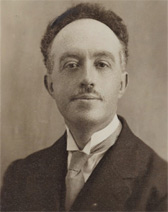
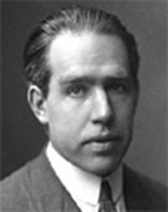
Louis de Broglie
French theoretical physicist who received the 1929 Nobel Prize in Physics for proposing the wave nature of electrons and developing the concept of matter waves, a foundation of quantum mechanics.
Born on August 15, 1892
Died on March 19, 1987
Age at death: 95
Profession: Physicist, Researcher
Place of Birth: Dieppe, Seine-Maritime, France
Place of Death: Louveciennes, France
Louis de Broglie, whose full name was Louis Victor Pierre Raymond de Broglie, was born on August 15, 1892, in Dieppe, France. He was a French theoretical physicist known for proposing that particles of matter, including electrons, possess wave-like properties. His 1924 doctoral thesis introduced the concept of matter waves and contributed to the development of quantum mechanics. In 1929, he received the Nobel Prize in Physics for his discovery of the wave nature of electrons.
Early Life and Education
Louis de Broglie was born into a French aristocratic family as the youngest of five children. His father was Victor de Broglie, the 5th Duke of Broglie, and his mother was Pauline d'Armaillé. His father died in 1906, when Louis was 14 years old. His elder brother, Maurice de Broglie, who later became an experimental physicist, played an important role in his upbringing and education.
He attended the Lycée Janson-de-Sailly in Paris and initially studied history at the Sorbonne University, receiving a degree in 1910. Although he first considered a diplomatic career, his interest gradually shifted toward mathematics and physics. In 1913, he obtained a science degree specializing in physics.
His brother Maurice maintained a private laboratory devoted to experimental research into atomic physics and X-rays. Through Maurice, Louis de Broglie became familiar with the emerging quantum theories of Max Planck and Albert Einstein. Unlike his brother, he preferred theoretical research and became interested in the relationship between radiation, energy, and matter.
World War I and Scientific Research
When World War I began in 1914, Louis de Broglie served in the French Army. He was assigned to military wireless communications at the Eiffel Tower in Paris, where he worked on radio transmission and technical equipment. His military service continued until 1919.
During these years, he gained practical experience with electromagnetic waves and radio technology. After leaving the army, he returned to the Sorbonne and resumed his studies in theoretical physics, concentrating on the emerging problems of quantum theory.
Matter Waves and Wave-Particle Duality
In the early twentieth century, physicists were reconsidering the nature of light and matter. Max Planck had introduced the quantum hypothesis, while Albert Einstein had proposed that light could behave as discrete packets of energy, later called photons. These developments encouraged de Broglie to investigate whether matter might also possess both particle and wave properties.
In 1924, Louis de Broglie presented his doctoral thesis, Recherches sur la théorie des quanta (Research on Quantum Theory), at the University of Paris. He proposed that every moving material particle is associated with a wave. According to his hypothesis, the wavelength of a particle is related to its momentum.
This relationship became known as the de Broglie wavelength and is expressed by the equation λ = h/p, where λ represents wavelength, h is Planck's constant, and p is momentum.
Before de Broglie's work, electrons were generally described as particles, although certain aspects of their behavior remained difficult to explain using classical physics. His hypothesis extended wave-particle duality beyond light and suggested that electrons and other forms of matter could exhibit wave behavior.
Albert Einstein supported the theoretical significance of de Broglie's proposal. The hypothesis also influenced Erwin Schrödinger, whose development of wave mechanics in 1926 provided a mathematical framework for describing quantum systems.
In 1927, experiments by Clinton Davisson and Lester Germer, together with independent work by George Paget Thomson, demonstrated electron diffraction. These observations confirmed that electrons could produce interference and diffraction effects associated with waves.
Nobel Prize and Academic Career
In 1929, Louis de Broglie received the Nobel Prize in Physics for his discovery of the wave nature of electrons. The award recognized the theoretical prediction that had been experimentally supported two years earlier.
He began teaching at the Institut Henri Poincaré in Paris in 1928. In 1932, he succeeded Léon Brillouin as professor of theoretical physics at the institute, which was associated with the University of Paris. He continued teaching until his retirement in 1962.
Between 1930 and 1950, his research focused on extensions of wave mechanics, the theory of electrons, nuclear physics, and the interpretation of quantum phenomena. He also wrote scientific books examining the philosophical implications of modern physics.
Interpretations of Quantum Mechanics
Louis de Broglie participated in discussions concerning the interpretation of quantum mechanics alongside physicists such as Niels Bohr, Werner Heisenberg, and Albert Einstein. Although he engaged with the prevailing probabilistic interpretation, he continued to investigate whether quantum phenomena could be explained through a more deterministic theory.
At the 1927 Solvay Conference, he presented his pilot-wave approach, in which a particle follows a trajectory guided by an associated wave. The theory did not gain widespread acceptance at the time. De Broglie later returned to similar ideas, particularly after David Bohm developed a related interpretation in 1952. Their work became associated with what is now called de Broglie–Bohm theory.
Scientific Institutions and Honors
Louis de Broglie was elected to the French Academy of Sciences in 1933. In 1942, he became its Permanent Secretary for the mathematical sciences, a position he held until 1975. He was also elected to the Académie française in 1944.
After World War II, he served as an adviser to the French Atomic Energy Commission. His scientific honors included the Henri Poincaré Medal in 1929, the Max Planck Medal in 1938, UNESCO's Kalinga Prize in 1952, and the Gold Medal of the French National Centre for Scientific Research in 1955.
He published numerous scientific studies and books, including Matter and Light and The Revolution in Physics, addressing both specialists and general readers interested in modern physics.
Personal Life
Louis de Broglie never married and had no children. He maintained a reserved personal life and generally preferred walking or using public transportation rather than owning a car.
Following the death of his elder brother Maurice de Broglie in 1960, he inherited the family title and became the 7th Duke of Broglie. Before succeeding to the dukedom, he had been known by the courtesy title Prince Louis de Broglie.
Death
Louis de Broglie died on March 19, 1987, in Louveciennes, near Paris, France, at the age of 94. His work on matter waves remains part of the theoretical framework of quantum mechanics and the explanation of electron diffraction and other quantum phenomena.
Source: Biyografiler.com
Frequently asked questions about Louis de Broglie
Who is Louis de Broglie?, Louis de Broglie biography, Louis de Broglie life story, Louis de Broglie age, Louis de Broglie facts, Louis de Broglie birthplace, Louis de Broglie photos, Louis de Broglie videos, Louis de Broglie career
Related Biographies

Lamine Yamal
Professional footballer

Kylian Mbappe
Professional footballer

Brad Pitt
Actor

Erling Haaland
Professional footballer

Keanu Reeves
Actor

Leonardo DiCaprio
Actor

Louis Büchner
Physician, Philosopher, Writer

Louis Daguerre
Painter, Photographer

Louis de Broglie
Physicist, Researcher

Louis De Funes
Actor, Comedian, Screenwriter

Louis Douzette
Painter

Louise Glück
Poet

Jensen Huang
Entrepreneur, CEO, Engineer

Lilly Wachowski
Film Director, Screenwriter
Leonardo DiCaprio
Actor

Liam Neeson
Actor
Erling Haaland
Professional footballer

Kristrun Frostadottir
Politician, Economist