
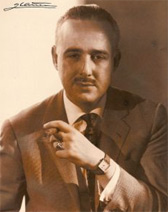
Alfonso Paso
Spanish playwright and screenwriter who wrote hundreds of theatrical works, primarily comedies, often incorporating black humor, crime, and social criticism. His plays include You Could Be a Murderer, The Poor Wretches, and The Song of the Cicada.
Born on September 12, 1926
Died on July 10, 1978
Age at death: 52
Profession: Writer, Screenwriter, Journalist
Place of Birth: Madrid, Spain
Place of Death: Madrid, Spain
Alfonso Paso, whose full name was Alfonso Paso Gil, was born on September 12, 1926, in Madrid, Spain, and died on July 10, 1978. He was a Spanish playwright, screenwriter, theater director, actor, and journalist. He wrote more than 200 staged theatrical works, primarily light comedies, although his repertoire also included black humor, crime dramas, tragedies, and socially critical plays. Some bibliographical accounts attribute as many as 436 theatrical works to him. His plays were translated into numerous languages and performed internationally. Among his works are You Could Be a Murderer (1958), The Poor Wretches (1957), The Song of the Cicada (1963), and Teaching a Scoundrel (1966). He also wrote for Spanish newspapers and magazines and contributed to film and television productions.
Early Life and Education
Alfonso Paso was born on September 12, 1926, in Madrid, Spain, into a family involved in theater and literature. His father, Antonio Paso y Cano, was a playwright and librettist known for writing Spanish zarzuelas, while his mother, Juana Gil, was an actress.
He initially entered university intending to study aeronautical engineering but subsequently abandoned the program and transferred to philosophy and literature.
In 1952, he graduated with a degree in Philosophy and Letters, specializing in American history and archaeology. He received an academic distinction for his studies.
He later studied medicine and psychiatry before turning to journalism. He completed his journalism degree in the mid-1970s.
Early Theater Career
Alfonso Paso began working in theater while still young. He directed university theater groups, including La Vaca Floja and El Duende, which were associated with experimental approaches to stage performance.
His first one-act comedy, Un tic-tac de reloj (*The Ticking of a Clock*), premiered in 1946.
During the following years, he continued writing plays and experimenting with different theatrical forms. His early works included Juicio contra un sinvergüenza (*The Trial of a Scoundrel*, 1952) and Una bomba llamada Abelardo (*A Bomb Named Abelardo*, 1953).
He also contributed to the theater magazine Primer Acto, participating in discussions concerning Spanish drama and contemporary theatrical productions.
Commercial Theater and Major Plays
During the 1950s and 1960s, Alfonso Paso became a frequently performed playwright in Spanish commercial theater.
His comedies generally relied on misunderstandings, complicated relationships, unexpected incidents, and rapid dialogue. Some incorporated criminal investigations, black humor, and criticism of social conventions.
His productions included Los pobrecitos (*The Poor Wretches*, 1957), El cielo dentro de casa (*Heaven Within the Home*, 1957), and Usted puede ser un asesino (*You Could Be a Murderer*, 1958).
In the 1960s, he wrote La boda de la chica (*The Girl's Wedding*), Vamos a contar mentiras (*Let's Tell Lies*), Aurelia y sus hombres (*Aurelia and Her Men*), and Los derechos de la mujer (*Women's Rights*).
He also wrote police comedies, including De profesión, sospechoso (*Suspect by Profession*) and Atrapar a un asesino (*Catch a Murderer*).
In 1968, seven of his plays were reportedly performed simultaneously at major theaters in Madrid, with multiple performances each day.
His comedy Enseñar a un sinvergüenza (*Teaching a Scoundrel*) had an unusually long theatrical run in Spain, remaining in production for many years.
International Performances and Broadway
Alfonso Paso's plays were translated and performed outside Spain, including in several European countries and Latin America.
His works were translated into more than twenty-five languages, including English, French, Italian, German, Portuguese, Turkish, and Arabic.
In 1963, his comedy El canto de la cigarra (*The Song of the Cicada*) was presented at the Anta Theatre on Broadway in New York.
He also participated as an actor in productions of his own plays, including Querido profesor, Sosteniendo el tipo, Papaíto, and Nerón-Paso.
Some of these productions were performed during tours in South America.
Journalism, Film, and Political Activity
Alongside his theater career, Alfonso Paso worked as a journalist and contributed articles to Spanish newspapers and magazines, including ABC, El Alcázar, Semana, and Diez Minutos.
He continued writing journalistic columns into the 1970s.
His theatrical works were also adapted for cinema, including Usted puede ser un asesino and Los Palomos. He contributed screenplays and dialogue to other Spanish film productions.
For television, he wrote the series El último café, which was broadcast over two consecutive years.
Politically, Paso held conservative positions and expressed sympathy for right-wing movements during the final period of Francisco Franco's rule. In 1972, he accepted a press-related position connected with Spain's Ministry of Public Works.
During this period, his theatrical output became less frequent, although he continued writing and maintaining professional connections with Spanish cultural institutions.
Personal Life
In 1952, Alfonso Paso married Evangelina Jardiel Poncela, daughter of Spanish playwright Enrique Jardiel Poncela.
His children included Paloma Paso Jardiel, Rocío Paso, Alfonso Paso, Almudena Paso, and Antonia Paso. Several members of his family subsequently worked in theater and the performing arts.
Death
Alfonso Paso died of liver cancer in Madrid on July 10, 1978, at the age of 51.
He was buried at the Sacramental de San Justo Cemetery in Madrid.
Awards and Recognition
1957 – Carlos Arniches Prize – Los pobrecitos
1960 – Álvarez Quintero Prize – El cielo dentro de casa
1960 – National Theater Prize – El cielo dentro de casa
1961 – Order of Isabella the Catholic – Commander
1962 – María Rolland Prize – Las que tienen que servir
1965 – Barcelona Critics' Prize – Sí, quiero
1966 – Leopoldo Cano Prize – Querido profesor
1973 – Silver Medal for Merit at Work
1975 – Café Gijón Prize – Ministro
Selected Plays
1946 – Un tic-tac de reloj (*The Ticking of a Clock*)
1952 – Juicio contra un sinvergüenza (*The Trial of a Scoundrel*)
1953 – Una bomba llamada Abelardo (*A Bomb Named Abelardo*)
1957 – Los pobrecitos (*The Poor Wretches*)
1957 – El cielo dentro de casa (*Heaven Within the Home*)
1958 – Usted puede ser un asesino (*You Could Be a Murderer*)
1959 – Papá se enfada por todo (*Father Gets Angry About Everything*)
1959 – No hay novedad, Doña Adela (*Nothing New, Doña Adela*)
1960 – La boda de la chica (*The Girl's Wedding*)
1960 – Pregunta por Julio César (*Ask for Julius Caesar*)
1960 – Cuidado con las personas formales (*Beware of Respectable People*)
1960 – Cosas de papá y mamá (*Things Concerning Father and Mother*)
1960 – Cuatro y Ernesto (*Four and Ernesto*)
1960 – Sentencia de muerte (*Death Sentence*)
1961 – Una tal Dulcinea (*A Certain Dulcinea*)
1961 – Vamos a contar mentiras (*Let's Tell Lies*)
1961 – Aurelia y sus hombres (*Aurelia and Her Men*)
1962 – Los derechos de la mujer (*Women's Rights*)
1962 – Al final de la cuerda (*At the End of the Rope*)
1962 – De profesión, sospechoso (*Suspect by Profession*)
1962 – Las que tienen que servir (*Those Who Must Serve*)
1962 – El mejor mozo de España (*The Best Young Man in Spain*)
1962 – Sosteniendo el tipo (*Keeping Up Appearances*)
1963 – El canto de la cigarra (*The Song of the Cicada*)
1963 – Las mujeres los prefieren pachuchos (*Women Prefer Them Unwell*)
1963 – La corbata (*The Necktie*)
1964 – Los Palomos
1964 – Carmen tomó la roja (*Carmen Took the Red One*)
1965 – La oficina (*The Office*)
1965 – Educando a un idiota (*Educating an Idiot*)
1965 – Sí, quiero (*Yes, I Do*)
1966 – Enseñar a un sinvergüenza (*Teaching a Scoundrel*)
1967 – ¡Estos chicos de ahora! (*These Young People Today!*)
1968 – Atrapar a un asesino (*Catch a Murderer*)
1968 – ¡Cómo está el servicio! (*What Service!*)
1968 – Viuda ella, viudo él (*She a Widow, He a Widower*)
1968 – Una monja (*A Nun*)
1969 – El armario (*The Wardrobe*)
1969 – Nerón-Paso
1970 – Tú me acostumbraste (*You Made Me Used to It*)
1978 – Quiéreme otra vez (*Love Me Again*)
Other works associated with Paso include Después de los cuarenta (*After Forty*) and Segunda primavera (*Second Spring*).
Source: Biyografiler.com
Frequently asked questions about Alfonso Paso
Who is Alfonso Paso?, Alfonso Paso biography, Alfonso Paso life story, Alfonso Paso age, Alfonso Paso facts, Alfonso Paso birthplace, Alfonso Paso photos, Alfonso Paso videos, Alfonso Paso career
Related Biographies

Lamine Yamal
Professional footballer

Kylian Mbappe
Professional footballer

Erling Haaland
Professional footballer

Keanu Reeves
Actor

Ronaldinho
Professional footballer

Bad Bunny
Rapper, Songwriter

Andre Gide
Novelist, Essayist

Andreas Papandreu
Former Prime Minister, Politician, Economist

Andrea Mantegna
Painter

Andrea del Verrocchio
Sculptor, Painter

Andrea del Sarto
Painter

Andrea Bargnani
Former Professional Basketball Player

Elizabeth Taylor
Actress

Alan Jones
Formula 1 Driver

Sam Altman
Entrepreneur, Investor, CEO

Susie Wiles
Political Consultant

Prabowo Subianto
Politician, President, Military Commander
Lamine Yamal
Professional footballer