
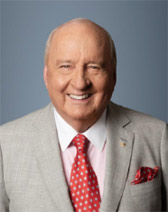
Alan Jones
1980 Formula One World Drivers' Champion and the first driver to win the championship with Williams.
Born on November 2, 1946
Age: 80
Profession: Formula 1 Driver
Place of Birth: Melbourne, Victoria, Australia
Alan Jones, whose full name is Alan Stanley Jones, was born on November 2, 1946, in Melbourne, Victoria, Australia. He is an Australian former racing driver and motorsport commentator who won the 1980 Formula One World Drivers' Championship with Williams Racing. He became the first driver to win a Formula One world championship for Williams and the second Australian to win the Drivers' Championship, following Jack Brabham. Between 1975 and 1986, he competed in 116 Formula One World Championship races, recording 12 Grand Prix victories, 24 podium finishes, six pole positions and 13 fastest laps. He also won the 1980 Australian Grand Prix, which was not part of the Formula One World Championship at that time.
Early Life and Family Background
Alan Jones was born in Melbourne into a family involved in motor racing. His father, Stan Jones, was an Australian racing driver who competed in domestic and international events during the 1950s and early 1960s.
His father won the 1959 Australian Grand Prix at the Longford Circuit in Tasmania, driving a Maserati 250F. He had previously won the 1954 New Zealand Grand Prix, becoming the first Australian driver to win a Grand Prix outside his home country.
Growing up around racing cars and competition, Alan Jones frequently attended motorsport events with his father. He became familiar with racing circuits, mechanics and the practical demands of competitive driving.
He attended Xavier College in Melbourne. His early interest in motorsport developed through kart racing, and he won the Victorian Junior Go-Kart Championship during the 1958–1959 period.
After leaving school, he continued pursuing opportunities in motor racing, initially competing in Australian events before attempting to establish a career in Europe.
Moving to Europe and Early Racing Career
In 1969, Alan Jones travelled to London to pursue a professional racing career. Like many drivers attempting to enter international motorsport, he faced financial difficulties and struggled to obtain competitive machinery and sufficient sponsorship.
His early European racing activities involved smaller single-seater categories. Limited financial resources prevented him from maintaining a consistent racing program, and he returned to Australia for a period.
He subsequently made another attempt to establish himself in the United Kingdom, competing in Formula Three and other racing championships. His results gradually attracted the attention of team owners and individuals involved in the development of young drivers.
During the early 1970s, Alan Jones competed in British Formula Three, Formula 5000 and other single-seater competitions. These categories provided experience in cars with increasingly powerful engines and more demanding technical characteristics.
His performances eventually brought him into contact with Harry Stiller, a racing enthusiast who supported his entry into Formula One.
Formula One Debut in 1975
Alan Jones made his Formula One World Championship debut on April 27, 1975, at the Spanish Grand Prix held at the Montjuïc circuit in Barcelona.
He drove a privately entered Hesketh racing car backed by Harry Stiller. The race was marked by serious safety concerns and was stopped after a fatal accident involving Rolf Stommelen.
Jones continued competing with the Hesketh during the early part of the season before joining Embassy Hill, the team established by former Formula One World Champion Graham Hill.
He scored his first Formula One World Championship points at the 1975 German Grand Prix, finishing fifth at the Nürburgring.
His first season ended with two championship points and 17th place in the Drivers' Championship standings.
Surtees and Shadow Racing Teams
In 1976, Alan Jones joined Surtees Racing Organisation, founded by former motorcycle and Formula One World Champion John Surtees.
Driving the Surtees TS19, he competed throughout the season and accumulated seven championship points, finishing 15th in the Drivers' Championship.
For the 1977 season, Jones joined Shadow Racing Cars following the death of Tom Pryce during the South African Grand Prix at Kyalami.
His first major Formula One victory came on August 14, 1977, at the Austrian Grand Prix at the Österreichring. Starting from 14th position in wet conditions, he advanced through the field and won the race ahead of Niki Lauda.
The victory was the first Formula One World Championship Grand Prix win of Jones's career and Shadow's only championship race victory.
He finished the 1977 championship in seventh place with 22 points. His performance attracted interest from other teams, including the developing Formula One operation led by Frank Williams.
Joining Williams in 1978
In 1978, Alan Jones joined Williams Grand Prix Engineering, the team established by Frank Williams with technical director Patrick Head.
Williams was rebuilding its Formula One operations after earlier financial and organizational difficulties. Jones became the team's primary driver as it developed a new generation of racing cars.
During his first season with Williams, he drove the FW06, a car designed by Patrick Head. Although the team did not win a Grand Prix in 1978, Jones achieved several competitive results, including second place at the United States Grand Prix at Watkins Glen.
He completed the season in 11th position in the Drivers' Championship with 11 points.
Alongside Formula One, Alan Jones competed in the North American Can-Am Championship. Driving a Lola, he won the 1978 Can-Am championship.
Williams' First Grand Prix Victories in 1979
The 1979 Formula One season brought substantial improvements in Williams' competitiveness. The team introduced the FW07, designed by Patrick Head and developed around ground-effect aerodynamics.
Alan Jones achieved the first Formula One World Championship victory for Williams at the British Grand Prix at Silverstone, although that race was won by his teammate Clay Regazzoni. Jones himself had qualified on pole position but retired from the race.
His first victory for Williams came at the German Grand Prix on July 29, 1979, at Hockenheim. He subsequently won the Austrian, Dutch and Canadian Grands Prix, bringing his total for the season to four victories.
Despite this series of wins, Jones finished third in the World Drivers' Championship behind Jody Scheckter and Gilles Villeneuve, both driving for Ferrari.
His results demonstrated that Williams had developed a car capable of competing regularly for victories against Ferrari, Brabham, Renault and other established Formula One teams.
1980 Formula One World Championship
Alan Jones began the 1980 Formula One season as a championship contender with Williams Racing. He drove the FW07B, an updated version of the car used during the previous season.
His teammate was Argentine driver Carlos Reutemann, who had previously competed for Brabham, Ferrari and Lotus.
Jones won the opening race of the season, the Argentine Grand Prix, at Buenos Aires. He later secured victories at the French, British, Canadian and United States Grands Prix.
Throughout the championship, he competed principally against Nelson Piquet of Brabham and Carlos Reutemann, while other race victories went to drivers including René Arnoux, Didier Pironi and Jacques Laffite.
At the Canadian Grand Prix on September 28, 1980, Jones secured the World Drivers' Championship after his principal rival, Nelson Piquet, retired with an engine failure. Jones finished the race in first place.
He completed the season by winning the United States Grand Prix at Watkins Glen on October 5, 1980.
With five Grand Prix victories and ten podium finishes, Alan Jones won the 1980 Formula One World Drivers' Championship with 67 points under the scoring system used that season.
His results also contributed to Williams winning its first Formula One World Constructors' Championship. The team finished ahead of Ligier, Brabham and Renault in the constructors' standings.
Jones became the first Williams driver to win the Formula One Drivers' Championship and the second Australian world champion after Jack Brabham, who had won titles in 1959, 1960 and 1966.
Winning the 1980 Australian Grand Prix
Following his Formula One World Championship success, Alan Jones won the 1980 Australian Grand Prix at Calder Park Raceway in Victoria.
The race was held before the Australian Grand Prix became part of the official Formula One World Championship calendar in 1985.
Jones competed in his Williams FW07B against a field consisting largely of Formula 5000 and Formula Pacific cars. He won the race after lapping the field.
The victory created a family connection in the history of the event. His father, Stan Jones, had won the Australian Grand Prix in 1959, making them the first father and son to win the race.
As of 2026, Alan Jones remains the most recent Australian driver to win the Australian Grand Prix, although his victory occurred when the event was not part of the Formula One World Championship.
The 1981 Season and Retirement from Formula One
Alan Jones remained with Williams for the 1981 season, again partnering Carlos Reutemann.
The relationship between the two drivers became strained after the Brazilian Grand Prix, when Reutemann ignored team instructions to allow Jones to pass.
Jones won the United States Grand Prix West at Long Beach and later secured victory in the season-ending Caesars Palace Grand Prix in Las Vegas.
The Las Vegas victory on October 17, 1981, was the final Formula One World Championship win of his career.
He finished the season in third place in the Drivers' Championship behind Nelson Piquet and Carlos Reutemann. Williams nevertheless won its second consecutive Constructors' Championship.
After the season, Alan Jones announced his retirement from Formula One. He returned to Australia, although he subsequently made two attempts to resume his World Championship career.
Formula One Comeback with Arrows and Haas Lola
In 1983, Alan Jones returned to Formula One for a single World Championship appearance with Arrows Grand Prix International.
He competed in the United States Grand Prix West at Long Beach, driving an Arrows A6. He qualified 12th but retired from the race because of a mechanical problem.
In 1985, he made a more substantial return with the newly established Team Haas, also known as Haas Lola. The project was supported by American businessman Carl Haas and operated with Lola-branded racing cars.
The team's initial car, the THL1, was entered during the final part of the 1985 season. Jones competed in four Grands Prix that year but failed to score championship points.
In 1986, he continued with Haas Lola alongside French driver Patrick Tambay. The team introduced the THL2, powered by a turbocharged Ford engine.
Jones scored four championship points during the season, including a fourth-place finish at the Austrian Grand Prix and sixth place at the Italian Grand Prix.
His final Formula One World Championship appearance came at the Australian Grand Prix in Adelaide on October 26, 1986. He retired from the race and subsequently ended his Formula One driving career.
Racing Career After Formula One
After leaving Formula One, Alan Jones continued competing in Australian touring car racing and selected international motorsport events.
He drove in the Australian Touring Car Championship and competed in endurance races, including events at Bathurst.
During the late 1980s and 1990s, Jones raced cars prepared by teams including Peter Brock's operations and other Australian touring car organizations.
In 1993, he won the James Hardie 12 Hour endurance race at Bathurst. He also won the 1995 Winfield Triple Challenge at Eastern Creek.
His activities extended beyond conventional touring car racing. He participated in sports car competitions and other motorsport events before gradually reducing his racing commitments.
Motorsport Commentary and Broadcasting
Following his competitive driving career, Alan Jones worked as a motorsport commentator and television analyst.
His broadcasting work included coverage of Formula One and Australian racing championships, providing analysis of driving techniques, race strategy, team decisions and technical developments.
As a former Formula One World Champion, he was frequently invited to discuss championship campaigns, drivers and developments within the sport.
He also participated in historic racing events, motorsport exhibitions and appearances associated with Formula One and Australian racing history.
Driving Style and Williams Career
Alan Jones was known for an aggressive and direct driving style. His approach emphasized race pace, physical endurance and a willingness to challenge other drivers on the circuit.
During his Williams years, he worked closely with team founder Frank Williams and technical director Patrick Head. His feedback contributed to the development of the FW06, FW07 and FW07B racing cars.
His 1979 results established Williams as a Grand Prix-winning team, while his 1980 championship gave the organization its first Drivers' Championship.
During four seasons with Williams from 1978 to 1981, Jones achieved 11 of his 12 Formula One Grand Prix victories.
Awards and Recognition
In 1980, Alan Jones was appointed a Member of the Order of the British Empire (MBE) for services to motor racing.
In 1985, he was inducted into the Sport Australia Hall of Fame as an athlete member.
His Formula One World Championship title remains one of the two Australian Drivers' Championship achievements of the twentieth century, alongside the three titles won by Jack Brabham.
Personal Life
Alan Jones is married to Amanda Butler-Davis, whom he married in 2002. He was previously married to Beverley Jones.
He has four children, including Christian Jones, who also pursued a career in motor racing and competed in junior single-seater championships.
Formula One Career Statistics
Formula One World Championships: 1 (1980)
World Championship Entries: 117
Grand Prix Starts: 116
Grand Prix Victories: 12
Podium Finishes: 24
Pole Positions: 6
Fastest Laps: 13
First Grand Prix: 1975 Spanish Grand Prix
First Victory: 1977 Austrian Grand Prix
Final Victory: 1981 Caesars Palace Grand Prix
Final Grand Prix: 1986 Australian Grand Prix
Formula One Teams
1975 – Hesketh Racing
1975 – Embassy Hill
1976 – Surtees Racing Organisation
1977 – Shadow Racing Cars
1978–1981 – Williams Grand Prix Engineering
1983 – Arrows Grand Prix International
1985–1986 – Team Haas Lola
Formula One Grand Prix Victories
1977 – Austrian Grand Prix – Shadow
1979 – German Grand Prix – Williams
1979 – Austrian Grand Prix – Williams
1979 – Dutch Grand Prix – Williams
1979 – Canadian Grand Prix – Williams
1980 – Argentine Grand Prix – Williams
1980 – French Grand Prix – Williams
1980 – British Grand Prix – Williams
1980 – Canadian Grand Prix – Williams
1980 – United States Grand Prix – Williams
1981 – United States Grand Prix West – Williams
1981 – Caesars Palace Grand Prix – Williams
Championships and Honours
1978 – Can-Am Championship – Champion
1980 – Formula One World Drivers' Championship – Champion
1980 – Formula One World Constructors' Championship – Williams Team Member
1980 – Australian Grand Prix – Winner (Non-World Championship Event)
1980 – Member of the Order of the British Empire (MBE)
1981 – Formula One World Constructors' Championship – Williams Team Member
1985 – Sport Australia Hall of Fame – Inducted
1993 – James Hardie 12 Hour, Bathurst – Winner
1995 – Winfield Triple Challenge, Eastern Creek – Winner
Source: Biyografiler.com
Frequently asked questions about Alan Jones
Who is Alan Jones?, Alan Jones biography, Alan Jones life story, Alan Jones age, Alan Jones facts, Alan Jones birthplace, Alan Jones photos, Alan Jones videos, Alan Jones career

Lamine Yamal
Professional footballer

Erling Haaland
Professional footballer

Kylian Mbappe
Professional footballer

Keanu Reeves
Actor

Bad Bunny
Rapper, Songwriter

Austin Abrams
Actor

Alan Moore
Novelist, Screenwriter, Musician

Alan Jones
Formula 1 Driver

Ingvar Kamprad
Businessperson, Entrepreneur

Inge Lehmann
Mathematician

Inga Ibsdotter Lilleaas
Actress

İndira Gandhi
Former Prime Minister

Adewale Akinnuoye-Agbaje
Actor, Former Model
Alan Moore
Novelist, Screenwriter, Musician
Inge Lehmann
Mathematician

Christine Lagarde
Lawyer, Politician
Alan Jones
Formula 1 Driver
Ingvar Kamprad
Businessperson, Entrepreneur