
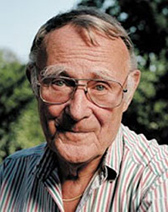
Ingvar Kamprad
Swedish entrepreneur who founded IKEA in 1943 and developed its low-cost, flat-pack furniture retail model.
Born on March 30, 1926
Died on January 26, 2018
Age at death: 92
Profession: Businessperson, Entrepreneur
Place of Birth: Pjätteryd, Småland, Sweden
Place of Death: Liatorp, Småland, Sweden
Ingvar Kamprad, whose full name was Feodor Ingvar Kamprad, was born on March 30, 1926, in Pjätteryd, Småland, Sweden. He was a Swedish entrepreneur who founded the furniture and home furnishings retailer IKEA in 1943 at the age of 17. Starting with a small mail-order business selling household goods, he developed IKEA into an international retail company built around affordable furniture, self-assembly products, large stores and standardized designs. According to Forbes, he was the world's fourth-richest person in 2006, with an estimated fortune of $28 billion. He died on January 27, 2018, at the age of 91.
Early Life and Family Background
Ingvar Kamprad grew up on the Elmtaryd farm near Agunnaryd in the Småland region of southern Sweden. His parents were Feodor Kamprad and Berta Kamprad. His paternal family had German roots, while his upbringing took place in a rural Swedish environment where agriculture and small businesses were common sources of income.
Kamprad became involved in trading while still a child. At approximately five years old, he began selling matches to neighbours, travelling around the surrounding area on his bicycle. He discovered that buying matches in larger quantities in Stockholm enabled him to resell them individually at relatively low prices while earning a profit.
He expanded his activities to selling fish, Christmas decorations, seeds, pencils and other inexpensive goods. His early business transactions involved purchasing products in bulk, controlling expenses and selling them directly to customers.
As a boy, Ingvar Kamprad also worked with local craftsmen and became familiar with the production of furniture components. He made and sold small decorative objects for holidays and other occasions.
Kamprad had dyslexia, which affected his reading and writing. His education included business-oriented studies, but he did not pursue a university degree. He later developed product-naming and organizational methods that helped him manage commercial information.
Founding IKEA in 1943
On July 28, 1943, at the age of 17, Ingvar Kamprad registered IKEA as a trading company. His father had given him a sum of money as a reward for his academic performance, which he used to establish the business.
The name IKEA was formed from four initials: I for Ingvar, K for Kamprad, E for Elmtaryd, the family farm, and A for Agunnaryd, the nearby parish where he grew up.
The original business was not a furniture retailer. Kamprad sold pens, wallets, picture frames, watches, jewellery, nylon stockings and other household items through mail-order advertising and direct sales.
He kept operating costs low by managing orders from the family farm and using existing transport services. At Elmtaryd, packages were collected by a milk-delivery vehicle and transported to the post office for distribution.
His parents assisted with the business as orders increased. Kamprad also attended business school in Gothenburg while continuing to manage commercial activities associated with IKEA.
Entering the Furniture Business
In 1948, Ingvar Kamprad introduced furniture into IKEA's product range. He initially purchased items from local manufacturers and carpenters in southern Sweden and sold them through mail-order channels.
Customer demand for inexpensive furniture encouraged him to expand this part of the business. By the early 1950s, IKEA had moved away from selling miscellaneous goods and concentrated increasingly on furniture and home furnishings.
In 1951, Kamprad published the first IKEA Catalogue devoted to furniture. The publication allowed customers across Sweden to examine products and prices without visiting a physical store.
The catalogue became a regular element of IKEA's sales operations. It presented furniture collections, dimensions, prices and product information while supporting the company's mail-order business.
As IKEA expanded, Kamprad began purchasing furniture from suppliers in different parts of Sweden. His policy of offering relatively low prices created competition with traditional furniture retailers and manufacturers.
The First IKEA Showroom
On March 30, 1953, Ingvar Kamprad opened IKEA's first permanent furniture showroom in Älmhult, Sweden. The location was a converted workshop formerly used by a local furniture manufacturer.
The showroom allowed customers to inspect furniture before ordering it. They could examine construction quality, test seating and compare products advertised in the IKEA catalogue.
This approach addressed a difficulty associated with mail-order furniture sales: customers were often reluctant to purchase large household products without first seeing them.
Combining catalogue distribution with physical showrooms enabled IKEA to serve customers beyond the immediate area while maintaining centralized operations.
In 1958, IKEA opened its first full-scale furniture store in Älmhult. The store brought a larger product assortment together under one roof and established a format that would later be adapted for international markets.
Supplier Boycotts and Furniture Manufacturing
During the 1950s, Ingvar Kamprad encountered opposition from established Swedish furniture manufacturers and retailers. Some suppliers objected to IKEA's low-price policies, and others reduced or discontinued their business relationships with the company.
Furniture trade organizations also placed pressure on manufacturers dealing with IKEA. These disputes created difficulties in maintaining a consistent supply of products.
Kamprad responded by seeking alternative suppliers and expanding IKEA's involvement in furniture design. In 1955, the company began developing its own furniture designs rather than relying exclusively on existing products from independent manufacturers.
He subsequently established commercial relationships with manufacturers in Poland and other countries. Polish factories provided an alternative supply of furniture and components at prices compatible with IKEA's retail model.
These relationships developed despite Kamprad's opposition to communism and the political differences between Sweden and Eastern European countries during the Cold War.
The use of external manufacturers became a central feature of IKEA's production system. The company increasingly controlled product design and specifications while relying on contracted factories for manufacturing.
Flat-Pack Furniture and Gillis Lundgren
In the mid-1950s, Ingvar Kamprad worked with furniture designer Gillis Lundgren, who joined IKEA in 1953. Lundgren became associated with the development of products designed for efficient manufacturing, transportation and assembly.
One frequently recounted episode involved the LÖVET table. When the table would not fit into a car, its legs were removed to make transportation easier.
The incident became part of IKEA's account of the development of its flat-pack furniture system. Although knock-down and self-assembly furniture existed before IKEA adopted these methods, the company began systematically incorporating removable components and compact packaging into its products.
In 1956, the flat-pack and customer-assembly approach became a recognized part of IKEA's furniture business.
Flat packaging reduced the space required for transportation and storage. It also allowed customers to take furniture home in smaller packages and assemble it themselves using supplied instructions and fittings.
The system reduced delivery and handling expenses, making it possible to offer many products at lower retail prices. Furniture was increasingly designed with packaging dimensions and assembly requirements in mind.
Customers became responsible for part of the final assembly process, while IKEA concentrated on product development, manufacturing coordination, warehousing and retail distribution.
International Expansion of IKEA
During the 1960s, Ingvar Kamprad began expanding IKEA beyond Sweden. In 1963, the company opened its first store outside Sweden in Asker, Norway.
The first IKEA store in Denmark opened in 1969. In 1973, the company entered Switzerland with a store in Spreitenbach, its first retail location outside Scandinavia.
The international expansion continued during the 1970s and 1980s. IKEA established stores in Germany, Austria, Canada, Australia and several other markets.
The company entered the United States in 1985, opening its first American store in Plymouth Meeting, Pennsylvania. The expansion required adjustments to product dimensions, local regulations, customer preferences and distribution systems.
Kamprad's retail model combined large furniture stores, room displays, self-service warehouses, flat-pack products and restaurants. Customers could inspect fully furnished rooms, collect packaged items and transport purchases themselves.
Products were frequently designed and named in Sweden, while manufacturing was carried out through suppliers in multiple countries. IKEA retained its Swedish brand identity as its international operations expanded.
IKEA's Business Model and Corporate Structure
Ingvar Kamprad developed IKEA around the principle of combining functional design with comparatively low prices. The company emphasized large-scale production, standardized components, efficient packaging and direct relationships with manufacturers.
The IKEA catalogue supported this model for decades. Its distribution reached customers in numerous languages and countries, providing a consistent presentation of the company's furniture collections.
Kamprad also promoted cost-conscious management practices within the company. He encouraged employees to avoid unnecessary expenses, use materials efficiently and examine opportunities to reduce operating costs.
During the early 1980s, IKEA underwent a corporate restructuring designed to separate the ownership of its retail operations from ownership of the IKEA brand and business concept.
In 1982, Kamprad established the INGKA Foundation in the Netherlands. The foundation became the owner of the corporate group responsible for operating most IKEA retail stores.
The wider IKEA system developed into separate groups with different responsibilities. Ingka Group became the largest IKEA retailer, while Inter IKEA Group held the IKEA brand and concept through its franchising operations.
Under the franchise arrangement, IKEA retailers paid fees for the right to operate under the IKEA name and use the company's business systems.
The foundation-based ownership structure meant that Kamprad and his children did not hold ordinary private ownership of all IKEA retail assets. This distinction later became important in assessments of his personal wealth.
Swedish Identity and IKEA Food
Ingvar Kamprad incorporated Swedish cultural references into IKEA's retail presentation, including the company's blue-and-yellow colour scheme, Scandinavian product names and food served in stores.
In 1960, IKEA opened its first in-store restaurant in Älmhult. Food services were introduced to accommodate customers who travelled considerable distances and spent extended periods shopping.
IKEA restaurants later became a regular feature of its stores. Swedish meatballs, often served with potatoes, cream sauce and lingonberry jam, became a widely recognized part of the company's food offering.
The company's food business eventually developed into a substantial commercial operation. During the 2010s, annual IKEA food sales reached approximately €1.8 billion, reflecting the expansion of restaurants, cafés and food markets within its international retail network.
Personal Wealth and Billionaire Rankings
As IKEA expanded internationally, Ingvar Kamprad appeared in rankings of the world's wealthiest individuals.
According to the 2006 billionaires list published by Forbes, Kamprad ranked fourth in the world with an estimated net worth of $28 billion.
The same ranking placed Bill Gates first with $50 billion, Warren Buffett second with $42 billion and Carlos Slim Helu third with $30 billion. Kamprad was followed by Lakshmi Mittal, whose estimated wealth was $23.5 billion.
His estimated fortune fluctuated substantially between publications and years. One reason was the difficulty of assessing the value attributable to Kamprad personally under IKEA's foundation and franchise ownership arrangements.
Some wealth estimates treated much of the IKEA business value as associated with Kamprad or his family, while other assessments excluded assets held by independent foundations.
In 2015, reports citing the Bloomberg Billionaires Index placed Kamprad among the world's ten wealthiest individuals, with an estimated fortune of approximately €38.6 billion. Other estimates for the same general period were considerably lower, including figures of approximately $3.8 billion reported by Forbes.
The differences reflected contrasting methods of evaluating IKEA's ownership and the distinction between assets controlled through foundations and privately owned wealth.
Frugal Lifestyle and Management Philosophy
Despite his association with a multibillion-dollar business, Ingvar Kamprad was known for maintaining relatively inexpensive personal habits.
He publicly discussed driving older cars, purchasing discounted goods, travelling in economy class and avoiding unnecessary spending. In interviews, he described cost control as an important principle in both personal life and business management.
He also encouraged IKEA employees to conserve resources, including using both sides of sheets of paper when possible.
Kamprad's emphasis on low overheads influenced the company's office culture, product development and approach to retail operations. His management philosophy was presented in the 1976 document The Testament of a Furniture Dealer, which outlined principles governing IKEA's pricing, business conduct and internal organization.
He acknowledged that his personal habits and business decisions were not always consistent with the public image of frugality. His extensive wealth and complex international corporate arrangements also generated scrutiny regarding taxation and financial transparency.
Involvement with Swedish Fascism and Nazism
Ingvar Kamprad's political activities during his youth became the subject of public controversy in the 1990s.
As a teenager during the Second World War, Kamprad became involved with Swedish far-right and pro-Nazi circles. His family background included German relatives, and he later discussed the influence of his German grandmother on his early political attitudes.
In 1994, the publication of correspondence associated with Swedish fascist leader Per Engdahl revealed further details about Kamprad's involvement with Engdahl's political movement.
Records indicated that Kamprad had joined Engdahl's organization in 1942 and provided financial support to the movement during the war years. His association with Engdahl continued after the Second World War.
The exact date when Kamprad ended his formal political involvement remains uncertain. His personal relationship with Engdahl continued into the postwar period.
After these activities became public, Kamprad acknowledged his involvement and described it as one of the greatest mistakes of his life. He sent letters of apology to Jewish employees of IKEA and publicly expressed regret for his earlier political associations.
The controversy continued to attract attention in later years, including renewed examination of archival materials documenting his activities during the 1940s.
Alcohol Problems and Public Statements
Ingvar Kamprad also publicly acknowledged having problems with alcohol. In interviews, he discussed periods of excessive drinking and stated that he had attempted to bring the problem under control.
His statements formed part of a series of public interviews in which he discussed his personal life, business practices and past mistakes.
Residence Abroad and Taxation
In 1973, Ingvar Kamprad left Sweden during a period when the country imposed relatively high taxes on personal income and wealth. He initially moved to Denmark before establishing his long-term residence in Switzerland.
From 1976, he lived in Epalinges, near Lausanne, where he remained for several decades.
His residence abroad attracted attention because of his wealth and the international corporate structure associated with IKEA. Kamprad acknowledged that taxation had influenced his decision to leave Sweden.
His wife Margaretha died in 2011, and in 2013 he announced that he would return to Sweden after approximately four decades abroad. He settled in the Småland region, close to the area where IKEA had been established.
After becoming a Swedish tax resident again, Kamprad resumed paying personal taxes in Sweden. Reports published in 2015 and 2016 described annual tax payments equivalent to approximately €640,000.
These reports included declared employment-related income and investment income. The figures prompted renewed public discussion about the difference between his reported taxable income and the much larger wealth estimates attributed to him by financial publications.
Family and Personal Life
Ingvar Kamprad married twice and had four children.
His first wife was Kerstin Wadling, whom he married in 1950. During their marriage, the couple adopted a daughter, Annika Kihlbom. The marriage ended in divorce in 1960.
In 1963, Kamprad married his second wife, Margaretha Kamprad. They had three sons: Peter Kamprad, Jonas Kamprad and Mathias Kamprad.
Margaretha died in 2011. Kamprad later returned to Sweden, where he spent his remaining years.
His sons became involved in different parts of the wider IKEA-associated business organization. Peter Kamprad and Jonas Kamprad held positions within the Ikano Group and related corporate structures. Mathias Kamprad also worked in IKEA-related businesses and held senior leadership responsibilities within Inter IKEA Group.
The Kamprad family remained involved in certain company boards and foundations, although the IKEA group structure did not provide the family with ordinary private ownership of all the company's assets.
Death
Ingvar Kamprad died on January 27, 2018, at his home in Liatorp, Småland, Sweden, following a short illness. He was 91 years old.
His death was announced by IKEA on January 28, 2018. The company stated that he had died peacefully, surrounded by members of his family.
At the time of his death, IKEA operated hundreds of stores across numerous international markets. The company he founded in 1943 had developed from a small Swedish mail-order business into a multinational furniture retailer operating through a franchise-based corporate structure.
Source: Biyografiler.com
Frequently asked questions about Ingvar Kamprad
Who is Ingvar Kamprad?, Ingvar Kamprad biography, Ingvar Kamprad life story, Ingvar Kamprad age, Ingvar Kamprad facts, Ingvar Kamprad birthplace, Ingvar Kamprad photos, Ingvar Kamprad videos, Ingvar Kamprad career
Related Biographies



Lamine Yamal
Professional footballer

Erling Haaland
Professional footballer

Kylian Mbappe
Professional footballer

Keanu Reeves
Actor

Bad Bunny
Rapper, Songwriter

Austin Abrams
Actor

Alan Moore
Novelist, Screenwriter, Musician

Alan Jones
Formula 1 Driver

Ingvar Kamprad
Businessperson, Entrepreneur

Inge Lehmann
Mathematician

Inga Ibsdotter Lilleaas
Actress

İndira Gandhi
Former Prime Minister

Adewale Akinnuoye-Agbaje
Actor, Former Model
Alan Moore
Novelist, Screenwriter, Musician
Inge Lehmann
Mathematician

Christine Lagarde
Lawyer, Politician
Ingvar Kamprad
Businessperson, Entrepreneur
Alan Jones
Formula 1 Driver