
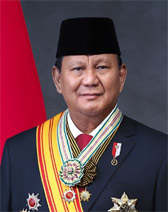
Prabowo Subianto
Indonesia’s Eighth President and a Powerful Figure Bridging the Military and Politics
Born on October 17, 1951
Age: 75
Profession: Politician, President, Military Commander
Place of Birth: Jakarta, Indonesia
Prabowo Subianto Djojohadikusumo (modern Indonesian spelling: Prabowo Subianto Joyohadikusumo) is an Indonesian politician, retired army general, and businessman who has served as the eighth President of Indonesia since 20 October 2024. He is the third Indonesian head of state with a military background, following Suharto and Susilo Bambang Yudhoyono. Widely described as a right-wing nationalist, Prabowo Subianto is also notable for being a solitary leader without a first lady, a distinctive feature in Indonesia’s modern political tradition.
Early Life and Influential Family Background
Prabowo Subianto was born on 17 October 1951 in Jakarta into one of Indonesia’s most influential political families. His father, Sumitro Djojohadikusumo, was among the country’s leading economists and served as a cabinet minister under both Sukarno and Suharto, placing the family at the heart of Indonesia’s post-independence political and economic elite. Through these connections, Prabowo Subianto was exposed from an early age to power, governance, and state ideology.
His education reflected this elite upbringing. He studied for a period at the American School in London and later received military training in the United States, including programs at Fort Benning. In 1970, he enrolled in the Indonesian Military Academy (Akademi Militer Nasional) and graduated in 1974, entering active duty at a time when the armed forces played a dominant role in national politics.
Military Career and Strategic Networks
Prabowo Subianto spent most of his military career within Indonesia’s elite Special Forces Command (Kopassus), where he built a reputation as a disciplined and hardline officer. During the New Order era, he developed close professional relationships with senior commanders loyal to President Suharto, strengthening his position within the military hierarchy.
In 1998, amid the political collapse of the Suharto regime, Prabowo Subianto was appointed commander of the Strategic Reserve Command (Kostrad), one of the most powerful posts in the Indonesian Army. That same year, however, his career came to an abrupt end. He was dismissed from the armed forces following allegations involving the abduction of pro-democracy student activists and human rights violations in Papua and East Timor. These accusations led to a long-standing ban on his entry into the United States and have remained a defining and controversial aspect of his public image.
Marriage into the Suharto Family
In 1983, Prabowo Subianto married Siti Hediati Hariyadi, one of Suharto’s daughters, further cementing his position within Indonesia’s ruling elite. The marriage symbolized the close ties between military power and political authority during the New Order period. The couple divorced shortly after Suharto was removed from power in 1998. From this marriage, Prabowo Subianto has one son, Didit Hediprasetyo.
Entry into Electoral Politics
After several years of political isolation, Prabowo Subianto re-emerged in national politics in the late 2000s. In early 2008, figures from his inner circle established the Great Indonesia Movement Party (Gerindra), which became his primary political platform and a vehicle for his nationalist ideology.
In the 2009 presidential election, Prabowo Subianto ran as the vice-presidential candidate alongside Megawati Sukarnoputri, daughter of Sukarno and a central figure in Indonesia’s post-authoritarian political landscape. Although the ticket was unsuccessful, the campaign firmly positioned him as a leading national contender.
Presidential Campaigns and Rivalries
Prabowo Subianto contested the presidency in 2014, losing to Joko Widodo, then Governor of Jakarta. The rivalry between the two men came to dominate Indonesian politics for the next decade, often framed as a contest between military-linked nationalism and civilian populism.
In 2019, Prabowo Subianto ran again for president, this time with Sandiaga Uno as his vice-presidential candidate. Despite broad support from several political parties, he once more failed to secure victory. His refusal to immediately accept the results contributed to violent protests in Jakarta, reinforcing his reputation as one of the most polarizing figures in Indonesian public life.
Reconciliation and Role as Defense Minister
Following the intense political conflict of the 2019 election, Prabowo Subianto unexpectedly reconciled with his longtime rival Joko Widodo. He joined the government as Minister of Defense, serving from 2019 to 2024. During this period, he worked alongside senior political figures such as Luhut Binsar Pandjaitan and Mahfud MD, focusing on defense modernization, arms procurement, and military diplomacy.
This role proved instrumental in rehabilitating his political image and restoring his standing within both domestic and international circles.
The 2024 Presidential Victory
On 10 October 2021, Gerindra officially nominated Prabowo Subianto as its candidate for the 2024 presidential election. He formally accepted the nomination on 12 August 2022. The election, held on 14 February 2024, resulted in a decisive victory, marking the culmination of decades of political ambition.
The General Elections Commission confirmed the results on 20 March 2024, and the Constitutional Court finalized the process on 22 April 2024. On 20 October 2024, Prabowo Subianto was sworn in as Indonesia’s eighth president.
Honors, Rank, and Historical Significance
Before his dismissal from the military, Prabowo Subianto held the rank of three-star lieutenant general. In 2024, shortly before leaving office, President Joko Widodo awarded him an honorary four-star general rank, symbolically restoring his status within the military establishment.
Prabowo Subianto remains one of the most controversial and consequential figures in contemporary Indonesian politics. His career combines elite lineage, military power, unresolved human rights allegations, and an enduring nationalist appeal. After decades of political defeat and persistence, his rise to the presidency represents a defining chapter in Indonesia’s post-reform era, reshaping debates over democracy, authority, and national identity.
Source: Biyografiler.com
News about Prabowo Subianto
Record Gathering at Davos: World Leaders and Global Business to Converge in Switzerland
Record Gathering at Davos: World Leaders and Global Business to Converge in Switzerland. The 56th Annual Meeting of the World Economic Forum (WEF) ...
Frequently asked questions about Prabowo Subianto
Who is Prabowo Subianto?, Prabowo Subianto biography, Prabowo Subianto life story, Prabowo Subianto age, Prabowo Subianto facts, Prabowo Subianto birthplace, Prabowo Subianto photos, Prabowo Subianto videos, Prabowo Subianto career

Lamine Yamal
Professional footballer

Erling Haaland
Professional footballer

Kylian Mbappe
Professional footballer

Austin Abrams
Actor

Bad Bunny
Rapper, Songwriter

Sam Altman
Entrepreneur, Investor, CEO


Hongjoong
Singer, Rapper, Songwriter, Composer

Ludacris
Rapper, Actor

Kwon Eunbi
Singer

Sarah Wayne Callies
Actress, Screenwriter, Producer, Director

LaTavia Roberson
Singer, Actress, Entrepreneur
Lamine Yamal
Professional footballer

Tolga Kurtoglu
Businessperson
Bad Bunny
Rapper, Songwriter
Kylian Mbappe
Professional footballer

Prabowo Subianto
Politician, President, Military Commander

Pedro Sanchez
Politician