
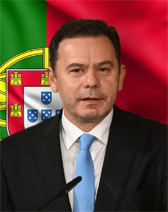
Luis Montenegro
Center-right lawyer who returned the Social Democratic Party to government and led Portugal through successive minority administrations
Born on February 17, 1973
Age: 53
Profession: Lawyer, Politician
Place of Birth: Porto, Portugal
Luís Montenegro was born on February 16, 1973, in Porto, Portugal. His full name is Luís Filipe Montenegro Cardoso de Morais Esteves. A Portuguese lawyer and politician, Luís Montenegro has served as Prime Minister of Portugal since April 2, 2024. After his first minority government collapsed in March 2025, he led the center-right Democratic Alliance to another election victory and began his second administration on June 5, 2025. He has also served as leader of the Social Democratic Party since May 2022.
Early Life and Family Background
Luís Montenegro was born in Porto but spent much of his childhood and youth in Espinho, a coastal city in the Aveiro District. His family had a professional connection with the legal field, and both his father and grandfather worked in law.
The legal environment in which Luís Montenegro grew up influenced his decision to pursue a similar professional path. His early years in Espinho also established the local political and social connections that later supported his entry into municipal government.
Although he became nationally associated with Lisbon and parliamentary politics, Luís Montenegro has continued to identify closely with northern Portugal. His political career began in the Aveiro region, where he developed his first electoral organization and served in local government before entering the national parliament.
Education and Legal Training
Luís Montenegro studied law at the Porto Faculty of the Portuguese Catholic University. His education covered constitutional law, civil law, administrative law and the legal principles governing businesses and public institutions.
After completing his law degree, Luís Montenegro pursued postgraduate studies in personal data protection law. This specialization became increasingly significant as digital technologies, electronic commerce and the processing of personal information created new legal and regulatory challenges.
He also completed an Advanced Management Programme at INSEAD, the France-based international business school. The program expanded his education beyond law and provided training in corporate management, organizational strategy and executive decision-making.
The combination of legal and managerial education later influenced the political approach of Luís Montenegro. He has frequently emphasized regulatory simplification, economic competitiveness, administrative efficiency and the modernization of the Portuguese state.
Legal and Business Career
Luís Montenegro began his professional career as a lawyer and legal consultant. He was one of the founders of the SP&M law firm and remained a partner until July 2022, when his election as leader of the Social Democratic Party required him to concentrate fully on national politics.
His legal practice provided experience in corporate law, commercial relationships and regulatory questions. It also allowed him to establish connections with Portuguese businesses and professional organizations outside the political system.
Luís Montenegro served as chairman of the general meetings of the Ferpinta Group and the electronics retailer Rádio Popular. These positions gave him experience in corporate governance and the formal supervision of company decision-making.
His private-sector background became an important part of his political identity. Supporters presented him as a leader familiar with the difficulties experienced by businesses, investors and professionals. Critics, however, later questioned whether his family’s commercial interests had been separated sufficiently from his public responsibilities.
Entry into Local Politics
Luís Montenegro entered politics through the Social Democratic Party, known in Portugal by the abbreviation PSD. Despite its name, the party is generally positioned on the center-right and combines liberal economic policies with moderate conservative and Christian-democratic traditions.
In 1997, Luís Montenegro was elected to local office in Espinho. He served in the city’s municipal institutions as a member of the Municipal Assembly and also worked as a municipal councillor.
Local government introduced him to public budgeting, urban services, municipal planning and direct communication with voters. His performance in Espinho helped establish him within the regional organization of the Social Democratic Party and prepared him for national office.
From 2009 to 2013, Luís Montenegro served as President of the Espinho Municipal Assembly. He was also a member of the Porto Metropolitan Assembly, gaining experience in regional coordination and metropolitan administration.
Election to the Portuguese Parliament
In 2002, Luís Montenegro was elected to the Assembly of the Republic as a representative of the Aveiro electoral district. He subsequently won reelection in 2005, 2009, 2011 and 2015.
During his 16 years in parliament, Luís Montenegro worked on constitutional affairs, justice, internal administration, civil liberties and public-sector policy. His training as a lawyer made him particularly active in debates concerning constitutional interpretation and the organization of state institutions.
He served as president of the parliamentary subcommittee responsible for internal administration and participated in Portugal’s delegation to the NATO Parliamentary Assembly. These roles expanded his experience beyond domestic legislation and introduced him to security and international-policy questions.
Luís Montenegro became known as a forceful and technically prepared parliamentary speaker. His interventions were often confrontational, particularly during debates with the Socialist Party and the parties of the Portuguese left.
PSD Parliamentary Leader
In 2011, Luís Montenegro became president of the parliamentary group of the Social Democratic Party. He held the position until 2017 and became one of the principal defenders of the government led by Prime Minister Pedro Passos Coelho.
Portugal was facing a severe economic and financial crisis when Luís Montenegro assumed the parliamentary leadership. The country had requested an international financial assistance program negotiated with the European Commission, the European Central Bank and the International Monetary Fund.
The government introduced spending reductions, tax increases, labor-market reforms and changes to pensions and public-sector salaries. These policies generated strong opposition from trade unions, public employees and left-wing parties.
Luís Montenegro defended the measures as necessary to prevent national insolvency, restore access to financial markets and meet Portugal’s international obligations. He argued that the government had inherited an unsustainable financial situation and had limited room for alternative policies.
His performance during this period established him as one of the most visible members of the Social Democratic Party. He became known for his combative parliamentary style, his ability to defend difficult government decisions and his loyalty to Pedro Passos Coelho.
The 2015 Election and Return to Opposition
In the 2015 parliamentary election, the center-right alliance led by Pedro Passos Coelho received the largest share of the vote but lost its parliamentary majority. A new government was initially formed, but it was defeated when the Socialist Party reached parliamentary agreements with the Left Bloc, the Portuguese Communist Party and the Ecologist Party “The Greens”.
Socialist leader António Costa subsequently became prime minister. Luís Montenegro continued to lead the Social Democratic parliamentary group and became one of the principal critics of the new government.
He argued that the Socialist administration was benefiting from the financial stabilization achieved under the previous government while reversing reforms that had improved Portugal’s economic credibility. The left-wing parties responded that the center-right had imposed unnecessary social hardship during the financial assistance period.
Departure from Parliament
Luís Montenegro stepped down as parliamentary leader in 2017 and left the Assembly of the Republic in 2018. After approximately sixteen years in national office, he returned to legal practice and private-sector activities.
His withdrawal did not represent a permanent departure from politics. He continued speaking at party events and remained connected to the Social Democratic Party’s internal debates.
The PSD experienced difficulty challenging António Costa, whose Socialist governments benefited from economic growth, lower unemployment and a political strategy that combined fiscal restraint with the reversal of some austerity measures.
First Campaign for PSD Leadership
In 2020, Luís Montenegro ran for the leadership of the Social Democratic Party. His principal opponent was the serving party leader, Rui Rio.
Luís Montenegro presented himself as a more assertive opposition leader who could restore the PSD’s electoral strength. He argued that the party needed a clearer political identity, stronger internal organization and a more direct challenge to the Socialist government.
He failed to win the leadership contest, and Rui Rio remained in office. Despite the defeat, the campaign strengthened the national network of Luís Montenegro and established him as the most likely future representative of the party’s more combative center-right wing.
Election as PSD Leader
After the Social Democratic Party suffered another defeat in the January 2022 parliamentary election, Rui Rio announced his departure. Luís Montenegro entered the resulting leadership contest and defeated former minister Jorge Moreira da Silva.
On May 28, 2022, Luís Montenegro was elected leader of the Social Democratic Party. He formally assumed the role of the principal center-right opposition figure and began reorganizing the party in preparation for the next election.
His political strategy focused on presenting the PSD as a stable alternative to the Socialist government. He criticized high taxation, declining public services, housing shortages and the emigration of young Portuguese professionals.
Luís Montenegro argued that Portugal required higher productivity, greater private investment and lower taxes on employment and businesses. At the same time, he promised to preserve the public foundations of healthcare, education, pensions and social security.
“Hope Has Returned” Political Strategy
As opposition leader, Luís Montenegro travelled extensively across Portugal under a political initiative associated with the message that hope could return to the country. These visits allowed him to meet local businesses, municipal leaders, public employees and community organizations.
His speeches emphasized the departure of younger workers, low wages, limited economic growth and the deterioration of public services. He argued that Portugal had become dependent on a model based on tourism, low salaries and high taxation rather than innovation and productivity.
The strategy was intended to build a more optimistic image than the one associated with the austerity years of Pedro Passos Coelho. Luís Montenegro retained a commitment to fiscal responsibility but increasingly emphasized wage growth, social mobility and improved public services.
Collapse of the Socialist Government
In November 2023, Prime Minister António Costa resigned after prosecutors announced an investigation involving government decisions connected with energy and infrastructure projects. Although António Costa was not immediately accused of a crime, the political crisis ended the Socialist government’s parliamentary majority.
President Marcelo Rebelo de Sousa dissolved parliament and called an early election for March 2024. The decision gave Luís Montenegro his first opportunity to campaign directly for the premiership.
Formation of the Democratic Alliance
Before the 2024 election, Luís Montenegro formed the Democratic Alliance, an electoral coalition led by the Social Democratic Party together with the conservative CDS–People’s Party and the smaller People’s Monarchist Party.
The alliance revived the name of a successful center-right coalition that had governed Portugal during the early years of democratic consolidation. It was intended to unite moderate conservative voters and avoid the fragmentation of the traditional right.
Luís Montenegro campaigned on lower taxes, higher wages, faster economic growth, improved housing supply and the restoration of public healthcare. He also promised to control immigration through clearer administrative rules while maintaining Portugal’s tradition as an open country.
The 2024 Parliamentary Election
The parliamentary election was held on March 10, 2024. The Democratic Alliance narrowly finished ahead of the Socialist Party and won the largest number of seats, but it remained far below the 116 seats required for an absolute majority.
The election also produced a major increase in support for the populist right-wing Chega party led by André Ventura. Its parliamentary representation expanded dramatically, making it impossible for the Democratic Alliance to control parliament without support from other parties.
Luís Montenegro had repeatedly rejected a government agreement with Chega. He maintained that the party was unreliable, politically inconsistent and unsuitable as a formal partner in government.
President Marcelo Rebelo de Sousa asked Luís Montenegro to form a government. Because no majority coalition was available, he established a minority administration dependent on negotiations with opposition parties.
First Government as Prime Minister
Luís Montenegro took office as Prime Minister of Portugal on April 2, 2024. His first cabinet was formed primarily by the Social Democratic Party and the CDS–People’s Party.
The government promised to reduce personal and corporate taxation, increase wages and pensions and improve the competitiveness of the Portuguese economy. It argued that lower taxes on work and investment would help retain young professionals and attract higher-value businesses.
Housing became one of the administration’s central priorities. Portugal had experienced rapid increases in property prices and rents, particularly in Lisbon, Porto and tourist regions. The government promoted tax advantages for first-time buyers, faster licensing procedures and the use of public property for housing development.
The administration also introduced an emergency program for the National Health Service. Long waiting times, shortages of doctors and nurses and difficulties maintaining emergency services had become major public concerns.
In education, the government sought agreements with teachers concerning salary and career progression. It also promised to modernize public administration, simplify licensing procedures and accelerate the use of European recovery funds.
Governing without a Parliamentary Majority
The minority position of the government required Luís Montenegro to negotiate with parties across the political spectrum. The administration could not approve budgets or major legislation solely with the votes of the Democratic Alliance.
On some economic and institutional questions, the government sought agreements with the Socialist Party. On other measures, it relied on votes from the Liberal Initiative or Chega.
This strategy allowed the government to remain in office but exposed Luís Montenegro to criticism from several directions. The left accused him of adopting policies favored by Chega, while the populist right claimed that he was protecting the traditional two-party political system.
Luís Montenegro continued to reject a formal coalition with André Ventura. He argued that cooperation on individual parliamentary proposals did not amount to a political alliance or shared government program.
Economic and Social Policies
The first government of Luís Montenegro benefited from relatively stable public finances and economic growth. The administration sought to preserve a balanced budget while reducing selected taxes and increasing expenditure in priority areas.
Tax reductions for younger workers became one of its most recognizable policies. The government argued that lower income tax would help prevent qualified young people from leaving Portugal for countries offering higher salaries.
Luís Montenegro also supported gradual reductions in corporate taxation, arguing that Portugal needed to attract investment, improve productivity and create better-paid employment. Opponents warned that tax reductions could limit the resources available to public services.
The government attempted to combine market-oriented economic policies with increases in pensions, public-sector wages and professional allowances. This approach reflected the effort of Luís Montenegro to distance modern center-right politics from the social image of the austerity period.
The Spinumviva Controversy
In early 2025, Luís Montenegro faced allegations concerning Spinumviva, a consultancy company he had established while outside parliament. After becoming PSD leader in 2022, he transferred the ownership and management of the company to members of his family.
Opposition parties questioned payments received by the company from private businesses, including companies operating in sectors regulated or affected by government decisions. They argued that the arrangements created a possible conflict between his public responsibilities and his family’s commercial interests.
Luís Montenegro denied any unlawful conduct, conflict of interest or ethical violation. He stated that he had withdrawn from the management of the company, had declared his income and assets and had not used his office to benefit private clients.
The controversy nevertheless dominated parliamentary debate and weakened the authority of the minority government. Opposition parties demanded further explanations, disclosure of client relationships and parliamentary investigations.
Loss of the Confidence Vote
In March 2025, Luís Montenegro requested a parliamentary vote of confidence, arguing that the country required political clarification. The government was unable to secure sufficient support.
On March 11, 2025, the Assembly of the Republic rejected the confidence motion. The defeat automatically caused the government to fall and created the conditions for another early parliamentary election.
President Marcelo Rebelo de Sousa dissolved parliament and scheduled the election for May 18, 2025. It was Portugal’s third national parliamentary election in slightly more than three years.
The 2025 Early Election
Luís Montenegro again led the Democratic Alliance during the 2025 campaign. He presented the election as an opportunity for voters to judge both his government’s record and the allegations concerning his family’s company.
He maintained that the controversy had been politically exaggerated and argued that the government had produced economic stability, tax relief and improvements in public-sector employment conditions.
The Democratic Alliance won the election with approximately 31.8 percent of the vote and secured 91 of the 230 seats in parliament. The result strengthened the coalition but again left it short of an absolute majority.
Chega became the second-largest parliamentary force with 60 seats, while the Socialist Party fell to third place with 58. The result ended the long-standing pattern in which the Social Democratic Party and Socialist Party had always occupied the two leading positions in Portuguese parliamentary politics.
Second Montenegro Government
After consultations with the political parties, President Marcelo Rebelo de Sousa again appointed Luís Montenegro as prime minister. His second government took office on June 5, 2025.
The new cabinet retained several of the most important ministers from the first administration, including Joaquim Miranda Sarmento as finance minister and Paulo Rangel as minister of foreign affairs. This continuity signaled that Luís Montenegro intended to maintain the core direction of his economic and foreign policies.
The second government remained a minority administration. Even with its increased number of seats, the Democratic Alliance still required support or abstention from opposition parties to pass legislation.
Luís Montenegro once again rejected a formal coalition with Chega. He called for a constructive parliament in which opposition parties would allow the election winner to govern while continuing to scrutinize government policy.
State Reform and Economic Competitiveness
The second government placed greater emphasis on the reform of the state and the reduction of administrative bureaucracy. Luís Montenegro argued that complicated licensing systems, overlapping responsibilities and slow public procedures discouraged investment and weakened citizen confidence.
The government created a ministerial structure directly connected to administrative reform. Its objectives included digital services, simpler procedures and a reduction in redundant requirements affecting citizens and companies.
Economic policy continued to focus on lowering taxes on employment and businesses, increasing productivity and encouraging technological development. Luís Montenegro argued that Portugal needed to grow faster than the European average if it wanted to increase salaries and finance its social institutions.
Housing Crisis
Housing remained one of the most difficult issues facing the second government of Luís Montenegro. High prices and limited supply had made it increasingly difficult for younger and middle-income citizens to rent or purchase homes.
The government supported tax exemptions for some first-home purchases, faster construction licensing, the development of public property and incentives intended to increase private housing supply.
Critics argued that tax incentives could increase demand without producing enough new homes. They called for greater public construction, stronger tenant protections and restrictions on speculative property investment.
Luís Montenegro maintained that the crisis could not be solved without increasing supply. His policies therefore focused heavily on construction, planning reform and cooperation with municipalities and private developers.
Immigration Policy
Immigration became a more prominent subject during the premiership of Luís Montenegro. Portugal had experienced rapid growth in its foreign population, while administrative systems struggled to process residence applications and regulate entry effectively.
The government described its policy as humane but controlled. It argued that Portugal should welcome people who worked, respected the law and contributed to society, while preventing irregular immigration and abuse of the system.
Measures included tighter nationality requirements, stronger border and immigration units and more effective removal procedures for people without legal permission to remain in the country.
Opposition parties on the left warned that stricter policies risked stigmatizing migrants and weakening labor protections. Chega argued that the government’s reforms did not go far enough.
European Union and Foreign Policy
Luís Montenegro is a strong supporter of Portugal’s membership in the European Union. He views European integration as essential to the country’s economic development, international influence and democratic stability.
His government supports the expansion of the European Union, stronger common security capabilities and reforms intended to make European institutions more effective. It has also emphasized the importance of Portugal’s relationships with Portuguese-speaking countries through the Community of Portuguese Language Countries.
Portugal’s Atlantic position remains central to the foreign-policy approach of Luís Montenegro. He supports close relations with the United States, maritime security and stronger cooperation among the European and North American members of NATO.
Defence and Support for Ukraine
Luís Montenegro has consistently condemned Russia’s invasion of Ukraine and supports continued Portuguese political, humanitarian and military assistance. His government views Ukrainian resistance as part of the wider defence of European security and international law.
Portugal has increased defence expenditure and strengthened its participation in NATO missions. Luís Montenegro has argued that additional investment should improve military readiness while also supporting technology, industry, cybersecurity and skilled employment.
His government has maintained that Portuguese troops should not enter an active war zone. It has nevertheless remained open to participation in a future multinational peacekeeping or security mission if a ceasefire and appropriate international framework are established.
In 2026, Luís Montenegro reaffirmed Portugal’s commitment to NATO, increased defence investment and continuing support for Ukraine. He also emphasized maritime security and the protection of undersea infrastructure connecting Europe and North America.
Political Position and Ideology
Luís Montenegro is generally described as a center-right, liberal-conservative and pro-European politician. He supports private investment, lower taxes, regulated markets and the reduction of administrative barriers.
At the same time, he argues that the state must maintain effective public healthcare, education, pensions and social support. His political message attempts to combine economic liberalization with the preservation of the social foundations created after Portugal’s democratic transition.
His experience during the financial crisis shaped his commitment to balanced public accounts. Luís Montenegro maintains that governments cannot sustainably improve wages or services without economic growth and fiscal credibility.
Critics on the left accuse him of favoring businesses and wealthier taxpayers. Critics on the populist right argue that he is too moderate on immigration, Europe and institutional reform.
Leadership Style and Public Image
Luís Montenegro is known for a confident, direct and combative speaking style. His years as parliamentary leader developed his ability to defend government policies under pressure and confront opponents during legislative debates.
Supporters describe him as resilient, experienced and capable of making difficult decisions. His victory in the 2025 election after the collapse of his government was presented by allies as evidence that voters had accepted his explanations regarding the family-company controversy.
Opponents argue that Luís Montenegro can appear overly partisan and that his refusal to provide more extensive information during the controversy damaged trust in political institutions.
His greatest political challenge has been governing without a stable majority. Maintaining his rejection of a formal alliance with Chega while passing budgets and reforms requires continuous negotiation with parties that hold sharply different political positions.
Personal Life
Luís Montenegro is married to Carla Montenegro. The couple have two sons.
Although his family entered public discussion during the controversy involving Spinumviva, Luís Montenegro has generally attempted to keep his private life separate from his official responsibilities.
His long connection with Espinho remains an important part of his personal and political identity. Despite being born in Porto and spending much of his national career in Lisbon, he developed his first professional, family and electoral networks in the Aveiro coastal region.
Position in Contemporary Portuguese Politics
The career of Luís Montenegro brings together local government, legal practice, corporate governance, parliamentary leadership, opposition politics and the premiership. His rise was gradual, developing through more than two decades of political activity rather than a rapid transition into national leadership.
He played a central role in defending the austerity-era government of Pedro Passos Coelho, temporarily withdrew from parliament and later returned to rebuild the Social Democratic Party as an electoral alternative.
As prime minister, Luís Montenegro has had to govern within one of the most fragmented parliaments in modern Portuguese history. His two minority governments have depended on negotiations with parties ranging from the center-left Socialist Party to the populist right-wing Chega.
His long-term political reputation will depend on whether his governments can improve housing, public healthcare, wages and economic productivity while maintaining balanced public finances. The stability of his administration will also depend on his ability to preserve the center-right’s independence from the growing influence of André Ventura and Chega.
Selected Offices and Positions
- 1997–2009 – Member of the Espinho Municipal Assembly and Municipal Councillor
- 2002–2018 – Member of the Assembly of the Republic
- 2009–2013 – President of the Espinho Municipal Assembly
- 2011–2017 – President of the Social Democratic Party Parliamentary Group
- 2022–Present – President of the Social Democratic Party
- 2022–2024 – Leader of the Opposition
- April 2, 2024–June 5, 2025 – Prime Minister of Portugal, First Government
- June 5, 2025–Present – Prime Minister of Portugal, Second Government
Source: Biyografiler.com
Frequently asked questions about Luis Montenegro
Who is Luis Montenegro?, Luis Montenegro biography, Luis Montenegro life story, Luis Montenegro age, Luis Montenegro facts, Luis Montenegro birthplace, Luis Montenegro photos, Luis Montenegro videos, Luis Montenegro career

Lamine Yamal
Professional footballer

Sam Altman
Entrepreneur, Investor, CEO

Kylian Mbappe
Professional footballer

Alice Weidel
Politician, Economist

Erling Haaland
Professional footballer

Giorgia Meloni
Politician, Journalist


Hongjoong
Singer, Rapper, Songwriter, Composer

Ludacris
Rapper, Actor

Kwon Eunbi
Singer

Sarah Wayne Callies
Actress, Screenwriter, Producer, Director

LaTavia Roberson
Singer, Actress, Entrepreneur
Lamine Yamal
Professional footballer

Austin Abrams
Actor

Xi Jinping
Politician, Statesman, Head of State

Claudia Sheinbaum
President, Politician, Scientist, Academic

Colman Domingo
Actor, Director, Producer

Kaia Gerber
Model, Actress