
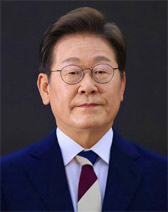
Lee Jae Myung
Political leader who rose from child factory labour and human rights law to local government and the presidency of South Korea
Born on December 22, 1964
Age: 62
Profession: , Human Rights Activist, Politician, Lawyer, President
Place of Birth: Andong, North Gyeongsang Province, South Korea
Lee Jae Myung was born on December 22, 1964, in Andong, North Gyeongsang Province, South Korea. A South Korean politician, lawyer and former human rights activist, Lee Jae Myung has served as President of the Republic of Korea since June 4, 2025. His life story is defined by childhood poverty, factory labour, permanent disability, self-directed education and an extraordinary rise through local and national politics. Before entering the presidency, he served as Mayor of Seongnam, Governor of Gyeonggi Province, a member of the National Assembly of South Korea and leader of the Democratic Party of Korea.
Early Life and Family Background
Lee Jae Myung was born into a large and financially disadvantaged farming family in rural Andong. He was one of seven children, and his parents struggled to provide the family with a stable income. His childhood was marked by poverty, limited educational opportunities and the expectation that every available family member would contribute economically.
After completing elementary school, Lee Jae Myung moved with his family to Seongnam, an industrial city south of Seoul. The move did not immediately improve the family’s financial circumstances. Because they could not afford to keep him in the conventional school system, he began working in factories while still a child.
His early experiences differed sharply from the educational and professional backgrounds of many senior South Korean political figures. Rather than progressing directly through middle school, high school and university, Lee Jae Myung spent much of his adolescence performing poorly paid industrial work under unsafe conditions.
Child Factory Labour
Lee Jae Myung entered the industrial workforce before reaching the legal employment age. He reportedly used altered personal information to obtain work and moved through several small manufacturing companies in the Seongnam area.
The factories in which he worked offered limited protection against accidents. Lee Jae Myung operated machinery, handled industrial materials and performed repetitive manual tasks for long hours. As an underage employee, he had little access to the legal and social protections available to formally registered adult workers.
These experiences later became central to his political identity. Lee Jae Myung described poverty, industrial exploitation and workplace insecurity not as abstract policy questions but as conditions he had personally experienced. His later positions on labour law, welfare, healthcare and economic inequality were strongly influenced by this period.
Workplace Injuries and Permanent Disability
During his years as a factory worker, Lee Jae Myung suffered several injuries. The most serious occurred when his left arm became caught in industrial machinery, damaging the bones and joints and leaving him with a permanent impairment.
The injury affected the growth and movement of his arm and later resulted in his exemption from South Korea’s compulsory military service. Medical examinations confirmed the permanent nature of the disability.
Lee Jae Myung also experienced hearing problems associated with prolonged exposure to factory noise. He has spoken publicly about periods of despair during his youth and described education as the only realistic means of escaping industrial labour and building a different life.
Self-Education
Although he could no longer attend school regularly, Lee Jae Myung continued studying independently after completing his factory shifts. He obtained textbooks and educational materials and prepared for South Korea’s academic equivalency examinations without the structure of conventional classroom education.
In 1978, he passed the middle-school equivalency examination. In 1980, he passed the high-school equivalency examination and became eligible to apply for university.
His success in these examinations transformed his personal circumstances. The achievement later became one of the most frequently cited elements of his biography and reinforced his image as a political figure who had overcome structural disadvantage through determination and education.
Legal Education
Lee Jae Myung entered the College of Law at Chung-Ang University in Seoul. He received scholarship assistance that enabled him to continue his studies despite his family’s limited financial resources.
He graduated with a Bachelor of Laws degree in 1986. In the same year, Lee Jae Myung passed South Korea’s 28th National Judicial Examination, one of the country’s most competitive professional examinations.
After passing the examination, he entered the Judicial Research and Training Institute. Lee Jae Myung completed the institute’s 18th training class in 1989 and became qualified to practise law.
Decision to Become a Human Rights Lawyer
Lee Jae Myung initially considered becoming a judge or prosecutor, professions that offered financial stability and considerable social prestige. His career direction changed after hearing a lecture by Roh Moo Hyun, who was then known as a human rights lawyer and later became President of South Korea.
Inspired by the idea that law could be used to defend workers and disadvantaged citizens, Lee Jae Myung chose private legal practice rather than a career within the judiciary or prosecution service.
In 1989, he opened a law office and became involved with Lawyers for a Democratic Society, a progressive legal organization widely known by its Korean abbreviation MINBYUN. His work focused on labour rights, human rights, industrial disputes and citizens who lacked the resources to challenge employers or public institutions.
Labour and Civic Activism
During the early 1990s, Lee Jae Myung worked with labour counselling centres in Icheon and Gwangju. He provided legal advice to workers dealing with unpaid wages, unfair dismissal, workplace injuries and violations of employment law.
He later became active in civic organizations in Seongnam. Lee Jae Myung served as an executive figure within the Seongnam Citizens’ Association and participated in anti-corruption and municipal accountability campaigns.
His legal and civic activities brought him into conflict with local authorities, property developers and established political interests. He argued that development decisions frequently benefited well-connected private businesses while ordinary residents carried the financial and social costs.
Campaign for a Municipal Hospital
One of the events that pushed Lee Jae Myung toward electoral politics was the closure of hospitals in Seongnam. The closures reduced access to medical care and generated public demands for a municipally operated hospital.
Lee Jae Myung helped organize a citizens’ campaign to establish a public medical facility. Campaigners collected signatures and submitted a residents’ initiative to the city council, but the proposal was rejected.
The rejection convinced him that civic activism and litigation alone would not produce the reforms he wanted. Lee Jae Myung concluded that meaningful change required control over elected institutions and decided to enter politics.
Entry into Politics
Lee Jae Myung formally entered party politics in 2005. He joined the progressive political movement that later developed into the Democratic Party of Korea.
His first electoral campaigns were unsuccessful. He ran for Mayor of Seongnam and later sought election to the National Assembly of South Korea, but initially failed to win public office.
These defeats did not end his political career. Lee Jae Myung continued building local support through legal work, civic activism and campaigns concerning public healthcare, municipal finance and corruption.
Mayor of Seongnam
In 2010, Lee Jae Myung was elected Mayor of Seongnam. The victory gave him executive authority over one of the most economically significant cities in the Seoul metropolitan area.
When he entered office, Lee Jae Myung argued that Seongnam faced serious financial obligations connected to development projects. His administration announced that it would suspend or restructure certain payments while reviewing municipal finances.
The decision was controversial, but supporters credited him with restoring financial discipline and redirecting public resources toward social programs. His approach established the governing style that would define much of his later career: aggressive intervention, highly visible welfare policies and direct confrontation with institutional opponents.
Lee Jae Myung was reelected as mayor in 2014. His second victory confirmed that his combination of welfare programs, fiscal claims and forceful public communication had created a durable electoral base.
Social Policies in Seongnam
As mayor, Lee Jae Myung introduced a range of welfare and public-service initiatives. His administration expanded support for school uniforms, young adults, new mothers and residents facing high medical or living costs.
He also fulfilled the earlier campaign for a public hospital by supporting the establishment of the Seongnam Citizens Medical Center. The project carried particular personal significance because the rejection of the original hospital campaign had helped persuade him to enter politics.
Lee Jae Myung argued that local governments should not limit themselves to roads, sanitation and administrative licensing. In his view, municipalities could act directly on inequality, healthcare, education and household economic insecurity.
Critics accused him of using expensive welfare programs to build personal popularity. Supporters responded that his policies demonstrated how local administrations could provide practical benefits while maintaining financial control.
Communication and Administrative Style
During his mayoralty, Lee Jae Myung became known for using social media to communicate directly with citizens. He promoted municipal policies, responded to criticism and challenged political opponents in unusually direct language.
His communication style was confrontational and sometimes highly personal. Admirers viewed this as evidence that he was willing to challenge established power, while critics argued that it intensified political hostility and reduced opportunities for compromise.
This combination of forceful administration and direct communication helped Lee Jae Myung move beyond local politics and become a nationally recognized progressive figure.
Rise to National Prominence
Lee Jae Myung gained wider national attention during the political crisis surrounding President Park Geun Hye. He became one of the most outspoken politicians demanding accountability following the corruption scandal involving Choi Soon Sil.
His strong rhetoric distinguished him from more cautious members of the liberal opposition. By presenting himself as a politician willing to confront powerful institutions directly, Lee Jae Myung attracted support among progressive voters dissatisfied with traditional party leadership.
In 2017, he entered the presidential primary of the Democratic Party of Korea. He did not win the nomination, which went to Moon Jae In, but the campaign established him as a major national political figure.
Governor of Gyeonggi Province
In 2018, Lee Jae Myung was elected Governor of Gyeonggi Province, South Korea’s most populous provincial jurisdiction. The position gave him responsibility for an area containing more than thirteen million residents and surrounding much of Seoul.
As governor, Lee Jae Myung promoted regional development, affordable housing, labour protections and expanded welfare programs. His administration introduced policies associated with basic income, including financial support for young adults and selected rural communities.
He also supported a regional currency system intended to encourage residents to spend public benefits at local businesses. The program was designed to assist small merchants while preventing economic support from flowing immediately to large corporations or major online platforms.
Basic Income
Basic income became one of the best-known elements of the political program of Lee Jae Myung. He argued that automation, insecure employment and concentrated wealth required new methods of distributing purchasing power.
His initial proposals did not provide enough money to replace employment income or conventional welfare programs. Instead, Lee Jae Myung presented modest universal payments as the beginning of a wider system capable of supporting consumption, improving economic security and reducing administrative complexity.
Critics questioned the financial sustainability of universal payments and argued that limited government resources should be directed toward citizens with the greatest need. Lee Jae Myung responded that universal programs were less stigmatizing, easier to administer and more likely to receive broad political support.
COVID-19 Pandemic
During the COVID-19 pandemic, Lee Jae Myung used his authority as governor to introduce emergency economic assistance and enforce public-health measures. His administration provided regional relief payments and supported local businesses affected by restrictions.
He adopted a forceful administrative style, publicly pressuring religious organizations and other groups accused of failing to cooperate with health authorities. Supporters praised his willingness to act quickly, while critics accused him of using confrontation and publicity to strengthen his national profile.
The pandemic substantially increased the visibility of Lee Jae Myung and helped establish him as one of the leading candidates for the next presidential election.
2022 Presidential Campaign
Lee Jae Myung won the Democratic Party of Korea nomination for the 2022 presidential election. His campaign emphasized economic inequality, housing, technological investment and a larger role for the state in supporting household security.
He proposed basic-income measures, expanded housing supply, support for young adults and policies intended to limit excessive real-estate speculation. He also presented himself as an experienced administrator whose local and provincial policies could be implemented nationally.
His principal opponent was former prosecutor general Yoon Suk-yeol, the candidate of the conservative People Power Party. The campaign was intensely polarized and included allegations concerning corruption, personal conduct and the records of both candidates.
Lee Jae Myung lost the election by approximately 0.73 percentage points, the narrowest margin in South Korean presidential history. The difference amounted to fewer than 250,000 votes.
Member of the National Assembly
After losing the presidency, Lee Jae Myung remained active in national politics. In June 2022, he won a parliamentary by-election in the Gyeyang B constituency of Incheon and entered the National Assembly of South Korea.
He was elected leader of the Democratic Party of Korea in August 2022. The position made him the principal opposition figure confronting the administration of Yoon Suk-yeol.
As party leader, Lee Jae Myung criticized the government’s economic management, prosecutorial policies and foreign-policy decisions. The governing party accused him of using his political position to resist investigations into allegations connected with his previous public offices.
Legal Investigations and Controversies
The political career of Lee Jae Myung has been accompanied by several criminal investigations and court proceedings. These cases concerned allegations involving property-development projects in Seongnam, campaign statements, public funds, corporate payments and transfers connected with North Korea.
Prosecutors alleged that private developers received improper benefits from projects associated with his period as mayor. Lee Jae Myung denied directing illegal arrangements and argued that the projects generated substantial public revenue that would otherwise have gone entirely to private companies.
He was also accused of making false statements during the 2022 presidential campaign. A lower court convicted him in 2024 and imposed a suspended prison sentence. An appeals court later acquitted him, but the Supreme Court of Korea overturned the acquittal in May 2025 and ordered the case to be reconsidered.
Lee Jae Myung has consistently denied criminal wrongdoing and described the investigations as politically motivated prosecution. His opponents have argued that the number and seriousness of the allegations raise important questions concerning accountability and public ethics.
Status of the Legal Proceedings
At the time of his presidential victory, Lee Jae Myung faced several separate criminal trials. After he entered office, the courts postponed the proceedings without establishing new hearing dates.
The decisions were connected to Article 84 of the South Korean Constitution, which states that a serving president may not be criminally prosecuted while in office except in cases involving insurrection or treason.
Legal experts have disagreed over whether this constitutional protection applies only to new prosecutions or also to trials that began before a president’s election. The postponements did not acquit Lee Jae Myung or formally terminate the cases, which may resume after the conclusion of his presidential term.
2024 Assassination Attempt
On January 2, 2024, Lee Jae Myung was attacked while visiting the proposed airport site on Gadeok Island in Busan. A man approached him as though requesting an autograph and stabbed him in the neck.
The attack damaged a major blood vessel, and Lee Jae Myung underwent surgery after being transferred to Seoul. He was released from hospital after several days and later returned to political work.
Investigators concluded that the attacker intended to kill him and had acted after developing extreme political hostility. The incident renewed public debate over political violence, online radicalization and the increasingly confrontational nature of South Korean politics.
After leaving hospital, Lee Jae Myung called for an end to the politics of hatred and argued that democratic competition should not transform political opponents into enemies.
2024 Parliamentary Election
Under the leadership of Lee Jae Myung, the Democratic Party of Korea and its allies won a commanding majority in the April 2024 parliamentary election. The result weakened President Yoon Suk-yeol and gave the opposition extensive control over legislation.
The election outcome strengthened the position of Lee Jae Myung within his party. Despite continuing legal challenges and internal disputes, he remained the most prominent liberal candidate for a future presidential election.
The large opposition majority intensified conflict between parliament and the presidential administration. Disputes over budgets, appointments, investigations and impeachment motions created an increasingly unstable political environment.
The December 2024 Martial-Law Crisis
On December 3, 2024, President Yoon Suk-yeol unexpectedly declared emergency martial law. He accused opposition forces of obstructing the government and engaging in anti-state activities.
Lee Jae Myung immediately called on citizens and members of parliament to gather at the National Assembly of South Korea. Military and police forces attempted to restrict access to the building, but lawmakers succeeded in entering the chamber.
Lee Jae Myung livestreamed part of his journey to parliament and climbed over a wall to enter the grounds. He joined lawmakers who voted to demand the termination of martial law.
The declaration was withdrawn after several hours. The actions of Lee Jae Myung and other opposition leaders placed them at the centre of political resistance to the attempted suspension of normal constitutional government.
Impeachment and Removal of Yoon Suk Yeol
Following the martial-law attempt, the National Assembly of South Korea moved to impeach Yoon Suk-yeol. A first motion failed after most members of the governing party boycotted the vote, but a second motion passed on December 14, 2024.
During the impeachment process, Lee Jae Myung argued that the martial-law declaration had constituted a direct attack on constitutional democracy. He called for accountability for senior officials and military commanders involved in the operation.
On April 4, 2025, the Constitutional Court of Korea unanimously upheld the impeachment and removed Yoon Suk-yeol from office. The decision required a presidential election to be held within sixty days.
2025 Presidential Campaign
Lee Jae Myung resigned as leader of the Democratic Party of Korea in April 2025 and formally announced his presidential candidacy. He won the party nomination by an overwhelming margin.
His campaign presented the election as an opportunity to restore constitutional order, revive economic growth and reduce political conflict. He promised to govern for citizens across the ideological spectrum rather than only for his traditional progressive supporters.
Although previously known for left-wing economic proposals, Lee Jae Myung adopted a more pragmatic national campaign platform. He emphasized investment, business innovation, artificial intelligence, semiconductors and cooperation with the private sector alongside social protection.
His principal opponent was Kim Moon Soo, the candidate of the People Power Party. The conservative campaign focused heavily on the legal allegations facing Lee Jae Myung and warned that his election could concentrate excessive authority in a presidency supported by a Democratic-controlled legislature.
Election as President
The early presidential election was held on June 3, 2025. Lee Jae Myung received 49.42 percent of the vote, while Kim Moon Soo received approximately 41.15 percent. Reform Party candidate Lee Jun Seok finished third.
Voter turnout exceeded 79 percent, reaching its highest level in a South Korean presidential election since 1997. The result gave Lee Jae Myung a clear victory after his extremely narrow defeat three years earlier.
Because the election followed the removal of a sitting president, there was no conventional transition period. Lee Jae Myung assumed the presidency immediately after the result was officially certified on June 4, 2025.
Inauguration and Political Message
In his inaugural address, Lee Jae Myung promised to serve as a president for all citizens and to overcome the political divisions intensified by the martial-law crisis.
He emphasized democratic institutions, economic recovery and social integration. Lee Jae Myung argued that South Korea needed to move beyond continuous confrontation and concentrate on growth, employment, household living costs and technological competition.
His rise to office was widely interpreted as one of the most dramatic political comebacks in contemporary South Korea. Within three years, he had moved from the narrowest presidential defeat in national history to a decisive victory following the removal of his former opponent.
Economic Growth and Industrial Policy
As president, Lee Jae Myung has placed economic growth and industrial transformation at the centre of his administration. His government has emphasized strategic investment in semiconductors, artificial intelligence, batteries, biotechnology, robotics and advanced manufacturing.
Lee Jae Myung argues that South Korea must respond to competition from the United States, China, Japan and the European Union through a more active industrial policy. In his view, the state should help coordinate infrastructure, research, energy supply and access to investment capital.
His administration has supported large-scale public and private investment in artificial-intelligence data centres and advanced semiconductor technology. It has also promoted cooperation among government institutions, universities and private companies in strategically important industries.
Social Policy and Economic Inequality
The personal background of Lee Jae Myung continues to influence his approach to social policy. He argues that economic growth must improve the lives of workers, young people, small-business owners and families facing high housing and education costs.
His administration has supported household assistance, regional investment and measures intended to reduce the concentration of economic opportunity in Seoul. Youth employment, housing affordability, household debt and declining birth rates remain among the government’s most difficult domestic challenges.
Although Lee Jae Myung was previously strongly associated with universal basic income, he adopted a more flexible national approach after becoming president. His government has concentrated on targeted assistance, regional development and growth-oriented investment rather than immediately introducing a comprehensive universal payment system.
Artificial Intelligence and Technology
Lee Jae Myung views artificial intelligence as a strategic technology capable of determining South Korea’s future economic position. His government has supported investment in computing infrastructure, data centres, advanced chips and the training of specialist workers.
He has argued that South Korea should become one of the world’s leading artificial-intelligence powers rather than remain primarily a manufacturer of components incorporated into products developed elsewhere.
The strategy also includes investment outside the capital region. Lee Jae Myung has promoted technology and industrial projects as tools for regional development and for reducing the economic imbalance between Seoul and other parts of the country.
Relationship with the United States
In foreign policy, Lee Jae Myung has maintained South Korea’s alliance with the United States as the central foundation of national security. Although he had previously criticized aspects of American policy, his presidency has taken a pragmatic approach to defence and economic cooperation.
His government has worked with the United States on regional security, trade, semiconductors, batteries and technological supply chains. Lee Jae Myung has also sought to manage disagreements involving tariffs, defence costs and industrial subsidies without weakening the alliance.
He presents the relationship as one that should combine security cooperation with greater recognition of South Korea’s economic and technological capabilities.
Relations with Japan
Lee Jae Myung has supported stable relations with Japan despite historical disputes involving colonial rule, forced labour and wartime abuses.
Earlier in his political career, he was known for sharply criticizing Japanese policies and conservative South Korean governments that he believed had made excessive concessions. As president, he adopted a more pragmatic position and emphasized security, trade and technological cooperation.
His administration has sought to preserve communication with Tokyo while maintaining that historical issues cannot simply be ignored. The approach reflects the wider effort of Lee Jae Myung to balance progressive political principles with the practical responsibilities of government.
North Korea Policy
Lee Jae Myung supports a reduction in military tensions with North Korea and the eventual restoration of dialogue. He has argued that deterrence remains necessary but that communication is essential to prevent accidental conflict.
His government has supported efforts to restore communication channels and reduce hostile actions around the Korean Peninsula. Lee Jae Myung favours humanitarian engagement and negotiations while recognizing that North Korea’s nuclear and missile programs remain serious security threats.
Critics argue that engagement can provide concessions without changing North Korean behaviour. Supporters maintain that the absence of dialogue increases the risk of misunderstanding and military escalation.
NATO and Defence-Industry Cooperation
Although South Korea is not a member of NATO, Lee Jae Myung supports wider cooperation with the alliance in defence technology, cybersecurity and industrial production.
He has promoted partnerships involving joint research, development, manufacturing and the operation of advanced defence systems. South Korea’s growing international role as a producer of tanks, artillery, aircraft, naval systems and missile technology has strengthened this area of foreign policy.
Lee Jae Myung presents South Korea as a reliable defence and technology partner capable of combining rapid manufacturing with advanced engineering and research.
Political Style and Ideology
Lee Jae Myung has been described as progressive, social democratic, populist and economically interventionist. He has also demonstrated considerable ideological flexibility, particularly during national election campaigns and after entering the presidency.
His political style is based on direct communication, detailed policy claims and a willingness to confront opponents. He frequently presents politics as a conflict between ordinary citizens and entrenched economic or institutional power.
Supporters regard Lee Jae Myung as a decisive administrator who understands poverty and is willing to use government authority to produce measurable results. Critics accuse him of encouraging polarization, making unrealistic promises and concentrating excessive political power around his leadership.
His evolution from a strong advocate of universal welfare programs to a president emphasizing industrial investment and economic competitiveness has led some observers to describe him as a pragmatic rather than doctrinaire progressive.
Public Controversies
Lee Jae Myung remains one of the most controversial figures in contemporary South Korean politics. His supporters argue that repeated investigations have been used by prosecutors and conservative governments to weaken a powerful opposition leader.
His opponents maintain that allegations connected with development projects, campaign statements and financial arrangements cannot be dismissed solely as political attacks. They argue that the presidency should not place a leader beyond legal accountability.
The suspension of his trials during his presidential term has therefore remained a major constitutional and political issue. The controversy involves not only the personal legal position of Lee Jae Myung but also broader questions concerning presidential immunity, the independence of the courts and equality before the law.
Personal Life
Lee Jae Myung married Kim Hye Kyung in 1991. The couple have two sons, Lee Dong Ho and Lee Yoon Ho.
Kim Hye Kyung has appeared alongside her husband during election campaigns and official events. She has also faced public scrutiny and legal controversy connected with allegations involving the use of public resources during Lee Jae Myung’s period as Governor of Gyeonggi Province.
Lee Jae Myung has frequently used his family history and childhood experiences when discussing poverty, education and social mobility. His personal narrative remains one of the strongest elements of his public appeal.
Position in Contemporary South Korean Politics
The life of Lee Jae Myung represents an extraordinary transition from child factory labour to the presidency of one of the world’s largest economies and most technologically advanced democracies.
His career connects human rights law, municipal welfare programs, regional government, parliamentary leadership and national industrial policy. Few South Korean leaders have built their political identity so directly around personal experiences of poverty, disability and insecure labour.
As president, Lee Jae Myung faces the challenge of restoring public confidence after the martial-law crisis while managing economic competition, demographic decline, regional inequality and continuing security tensions on the Korean Peninsula.
Supporters regard him as a determined reformer who understands the everyday problems of ordinary citizens. Critics view him as a polarizing and legally vulnerable politician whose confrontational leadership style may deepen existing divisions.
From factory work and permanent injury to legal practice, local government and the presidency, the career of Lee Jae Myung remains one of the most dramatic and contested political journeys in modern South Korean history.
Selected Offices and Positions
- 1989–2005 – Human Rights and Labour Lawyer
- 1990–1994 – Director of Labour Counselling Centres in Icheon and Gwangju
- 1994–2005 – Civic Activist in Seongnam
- 2010–2018 – Mayor of Seongnam
- 2018–2021 – Governor of Gyeonggi Province
- 2022–2025 – Member of the National Assembly of South Korea
- 2022–2025 – Leader of the Democratic Party of Korea
- 2025–Present – President of the Republic of Korea
Source: Biyografiler.com
Frequently asked questions about Lee Jae Myung
Who is Lee Jae Myung?, Lee Jae Myung biography, Lee Jae Myung life story, Lee Jae Myung age, Lee Jae Myung facts, Lee Jae Myung birthplace, Lee Jae Myung photos, Lee Jae Myung videos, Lee Jae Myung career
Related Biographies

Lamine Yamal
Professional footballer

Sam Altman
Entrepreneur, Investor, CEO

Kylian Mbappe
Professional footballer

Alice Weidel
Politician, Economist

Erling Haaland
Professional footballer

Giorgia Meloni
Politician, Journalist


Hongjoong
Singer, Rapper, Songwriter, Composer

Ludacris
Rapper, Actor

Kwon Eunbi
Singer

Sarah Wayne Callies
Actress, Screenwriter, Producer, Director

LaTavia Roberson
Singer, Actress, Entrepreneur
Lamine Yamal
Professional footballer

Austin Abrams
Actor

Xi Jinping
Politician, Statesman, Head of State

Claudia Sheinbaum
President, Politician, Scientist, Academic

Colman Domingo
Actor, Director, Producer

Kaia Gerber
Model, Actress