
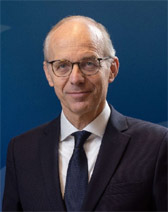
Luc Frieden
Experienced Christian-democratic politician whose career extended from justice and finance ministries to banking, European business leadership and the premiership of Luxembourg
Born on September 16, 1963
Age: 63
Profession: Lawyer, Politician
Place of Birth: Esch-sur-Alzette, Luxembourg
Luc Frieden was born on September 16, 1963, in Esch-sur-Alzette, Luxembourg. A Luxembourgish lawyer, politician and former banking executive, Luc Frieden has served as Prime Minister of Luxembourg since November 17, 2023. He previously held the justice, treasury and budget, defence and finance portfolios in governments led by Jean-Claude Juncker. After leaving government in 2013, he developed a prominent career in law, banking and European business organizations before returning to politics as the lead candidate of the Christian Social People’s Party.
Early Life and Family Background
Luc Frieden spent the first years of his childhood in Esch-sur-Alzette, an industrial city in southern Luxembourg. He later moved with his family to Luxembourg City, where he completed his secondary education at the Athénée de Luxembourg.
His father, Ernest Frieden, worked in the administration of the Luxembourg steel company ARBED and later held senior responsibilities in the country’s hospital federation. Growing up in a family familiar with administration, industry and public institutions contributed to Luc Frieden’s early interest in law, politics and international affairs.
Luxembourg’s multilingual and internationally connected environment also shaped his outlook. The country’s location between France, Germany and Belgium, together with its role in European integration, encouraged him to pursue a legal education across several countries.
Education in Paris, Cambridge and Harvard
After completing his schooling in Luxembourg, Luc Frieden studied at Paris 1 Panthéon-Sorbonne University. He received a master’s degree in business law in 1986, acquiring a foundation in commercial transactions, company law and the legal regulation of economic activity.
In 1987, Luc Frieden continued his postgraduate education at Queens’ College, University of Cambridge. He earned a Master of Comparative Law degree, studying the similarities and differences between national legal systems.
He subsequently attended Harvard Law School in the United States and completed a Master of Laws degree in 1988. His studies in France, the United Kingdom and the United States provided him with experience of continental European law, common-law traditions and international legal practice.
Luc Frieden speaks Luxembourgish, French, German and English. His multilingual education and international legal training later became important in European ministerial negotiations, financial diplomacy and private-sector leadership.
Legal Career
Luc Frieden joined the Luxembourg Bar in 1989 and began practising as a lawyer. His work focused particularly on corporate, commercial and banking law, fields closely connected to Luxembourg’s position as an international financial centre.
Between 1989 and 1998, he advised companies and financial institutions while gradually becoming more active in politics. His legal experience gave him practical knowledge of regulation, company governance, financial transactions and the relationship between national law and European rules.
After leaving frontline politics, Luc Frieden returned to legal practice between 2016 and 2023. He became a partner at Elvinger Hoss Prussen, where he advised on international corporate and banking matters.
Entry into Parliament
Luc Frieden entered national politics through the Christian Social People’s Party, commonly known by its Luxembourgish abbreviation CSV. The party is associated with Christian democracy, European integration, social-market economics and moderate conservative values.
In the 1994 legislative election, Luc Frieden was elected to the Chamber of Deputies of Luxembourg as a representative of the Centre constituency. At the age of 30, he became one of the youngest members of parliament.
During his first parliamentary term, Luc Frieden worked on constitutional reform, institutional law and public finance. He chaired the Finance and Budget Committee from 1996 until his appointment to the government in 1998.
He also played an important role in discussions concerning the modernization of Luxembourg’s constitutional and administrative court system. His legal training and committee work established him as one of the younger specialists within the governing party.
Appointment to Government
In 1998, Prime Minister Jean-Claude Juncker appointed Luc Frieden to the Luxembourg government. He was 34 years old when he became Minister of Justice and Minister for the Budget.
The appointment placed him in charge of two demanding fields: the modernization of the legal system and the management of public finances. He also became responsible for relations between the government and parliament during part of his early ministerial career.
Luc Frieden remained a cabinet minister for approximately fifteen years, serving in successive coalition governments under Jean-Claude Juncker. This long period in office made him one of the most experienced members of the Luxembourg government.
Minister of Justice
Luc Frieden served as Minister of Justice from 1998 to 2009. His responsibilities included criminal law, civil law, the organization of the courts, international judicial cooperation and the implementation of European legal standards.
During this period, Luxembourg was adapting its legal system to rapid economic globalization and deeper European integration. Financial crime, money laundering, cross-border investigations and data protection increasingly required cooperation among national governments and European institutions.
Luc Frieden participated in the development of legislation concerning judicial modernization, security and the legal framework governing Luxembourg’s internationally oriented economy. His supporters credited him with promoting a more modern and efficient legal system.
Some of his decisions involving immigration, deportations and internal security later became subjects of political criticism. Opponents argued that certain policies were excessively restrictive, while Luc Frieden maintained that the government had acted within the law and its responsibility to enforce national and European rules.
European Justice Cooperation
During Luxembourg’s presidency of the Council of the European Union in 2005, Luc Frieden chaired meetings of European justice and home affairs ministers. The role placed him at the centre of negotiations concerning judicial cooperation, internal security, immigration and the fight against cross-border crime.
His legal background and multilingual abilities allowed him to work directly with ministers from different European legal traditions. This experience strengthened his reputation as a politician comfortable with complex European negotiations.
The period also reinforced his commitment to European integration. Luc Frieden has consistently argued that small countries such as Luxembourg benefit from common European rules, strong institutions and predictable international cooperation.
Minister for the Treasury and Budget
From 1998 to 2009, Luc Frieden held responsibility for the treasury and national budget. His work included the preparation of public finances, the management of government borrowing and the coordination of fiscal policy.
One of the most important developments during this period was the introduction of the euro. Luc Frieden played a senior governmental role in the transition from the Luxembourg franc to the common European currency, which entered daily circulation in 2002.
The adoption of the euro was especially important for Luxembourg because of the country’s financial sector and its close economic relationship with neighboring states. The transition required legal, banking, administrative and public-information preparations.
Luc Frieden presented disciplined public finances as essential to maintaining Luxembourg’s credibility, social model and capacity to respond to future crises. His political outlook combined fiscal caution with support for the financial resources required by the welfare state.
Minister of Defence
Between 2004 and 2006, Luc Frieden served as Minister of Defence in addition to his justice and budget responsibilities. Luxembourg has a small military, but it participates in collective security through NATO, the European Union and multinational operations.
As defence minister, Luc Frieden worked on military cooperation, international missions and the modernization of Luxembourg’s defence policy. He supported close transatlantic relations and stronger European coordination in security affairs.
His term took place during a period in which European governments were reassessing defence priorities following terrorist attacks, instability in the Middle East and the expansion of NATO into Central and Eastern Europe.
The Global Financial Crisis
The international financial crisis of 2008 created an exceptional challenge for Luxembourg because banking and investment services represented a central part of its economy. The collapse of major international financial institutions threatened banks across Europe.
As the minister responsible for the treasury and budget, Luc Frieden participated in measures designed to protect financial stability and prevent the failure of systemically important banks operating in Luxembourg.
The government cooperated with neighboring states and financial authorities to support institutions exposed to the crisis. These interventions were controversial because they involved substantial public responsibility, but officials argued that uncontrolled bank failures would have caused severe damage to depositors, employment and the wider economy.
The crisis strengthened Luc Frieden’s profile as a politician with direct experience of emergency financial management. It also prepared him for his appointment as finance minister the following year.
Minister of Finance
In July 2009, Luc Frieden became Minister of Finance. He held the portfolio until the end of the Jean-Claude Juncker government in December 2013.
His term coincided with the European sovereign-debt crisis, instability within the euro area and intense debate over banking supervision, fiscal discipline and financial assistance to heavily indebted member states.
Luc Frieden represented Luxembourg in the Eurogroup and the Economic and Financial Affairs Council. He participated in negotiations concerning euro-area stabilization, financial regulation and the development of common European banking supervision.
Luxembourg’s financial centre depended heavily on international confidence and access to European markets. Luc Frieden therefore sought to defend the sector while responding to international demands for stronger regulation and greater tax transparency.
In 2013, he chaired the Boards of Governors of the International Monetary Fund and the World Bank Group. This role reflected his standing within international financial diplomacy and his experience in European economic negotiations.
End of the Juncker Government
The 2013 legislative election ended the long period of government led by Jean-Claude Juncker. Although the Christian Social People’s Party remained the largest party, the liberal, socialist and green parties formed a coalition under Xavier Bettel.
Luc Frieden left the government in December 2013 and briefly returned to the Chamber of Deputies. In 2014, he withdrew from active parliamentary politics and began a new phase of his career in law, banking and corporate governance.
His departure ended approximately nineteen years of continuous parliamentary and ministerial service. It also allowed him to develop professional experience beyond government, which later became a central element of his campaign to return to national leadership.
Deutsche Bank and International Finance
In 2014, Luc Frieden joined Deutsche Bank as vice-chairman of the group. Based in London, he advised senior management on European and international affairs, regulation and strategic developments.
He also chaired the supervisory board of Deutsche Bank Luxembourg. These responsibilities gave him a private-sector perspective on the regulations and economic policies he had previously helped shape as a minister.
Luc Frieden left Deutsche Bank in 2016. His movement from government to a major international financial institution attracted scrutiny from critics concerned about connections between public regulation and the banking industry.
Supporters argued that his experience provided valuable insight into the international financial system and strengthened his ability to understand the commercial impact of government decisions.
Banking and Corporate Governance
In 2016, Luc Frieden became Chairman of the Board of Directors of Banque Internationale à Luxembourg, one of the country’s oldest and most important banks. He remained in the position until March 2023.
During his chairmanship, the bank strengthened its risk framework, expanded its sustainability policies and underwent important changes in ownership and governance. Luc Frieden resigned when he decided to return to electoral politics as his party’s lead candidate.
He also served on the board of the Luxembourg Stock Exchange and chaired the board of the media company Saint-Paul Luxembourg from 2016 to 2019.
These positions expanded his knowledge of banking, capital markets, media governance and corporate strategy. They also strengthened his relationships within Luxembourg’s business community.
Academic and Legal Activities
In 2016, Luc Frieden served as a visiting professor of business law at the University of St. Gallen in Switzerland. His teaching drew on his experience in government, European regulation and international finance.
He has written and spoken on law, European policy, banking and economic competitiveness. He also co-authored Europa 5.0, a book examining economic development and the future of Europe.
His work outside politics allowed Luc Frieden to present himself not only as a former minister but also as a lawyer, banking executive, lecturer and representative of European businesses.
President of the Luxembourg Chamber of Commerce
Luc Frieden became president of the Luxembourg Chamber of Commerce in 2019 and remained in the position until his return to electoral politics in 2023.
The Chamber represents companies operating in commerce, industry, finance and services. As president, Luc Frieden focused on competitiveness, entrepreneurship, digital transformation, workforce skills and the economic impact of regulation.
During the COVID-19 pandemic, he advocated support for businesses and employees affected by restrictions and economic disruption. He also called for policies capable of protecting companies while preparing Luxembourg for changes in technology and international trade.
His leadership strengthened his identification with the principles of the social-market economy: private enterprise and competition combined with social dialogue, worker protection and effective public institutions.
President of Eurochambres
In 2022, Luc Frieden became president of Eurochambres, the organization representing European chambers of commerce and industry. His term covered 2022 and 2023.
The organization represents millions of European companies, most of them small and medium-sized enterprises. Luc Frieden used the role to advocate stronger European competitiveness, simpler regulation, international trade and support for businesses facing energy and supply-chain disruption.
He argued that Europe needed to combine its environmental and social ambitions with policies that allowed businesses to invest and compete globally. His work also reinforced his support for deeper European economic integration.
Return to Electoral Politics
In early 2023, the Christian Social People’s Party selected Luc Frieden as its national lead candidate for the legislative election. The choice marked his return to active politics after approximately nine years in the private sector.
He campaigned on housing, taxation, economic competitiveness, healthcare, family support and administrative modernization. Luc Frieden argued that the government led by Xavier Bettel had not acted quickly enough on the housing shortage or the increasing cost of living.
His private-sector experience became a major campaign theme. Supporters presented him as a leader capable of combining knowledge of public administration with an understanding of business and investment.
Critics revisited his earlier ministerial record, including immigration decisions, labor policy, pension reform and his close relationship with the financial sector. Luc Frieden defended his record while promising a pragmatic and socially responsible center-right government.
The 2023 Legislative Election
The legislative election was held on October 8, 2023. The Christian Social People’s Party remained the largest political force and won 21 of the 60 seats in the Chamber of Deputies.
The governing coalition led by Xavier Bettel lost its parliamentary majority after the Green Party suffered major losses. Although the liberal Democratic Party increased its representation, the previous three-party coalition could no longer continue.
Grand Duke Henri of Luxembourg asked Luc Frieden to lead negotiations for the formation of a new government. He began discussions with the Democratic Party, which had won 14 seats.
The two parties together held 35 seats, providing a stable majority in the 60-member parliament. The result returned the Christian Social People’s Party to government after ten years in opposition.
Formation of the Frieden–Bettel Government
Luc Frieden and Xavier Bettel negotiated a coalition agreement between the Christian Social People’s Party and the Democratic Party. Despite having been opposing candidates during the election, the two leaders formed a center-right and liberal partnership.
On November 17, 2023, Grand Duke Henri of Luxembourg appointed Luc Frieden Prime Minister. Xavier Bettel became Deputy Prime Minister and Minister for Foreign Affairs.
The government’s program focused on housing, purchasing power, taxation, economic competitiveness, digitalization, security and the energy transition. It also promised to simplify state administration and accelerate major infrastructure projects.
In 2024, Luc Frieden also became president of the Christian Social People’s Party, formally combining the leadership of the government with the leadership of the country’s largest political party.
Housing Policy
Housing has been one of the most urgent domestic challenges of the government led by Luc Frieden. Luxembourg has experienced extremely high property prices and rents, driven by population growth, limited construction, land constraints and lengthy planning procedures.
The government has sought to accelerate construction, simplify building regulations, make public land available and increase cooperation with municipalities and private developers.
Luc Frieden argues that the housing shortage cannot be solved only through subsidies or rent assistance. In his view, the country must substantially increase the number of homes being constructed.
Critics have warned that faster approvals must not weaken environmental protections or planning standards. The government has responded that economic, social and environmental objectives should be pursued together rather than treated as mutually exclusive.
Purchasing Power and Tax Policy
The government of Luc Frieden has placed the purchasing power of households at the centre of its economic agenda. Measures have included tax relief, adjustments to social benefits and support for families facing high housing and energy costs.
Luc Frieden supports Luxembourg’s automatic wage-indexation system, which adjusts salaries and pensions when inflation reaches specified levels. He has described indexation as an important part of the country’s social model.
His government has also worked on a major reform of individual taxation. The planned transition toward a single tax class is intended to reduce inequalities created by marital status and changes in family circumstances.
The policy combines market-oriented tax relief with targeted assistance for lower-income households, single parents and families with children. In his 2026 State of the Nation address, Luc Frieden identified purchasing power, solidarity and family support as central government priorities.
Families and Social Policy
Although Luc Frieden is associated with a center-right political tradition, his government has emphasized the preservation of Luxembourg’s extensive welfare system.
Policies announced during his premiership include higher family allowances, additional tax support for parents, increased assistance for single-parent households and reduced childcare costs.
The government has also developed measures to simplify access to social assistance. Several benefits are being reorganized to reduce the number of separate applications required from citizens.
Luc Frieden presents these policies as part of a social-market approach in which employment and economic growth finance strong social protection. He argues that fiscal responsibility is necessary to ensure that benefits remain sustainable for future generations.
Pensions and Healthcare
The long-term financing of pensions has become an important issue as Luxembourg’s population ages. The government of Luc Frieden has begun reforms intended to preserve solidarity between working people and retirees.
Healthcare policy has focused on improving access, reducing waiting times and modernizing hospitals and outpatient services. The government has rejected the creation of a two-tier medical system in which access to treatment depends primarily on personal wealth.
At the same time, Luc Frieden supports new organizational models that allow doctors to share facilities, equipment and administrative resources. His government argues that modernization is necessary to attract healthcare professionals and respond to population growth.
The approach reflects his wider political philosophy: public services should remain universal and socially inclusive, but their organization must be updated to remain effective and financially sustainable.
Economic Competitiveness
Luc Frieden argues that Luxembourg’s social model depends on a dynamic and internationally competitive economy. Financial services remain central, but the government wants to reduce excessive dependence on a limited number of sectors.
Its diversification priorities include digital services, space technologies, biotechnology, sustainable finance, advanced industry and research. The government also seeks to attract highly skilled workers and international investment.
Luc Frieden has called for simpler administrative procedures, faster licensing and more efficient public services. He maintains that smaller companies are particularly affected by complicated regulation because they have fewer resources available for legal and administrative compliance.
His business background has made competitiveness one of the most recognizable themes of his premiership. Critics argue that commercial interests must not take priority over worker protections, while Luc Frieden presents social dialogue as essential to economic reform.
Artificial Intelligence and Digital Sovereignty
The government led by Luc Frieden has made artificial intelligence, data and quantum technologies major elements of Luxembourg’s economic strategy. It wants the country to develop high-value technology while maintaining control over sensitive data and digital infrastructure.
Luc Frieden supports a European approach to artificial intelligence based on human dignity, security and democratic control. He argues that Europe should not depend entirely on technologies, cloud infrastructure and models developed outside the continent.
Luxembourg has promoted the Luxembourg AI Factory, secure data centres, research investment and the AI-optimized MeluXina-AI supercomputer. These projects are intended to help companies, public institutions, start-ups and research organizations adopt artificial intelligence.
Luc Frieden has described technological sovereignty as the ability to control data, infrastructure and strategic decisions. His government’s approach combines regulation with efforts to make Europe a producer rather than merely a consumer of advanced technology.
Energy and Environmental Policy
The government of Luc Frieden supports the expansion of renewable energy, improved building efficiency and the reduction of Luxembourg’s dependence on imported fossil fuels.
His administration presents environmental policy as part of a wider economic and social strategy. It argues that climate objectives must be pursued in ways that remain affordable for households and manageable for companies.
Luc Frieden favors incentives, investment and dialogue over policies that rely exclusively on prohibitions. Supporters describe this as pragmatic environmentalism, while critics argue that faster action may be required to meet climate targets.
Renewable energy, transport infrastructure and energy security have remained prominent priorities as international crises have demonstrated the economic risks created by dependence on imported resources.
Security and National Resilience
As prime minister, Luc Frieden has emphasized the need to prepare Luxembourg for cyberattacks, energy disruption, extreme weather, supply-chain failures and wider security threats.
The government has promoted stronger coordination among public institutions, emergency services, municipalities, businesses and citizens. National resilience is understood not only as a military issue but also as the capacity of society to continue functioning during a crisis.
Luc Frieden supports increased defence investment and closer European security cooperation. Luxembourg’s limited size means that it depends heavily on NATO, European partnerships and multilateral mechanisms.
His government maintains that stronger defence must be accompanied by cybersecurity, infrastructure protection, emergency planning and public awareness.
European Union and Foreign Policy
Luc Frieden is a strong supporter of European integration. He argues that the European Union provides Luxembourg with economic opportunities, political influence and security that would be impossible for a small country to achieve alone.
He supports a stronger European single market, greater investment in research and defence, more integrated capital markets and a common approach to energy and technological sovereignty.
Luc Frieden also favors close transatlantic relations and continued cooperation within NATO. He regards the United States as an essential security partner while arguing that European countries must accept greater responsibility for their own defence.
Luxembourg has continued to support Ukraine following Russia’s invasion through political, financial, humanitarian and military assistance. Luc Frieden presents support for Ukraine as a defence of international law, territorial sovereignty and the security of Europe.
Political Philosophy
Luc Frieden is generally described as a Christian democrat, a pro-European institutionalist and an economically market-oriented politician.
He supports private enterprise, international trade, competitive taxation and disciplined public finances. At the same time, he emphasizes social solidarity, family support, universal healthcare and the preservation of Luxembourg’s welfare system.
His political philosophy is closely connected to the European social-market economy. According to this approach, economic competition creates growth and employment, while public institutions provide regulation, social protection and equal opportunity.
Supporters regard Luc Frieden as an experienced and pragmatic leader capable of moving between government, law, banking and European business. Critics view his close connections to the financial sector as a potential source of excessive corporate influence over public policy.
Leadership Style and Public Image
Luc Frieden is known for a calm, formal and legally precise communication style. Unlike politicians who rely heavily on emotional or populist rhetoric, he generally presents his policies through institutional, economic and administrative arguments.
His long ministerial career gives him extensive knowledge of government procedures, European negotiations and public finance. His private-sector experience has also strengthened his familiarity with investment, banking and corporate decision-making.
Supporters describe him as competent, internationally respected and capable of taking difficult decisions. They regard his return to office as the restoration of experienced Christian-democratic leadership after ten years in opposition.
Opponents argue that his policies can place excessive emphasis on competitiveness and market incentives. They also question whether faster construction and administrative simplification may weaken labor, planning or environmental protections.
Personal Life
Luc Frieden married Dutch-born lawyer Marjolijne Frieden in 1992. The couple met while studying at the University of Cambridge.
Marjolijne Frieden has pursued her own legal career and has held senior responsibilities within the Luxembourg financial sector. The couple have two children.
Despite the public nature of his career, Luc Frieden has generally kept his family life outside daily political debate. Both he and his wife have emphasized maintaining separate professional identities.
Position in Contemporary Luxembourg Politics
The career of Luc Frieden encompasses law, parliament, cabinet government, European negotiations, banking, corporate governance and business representation.
He entered parliament at the age of 30, became a minister four years later and spent fifteen years in government. After a decade in the private sector, he returned to politics and restored the Christian Social People’s Party to national government.
His premiership is defined by the attempt to address Luxembourg’s housing shortage, preserve purchasing power, reform taxation and pensions, diversify the economy and prepare the country for technological and geopolitical change.
From the justice and finance ministries to the leadership of Banque Internationale à Luxembourg, Eurochambres and the Luxembourg government, Luc Frieden has developed one of the most extensive institutional careers in contemporary Luxembourg.
Selected Offices and Positions
- 1989–1998 – Lawyer and Member of the Luxembourg Bar
- 1994–1998 – Member of the Chamber of Deputies of Luxembourg
- 1996–1998 – Chair of the Finance and Budget Committee
- 1998–2009 – Minister of Justice
- 1998–2009 – Minister for the Treasury and Budget
- 2004–2006 – Minister of Defence
- 2009–2013 – Minister of Finance
- 2013–2014 – Member of the Chamber of Deputies of Luxembourg
- 2014–2016 – Vice-Chairman of Deutsche Bank Group
- 2016 – Visiting Professor at the University of St. Gallen
- 2016–2023 – Lawyer and Partner at Elvinger Hoss Prussen
- 2016–2023 – Chairman of Banque Internationale à Luxembourg
- 2016–2023 – Member of the Board of the Luxembourg Stock Exchange
- 2016–2019 – Chairman of Saint-Paul Luxembourg
- 2019–2023 – President of the Luxembourg Chamber of Commerce
- 2022–2023 – President of Eurochambres
- 2023–Present – Prime Minister of Luxembourg
- 2024–Present – President of the Christian Social People’s Party
Source: Biyografiler.com
Frequently asked questions about Luc Frieden
Who is Luc Frieden?, Luc Frieden biography, Luc Frieden life story, Luc Frieden age, Luc Frieden facts, Luc Frieden birthplace, Luc Frieden photos, Luc Frieden videos, Luc Frieden career

Lamine Yamal
Professional footballer

Sam Altman
Entrepreneur, Investor, CEO

Kylian Mbappe
Professional footballer

Alice Weidel
Politician, Economist

Erling Haaland
Professional footballer

Giorgia Meloni
Politician, Journalist


Hongjoong
Singer, Rapper, Songwriter, Composer

Ludacris
Rapper, Actor

Kwon Eunbi
Singer

Sarah Wayne Callies
Actress, Screenwriter, Producer, Director

LaTavia Roberson
Singer, Actress, Entrepreneur
Lamine Yamal
Professional footballer

Austin Abrams
Actor

Xi Jinping
Politician, Statesman, Head of State

Claudia Sheinbaum
President, Politician, Scientist, Academic

Colman Domingo
Actor, Director, Producer

Kaia Gerber
Model, Actress