
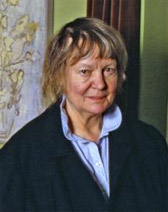
Iris Murdoch
A writer who fused moral philosophy with the psychological depth of the modern novel
Born on July 15, 1919
Died on February 8, 1999
Age at death: 80
Profession: Novelist, Philosopher
Place of Birth: Dublin, Ireland
Place of Death: Oxford, Oxfordshire, United Kingdom
Iris Murdoch (full name Jean Iris Murdoch) was an Irish-born novelist and philosopher widely regarded as one of the most important intellectual figures of the 20th century. With an extraordinarily prolific career spanning 26 novels, philosophical works, plays, and poetry, she explored the complexities of human relationships, ethics, and inner life. Her fiction, often compared in psychological depth to writers like Fyodor Dostoevsky and Virginia Woolf, stands at the intersection of literature and philosophy, reflecting influences from thinkers such as Plato and Immanuel Kant.
Early Life and Education
Iris Murdoch, July 15, 1919 tarihinde Ireland’ın Dublin kentinde doğmuştur. She was the only child of an Irish mother and an English father, and she spent most of her childhood in London. Her early education took place at Badminton School in Bristol, where her academic talents became evident.
In 1938, she entered University of Oxford’s Somerville College to study classics. During this period, she encountered a range of intellectual influences and developed a strong interest in philosophy and literature. She also formed a significant personal and intellectual relationship with Franz Steiner, which contributed to her evolving worldview.
War Years and Philosophical Formation
During her early adulthood, Iris Murdoch briefly joined the Communist Party in 1938 but later distanced herself from its ideology. After graduating, she worked at HM Treasury between 1942 and 1944. Toward the end of World War II, she joined the United Nations Relief and Rehabilitation Administration, working in refugee camps in Belgium and Austria.
This period exposed her to the realities of war and human suffering, deepening her philosophical concerns. She also encountered influential thinkers such as Jean-Paul Sartre and Simone de Beauvoir, whose existentialist ideas left a lasting imprint on her intellectual development.
Academic Career and Intellectual Influences
After the war, Iris Murdoch continued her philosophical studies at University of Cambridge’s Newnham College, where she was influenced by the intellectual environment shaped by Ludwig Wittgenstein. In 1948, she returned to Oxford and became a fellow at St Anne’s College, where she taught philosophy until 1963.
During this time, she also developed a close intellectual relationship with Elias Canetti, whose ideas on power, psychology, and society resonated with her own concerns. Her early philosophical work, including Sartre: Romantic Rationalist (1953), reflected her engagement with existentialist thought while also signaling her critical distance from it.
Literary Breakthrough and Major Works
Iris Murdoch made her literary debut with Under the Net (1954), a novel that combined existential themes with sharp psychological insight. The protagonist’s intellectual struggles echoed the philosophical tensions explored by Jean-Paul Sartre, yet Murdoch’s approach was more ethically nuanced and less doctrinaire.
She quickly established herself as a major novelist with works such as The Flight from the Enchanter (1956) and The Bell (1958), followed by a series of critically acclaimed novels including A Severed Head (1961), The Red and the Green (1965), The Nice and the Good (1968), and The Black Prince (1973).
Her international reputation was solidified with The Sea, the Sea (1978), which won the Booker Prize. Later works such as The Philosopher’s Pupil (1983), The Good Apprentice (1985), The Book and the Brotherhood (1987), The Message to the Planet (1989), The Green Knight (1993), and Jackson’s Dilemma (1995) demonstrated her sustained creative output over four decades.
Philosophy and Ethical Vision
In addition to her novels, Iris Murdoch made significant contributions to moral philosophy. Her works, including The Sovereignty of Good (1970), The Fire and the Sun (1977), Metaphysics as a Guide to Morals (1992), and Existentialists and Mystics (1997), explored the nature of goodness, morality, and human perception.
Drawing on the ideas of Plato, Immanuel Kant, Søren Kierkegaard, and Ludwig Wittgenstein, she argued that moral understanding requires attention, humility, and a recognition of reality beyond the self. Unlike existentialists such as Jean-Paul Sartre, she emphasized the importance of objective values and the moral significance of love.
Style and Themes
Iris Murdoch’s novels are characterized by complex plots, large ensembles of characters, and intricate moral dilemmas. Her characters often embody competing philosophical viewpoints, reflecting her belief that fiction can serve as a laboratory for ethical inquiry.
Recurring themes in her work include love, freedom, religion, loneliness, and the unpredictability of human behavior. She frequently challenged the idea that individuals can fully control their lives through reason alone, highlighting instead the influence of unconscious drives and external circumstances.
Personal Life
In 1956, Iris Murdoch married literary critic John Bayley, a professor at Oxford. Their marriage was marked by intellectual companionship and mutual support, and they remained together throughout her life. The couple did not have children.
From the mid-1990s, Iris Murdoch began to suffer from memory loss and was diagnosed with Alzheimer’s disease in 1997. As the illness progressed, she lost the ability to recognize even her own works, describing the experience as being “in a very bad, silent, and dark place.”
Death and Legacy
Iris Murdoch died on February 8, 1999, in Oxford, United Kingdom, at the age of 80. Her husband John Bayley later documented her illness in the memoir Elegy for Iris, which was adapted into the film Iris (2001), starring Judi Dench and Kate Winslet.
Today, Iris Murdoch is regarded as one of the most original and influential thinkers of the 20th century. Her ability to merge philosophical inquiry with narrative art continues to inspire readers and scholars, placing her among the most enduring voices in modern literature and ethics.
Selected Works
1954 – Under the Net
1956 – The Flight from the Enchanter
1958 – The Bell
1961 – A Severed Head
1965 – The Red and the Green
1968 – The Nice and the Good
1973 – The Black Prince
1978 – The Sea, the Sea
1983 – The Philosopher’s Pupil
1985 – The Good Apprentice
1987 – The Book and the Brotherhood
1993 – The Green Knight
1995 – Jackson’s Dilemma
1953 – Sartre: Romantic Rationalist
1970 – The Sovereignty of Good
1977 – The Fire and the Sun
1992 – Metaphysics as a Guide to Morals
1997 – Existentialists and Mystics
Source: Biyografiler.com
Frequently asked questions about Iris Murdoch
Who is Iris Murdoch?, Iris Murdoch biography, Iris Murdoch life story, Iris Murdoch age, Iris Murdoch facts, Iris Murdoch birthplace, Iris Murdoch photos, Iris Murdoch videos, Iris Murdoch career
Related Biographies



Lamine Yamal
Professional footballer

Kylian Mbappe
Professional footballer

Sam Altman
Entrepreneur, Investor, CEO

Erling Haaland
Professional footballer

Alice Weidel
Politician, Economist

Giorgia Meloni
Politician, Journalist


Hongjoong
Singer, Rapper, Songwriter, Composer

Ludacris
Rapper, Actor

Kwon Eunbi
Singer

Sarah Wayne Callies
Actress, Screenwriter, Producer, Director

LaTavia Roberson
Singer, Actress, Entrepreneur

Snoop Dogg
Rapper, Singer, Actor

Eliezer Yudkowsky
Researcher, Writer

Leonardo DiCaprio
Actor

Josh Duhamel
Actor

Florence Pugh
Actress

Sergio Perez
Formula 1 Driver