
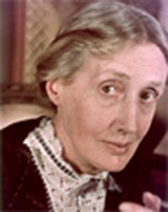
Virginia Woolf
One of the most important writers of the twentieth century, a feminist and modernist author renowned for pioneering the stream of consciousness technique.
Born on January 25, 1882
Died on March 28, 1941
Age at death: 59
Profession: Novelist
Place of Birth: London, England
Place of Death: Lewes, Sussex, England
Virginia Woolf was an English writer and one of the most influential authors of the twentieth century. A leading figure of modernist literature and feminist thought, she became famous for her use of the stream of consciousness technique. Her most important works include A Room of One’s Own, Three Guineas, Mrs Dalloway, To the Lighthouse, Jacob’s Room, and Between the Acts. Together with her husband, Leonard Woolf, she founded the publishing house Hogarth Press.
Virginia Woolf was born on January 25, 1882, in London, England. She never attended formal school and was educated at home. Her family belonged to England’s intellectual elite. Her father, Sir Leslie Stephen, was a renowned editor, critic, and biographer, and his extensive personal library allowed Woolf to educate herself. She received private lessons in Latin and Classical Greek and, at the age of nine, began publishing a weekly family newspaper titled Hyde Park Gate News together with her brother Thoby.
Woolf’s family background was deeply influential. Her mother, Julia Prinsep Stephen, and father both came from distinguished intellectual circles. She had several siblings and half-siblings, including Vanessa Stephen, Thoby Stephen, and Adrian Stephen. Her extended family included notable artists and scholars, and many members had received knighthoods. Woolf grew up in a large, crowded house at 22 Hyde Park Gate, surrounded by family members, servants, and governesses.
The sudden death of her mother in 1895, when Woolf was thirteen, profoundly affected her mental health and led to recurring nervous breakdowns. These episodes included depression and hallucinations but did not define her entire life. In 1904, following the death of her father, she experienced another severe breakdown. Shortly afterward, she moved with her siblings to the Bloomsbury district of London, a transition she later described as a personal liberation.
We were determined to paint, to write, to drink coffee at nine o’clock at night instead of tea. Everything was new; everything had to be different. Everything was tried.
In Bloomsbury, Woolf became part of the influential Bloomsbury Group, whose members believed in intellectual honesty and the importance of reason in human relationships. The group included figures such as John Maynard Keynes, E. M. Forster, Roger Fry, Duncan Grant, and Lytton Strachey. Their progressive views on art, sexuality, and society strongly shaped Woolf’s worldview and writing.
Woolf began her professional writing career in 1905, contributing literary criticism to the Times Literary Supplement. In 1906, she suffered another major loss when her brother Thoby died of typhoid fever. Despite these tragedies, Woolf continued to write and host intellectual gatherings. She also contributed criticism to the monthly magazine Cornhill.
Her first novel, The Voyage Out, was published in 1915 and received critical acclaim for its intelligence and originality. In 1912, Woolf met Leonard Woolf, a political theorist and writer, who would become her lifelong companion and caretaker. Although their marriage faced challenges, Leonard remained her strongest support throughout her struggles with mental illness.
Between 1913 and 1915, Woolf endured one of the most severe mental breakdowns of her life and attempted suicide. In 1917, seeking both independence and creative freedom, the Woolfs founded Hogarth Press, which published works by leading writers such as T. S. Eliot, Katherine Mansfield, and E. M. Forster. The press also allowed Woolf to publish her own experimental works without constraint.
After publishing Night and Day in 1919, Woolf turned decisively toward formal experimentation. In her essay Modern Fiction, she argued for new narrative forms capable of capturing the complexity of human consciousness. This vision found expression in Jacob’s Room (1922), marking her first major use of the stream of consciousness technique.
Her 1925 novel Mrs Dalloway became one of the most celebrated examples of this technique, exploring life, death, sanity, and social order through the inner lives of its characters.
I want to give life and death, sanity and insanity; I want to criticize the social system, and to show it at work, at its most intense.
This was followed in 1927 by To the Lighthouse, widely regarded as her greatest novel, in which she perfected her unique narrative style. In 1929, Woolf published A Room of One’s Own, arguing that women must have financial independence and personal space in order to create literature. The essay became a foundational text of feminist criticism.
Woolf continued to push literary boundaries with The Waves (1931), a radical blend of prose, poetry, and dramatic form. Her later works, including The Years (1937) and Between the Acts, reflect her deep anxiety over war and social collapse.
As World War II intensified and London suffered air raids, Woolf’s mental health deteriorated. After completing Between the Acts in February 1941, she fell into a profound depression. On March 28, 1941, convinced she would not recover, Woolf filled her pockets with stones and drowned herself in the River Ouse.
Before her death, she left farewell letters to her husband Leonard and to Vita Sackville-West. Her letter to Leonard read:
Dearest, I feel certain that I am going mad again. I feel we can’t go through another of those terrible times. And I shan’t recover this time… You have given me the greatest possible happiness. You have been in every way all that anyone could be. I don’t think two people could have been happier till this terrible disease came. — Virginia Woolf
Virginia Woolf’s legacy endures through her revolutionary narrative techniques, feminist ideas, and profound exploration of human consciousness. Her life and work inspired the 2002 film The Hours, in which she was portrayed by Nicole Kidman.
Major Works
The Voyage Out
Night and Day
Jacob’s Room
Mrs Dalloway
To the Lighthouse
Orlando
A Room of One’s Own
The Waves
The Years
Three Guineas
Between the Acts
Source: Biyografiler.com
Frequently asked questions about Virginia Woolf
Who is Virginia Woolf?, Virginia Woolf biography, Virginia Woolf life story, Virginia Woolf age, Virginia Woolf facts, Virginia Woolf birthplace, Virginia Woolf photos, Virginia Woolf videos, Virginia Woolf career

Lamine Yamal
Professional footballer

Kylian Mbappe
Professional footballer

Erling Haaland
Professional footballer

Sam Altman
Entrepreneur, Investor, CEO

Bad Bunny
Rapper, Songwriter

Brad Pitt
Actor


Hongjoong
Singer, Rapper, Songwriter, Composer

Ludacris
Rapper, Actor

Kwon Eunbi
Singer

Sarah Wayne Callies
Actress, Screenwriter, Producer, Director

LaTavia Roberson
Singer, Actress, Entrepreneur
Brad Pitt
Actor

Quentin Tarantino
Film Director, Actor, Screenwriter

Sarah Jessica Parker
Actress, Producer

Zohran Mamdani
Politician, Musician
Lamine Yamal
Professional footballer

Javier Milei
Economist, Politician, President