
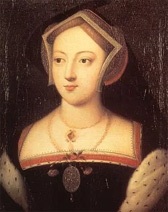
Anne Boleyn
Second wife of King Henry VIII and Queen of England from 1533 to 1536. She was the mother of Queen Elizabeth I and was executed on charges of adultery, incest, and high treason.
Born on ?? ??, 1501
Died on May 19, 1536
Age at death: 35
Profession: Queen
Place of Birth: Probably Blickling, Norfolk, England
Place of Death: Tower of London, London, England
Anne Boleyn was born around 1501, probably at Blickling Hall in Norfolk, England, although her exact birth date and birthplace remain uncertain. She was the second wife of King Henry VIII of England and Queen of England from 1533 to 1536. The daughter of Thomas Boleyn and Elizabeth Howard, she spent part of her youth at the royal courts of the Netherlands and France before returning to England. Her relationship with Henry VIII became closely associated with the English Reformation and the establishment of royal authority over the Church of England. Their daughter, Elizabeth I, was born on September 7, 1533, and later ruled England from 1558 to 1603. Accused of adultery, incest, and high treason, Anne was executed at the Tower of London on May 19, 1536.
Early Life and Family Background
Anne Boleyn was born around 1501, although some historians have proposed a later birth date of approximately 1507. She was the daughter of Thomas Boleyn, later Earl of Wiltshire, and Elizabeth Howard, a member of the Howard family of Norfolk.
Her father was a diplomat who served the English monarchy under Henry VII of England and Henry VIII. Her mother was the daughter of Thomas Howard, 2nd Duke of Norfolk.
Anne had two siblings, Mary Boleyn and George Boleyn. The precise birth order of the Boleyn children remains uncertain.
The family maintained residences in Norfolk and Kent, including Hever Castle, where Anne spent part of her childhood.
Education in the Netherlands and France
In 1513, Anne Boleyn traveled to the court of Margaret of Austria, who governed the Habsburg Netherlands. She received instruction in court etiquette, languages, music, and other subjects associated with the education of young noblewomen.
In 1514, she entered the household of Mary Tudor, Queen of France, the sister of Henry VIII, who married Louis XII of France.
Following the death of Louis XII in January 1515, Anne remained at the French court, serving Claude of France, wife of King Francis I of France.
During her years in France, she improved her French, studied music and dancing, and became familiar with court fashions and religious discussions.
She remained in France until approximately 1521 before returning to England.
Return to the English Court
Anne Boleyn returned to England in late 1521 and appeared at the English royal court in 1522. She became a lady-in-waiting to Catherine of Aragon, the first wife of Henry VIII.
Her sister Mary Boleyn had married William Carey in 1520 and subsequently became Henry VIII's mistress. The precise dates of Mary's relationship with the king are uncertain.
Anne attracted the attention of several courtiers, including Henry Percy, heir to the Earl of Northumberland, and poet Thomas Wyatt.
Around 1523, Anne and Henry Percy developed a relationship and may have entered into a private betrothal. Their proposed marriage was opposed by their families and Cardinal Thomas Wolsey, and the relationship ended. They were never married.
Relationship with Henry VIII
By approximately 1526, King Henry VIII of England had developed a romantic interest in Anne Boleyn.
Henry had been married to Catherine of Aragon since 1509. Their only surviving child was Mary I of England, and the king sought a male heir to secure the succession of the Tudor dynasty.
Anne refused to become the king's mistress, and Henry began seeking an annulment of his marriage to Catherine.
He appealed to Pope Clement VII, arguing that his marriage to his brother's widow was invalid. The pope did not grant the requested annulment.
Henry's efforts to end the marriage became a prolonged political and religious dispute involving the English monarchy, the papacy, and European rulers.
Marchioness of Pembroke and Marriage to Henry VIII
On September 1, 1532, Anne Boleyn was created Marchioness of Pembroke by Henry VIII. The title was granted to her in her own right, an unusual distinction for a woman in Tudor England.
Later that year, Anne accompanied Henry to Calais, where the king met Francis I of France.
Henry VIII and Anne married secretly, most likely on January 25, 1533, at Whitehall Palace in London. At that time, Henry's marriage to Catherine of Aragon had not yet been formally annulled.
On May 23, 1533, Thomas Cranmer, Archbishop of Canterbury, declared Henry's marriage to Catherine invalid. Five days later, on May 28, he pronounced Henry's marriage to Anne lawful.
Anne Boleyn was crowned Queen of England on June 1, 1533, at Westminster Abbey. The coronation ceremonies included a procession through London and several days of public celebrations.
Birth of Elizabeth I
On September 7, 1533, Anne Boleyn gave birth to a daughter at Greenwich Palace. The child was named Elizabeth I.
Although Henry VIII had hoped for a male heir, Elizabeth survived infancy and eventually became Queen of England in 1558.
Anne experienced further pregnancies, but none resulted in another surviving child. She suffered a miscarriage in 1534 and another in January 1536.
The absence of a surviving son contributed to difficulties in her marriage, while her political opponents continued challenging her position at court.
Anne Boleyn and the English Reformation
Anne Boleyn's marriage to Henry VIII took place during the political and religious changes that led to the English Reformation.
After Pope Clement VII refused to annul Henry's first marriage, the king and his advisers took measures to reduce papal authority in England.
In 1534, Parliament passed the Act of Supremacy, recognizing Henry VIII as Supreme Head of the Church of England.
Anne supported religious reform and maintained connections with individuals who advocated changes to established church practices.
She also supported educational initiatives and religious scholarship. Her household included people associated with reformist ideas, and she showed interest in religious texts circulated during the period.
Although Anne participated in these developments, the separation from Rome resulted from several political, dynastic, and religious factors rather than from her influence alone.
Accusations and Arrest
By early 1536, Anne Boleyn's relationship with Henry VIII had deteriorated. The king had developed an interest in Jane Seymour, one of Anne's ladies-in-waiting.
In April 1536, investigations began into allegations of sexual misconduct involving Anne and several men associated with the royal court.
The accusations were assembled under the direction of Thomas Cromwell, the king's principal secretary.
On May 2, 1536, Anne was arrested and taken to the Tower of London. She was accused of adultery, incest with her brother George Boleyn, and high treason.
Five men were implicated in the case: George Boleyn, Henry Norris, Francis Weston, William Brereton, and Mark Smeaton.
Anne denied the accusations. Historians generally regard the evidence presented against her as unreliable, and the allegations have not been established as historical facts.
Trial and Execution
On May 15, 1536, Anne Boleyn was tried at the Tower of London before a court of peers. Her brother George Boleyn, Viscount Rochford, was also tried that day.
Both were convicted and sentenced to death.
On May 17, George Boleyn and the four other accused men were executed at Tower Hill.
Anne's marriage to Henry VIII was also declared invalid before her execution, and their daughter Elizabeth was subsequently excluded from the succession until later parliamentary changes.
On May 19, 1536, Anne Boleyn was executed by beheading on Tower Green, inside the Tower of London. A swordsman had been brought from Calais to carry out the execution.
She was buried in the Chapel Royal of St Peter ad Vincula within the Tower of London.
On May 30, 1536, eleven days after Anne's execution, Henry VIII married Jane Seymour.
Portrayals in Film and Television
The life of Anne Boleyn has been depicted in historical films, television dramas, novels, and theatrical productions.
Between 2007 and 2010, British-Canadian television series The Tudors portrayed the reign of Henry VIII. Jonathan Rhys Meyers played the king, while Natalie Dormer portrayed Anne Boleyn.
In 2008, director Justin Chadwick released The Other Boleyn Girl, adapted from the historical novel by Philippa Gregory.
Natalie Portman portrayed Anne Boleyn, Scarlett Johansson played Mary Boleyn, and Eric Bana portrayed Henry VIII.
Other members of the cast included Jim Sturgess, Mark Rylance, Kristin Scott Thomas, Eddie Redmayne, Benedict Cumberbatch, and Andrew Garfield.
In 2021, Jodie Turner-Smith portrayed Anne in the historical television miniseries Anne Boleyn.
Family and Royal Position
Father: Thomas Boleyn, Earl of Wiltshire
Mother: Elizabeth Howard
Sister: Mary Boleyn
Brother: George Boleyn, Viscount Rochford
Husband: Henry VIII of England (1533–1536)
Daughter: Elizabeth I of England (1533–1603)
Title: Marchioness of Pembroke (1532)
Royal Title: Queen Consort of England (1533–1536)
Coronation: June 1, 1533, Westminster Abbey
Source: Biyografiler.com
Frequently asked questions about Anne Boleyn
Who is Anne Boleyn?, Anne Boleyn biography, Anne Boleyn life story, Anne Boleyn age, Anne Boleyn facts, Anne Boleyn birthplace, Anne Boleyn photos, Anne Boleyn videos, Anne Boleyn career
Related Biographies





Lamine Yamal
Professional footballer

Kylian Mbappe
Professional footballer

Keanu Reeves
Actor

Erling Haaland
Professional footballer

Brad Pitt
Actor

Leonardo DiCaprio
Actor

Antoni Gaudi
Architect

Antonija Misura
Former Professional Basketball Player

Gadi Eisenkot
Politician, Military Commander

Ann-Margret
Actress, Singer

Anitta
Singer, Dancer

Anjelika Akbar
Pianist, Composer

Alberto Ascari
Formula 1 Driver
Gadi Eisenkot
Politician, Military Commander

Susie Wiles
Political Consultant

Jean Claude Van Damme
Actor

Ann-Margret
Actress, Singer