
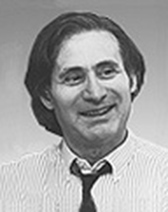
Alfred Schnittke
Soviet and Russian composer of German-Jewish ancestry, known for developing polystylism, a compositional approach combining different musical styles. His works include symphonies, concertos, operas, chamber music, and scores for more than 60 films.
Born on November 24, 1934
Died on August 3, 1998
Age at death: 64
Profession: Composer
Place of Birth: Engels, Volga German Autonomous Soviet Socialist Republic, Soviet Union (present-day Russia)
Place of Death: Hamburg, Germany
Alfred Schnittke, whose full name was Alfred Garrievich Schnittke, was born on November 24, 1934, in Engels, Soviet Union, and died on August 3, 1998, in Hamburg, Germany. He was a Soviet and Russian composer associated with twentieth-century classical music and the development of polystylism, a technique combining musical forms and styles from different historical periods. He studied at the Moscow Conservatory and later taught orchestration there. His compositions include nine symphonies, six concerti grossi, four violin concertos, two cello concertos, piano concertos, chamber music, and operas. He also composed music for more than sixty films. His Concerto Grosso No. 1 (1977), promoted internationally by violinist Gidon Kremer, helped introduce his work to audiences outside the Soviet Union. His later operas included Life with an Idiot, Gesualdo, and Historia von D. Johann Fausten.
Early Life and Musical Education
Alfred Schnittke was born on November 24, 1934, in Engels, a city on the Volga River that was then part of the Soviet Union's Volga German Autonomous Republic.
His father, Harry Viktorovich Schnittke, came from a German-Jewish family and worked as a journalist and translator. His mother, Maria Iosifovna Vogel, was of Volga German ancestry and worked as a German-language teacher.
In 1946, the family moved to Vienna, where his father worked for a German-language newspaper published under the Soviet occupation administration. Schnittke began studying piano there and became familiar with the music of composers such as Wolfgang Amadeus Mozart, Franz Schubert, and Ludwig van Beethoven.
In 1948, his family returned to the Soviet Union and settled near Moscow. Schnittke continued his musical education and completed a diploma in choral conducting in 1953.
Moscow Conservatory and Early Career
From 1953 to 1958, Alfred Schnittke studied composition and orchestration at the Moscow Conservatory. His teachers included Yevgeny Golubev, who taught composition, and Nikolai Rakov, who taught instrumentation.
He completed postgraduate studies in composition in 1961 and became a member of the Union of Soviet Composers.
During his early career, he studied contemporary European music and became interested in the work of composers such as Dmitri Shostakovich, Arnold Schoenberg, and Anton Webern. He also received intellectual encouragement from composer and music theorist Philipp Herschkowitz, who had studied with members of the Second Viennese School.
In 1962, Schnittke began teaching instrumentation at the Moscow Conservatory, a position he held until 1972.
Alongside his academic work, he composed music for film productions. By the mid-1980s, he had written scores for more than sixty films, using the income from this work to support his concert-music compositions.
Polystylism and Major Compositions
During the 1960s, Alfred Schnittke experimented with serial composition and other techniques associated with European modernism. He subsequently developed an approach he called *polystylism*, combining elements of classical music, Baroque forms, modernist techniques, popular music, and musical quotations within individual compositions.
His Symphony No. 1, composed between 1969 and 1972, incorporated contrasting musical styles, quotations, and unconventional orchestral arrangements. Its performance encountered difficulties with Soviet cultural authorities.
In 1977, he completed Concerto Grosso No. 1, a work for two violins, harpsichord, prepared piano, and string orchestra. The composition brought together Baroque references, modernist passages, and elements resembling popular dance music.
Violinist Gidon Kremer performed and recorded the work, helping establish Schnittke's international reputation.
His compositions were also performed by musicians including violist Yuri Bashmet, cellist Natalia Gutman, conductor Gennady Rozhdestvensky, and cellist and conductor Mstislav Rostropovich.
During the 1980s, Schnittke increasingly incorporated religious and spiritual themes into his music. His works from this period included Viola Concerto (1985), written for Yuri Bashmet, and Cello Concerto No. 1 (1985–1986).
International Performances and Recognition
During the 1980s, Alfred Schnittke's music became more widely performed outside the Soviet Union.
In 1988, he traveled to the United States for the Making Music Together Festival in Boston. The Boston Symphony Orchestra presented the American premiere of his Symphony No. 1.
In 1991, he returned to the United States when Carnegie Hall commissioned his Concerto Grosso No. 5 for the Cleveland Orchestra as part of its centennial celebrations.
In 1994, the New York Philharmonic presented the world premiere of his Symphony No. 7. During the same year, the National Symphony Orchestra gave the American premiere of his Symphony No. 6.
His international recognition included the Austrian State Prize in 1991 and Japan's Praemium Imperiale for music in 1992.
Operas and Later Works
Alfred Schnittke composed three major operas during the later years of his career.
His first opera, Life with an Idiot, based on a story by Viktor Yerofeyev, premiered in Amsterdam in April 1992.
His second opera, Gesualdo, concerns the Renaissance composer Carlo Gesualdo and premiered at the Vienna State Opera in May 1995.
His third opera, Historia von D. Johann Fausten, based on the Faust tradition, premiered in Hamburg in June 1995.
He also composed music for ballet, including Peer Gynt, written for choreographer John Neumeier, as well as choral works, string quartets, and concertos.
His later compositions increasingly used restrained textures and concentrated musical material, particularly as his health deteriorated.
Final Years and Death
In 1985, Alfred Schnittke suffered a severe stroke that left him in a coma. He recovered sufficiently to continue composing but experienced additional strokes in subsequent years.
From 1990, he lived primarily in Hamburg, Germany, where he continued his musical work and was associated with the Hamburg University of Music.
His health deteriorated after further strokes in 1991 and 1994. Despite serious physical limitations, he continued composing during the final years of his life.
He received several awards during this period, including the Austrian State Prize in 1991, Japan's Praemium Imperiale in 1992, and the Slava-Gloria Prize in Moscow in June 1998.
Alfred Schnittke died on August 3, 1998, in Hamburg, following another stroke. He was 63 years old.
He was buried at Novodevichy Cemetery in Moscow.
Selected Compositions
1972 – Symphony No. 1
1977 – Concerto Grosso No. 1
1980 – Symphony No. 2 (St. Florian)
1983 – Symphony No. 3
1984 – Symphony No. 4
1985 – Viola Concerto
1985–1986 – Cello Concerto No. 1
1988 – Symphony No. 5 / Concerto Grosso No. 4
1991 – Concerto Grosso No. 5
1992 – Life with an Idiot (Opera premiere)
1993 – Symphony No. 6
1994 – Symphony No. 7
1995 – Gesualdo (Opera premiere)
1995 – Historia von D. Johann Fausten (Opera premiere)
1998 – Symphony No. 8
Awards and Honors
1986 – State Prize of the Russian Soviet Federative Socialist Republic
1991 – Austrian State Prize for European Literature and Music
1992 – Praemium Imperiale, Japan, Music
1994 – Order of Merit of the Federal Republic of Germany
1995 – State Prize of the Russian Federation
1998 – Slava-Gloria Prize, Moscow
Source: Biyografiler.com
Frequently asked questions about Alfred Schnittke
Who is Alfred Schnittke?, Alfred Schnittke biography, Alfred Schnittke life story, Alfred Schnittke age, Alfred Schnittke facts, Alfred Schnittke birthplace, Alfred Schnittke photos, Alfred Schnittke videos, Alfred Schnittke career
Related Biographies

Lamine Yamal
Professional footballer

Erling Haaland
Professional footballer

Keanu Reeves
Actor

Kylian Mbappe
Professional footballer

Bad Bunny
Rapper, Songwriter

Leonardo DiCaprio
Actor

Andre Gide
Novelist, Essayist

Andreas Papandreu
Former Prime Minister, Politician, Economist

Andrea Mantegna
Painter

Andrea del Verrocchio
Sculptor, Painter

Andrea del Sarto
Painter

Andrea Bargnani
Former Professional Basketball Player

Amy Ryan
Actress

Andy Garcia
Actor, Film Director

Ali Larter
Actress, Former Model

Andy Serkis
Actor, Film Director

Ursula von der Leyen
Politician, Physician

John Healey
Politician