
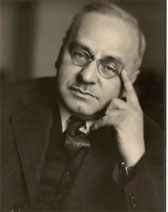
Alfred Adler
Founder of Individual Psychology
Born on February 7, 1870
Died on May 28, 1937
Age at death: 67
Profession: Physician, Psychiatrist
Place of Birth: Rudolfsheim-Fünfhaus, Vienna, Austria-Hungary
Place of Death: Aberdeen, Scotland, United Kingdom
Alfred Adler was an Austrian physician, psychiatrist, and psychologist who is regarded as one of the three major founders of depth psychology, alongside Sigmund Freud and Carl Jung. He is the founder of Individual Psychology and a pioneering figure in analytic and humanistic approaches to psychology.
Alfred Adler was born on February 7, 1870, in Rudolfsheim-Fünfhaus, Vienna, as the third child in a family of six children. During his childhood, Adler was physically fragile and suffered from multiple health problems. He experienced rickets, developed pneumonia at the age of five, and struggled with stuttering caused by vocal cord issues. These early physical challenges profoundly influenced his later theoretical focus on inferiority and compensation.
In 1895, Alfred Adler graduated from the University of Vienna Faculty of Medicine as a medical doctor. He initially specialized in ophthalmology, later turned to general medicine, and eventually devoted himself to psychiatry. From the beginning of his medical practice, he emphasized the importance of understanding patients within the context of their social environment. He developed a holistic, human-centered, and organic approach to psychological problems, which led him to explore the psychological implications of physical disorders.
In 1902, Alfred Adler met Sigmund Freud and became part of his inner circle. Together with Freud, Adler helped establish the Vienna Psychoanalytic Society, which he initially chaired. However, fundamental theoretical disagreements soon emerged between the two thinkers. Adler rejected Freud’s emphasis on early childhood sexual trauma as the primary source of mental illness, as well as Freud’s approach to dream interpretation.
After the publication of Adler’s work Study of Organ Inferiority, the conflict with Freud became irreconcilable. In 1911, Alfred Adler openly criticized Freud and, together with his followers, broke away from the psychoanalytic movement to develop his own system, which he called Individual Psychology.
In 1911, Adler and a group of psychiatrists left Freud’s circle, and in 1912 they founded the Society for Free Psychoanalytic Research, which later became known as the Society for Individual Psychology. Adler formally named his theoretical and therapeutic approach “Individual Psychology,” emphasizing the unity of personality and the goal-oriented nature of human behavior.
According to Alfred Adler, physical organ deficiencies and weaknesses play a crucial role in personality development. Individuals with such deficiencies tend to compare themselves with others, leading to feelings of inferiority. Adler argued that the striving for superiority or self-realization serves as a compensatory mechanism to overcome these feelings. This striving becomes the central driving force behind all psychological life and behavior.
During the First World War, Alfred Adler served as a physician in the Austrian army. After the war, motivated by the belief that feelings of inferiority could be regulated through conscious education, he established child guidance clinics. These clinics rapidly expanded, reaching nearly thirty centers. However, after the rise of the Nazis in Austria, most of Adler’s clinics were closed in 1934 due to his Jewish background. In 1935, he emigrated to the United States.
In 1926, Alfred Adler lectured at Columbia University in the United States and delivered conferences at universities throughout Europe. In 1934, he was appointed professor at the Long Island College of Medicine.
Alfred Adler married Raissa Timofejewna in 1897, and the couple had four children.
Alfred Adler died on May 28, 1937, at the age of 67, from a heart attack while traveling to a conference in Aberdeen, Scotland.
The theoretical perspectives of Alfred Adler and Sigmund Freud differ sharply. While Freud emphasized the determining influence of past experiences on behavior, Adler oriented his theory toward future goals. Freud’s theory is based on the division of personality into separate components, whereas Adler stressed the unity and coherence of the individual.
Another major point of divergence from Freud lies in Adler’s socially oriented psychology. Adler believed that human behavior is shaped not by biological drives but by social forces. He argued that personality can only be understood through an individual’s social relationships and attitudes toward others. Adler introduced the concept of social interest, defining it as an innate potential that develops through learning from early childhood and drives cooperation, empathy, and community-oriented behavior.
The first social relationship a child encounters is with the mother, beginning from the first day of life. Through the mother’s educational abilities, the child’s interest in others is initially awakened. If this interest is guided toward cooperation, the child’s innate and acquired abilities unite in the direction of social understanding. Therefore, social attitude and interest develop through learning experiences.
Books by Alfred Adler:
1911 – Study of Organ Inferiority
1912 – The Neurotic Constitution
1914 – Treatment and Education
1917 – The Practice and Theory of Individual Psychology
1927 – Understanding Human Nature
1928 – Technique of Individual Psychology, Part I
1930 – Technique of Individual Psychology, Part II
1929 – Understanding Life
1929 – Individual Psychology in Schools
1919–1929 – Psychotherapy and Education
1929 – Neuroses
1930 – The Problem of Homosexuality
1930 – The Education of Children
1930 – The Pattern of Life
1929–1932 – Psychotherapy and Education II
1933 – The Meaning of Life
1933–1937 – Psychotherapy and Education III
Source: Biyografiler.com
Frequently asked questions about Alfred Adler
Who is Alfred Adler?, Alfred Adler biography, Alfred Adler life story, Alfred Adler age, Alfred Adler facts, Alfred Adler birthplace, Alfred Adler photos, Alfred Adler videos, Alfred Adler career
Related Biographies

Lamine Yamal
Professional footballer

Kylian Mbappe
Professional footballer

Sam Altman
Entrepreneur, Investor, CEO

Erling Haaland
Professional footballer

Alice Weidel
Politician, Economist

Giorgia Meloni
Politician, Journalist


Hongjoong
Singer, Rapper, Songwriter, Composer

Ludacris
Rapper, Actor

Kwon Eunbi
Singer

Sarah Wayne Callies
Actress, Screenwriter, Producer, Director

LaTavia Roberson
Singer, Actress, Entrepreneur

Snoop Dogg
Rapper, Singer, Actor

Eliezer Yudkowsky
Researcher, Writer

Leonardo DiCaprio
Actor

Josh Duhamel
Actor

Florence Pugh
Actress

Sergio Perez
Formula 1 Driver