
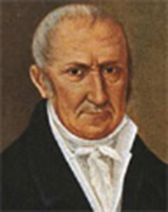
Alessandro Volta
Italian physicist and inventor who developed the first electric battery, known as the voltaic pile, in 1800. His scientific investigations also included electrostatics, methane gas, electrical capacitance, and the relationship between electricity and chemical reactions. The SI unit of electric potential difference, the volt, is named in his honor.
Born on February 18, 1745
Died on March 5, 1827
Age at death: 82
Profession: Physicist, Chemist, Inventor
Place of Birth: Como, Duchy of Milan (present-day Italy)
Place of Death: Camnago, near Como, Lombardy, Italy
Alessandro Volta, whose full name was Alessandro Giuseppe Antonio Anastasio Volta, was born on February 18, 1745, in Como, then part of the Duchy of Milan, and died on March 5, 1827. He was an Italian physicist, chemist, and inventor who developed the first electric battery capable of supplying a continuous electric current. His invention, the Voltaic Pile, was announced in a letter dated March 20, 1800, to Joseph Banks, president of the Royal Society of London. Volta previously contributed to the study of electrostatics, developed an improved Electrophorus for producing static electric charge, isolated and investigated methane, and studied electrical capacitance. He became professor of physics at Como's Royal School in 1774 and professor of experimental physics at the University of Pavia in 1779. His scientific dispute with Luigi Galvani over the origin of electricity observed in animal tissue contributed directly to his battery experiments. In recognition of his research, the unit of electric potential difference was named the volt in 1881.
Early Life and Family Background
Alessandro Volta was born on February 18, 1745, in Como, a city in northern Italy near the Swiss border. At the time, Como belonged to the Duchy of Milan, which was governed by the Austrian Habsburg monarchy.
His father was Filippo Volta, a member of a family associated with the local administration and minor nobility. His mother was Maddalena Inzaghi, who came from another established family in the region.
Volta developed an interest in natural philosophy and scientific experimentation during his youth. His education included religious instruction, classical subjects, and independent study of mathematics and the physical sciences.
Although his family initially considered a religious or legal career for him, he chose to pursue scientific research.
His earliest investigations focused on electricity, a subject that had attracted increasing interest among European experimental scientists during the eighteenth century.
Early Scientific Studies
During his teenage years, Alessandro Volta began studying the experiments of scientists who had investigated electrical attraction, repulsion, and the storage of static charge.
He became familiar with the work of Benjamin Franklin, Pieter van Musschenbroek, and other researchers associated with eighteenth-century electrical science.
In 1769, Volta published De vi attractiva ignis electrici, a study examining the attractive force of electricity.
He subsequently investigated electrical conduction, the behavior of charged objects, and methods for generating and measuring electrical effects.
At this time, most electrical experiments relied on static electricity generated by friction or stored temporarily in devices such as the Leyden Jar.
Such apparatuses could deliver brief electrical discharges but could not provide the sustained current that Volta would later achieve with his battery.
Professor of Physics in Como
In 1774, Alessandro Volta was appointed professor of physics at the Royal School in Como.
The appointment provided him with an institutional position from which to teach natural philosophy and conduct experiments.
He continued investigating static electricity and developed instruments intended to produce and detect electrical charge.
His early work involved practical demonstrations as well as theoretical questions about the behavior of electrical phenomena.
The experiments he conducted during this period established the basis for his subsequent research at the University of Pavia.
The Electrophorus
In 1775, Alessandro Volta announced an improved form of the Electrophorus, an instrument capable of repeatedly producing static electric charge through electrostatic induction.
The apparatus consisted of an insulating plate and a metal conductor. After the insulating surface was charged by friction, the metal plate could be placed on it, grounded, and lifted to obtain an electric charge.
The operation could be repeated without recharging the insulating plate after every cycle, provided the original charge remained sufficiently strong.
Earlier versions of electrophorus-type apparatuses had been developed by other researchers, including Johan Carl Wilcke. Volta's design made the device more practical and contributed to its wider use in electrical experiments.
The electrophorus produced static electricity rather than the continuous current supplied by his later battery.
Discovery and Investigation of Methane
In 1776, Alessandro Volta investigated a flammable gas found in marshy environments near Lake Maggiore in northern Italy.
He observed bubbles rising from sediment and collected samples of the gas for laboratory experiments.
He established that the gas could be ignited by an electric spark. The substance was subsequently identified as methane, the simplest hydrocarbon, with the chemical formula CH₄.
Volta continued examining the gas during 1777 and published observations concerning its combustion and electrical ignition.
He also devised experimental apparatuses for producing controlled ignition of flammable gas mixtures.
His investigations contributed to the early study of combustible gases, atmospheric chemistry, and the interaction between electricity and chemical substances.
Research in Meteorology and Pneumatics
During the 1770s and 1780s, Alessandro Volta investigated subjects beyond electricity, including meteorology, atmospheric gases, and pneumatics.
His research concerned the behavior of gases under different conditions and the use of experimental instruments to measure physical changes.
He also examined electrical phenomena associated with the atmosphere and studied ways to measure weak electrical charges.
These projects belonged to established fields of experimental natural philosophy. There is no reliable historical basis for attributing investigations into invisibility or teleportation to Volta.
University of Pavia
In 1779, Alessandro Volta was appointed professor of experimental physics at the University of Pavia.
The university was one of the principal educational institutions in northern Italy, and his appointment provided access to facilities for teaching and laboratory experiments.
Volta developed and demonstrated electrical equipment for students while continuing his independent investigations.
His work increasingly concentrated on electrical measurement, the storage of electrical charge, and the behavior of different conducting materials.
During the 1780s, he conducted experiments involving capacitance and the relationship between stored charge and electrical potential.
In 1791, he was elected a Fellow of the Royal Society. In 1794, the society awarded him the Copley Medal for his electrical research.
The History of Electricity Before Volta
Human observations of electricity preceded Volta's experiments by many centuries.
In ancient Greece, Thales of Miletus was traditionally associated with the observation that amber, when rubbed with certain materials, could attract small objects such as pieces of straw or feathers.
These effects are now understood as examples of static electricity, in which electric charge accumulates on an object's surface.
During the seventeenth and eighteenth centuries, researchers developed instruments capable of generating, storing, and detecting electrical charge.
In 1745–1746, the invention of the Leyden Jar allowed experimenters to store electrical energy temporarily and release it as a discharge.
Although these devices could produce powerful electrical effects, they did not provide the reliable and sustained current necessary for many later electrical experiments.
Volta's battery addressed that limitation through a fundamentally different arrangement of metals and liquid conductors.
Luigi Galvani and Animal Electricity
During the late eighteenth century, Alessandro Volta became involved in a scientific disagreement with Italian physician and anatomist Luigi Galvani.
Galvani had observed that the muscles of dissected frogs could contract when exposed to electrical stimulation or when connected through certain metal conductors.
He interpreted these results as evidence of an electrical principle associated with living animal tissue, which he called animal electricity.
Volta examined Galvani's experiments and developed a competing explanation.
He argued that the electrical effects observed in the experiments arose primarily from the contact between different conducting materials rather than from electricity generated by the animal's muscles.
The controversy continued through the 1790s and encouraged further experiments by both scientists and their supporters.
Modern electrochemistry and physiology recognize that electrical potentials occur in living cells and that electrochemical reactions involving different materials can also produce electric current.
Galvani's observations therefore concerned genuine bioelectrical phenomena, while Volta's investigations led to the development of a practical electrochemical power source.
Invention of the First Electric Battery
By the end of 1799, Alessandro Volta had developed an apparatus capable of producing a sustained flow of electricity.
He constructed the device by arranging alternating discs of two different metals, typically zinc and silver or copper, separated by pieces of cloth or cardboard soaked in salt water.
When the metallic layers were connected through an external conductor, the apparatus produced an electrical current.
Volta called his instrument an artificial electric organ, partly because he had been studying the natural electrical organs of fish such as the torpedo ray.
The device became known as the Voltaic Pile because its components were stacked vertically.
Increasing the number of repeated metal-and-electrolyte units increased the electrical potential available from the arrangement.
The invention provided researchers with an electrical source that could operate continuously for a period of time, unlike the brief discharges produced by many earlier electrostatic instruments.
How the Voltaic Pile Worked
The voltaic pile produced electricity through electrochemical processes involving different metals and an electrolyte.
The zinc and copper or silver components formed electrodes. The saltwater-soaked material allowed ions to move between the metallic surfaces, completing the electrochemical system.
At the zinc electrode, oxidation released electrons into the external electrical circuit. Reduction reactions occurred at the other electrode, allowing electrical current to flow when the circuit was closed.
Volta interpreted the operation primarily through his theory of contact electricity. He believed that contact between dissimilar metals was responsible for the electrical force.
Although his explanation did not fully account for the chemical reactions involved, the construction of his apparatus was successful.
Later scientific research established the role of oxidation, reduction, and chemical potential in electrochemical cells.
Modern batteries use the same general principle of converting chemical energy into electrical energy, although their materials, internal structures, and performance characteristics differ substantially from Volta's original design.
Announcement to the Royal Society in 1800
On March 20, 1800, Alessandro Volta wrote a letter to Joseph Banks, president of the Royal Society of London, describing his new electrical apparatus.
The letter was written in French and explained the construction and operation of the voltaic pile.
It was read before the Royal Society on June 26, 1800, and published in volume 90 of Philosophical Transactions of the Royal Society.
The published paper described the generation of electricity through the contact of different conducting substances.
Scientists in Britain and elsewhere quickly reproduced the apparatus and began experimenting with its applications.
The invention was therefore publicly documented in 1800, rather than 1801, as sometimes stated in later biographical accounts.
Scientific Applications of the Battery
Volta's invention quickly became useful to researchers studying the relationship between electricity and chemical substances.
In 1800, British scientists William Nicholson and Anthony Carlisle used a voltaic pile to decompose water into hydrogen and oxygen through an electrical process.
The experiment provided an early demonstration of Electrolysis, in which electrical energy drives a chemical reaction.
In subsequent years, chemists used larger batteries to investigate substances that had previously resisted chemical analysis.
Humphry Davy used powerful voltaic batteries to isolate the elements potassium and sodium in 1807 and calcium, barium, and other metals in 1808.
In 1820, Danish physicist Hans Christian Ørsted demonstrated that an electric current could deflect a magnetic compass needle, establishing an experimental relationship between electricity and magnetism.
These investigations relied on access to sustained electrical currents, which made the voltaic pile a practical instrument for laboratory research.
Demonstration Before Napoleon Bonaparte
In 1801, Alessandro Volta traveled to Paris to demonstrate his electrical experiments before members of the French scientific community.
He presented the voltaic pile at the Institut National des Sciences et des Arts in November 1801.
Napoleon Bonaparte, then First Consul of France, attended the demonstrations.
The French scientific institution awarded Volta a gold medal, and he subsequently received financial rewards and official recognition.
In 1805, Napoleon granted him a pension and appointed him a Knight of the Legion of Honour.
Volta was appointed a senator of the Napoleonic Kingdom of Italy in 1809 and received the title of count in 1810.
These appointments accompanied his continuing scientific and academic activities in northern Italy.
Later Improvements to Electric Batteries
Although the original voltaic pile demonstrated the production of a sustained electrical current, it had practical limitations.
Its output could decline as chemical reactions progressed, and the accumulation of gases and reaction products affected its performance.
Later scientists developed alternative arrangements using different metals and electrolytes.
In 1836, British chemist John Frederic Daniell introduced the Daniell Cell, which used zinc and copper electrodes in separate electrolyte solutions.
The Daniell cell provided a more stable electrical output and became widely used in telegraph systems and scientific instruments.
Subsequent developments included rechargeable lead-acid batteries, dry cells, alkaline batteries, and modern lithium-ion systems.
These technologies differ considerably in chemistry and construction, but they operate through electrochemical reactions that establish a potential difference between electrodes.
Personal Life and Marriage
On September 22, 1794, Alessandro Volta married Maria Teresa Peregrini, who came from a family in Como.
The couple had three sons: Zanino, Flaminio, and Luigi.
Volta maintained a close relationship with his family while continuing his teaching and research responsibilities at Pavia.
His son Flaminio died at a young age, an event that affected the family during Volta's later years.
Outside his academic duties, Volta also maintained interests in agriculture, local affairs, and correspondence with scientists in several European countries.
Retirement and Final Years
After the fall of Napoleon's government, the restoration of Austrian rule in northern Italy resulted in administrative changes at the University of Pavia.
In 1814–1815, Alessandro Volta was appointed to oversee philosophical studies at the university.
By this period, he was gradually reducing his teaching and experimental activities.
In 1819, he retired from public life and settled at his family's residence in Camnago, near Como.
He continued corresponding with scientific colleagues but spent much of his remaining time with his family.
Volta died on March 5, 1827, at the age of 82. He was buried in Camnago, subsequently renamed Camnago Volta.
The Volt as a Unit of Electrical Measurement
In 1881, the International Electrical Congress adopted the name Volt for the unit of electrical potential difference in recognition of Alessandro Volta's work.
The volt, represented by the symbol V, is now the SI unit of electric potential difference and electromotive force.
One volt is equivalent to one joule of energy per coulomb of electric charge.
The unit is used to specify the potential difference supplied by batteries, electrical circuits, power supplies, and other devices.
For example, an ordinary alkaline AA cell has a nominal voltage of approximately 1.5 volts, while a single rechargeable lithium-ion cell commonly has a nominal voltage of approximately 3.6 or 3.7 volts.
The word voltage is also derived from Volta's surname.
Scientific Institutions and Commemorations
Volta's instruments, manuscripts, and experimental apparatuses are preserved in several Italian collections.
The Tempio Voltiano in Como, inaugurated in 1928, houses exhibits concerning his scientific work and instruments.
The University of Pavia also preserves equipment associated with his experiments and teaching.
His portrait appeared on an Italian 10,000-lira banknote issued before the introduction of the euro.
In 1927, scientific meetings held in Como commemorated the hundredth anniversary of his death and included discussions of developments in electrical science.
Principal Inventions and Scientific Discoveries
1769 – Published De vi attractiva ignis electrici, concerning the attractive force of electricity
1775 – Developed an improved Electrophorus for producing static electrical charge
1776–1777 – Discovered and investigated methane gas in marshland environments
1777 – Developed instruments for igniting gas mixtures electrically
1780s – Investigated electrical capacitance and improved instruments for measuring weak charges
1790s – Developed theories concerning electrical effects produced by contact between different conducting materials
1799–1800 – Invented the Voltaic Pile, the first electric battery capable of producing sustained current
1800 – Published an account of the voltaic pile through the Royal Society
1801 – Demonstrated his battery before the French scientific establishment in Paris
Awards and Academic Appointments
1774 – Professor of Physics, Royal School of Como
1779 – Professor of Experimental Physics, University of Pavia
1791 – Elected Fellow of the Royal Society of London
1794 – Awarded the Copley Medal
1801 – Awarded a gold medal by the Institut National des Sciences et des Arts in France
1805 – Appointed Knight of the Legion of Honour
1809 – Appointed Senator of the Napoleonic Kingdom of Italy
1810 – Received the title of Count from Napoleon Bonaparte
1814–1815 – Appointed to oversee philosophical studies at the University of Pavia
Selected Historical Dates
1745 – Born in Como on February 18
1769 – Published his early research on electricity
1774 – Became professor of physics at the Royal School in Como
1775 – Developed the electrophorus
1776 – Began investigating methane gas
1779 – Appointed professor at the University of Pavia
1791 – Elected to the Royal Society
1794 – Received the Copley Medal and married Maria Teresa Peregrini
1799 – Completed the development of the voltaic pile
March 20, 1800 – Announced the invention of the electric battery in a letter to Joseph Banks
1801 – Demonstrated the voltaic pile in Paris before Napoleon Bonaparte
1805 – Received a pension and appointment to the Legion of Honour
1809 – Became a senator of the Kingdom of Italy
1810 – Received the title of Count
1819 – Retired to Camnago near Como
1827 – Died on March 5 at the age of 82
1881 – The electrical unit volt was named in his honor
Source: Biyografiler.com
Frequently asked questions about Alessandro Volta
Who is Alessandro Volta?, Alessandro Volta biography, Alessandro Volta life story, Alessandro Volta age, Alessandro Volta facts, Alessandro Volta birthplace, Alessandro Volta photos, Alessandro Volta videos, Alessandro Volta career
Related Biographies

Lamine Yamal
Professional footballer

Erling Haaland
Professional footballer

Kylian Mbappe
Professional footballer

Keanu Reeves
Actor

Bad Bunny
Rapper, Songwriter

Ronaldinho
Professional footballer

Aleksey Navalni
Lawyer, Politician

Aleksey Nikolayevich Tolstoy
Novelist, Poet, Writer

Alessandra Ambrosio
Model, Actress

Alessandro Safina
Singer

Alessandro Volta
Physicist, Chemist, Inventor

Alexander Albon
Formula 1 Driver

Alan Rickman
Actor, Film Director

Albert Pike
Poet, Soldier, Lawyer

Albert Uderzo
Illustrator, Cartoonist

Alberto Ginastera
Composer

Albertus Magnus
Philosopher

Patrick Stewart
Actor