
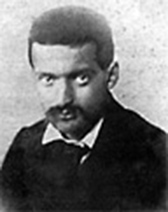
Paul Cézanne
Father of Modern Painting
Born on January 19, 1839
Died on October 22, 1906
Age at death: 67
Profession: Painter
Place of Birth: Aix-en-Provence, France
Place of Death: Aix-en-Provence, France
Paul Cézanne was a French painter who gained recognition as one of the first major artists to develop the Impressionist style and, by dismantling its formal limitations, laid the groundwork for the birth of Cubism. He is widely regarded as a pivotal figure bridging nineteenth-century Impressionism and the revolutionary art movements of the twentieth century.
Paul Cézanne was born on January 19, 1839, in Aix-en-Provence. His father, Louis-Auguste Cézanne, was initially a hat maker and later became a successful banker, while his mother was a working-class woman employed in the same trade. Thanks to his father’s rapid financial rise, Cézanne grew up in relative comfort. In 1849, he attended the St. Joseph School and in 1852 was transferred to the Bourbon College in Aix. He proved to be an outstanding student, earning awards in Ancient Greek, Latin, History, and Mathematics.
Throughout much of his life, Cézanne felt the heavy pressure of his father’s dominant and authoritarian personality. Despite his passion for painting, he was forced by his father to abandon the Aix School of Drawing in 1858 and enroll in the Aix Law School. Cézanne was known as a withdrawn, stern, ambitious individual, prone to episodes of anger and despair. Nevertheless, during this period he formed two close friendships: one with the future realist writer Émile Zola and the other with a young engineer named Baptistin Baille. The three friends spent much of their time hiking, swimming, hunting, discussing poetry and art, and embracing a bohemian lifestyle—an experience that deeply influenced Cézanne’s life and artistic sensibility.
After a prolonged struggle against his father’s authority, Cézanne moved to Paris in May 1861 to pursue artistic training. He enrolled at the Académie Suisse, an informal art school, but after six months of disappointment and discouragement returned to Aix to work in his father’s business. Unable to endure this life, he returned to Paris again in November 1862. There, he encountered many young painters who would shape the future of modern art, including Camille Pissarro, who would become one of the most significant influences on his work.
Cézanne entered into a relationship with Hortense Fiquet, a well-known beauty who worked as a nude model, and in January 1872 their son, Paul Cézanne Jr., was born. Terrified of his father’s reaction upon discovering this relationship, Cézanne lived in constant anxiety. His fear and resentment toward his father profoundly affected both his personal life and social relationships. He described himself with the words: “I was made to live alone.” His harsh and deliberately abrasive behavior served as a protective shell, while his mother remained the only person he fully trusted.
Cézanne regularly submitted his works to the official Paris Salon, but with the exception of a single occasion, his paintings were consistently rejected. One of his close friends, Antoine Guillemet, succeeded in having a Cézanne painting accepted by exploiting a Salon rule that allowed jurors to include a student’s work. Cézanne was not alone in his dissatisfaction with the Salon system. In 1863, widespread opposition to the jury’s conservatism led Emperor Napoleon III to organize the Salon des Refusés, where Cézanne also exhibited.
The influence of Camille Pissarro marked a decisive turning point in Cézanne’s artistic development. Moving away from the dark, dramatic style rooted in his melancholic temperament, he began painting landscapes. This shift led him toward the genres that would define his legacy: landscapes, still lifes, and portraits. Notable works from this period include Olympia, The House of the Hanged Man, Poplars, and The Bridge at Maincy. His technique softened as well, replacing dark colors and harsh brushstrokes with lighter tones and more delicate applications of paint.
Cézanne participated in the first Impressionist exhibition in 1874 with three paintings and exhibited seventeen works at the second exhibition in 1877. On both occasions, his art was misunderstood and ridiculed by critics and the public. Recognition came slowly. In 1900, one of his paintings was acquired by the National Gallery in Berlin. His greatest triumph followed in 1904, when his works were displayed in the largest gallery room of the Paris Autumn Salon.
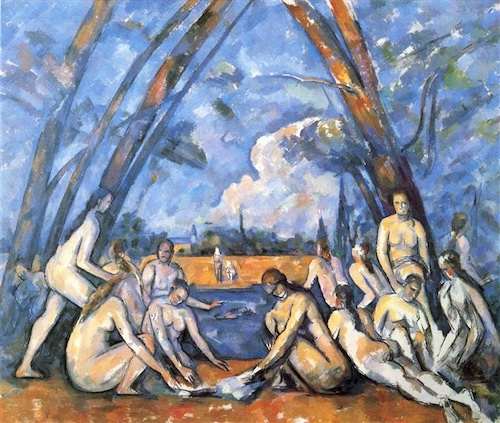
Although rarely appreciated during his lifetime, Paul Cézanne considered himself the greatest painter of his era. In his final years, he boldly questioned traditional pictorial conventions, eliminating conventional depth and pursuing a geometric approach to form. This radical vision became a foundation for Fauvism and Cubism, earning Cézanne the title “father of modern art.” The influence of his The Large Bathers can be clearly seen in Pablo Picasso’s Les Demoiselles d’Avignon.
Paul Cézanne died on October 22, 1906, at the age of sixty-seven. While painting landscapes near Aix-en-Provence, he was caught in a violent storm, fell ill, and died of pneumonia. He was buried in the cemetery of Aix-en-Provence.
Source: Biyografiler.com
Frequently asked questions about Paul Cézanne
Who is Paul Cézanne?, Paul Cézanne biography, Paul Cézanne life story, Paul Cézanne age, Paul Cézanne facts, Paul Cézanne birthplace, Paul Cézanne photos, Paul Cézanne videos, Paul Cézanne career
Related Biographies

Lamine Yamal
Professional footballer

Erling Haaland
Professional footballer

Kylian Mbappe
Professional footballer

Keanu Reeves
Actor

Austin Abrams
Actor

Bad Bunny
Rapper, Songwriter


Hongjoong
Singer, Rapper, Songwriter, Composer

Ludacris
Rapper, Actor

Kwon Eunbi
Singer

Sarah Wayne Callies
Actress, Screenwriter, Producer, Director

LaTavia Roberson
Singer, Actress, Entrepreneur

Pedro Sanchez
Politician
Lamine Yamal
Professional footballer

Claudia Sheinbaum
President, Politician, Scientist, Academic
Erling Haaland
Professional footballer

Leonardo DiCaprio
Actor
Keanu Reeves
Actor