

Milo Manara
Italian comic book artist and illustrator known for erotic comics, the Giuseppe Bergman series, Click and collaborations with Hugo Pratt, Federico Fellini, Alejandro Jodorowsky and Neil Gaiman.
Born on September 12, 1945
Age: 81
Profession: Painter, Cartoonist, Illustrator
Place of Birth: Luson (Lüsen), South Tyrol, Italy
Milo Manara, born Maurilio Manara on September 12, 1945, is an Italian comic book artist, illustrator and writer. He is known for his erotic graphic novels, adventure comics and adaptations of literary and historical subjects. His works include Giuseppe Bergman, Click, The Paper Man, Indian Summer, El Gaucho, The Borgias and Caravaggio. During his career, he has collaborated with writers, filmmakers and artists including Hugo Pratt, Federico Fellini, Alejandro Jodorowsky, Neil Gaiman and Chris Claremont. His illustrations have appeared in European comic magazines, books, advertising campaigns and publications by DC Comics and Marvel Comics. In the 2020s, he adapted Umberto Eco's novel The Name of the Rose into a two-volume graphic novel.
Early Life and Education
Milo Manara was born on September 12, 1945, in Luson, known in German as Lüsen, a mountain town in the province of Bolzano in northern Italy's South Tyrol region. He grew up in a working-class family whose financial circumstances required the children to contribute to household expenses.
His father's employment led the family to move between different towns. Manara began earning money through artistic work while still a child. At the age of twelve, he accepted commissions to produce decorative panels.
He attended an art school and later moved to Verona, where he worked as an assistant to Spanish sculptor Miguel Ortiz Berrocal. During this period, he enrolled in the Faculty of Architecture in Venice but left before completing his studies.
While working with Berrocal, Manara encountered French and Belgian comics that differed from the illustrated publications he had previously known. Among them were Barbarella by Jean-Claude Forest and The Adventures of Jodelle and Pravda by Guy Peellaert.
He became interested in comics as a medium that combined drawing, storytelling and commercial publishing. By the late 1960s, he had decided to pursue illustration and comics professionally.
Career Beginnings in Italian Comics
Milo Manara began seeking work from publishing houses in Milan during the late 1960s. His early attempts were unsuccessful, but contacts within the illustration industry eventually led him to publisher Furio Viano.
His first published comics appeared in Genius, a crime and mystery publication that had originally been conceived as a photo-story series. With the success of Italian crime comics such as Diabolik, Genius was converted into a comic book.
Manara illustrated the story Il morso della lupa, published on September 15, 1969. This marked the beginning of his professional career as a comic book artist.
His work attracted the attention of publisher Renzo Barbieri, and Manara subsequently worked on publications associated with Ediperiodici, which specialized in crime, horror and erotic comics.
He contributed to titles including Terror and Jolanda de Almaviva. The latter followed the adventures of a female pirate and combined historical adventure with erotic elements.
The Jolanda series appeared between 1970 and 1974, with Manara beginning his contributions in May 1971. These assignments provided regular illustration work and introduced him to the Italian market for adult comics.
Historical Comics and Illustrated Publications
In 1974, Milo Manara began collaborating with Corriere dei Ragazzi, a weekly publication for younger readers associated with the newspaper Corriere della Sera.
Working with writer Milo Milani, he illustrated historical stories in the series La parola alla giuria. The stories examined historical figures through fictionalized trials or discussions of their actions.
Subjects included George Armstrong Custer, Nero, Maximilien Robespierre, Helen of Troy, Alfred Nobel, J. Robert Oppenheimer and Attila.
He also illustrated Un fascio di bombe, a political comic addressing violence and covert operations during Italy's period of domestic terrorism and political instability.
Following changes to Corriere dei Ragazzi, he contributed to Corrier Boy and worked on the detective-adventure character Chris Lean, whose appearance drew inspiration from actor James Dean.
During the second half of the 1970s, Manara also produced illustrations for the French publisher Larousse, contributing to illustrated histories of France, world exploration and China.
He participated in Storia d'Italia a fumetti, a history of Italy presented through comics and written by journalist Enzo Biagi.
Political and Literary Adaptations
Milo Manara collaborated with writer Silverio Pisu on comics including Lo Scimmiotto (The Monkey) and Alessio, il borghese rivoluzionario.
Lo Scimmiotto, published in the 1970s, drew on the Chinese novel Journey to the West, traditionally attributed to Wu Cheng'en. Manara and Pisu adapted elements of the Monkey King's adventures into a comic with contemporary political references.
In 1978, Manara illustrated L'Uomo delle Nevi (The Snowman), written by Alfredo Castelli, for the Un uomo, un'avventura series published by Cepim, later known as Sergio Bonelli Editore.
The adventure concerned an expedition searching for a mysterious creature in the Himalayas. Castelli later created the comic book character Martin Mystère, whose stories similarly combined adventure, unexplained phenomena and historical mysteries.
Giuseppe Bergman and Hugo Pratt
In 1978, Milo Manara introduced Giuseppe Bergman, a fictional adventurer who became a recurring character in his work.
The first story, H.P. and Giuseppe Bergman, was published in the French magazine À Suivre, issued by Casterman. It was one of the first major works for which Manara was credited as both writer and artist.
The initials H.P. referred to Hugo Pratt, creator of the Corto Maltese comic series. Pratt was a mentor and friend of Manara, and the fictional character H.P. was a reference to their relationship.
Giuseppe Bergman's adventures combined travel, literary references, fantasy and erotic situations. The series also explored the relationship between fictional characters and the stories in which they appear.
Manara continued working with the character over several decades, including The African Adventures of Giuseppe Bergman and later stories dealing with art, memory and the creative process.
His professional collaboration with Hugo Pratt developed into two graphic novels written by Pratt and illustrated by Manara: Indian Summer and El Gaucho.
Indian Summer was serialized in the magazine Corto Maltese beginning in 1983. Set in colonial North America, it dealt with conflicts involving European settlers and Indigenous communities.
El Gaucho, published during the 1990s, took place in South America during the British military expeditions against Buenos Aires in the early nineteenth century.
Click and Erotic Comics
Milo Manara began a collaboration with the Italian adult magazine Playmen in 1982. The magazine commissioned an erotic comic that became Il Gioco, internationally published as Click and in French as Le Déclic.
The first installment appeared in 1983. The story followed Claudia Cristiani, a married woman whose behavior is altered by a mysterious electronic device that removes her sexual inhibitions.
The work combined erotic imagery with satire concerning social conventions, sexual behavior and the public presentation of morality.
Click was translated and republished internationally, and later installments appeared in 1991, 1994 and 2001.
The comic also inspired the French film Le Déclic (1985), directed by Jean-Louis Richard and starring Florence Guérin.
Manara continued publishing erotic graphic novels and illustrated stories, including The Perfume of the Invisible, Gulliveriana, Kama Sutra, The Golden Ass and Hidden Camera.
His illustrations frequently portrayed female figures in situations involving fantasy, social expectations and sexuality. The explicit nature of some of his work has also generated criticism concerning the representation and sexualization of women.
Collaboration with Federico Fellini
In 1987, Milo Manara began collaborating with Italian filmmaker Federico Fellini, following an introduction arranged by journalist and writer Vincenzo Mollica.
Their first major collaborative project was Trip to Tulum, based on a screenplay by Fellini and adapted into a comic by Manara. It was published in Corto Maltese magazine.
They subsequently worked together on The Journey of G. Mastorna, Called Fernet, based on one of Fellini's unrealized film projects.
Manara also created illustrations and promotional artwork associated with Fellini's films Intervista and The Voice of the Moon.
The collaboration brought together Fellini's film narratives and Manara's sequential illustrations, particularly in stories involving dreams, imaginary journeys and the relationship between reality and fiction.
Literature, History and European Collaborations
During the 1990s, Milo Manara continued working with literary adaptations, historical subjects and original graphic novels.
He illustrated projects associated with Enzo Biagi, including stories about Christopher Columbus, and contributed drawings to works by Spanish filmmaker Pedro Almodóvar.
His adaptations and illustrated books included Gulliveriana, inspired by Jonathan Swift's Gulliver's Travels, and The Golden Ass, based on the ancient novel by Apuleius.
He also produced Kama Sutra and illustrated works related to mythology and European literary traditions.
Other projects addressed contemporary issues. These included Revolution, which examined mass media, and WWW, which concerned communication and relationships in the internet era.
DC Comics and Marvel Comics
In 2003, Milo Manara collaborated with British writer Neil Gaiman on The Sandman: Endless Nights, published under DC Comics' adult-oriented Vertigo imprint.
Manara illustrated the chapter devoted to Desire, one of the central characters in Gaiman's Sandman universe.
He later worked with writer Chris Claremont on X-Women, a graphic novel published by Marvel Comics in 2010.
His Marvel assignments also included variant covers featuring characters such as Black Widow, Gamora and Spider-Woman.
In 2014, a variant cover he created for Spider-Woman No. 1 drew criticism over its sexualized portrayal of the character. Marvel's editorial management publicly addressed the controversy, and previously announced additional Manara covers were subsequently withdrawn from the publishing schedule.
The Borgias and Other Graphic Novels
Between 2004 and 2010, Milo Manara illustrated The Borgias, a four-volume historical graphic novel series written by Chilean-French writer and filmmaker Alejandro Jodorowsky.
The series dealt with the Borgia family and political and religious conflicts in Renaissance Italy. Its central figures included Pope Alexander VI, Cesare Borgia and Lucrezia Borgia.
Manara also illustrated Pandora's Eyes, based on a screenplay by Italian writer Vincenzo Cerami.
In another collaboration, he created 46, a comic project involving motorcycle racer Valentino Rossi, whose racing number provided its title.
His illustration work extended to advertising, album covers, posters and publishing projects for companies and institutions including Chanel, Sisley, Lavazza and Mondadori.
Caravaggio and Historical Art
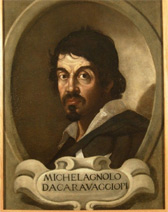
In 2015, Milo Manara published Caravaggio: The Palette and the Sword, the first volume of a graphic biography of Italian painter Caravaggio, whose full name was Michelangelo Merisi.
The book examined the painter's early years in Rome, his artistic work and his relationships with patrons, other artists and the authorities.
The second volume, Caravaggio: Grace, was published in 2019 and completed Manara's account of the painter's life.
For the project, Manara studied Caravaggio's paintings and the historical environments in which the artist lived. The illustrations included interpretations of Renaissance and Baroque settings.
The Name of the Rose
During the 2020s, Milo Manara undertook a graphic novel adaptation of The Name of the Rose, the 1980 novel by Italian writer Umberto Eco.
The story takes place in a medieval monastery and follows Franciscan friar William of Baskerville as he investigates a series of deaths.
Manara translated Eco's historical and philosophical narrative into sequential illustrations, including the monastery's architecture, library and religious community.
The adaptation was published by Oblomov Edizioni in two volumes, with the second and concluding volume released in December 2025.
Exhibitions and Recent Activities
Milo Manara has exhibited original drawings and illustrations in Italy and other countries. His exhibitions have included material from his comics, literary adaptations, personal projects and collaborations with filmmakers.
In 2009, he received an honorary academic degree from the Academy of Fine Arts of Macerata in Italy.
His career was also examined in Manara, a documentary directed by Valentina Zanella and presented at the 2025 Venice International Film Festival.
In October 2026, an exhibition titled Visioni. Milo Manara nel Labirinto opened at the Labirinto della Masone in Fontanellato, near Parma. The exhibition brought together original comic pages, illustrations and preparatory materials, including works from Giuseppe Bergman, Trip to Tulum and The Name of the Rose.
Personal Life
Milo Manara married Luisa Fedrigoli on April 4, 1970. The couple have two children, Simona and Mario.
Manara has spent much of his adult life working in northern Italy. He has continued producing illustrations and graphic novels while participating in publishing events, art exhibitions and discussions concerning comics and visual storytelling.
Source: Biyografiler.com
Frequently asked questions about Milo Manara
Who is Milo Manara?, Milo Manara biography, Milo Manara life story, Milo Manara age, Milo Manara facts, Milo Manara birthplace, Milo Manara photos, Milo Manara videos, Milo Manara career
Related Biographies




Lamine Yamal
Professional footballer

Brad Pitt
Actor

Erling Haaland
Professional footballer

Kylian Mbappe
Professional footballer

Leonardo DiCaprio
Actor

Sam Altman
Entrepreneur, Investor, CEO

Milo Manara
Painter, Cartoonist, Illustrator

Mikhail Mishustin
Politician, Economist, Prime Minister

Milla Jovovich
Actress, Model

Millie Bobby Brown
Actress

Moshe Dayan
Military Commander, Politician


Jensen Huang
Entrepreneur, CEO, Engineer
Lamine Yamal
Professional footballer

Taylor Swift
Singer, Musician, Songwriter
Erling Haaland
Professional footballer
Sam Altman
Entrepreneur, Investor, CEO
Leonardo DiCaprio
Actor