

Moshe Katsav
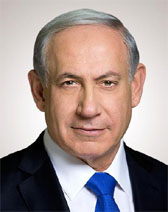
Iranian-born Israeli politician who served as Israel's eighth president from August 1, 2000, to July 1, 2007. Previously a member of the Knesset and a minister in several governments, he resigned amid allegations of sexual offenses and was subsequently convicted and sentenced to prison.
Born on December 5, 1945
Age: 81
Profession:
Place of Birth:
Moshe Katsav, also spelled Moshe Katzav, is an Iranian-born Israeli politician who served as the eighth President of Israel from August 1, 2000, until July 1, 2007. A member of the Likud party before becoming president, he previously served as mayor of Kiryat Malakhi, a member of the Knesset and a minister in several Israeli governments. He was the first Israeli president born in an Islamic-majority country. His presidency ended following allegations of sexual offenses involving female employees. In December 2010, he was convicted of rape and other offenses. He received a seven-year prison sentence in 2011 and was released on parole in December 2016.
Early Life and Family Background
Moshe Katsav was born on December 5, 1945, in Yazd, Iran, to a Jewish family. He was the eldest of eight children. During his early childhood, the family moved from Yazd to Tehran.
In 1951, when Katsav was five years old, his family immigrated to Israel. They initially stayed at the Sha'ar HaAliyah immigrant reception camp near Haifa before moving to the Kastina transit camp near Be'er Tuvia.
The transit settlement subsequently developed into Kiryat Malakhi, a town in southern Israel. Katsav grew up there during a period when the country was absorbing large numbers of Jewish immigrants from the Middle East and elsewhere.
He worked at various jobs while attending school to help support his family.
Education and Military Service
Moshe Katsav attended Ben Shemen Agricultural School and completed his secondary education in the Be'er Tuvia area.
In 1964, he entered the Israel Defense Forces, serving in the communications corps and attaining the rank of corporal.
He subsequently enrolled at the Hebrew University of Jerusalem, becoming one of the first residents of Kiryat Malakhi to attend university. He studied history and economics and later worked as a teacher.
During his university years, he was active in youth political organizations and wrote for the Israeli newspaper Yedioth Ahronoth.
Political Beginnings and Mayor of Kiryat Malakhi
Moshe Katsav became involved in local politics while still a university student. In 1969, at the age of 24, he was elected head of the municipal council of Kiryat Malakhi.
He was described at the time as Israel's youngest municipal leader. He subsequently returned to local office and served as mayor during the period from 1974 to 1981.
His municipal career included matters involving housing, infrastructure and public services in a town established largely to accommodate immigrant families.
His political activities brought him into the national leadership of Likud, the right-of-center political alliance formed in 1973.
Member of the Knesset
In 1977, Moshe Katsav was elected to the Ninth Knesset as a representative of Likud. His election coincided with the party's victory under Menachem Begin, which ended decades of Labor-led government in Israel.
He became the first former municipal leader from an Israeli development town to enter the Knesset.
Katsav served in the Israeli parliament continuously from 1977 until his election as president in 2000. He participated in parliamentary committees dealing with education, culture, internal affairs and public administration.
During his early parliamentary career, Begin's government sent him to Iran to encourage Jewish emigration to Israel. These contacts took place before the 1979 Iranian Revolution fundamentally changed relations between the two countries.
Ministerial Positions and Government Responsibilities
Moshe Katsav held several government positions during the 1980s and 1990s.
From 1981 to 1984, he served as Deputy Minister of Construction and Housing in governments led by Menachem Begin and Yitzhak Shamir. His responsibilities included housing development and neighborhood rehabilitation projects.
Between 1984 and 1988, he was Minister of Labor and Social Welfare in Israel's national unity government.
From 1988 to 1992, Katsav served as Minister of Transportation under Prime Minister Yitzhak Shamir. His responsibilities covered transportation policy and the administration of the country's transport infrastructure.
Following the 1996 parliamentary election, he joined the government of Benjamin Netanyahu as Minister of Tourism and Deputy Prime Minister, holding these positions until 1999.
After Likud lost the 1999 election, he continued serving in parliament and held leadership responsibilities within the party's parliamentary faction.
Public Organizations and Academic Recognition
Alongside his parliamentary and government career, Moshe Katsav was involved in organizations representing immigrants from Iran.
He served as chairman of the Central Organization of Iranian Immigrants and participated in public initiatives associated with education and immigrant integration.
He was also a member of the Board of Governors of Ben-Gurion University of the Negev.
In 1998, the University of Nebraska at Omaha awarded him an honorary Doctor of Humane Letters degree.
Election as President of Israel
In July 2000, Moshe Katsav became Likud's candidate for President of Israel. His opponent was Shimon Peres, a former prime minister and senior member of the Israeli Labor movement.
The president was elected by the Knesset rather than by a direct public vote. On July 31, 2000, Katsav defeated Peres by 63 votes to 57.
He was inaugurated as Israel's eighth president on August 1, 2000, succeeding Ezer Weizman.
Katsav became the first president of Israel born in an Islamic-majority country. His election also brought a politician from an Iranian Jewish immigrant family and a former development town to the country's presidency.
Presidency
Under Israel's parliamentary system, the presidency is primarily a ceremonial office. Its duties include representing the state at official occasions, receiving foreign diplomatic representatives and performing constitutional functions connected to the formation of governments.
During his presidency, Moshe Katsav participated in state ceremonies, hosted visiting officials and met representatives of different religious and social communities.
He also made public statements concerning relations among Israel's Jewish communities and the position of ethnic and religious minorities.
His term coincided with the Second Intifada, major political disagreements over relations with the Palestinians and Israel's 2005 withdrawal from settlements in the Gaza Strip.
Sexual Offense Allegations and Resignation
In 2006, allegations of sexual harassment and assault involving women who had worked with Moshe Katsav became public.
The investigation began after Katsav contacted Israel's attorney general concerning what he described as an attempt to blackmail him. Subsequent inquiries examined allegations made by several former female employees.
In January 2007, Attorney General Menachem Mazuz announced that prosecutors were considering criminal charges, including rape and sexual harassment.
Katsav denied the accusations and argued that he was being subjected to an unfair investigation.
He temporarily stepped aside from his presidential duties. In June 2007, a proposed plea agreement was announced under which he would admit to lesser offenses and resign. The arrangement subsequently collapsed when Katsav refused to proceed with it.
He resigned from the presidency effective July 1, 2007, shortly before the scheduled expiration of his term. Shimon Peres was elected to succeed him and took office later that month.
Criminal Trial and Conviction
In March 2009, Israeli prosecutors formally indicted Moshe Katsav on charges arising from allegations made by former employees.
The trial took place in the Tel Aviv District Court. On December 30, 2010, a three-judge panel unanimously convicted him of two counts of rape, as well as other sexual offenses, witness harassment and obstruction of justice.
The court found that he had committed offenses against women who worked under his authority during his earlier political positions and his presidency.
On March 22, 2011, Katsav was sentenced to seven years in prison, together with additional penalties.
He appealed the verdict, but Israel's Supreme Court upheld his conviction in November 2011.
Katsav continued to deny committing the crimes despite the final judicial decision.
Imprisonment and Release
Moshe Katsav began serving his prison sentence in December 2011 at Ma'asiyahu Prison in Ramla, Israel.
During his imprisonment, his legal representatives submitted requests for early release. An initial request was rejected, but a parole board approved his release in December 2016.
He was released on December 21, 2016, after serving approximately five years and fifteen days of his seven-year sentence.
The release was subject to restrictions, including conditions governing his movements and activities.
Following his release, Katsav largely withdrew from national political activity and continued living in Kiryat Malakhi.
Marriage and Children
Moshe Katsav is married to Gila Katsav, born in 1948. The couple have five children.
Gila Katsav participated in charitable and public activities during her husband's presidency. She also supported him publicly during the criminal proceedings.
The family has maintained connections with Kiryat Malakhi, the town where Katsav grew up and began his political career.
Source: Biyografiler.com
Frequently asked questions about Moshe Katsav
Who is Moshe Katsav?, Moshe Katsav biography, Moshe Katsav life story, Moshe Katsav age, Moshe Katsav facts, Moshe Katsav birthplace, Moshe Katsav photos, Moshe Katsav videos, Moshe Katsav career
Related Biographies

Lamine Yamal
Professional footballer

Brad Pitt
Actor

Erling Haaland
Professional footballer

Kylian Mbappe
Professional footballer

Leonardo DiCaprio
Actor

Sam Altman
Entrepreneur, Investor, CEO

Milo Manara
Painter, Cartoonist, Illustrator

Mikhail Mishustin
Politician, Economist, Prime Minister

Milla Jovovich
Actress, Model

Millie Bobby Brown
Actress

Moshe Dayan
Military Commander, Politician


Jensen Huang
Entrepreneur, CEO, Engineer
Lamine Yamal
Professional footballer

Taylor Swift
Singer, Musician, Songwriter
Erling Haaland
Professional footballer
Sam Altman
Entrepreneur, Investor, CEO
Leonardo DiCaprio
Actor