
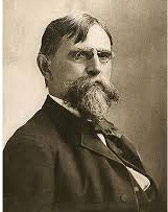
Lewis Wallace
American Civil War major general, novelist, lawyer, and diplomat. He wrote the historical novel Ben-Hur: A Tale of the Christ (1880), served as Governor of the New Mexico Territory from 1878 to 1881, and represented the United States as minister to the Ottoman Empire from 1881 to 1885.
Born on April 10, 1827
Died on February 15, 1905
Age at death: 78
Profession: Military Officer, Novelist, Politician
Place of Birth: Brookville, Indiana, United States
Place of Death: Crawfordsville, Indiana, United States
Lewis Wallace, commonly known as Lew Wallace, was born on April 10, 1827, in Brookville, Indiana, United States. He was an American military officer, novelist, lawyer, politician, and diplomat. During the American Civil War, he served as a major general in the Union Army and participated in the battles of Fort Donelson, Shiloh, and Monocacy. He later served as Governor of the New Mexico Territory from 1878 to 1881 and as United States Minister to the Ottoman Empire from 1881 to 1885. His best-known literary work, Ben-Hur: A Tale of the Christ, was published in 1880 and became one of the best-selling American novels of the nineteenth century. The novel was subsequently adapted for the stage, cinema, and television, including the 1925 and 1959 films Ben-Hur.
Early Life and Family Background
Lewis Wallace was born on April 10, 1827, in Brookville, Indiana. His father, David Wallace, was a lawyer and politician who served as Governor of Indiana from 1837 to 1840. His mother, Esther French Test Wallace, came from a family involved in politics and public service. Her father, John Test, served in the United States House of Representatives.
His mother died in 1834, when Wallace was seven years old. His father subsequently married Zerelda Gray Sanders. The family lived in an environment where law, politics, and public affairs were regular subjects of discussion.
During his childhood, Wallace showed an interest in drawing, literature, history, and military subjects. He did not follow a conventional academic path and devoted considerable time to independent reading and artistic activities.
As a teenager, he left formal schooling and began working in his father's law office. He studied legal subjects while continuing to develop his interest in military history and writing.
Mexican-American War and Early Political Career
When the Mexican-American War began in 1846, Lewis Wallace joined the Indiana volunteers. He served as a second lieutenant in the First Indiana Volunteer Infantry Regiment.
Although his military unit saw limited combat, the experience introduced him to army organization, military discipline, and the realities of wartime service.
After returning to Indiana in 1847, he resumed his legal studies and eventually qualified to practice law. He established a legal career in the state and became involved in local politics.
Wallace was elected to the Indiana State Senate in 1856, serving until 1860. His legal and political work preceded his return to military service at the outbreak of the American Civil War.
American Civil War and Military Leadership
When the American Civil War began in April 1861, Lewis Wallace joined the Union Army. He was appointed Adjutant General of Indiana and helped organize volunteer troops for military service.
He subsequently became colonel of the 11th Indiana Volunteer Infantry Regiment. In September 1861, he was promoted to brigadier general.
Wallace served under Ulysses S. Grant during Union military operations in the western theater of the war. In February 1862, he participated in the Battle of Fort Donelson in Tennessee, where Union forces defeated Confederate troops.
His performance during the battle contributed to his promotion to major general on March 21, 1862. At the age of 34, he was among the youngest officers to hold that rank in the Union Army.
The Battle of Shiloh Controversy
In April 1862, Lewis Wallace commanded a division during the Battle of Shiloh in Tennessee, one of the major early engagements of the American Civil War.
During the first day of fighting, Wallace received orders to move his division toward the battlefield. Confusion over the intended route and changes in the positions of Union troops delayed his arrival.
By the time his division reached the battlefield, most of the first day's fighting had ended. Although Union forces won the battle on April 7, 1862, Wallace faced criticism for the delay.
General Ulysses S. Grant and other Union commanders questioned his actions. Wallace maintained that he had followed the orders as he understood them and disputed accounts that placed responsibility for the delay entirely on him.
The controversy affected his military career. He was removed from major field command for a period and spent years defending his conduct at Shiloh through correspondence, public statements, and historical accounts.
The Battle of Monocacy and the Defense of Washington
In March 1864, President Abraham Lincoln appointed Lewis Wallace commander of the Middle Department and the Union Army's VIII Corps, headquartered in Baltimore, Maryland.
In July 1864, Confederate General Jubal Early advanced toward Washington, D.C., threatening the United States capital.
Wallace assembled a smaller Union force to confront the Confederate advance near Monocacy Junction in Maryland.
On July 9, 1864, his troops fought Early's forces in the Battle of Monocacy. Although the Confederate Army won the engagement, Wallace delayed its advance toward Washington.
The delay allowed Union commanders to move reinforcements into the capital's defenses. Confederate forces subsequently withdrew after encountering strengthened Union positions.
For this reason, the Battle of Monocacy became known as the battle that saved Washington. Wallace's conduct during the engagement was later viewed more favorably than his actions at Shiloh.
Military Trials Following Abraham Lincoln's Assassination
Following the assassination of President Abraham Lincoln in April 1865, Lewis Wallace was appointed to the military commission responsible for trying individuals accused of participating in the assassination conspiracy.
Lincoln died on April 15, 1865, after being shot by John Wilkes Booth the previous evening. The military tribunal investigated the actions of people accused of assisting Booth and participating in the wider conspiracy.
Wallace served as a member of the commission that heard evidence against the defendants.
Later in 1865, he presided over the military commission that tried Henry Wirz, the Confederate officer who commanded the Andersonville prisoner-of-war camp in Georgia.
Wirz was accused of responsibility for the mistreatment and deaths of Union prisoners. He was convicted and executed in November 1865.
These appointments placed Wallace directly within the military justice proceedings that followed the end of the Civil War.
Military Activities in Mexico
After the American Civil War, Lewis Wallace became involved in the political and military conflict in Mexico, where forces supporting President Benito Juárez opposed the government of Emperor Maximilian I of Mexico.
Wallace resigned from the United States Army on November 30, 1865, and pursued opportunities to assist the Mexican republican forces.
He traveled to Mexico and became involved in efforts to obtain military supplies and support for the republican cause.
During these activities, Wallace expected financial compensation from the Juárez government. Accounts of his involvement describe a proposed payment of $100,000 for his services.
Despite these expectations, his Mexican activities did not produce the financial results he anticipated. He returned to the United States in 1867 with substantial debts.
Following his return, he resumed his legal career and devoted increasing attention to literature.
Beginning of His Literary Career
Lewis Wallace had begun writing fiction during his youth and continued working on literary projects while practicing law and serving in the military.
His first published novel, The Fair God: or, The Last of the 'Tzins, appeared in 1873.
The historical novel was set during the Spanish conquest of Mexico and depicted the conflict between the Aztec civilization and Spanish forces led by Hernán Cortés.
Wallace combined historical events with fictional characters and romantic adventure. The novel established his interest in writing historical fiction involving political conflict, religion, and different civilizations.
He subsequently began researching and writing the novel that would become Ben-Hur: A Tale of the Christ.
Ben-Hur: A Tale of the Christ
In 1880, Lewis Wallace published Ben-Hur: A Tale of the Christ, a historical novel set in the Roman Empire during the lifetime of Jesus Christ.
The story follows Judah Ben-Hur, a Jewish nobleman living in Jerusalem. After being falsely accused and betrayed by his childhood friend Messala, a Roman officer, Ben-Hur is imprisoned and sent into slavery.
His subsequent experiences include service as a galley slave, his eventual freedom, a return to his homeland, and a search for his family.
One of the novel's central episodes is a chariot race in which Ben-Hur confronts Messala. The race later became a major sequence in the theatrical and cinematic adaptations of the book.
The narrative combines revenge, family relationships, political oppression, religious belief, forgiveness, and personal redemption.
Throughout the novel, Ben-Hur's life intersects with events associated with Jesus Christ. His encounter with Christian teachings gradually changes his understanding of revenge and justice.
Wallace researched the geography, history, customs, and religious traditions of the ancient Mediterranean world while preparing the novel.
Published on November 12, 1880, by Harper & Brothers, the book achieved substantial commercial success. It became one of the most widely read American novels of the nineteenth century and remained in circulation through numerous editions and translations.
Stage and Film Adaptations of Ben-Hur
The success of Ben-Hur: A Tale of the Christ led to adaptations for theater and eventually cinema.
In 1899, a theatrical adaptation opened on Broadway. The production used elaborate stage machinery to reproduce scenes from the novel, including the chariot race.
In 1907, the story was adapted into a short silent film by the Kalem Company. The production later became associated with a significant American copyright dispute concerning the rights to adapt literary works for motion pictures.
In 1925, director Fred Niblo made Ben-Hur: A Tale of the Christ, a silent feature film starring Ramon Novarro as Judah Ben-Hur and Francis X. Bushman as Messala.
The best-known screen adaptation followed in 1959. Directed by William Wyler, Ben-Hur starred Charlton Heston as Judah Ben-Hur and Stephen Boyd as Messala.
The 1959 film won eleven Academy Awards, including Best Picture, Best Director, and Best Actor for Charlton Heston.
Additional adaptations appeared in later decades, including a 2003 animated film, a 2010 television miniseries, and a 2016 theatrical film directed by Timur Bekmambetov and starring Jack huston.
Governor of the New Mexico Territory
In 1878, President Rutherford B. Hayes appointed Lewis Wallace Governor of the New Mexico Territory. He served from September 1878 until 1881.
During his governorship, New Mexico experienced political disputes, criminal violence, and conflicts involving ranchers, merchants, law enforcement authorities, and competing economic interests.
One of the principal conflicts was the Lincoln County War, which involved rival commercial groups and armed supporters in southeastern New Mexico.
Wallace attempted to restore order through negotiations, legal measures, and the use of territorial authority.
During this period, he became involved in negotiations with the outlaw Billy the Kid, also known as Henry McCarty and William H. Bonney.
In 1879, Wallace discussed the possibility of a pardon with Billy the Kid in exchange for testimony concerning killings associated with the Lincoln County conflict.
The arrangement did not lead to a completed pardon, and Billy the Kid remained involved in criminal proceedings and conflicts with territorial authorities.
Wallace continued writing Ben-Hur: A Tale of the Christ during his time as governor and completed the novel while holding office.
United States Minister to the Ottoman Empire
In 1881, President James A. Garfield appointed Lewis Wallace United States Minister to the Ottoman Empire. He served in the diplomatic position until 1885.
Wallace arrived in Constantinople, now Istanbul, during the reign of Sultan Abdul Hamid II. His appointment came at a time when the Ottoman government was dealing with political, financial, and diplomatic pressures from European powers.
As the American diplomatic representative, Wallace handled matters concerning relations between the United States and the Ottoman government, including American citizens, educational institutions, commercial interests, and diplomatic correspondence.
He developed a cordial relationship with Sultan Abdul Hamid II and met with Ottoman officials during his diplomatic service.
His residence in Constantinople also provided opportunities to study the city's history, architecture, and religious traditions.
Wallace continued writing and researching historical subjects during his years in the Ottoman Empire. His experiences in the region contributed to the background of his later novel The Prince of India; or, Why Constantinople Fell.
He returned to the United States in 1885, following the change of presidential administration.
Biography of Benjamin Harrison
In 1888, Lewis Wallace wrote a campaign biography of his friend Benjamin Harrison, who was running for President of the United States as the Republican Party's candidate.
The work, titled The Life of Benjamin Harrison, was prepared during the presidential election campaign.
Wallace had a limited period in which to complete the biography. The book described Harrison's family background, military service, political career, and public positions.
In an era before radio and television, printed campaign biographies were used to introduce political candidates to voters.
Harrison won the 1888 presidential election and served as the twenty-third President of the United States from 1889 to 1893.
Wallace's book continued to be used as a biographical reference on Harrison for decades after its publication.
The Prince of India and Later Literary Works
In 1893, Lewis Wallace published The Prince of India; or, Why Constantinople Fell, a historical novel set during the final years of the Byzantine Empire.
The book explores the events surrounding the Ottoman conquest of Constantinople in 1453. It combines historical figures, religious traditions, political conflicts, and fictional characters.
One of the central figures is the Wandering Jew, a character associated with a European Christian legend. Wallace uses the character to explore questions of religion, historical change, and the relationship between Christianity and Islam.
The novel reflects Wallace's interest in the history of Constantinople, a city where he had served as an American diplomat.
His other literary works included The Boyhood of Christ and the narrative poems The Wooing of Malkatoon and Commodus.
During his later years, Wallace also worked on his autobiography, recording his experiences in politics, the military, diplomacy, and literature.
Marriage and Family
Lewis Wallace married Susan Arnold Elston on May 6, 1852. Susan Wallace was also a writer and poet.
The couple initially lived in Covington, Indiana, where Wallace practiced law.
Their only child, Henry Lane Wallace, was born on February 17, 1853.
Following their son's birth, the family moved to Crawfordsville, Indiana, where Susan's family lived.
Susan supported Wallace's literary career and assisted with the preservation and organization of his writings.
Final Years and Death
After returning from his diplomatic assignment in 1885, Lewis Wallace settled in Crawfordsville, Indiana, and devoted much of his time to writing.
In 1895, construction began on a private study on his property. The building provided a dedicated space for his books, manuscripts, and literary work.
Wallace continued writing his autobiography during his final years but did not complete it before his death.
Lewis Wallace died on February 15, 1905, in Crawfordsville, Indiana, at the age of 77. He was buried in Oak Hill Cemetery in Crawfordsville.
His autobiography, Lew Wallace: An Autobiography, was published posthumously in 1906 with assistance from his wife Susan and writer Mary Hannah Krout.
Major Literary Works
1873 - The Fair God: or, The Last of the 'Tzins - Historical Novel1880 - Ben-Hur: A Tale of the Christ - Historical Novel
1888 - The Boyhood of Christ - Religious and Historical Work
1888 - The Life of Benjamin Harrison - Political Biography
1893 - The Prince of India; or, Why Constantinople Fell - Historical Novel
1898 - The Wooing of Malkatoon - Narrative Poem
1898 - Commodus - Narrative Poem
1906 - Lew Wallace: An Autobiography - Autobiography, Published Posthumously
Military, Political and Diplomatic Career
1846–1847 - Second Lieutenant, First Indiana Volunteers, Mexican-American War1856–1860 - Member of the Indiana State Senate
1861 - Colonel, 11th Indiana Volunteer Infantry
September 1861 - Promoted to Brigadier General, Union Army
March 1862 - Promoted to Major General, Union Army
1862 - Battle of Fort Donelson
1862 - Battle of Shiloh
1864 - Commander of the VIII Corps and Middle Department
July 9, 1864 - Battle of Monocacy
1865 - Member of the Military Commission Investigating the Lincoln Assassination Conspiracy
1865 - President of the Military Commission in the Henry Wirz Trial
1865–1867 - Activities Supporting Mexican Republican Forces
1878–1881 - Governor of the New Mexico Territory
1881–1885 - United States Minister to the Ottoman Empire
Film and Television Adaptations
1907 - Ben Hur - Silent Short Film1925 - Ben-Hur: A Tale of the Christ - Silent Feature Film, Directed by Fred Niblo
1959 - Ben-Hur - Feature Film, Directed by William Wyler
2003 - Ben Hur - Animated Film
2010 - Ben Hur - Television Miniseries
2016 - Ben-Hur - Feature Film, Directed by Timur Bekmambetov
Family
Father: David Wallace (1799–1859), Governor of IndianaMother: Esther French Test Wallace (1806–1834)
Stepmother: Zerelda Gray Sanders Wallace
Wife: Susan Arnold Elston Wallace (1830–1907), Married May 6, 1852
Son: Henry Lane Wallace (February 17, 1853 – 1926)
Source: Biyografiler.com
Frequently asked questions about Lewis Wallace
Who is Lewis Wallace?, Lewis Wallace biography, Lewis Wallace life story, Lewis Wallace age, Lewis Wallace facts, Lewis Wallace birthplace, Lewis Wallace photos, Lewis Wallace videos, Lewis Wallace career
Related Biographies



Lamine Yamal
Professional footballer

Kylian Mbappe
Professional footballer

Brad Pitt
Actor

Erling Haaland
Professional footballer

Keanu Reeves
Actor

Leonardo DiCaprio
Actor

Loris Karius
Professional footballer

Louis Aragon
Poet, Novelist, Essayist

Louis Pasteur
Chemist, Biologist

Luca Toni
Professional footballer, Football Manager

Luc Besson
Film Director, Screenwriter

Luciano Benetton
Businessperson, Entrepreneur

Jensen Huang
Entrepreneur, CEO, Engineer

Lilly Wachowski
Film Director, Screenwriter

Liam Neeson
Actor
Loris Karius
Professional footballer

Oliver Kahn
Professional footballer

Linda Hamilton
Actress