
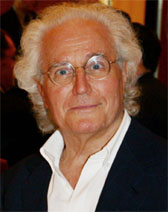
Luciano Benetton
Italian businessman who co-founded Benetton Group with his siblings in 1965. He developed its international fashion retail network, oversaw its expansion into Formula 1, and served as a senator in Italy from 1992 to 1994.
Born on May 13, 1935
Age: 91
Profession: Businessperson, Entrepreneur
Place of Birth: Treviso, Italy
Luciano Benetton was born on May 13, 1935, in Treviso, Italy. He is an Italian businessman and entrepreneur who founded Benetton Group in 1965 with his siblings Giuliana Benetton, Gilberto Benetton, and Carlo Benetton. Beginning with the production of colorful knitted sweaters, the family developed an international clothing business operating through a network of branded stores. Under his leadership, Benetton expanded into fashion accessories, sportswear, advertising, and Formula 1 racing. He served as a member of the Italian Senate from 1992 to 1994 and returned to the chairmanship of Benetton Group in 2018 before stepping down in 2024.
Early Life and Family Background
Luciano Benetton was born on May 13, 1935, in Treviso, in the Veneto region of northern Italy. He was the eldest of four children. His younger siblings were Giuliana Benetton, Gilberto Benetton, and Carlo Benetton.
His childhood coincided with the economic and social difficulties experienced in Italy during the Second World War. His father died in 1945, leaving the family without one of its principal sources of income.
Luciano left school at approximately fourteen or fifteen years of age and began working in the clothing trade. He first worked in a warehouse and later as a salesman in a clothing shop, contributing to the family's household expenses.
His sister Giuliana worked with knitted garments and produced sweaters for a local clothing business. Luciano began considering whether the family could manufacture and sell its own products rather than continue working for other employers.
The First Sweaters and the Family Business
In the mid-1950s, Luciano Benetton began selling knitted sweaters made by his sister Giuliana Benetton. According to accounts of the company's beginnings, Giuliana had made Luciano a yellow sweater at a time when muted colors dominated everyday clothing.
Luciano believed that brightly colored sweaters could attract customers, particularly younger buyers. The siblings obtained a knitting machine and began producing garments in yellow, green, blue, and other colors.
Early products were sold under the Très Jolie label. Luciano handled sales while Giuliana concentrated on production. Their family home gradually became a small workshop as orders increased.
To finance the business, the family used savings and sold personal possessions, including Luciano's accordion and Carlo's bicycle.
By the late 1950s, Luciano had left his regular job to concentrate on the family enterprise. Production increased, and the business began experimenting with manufacturing methods that made it easier to offer sweaters in different colors.
Garment-Dyeing Techniques
One of the manufacturing methods associated with Benetton's development was garment dyeing, in which finished or nearly finished knitted garments were dyed rather than relying entirely on yarn colored before production.
Luciano Benetton worked with textile specialists, including Adalgerico Montagna, on methods that enabled the company to adjust its color selection closer to the time products reached stores.
This process allowed the business to produce basic garments and respond to changes in customer demand without maintaining large inventories of every color.
Color selection and the ability to produce different variations of similar garments became recurring features of the company's manufacturing and commercial approach.
Founding of Benetton Group
On March 2, 1965, Luciano Benetton and his siblings established the business that became Benetton Group in Ponzano Veneto, near Treviso.
The four siblings divided their responsibilities. Luciano concentrated on sales and commercial development, Giuliana on knitwear design and product development, Gilberto on financial operations, and Carlo on production and manufacturing.
The company's first factory was developed to accommodate increasing production. The family gradually expanded from a small knitting operation into an organized clothing manufacturer.
In 1966, the first Benetton retail shop opened in Belluno, Italy. The shop, originally called My Market, was established with local business partner Piero Marchiorello.
Its interior allowed customers to examine and select colorful sweaters without the traditional arrangement of counters separating buyers from products.
A second store opened in Cortina d'Ampezzo in 1967. In 1969, Benetton opened its first store outside Italy, in Paris.
Expansion Through the Franchise Model
Luciano Benetton developed a retail strategy based on a network of independently operated stores selling Benetton clothing.
Under this commercial arrangement, retailers could open stores using the company's branding and store design. Benetton supplied clothing directly to the outlets, while individual operators generally financed their own retail premises and day-to-day operations.
The company established guidelines for store interiors, visual presentation, and product selection, allowing customers to encounter a similar retail environment in different locations.
By the early 1970s, approximately 500 Benetton stores were operating worldwide, including directly operated and independently managed outlets.
During the 1970s, the company expanded its international distribution. By 1978, exports accounted for approximately 60 percent of production.
Benetton opened a store on Madison Avenue in New York City in 1980 and entered the Japanese market with a Tokyo store in 1982.
Corporate Development and New Fashion Brands
In 1974, Sisley entered Benetton Group's brand portfolio. The brand offered fashion collections with a different positioning from the company's colorful knitwear.
The Group also expanded its clothing lines to include men's garments, children's wear, and additional categories. Accessories such as shoes, watches, eyewear, and cosmetics became part of its broader commercial activities.
In 1978, the family reorganized the business as a limited liability company under Italian corporate law. The company later adopted the name Benetton Group S.p.A. as part of a corporate reorganization completed in December 1985.
In 1986, Benetton Group was listed on the Milan Stock Exchange. Its shares were subsequently listed in Frankfurt in 1988 and New York in 1989.
By 2005, the company reported approximately 5,000 stores in 120 countries.
Benetton and Formula 1
Luciano Benetton supported the company's entry into international motorsport as part of its advertising and commercial activities.
In 1983, Benetton became a sponsor of the Tyrrell Racing Formula 1 team. The company subsequently sponsored the Alfa Romeo Formula 1 operation.
In 1985, Benetton acquired the Toleman racing team. The operation was reorganized as Benetton Formula and began competing under the Benetton name in the 1986 Formula 1 season.
The team competed with drivers including Nelson Piquet, Gerhard Berger, Johnny Herbert, and Michael Schumacher.
Schumacher won the Formula 1 World Drivers' Championship with Benetton in 1994 and 1995. The team also won the World Constructors' Championship in 1995.
On March 16, 2000, Benetton announced an agreement to transfer its Formula 1 team to French automobile manufacturer Renault for approximately 120 million US dollars. The team continued competing under the Benetton name before becoming Renault's factory team in 2002.
United Colors of Benetton and Oliviero Toscani
In 1982, Luciano Benetton began a long-term professional collaboration with Italian photographer and advertising director Oliviero Toscani.
Toscani developed advertising campaigns that moved away from conventional clothing photography. Early campaigns used images of people from different ethnic backgrounds wearing colorful Benetton garments.
The advertising message became associated with the slogan United Colors of Benetton, which was subsequently adopted as one of the company's principal brand identities.
During the late 1980s and 1990s, the campaigns increasingly used photographs addressing social and political issues rather than showing clothing products.
Subjects included racism, poverty, hunger, war, AIDS, religion, and the death penalty. The images were displayed on billboards and in newspapers and magazines across numerous countries.
In 1991, Toscani and art director Tibor Kalman founded Colors, a magazine supported by Benetton that explored international social and cultural subjects.
In 1994, the company established Fabrica, a research and communication center based in Treviso that supported projects involving photography, design, filmmaking, publishing, and other creative disciplines.
Advertising Controversies
Several Benetton advertising campaigns developed by Oliviero Toscani provoked disputes over the use of images involving suffering and death.
A 1992 campaign featured a photograph of AIDS activist David Kirby in a hospital bed shortly before his death, surrounded by family members. The image had originally been taken by photographer Therese Frare.
Another campaign used the bloodstained uniform of a soldier killed during the conflict in the former Yugoslavia. Other advertisements depicted religious figures, racial tensions, and humanitarian crises.
Critics argued that the company was using distressing images to attract attention to its commercial brand. Supporters regarded the campaigns as a means of bringing social issues into public advertising spaces.
Some advertising materials were restricted or rejected in individual countries, and the campaigns led to disagreements with certain retailers and franchise operators.
In 2000, a Benetton campaign featuring American death-row prisoners generated legal and commercial opposition in the United States. The campaign contributed to the end of Toscani's first eighteen-year collaboration with the company.
Toscani returned to work with Benetton in 2017. The second collaboration ended in February 2020 after comments he made concerning the 2018 collapse of the Morandi Bridge in Genoa, which killed 43 people.
Benetton Group publicly distanced itself from his remarks and announced that their professional relationship could not continue.
Investments in Sportswear and Other Industries
During the early 1990s, the Benetton family expanded its business interests beyond fashion retail.
Through corporate acquisitions, the Group developed its sports equipment operations, including interests in Italian ski boot manufacturer Nordica and American inline skate manufacturer Rollerblade.
The family also became involved in food-service operations, transport infrastructure, and other investment activities through its holding company, Edizione.
In 1995, the family acquired a controlling interest in Autogrill, an Italian company operating restaurants and service facilities along highways and at transport terminals.
Autogrill was listed on the Milan Stock Exchange in 1997 and expanded internationally, including through its acquisition of American travel food-service company HMSHost in 1999.
The family's investments also extended into motorway infrastructure, including interests in Autostrade per l'Italia through companies controlled by Edizione.
Political Career in the Italian Senate
In April 1992, Luciano Benetton was elected to the Senate of the Italian Republic as a representative of the Italian Republican Party.
He served as a senator from April 23, 1992, until April 14, 1994.
His parliamentary service coincided with a period of political change in Italy, during which corruption investigations and the restructuring of the country's established party system affected national politics.
After leaving the Senate, he continued his work in the family business.
Company Leadership and His Son Alessandro
Luciano Benetton served as Chairman of Benetton Group from 1978 until 2012, although the company increasingly delegated operational responsibilities to professional managers during the 2000s.
In April 2012, his son Alessandro Benetton became Chairman of Benetton Group. Alessandro had previously worked in finance and served on the boards of several companies associated with the family.
Alessandro remained Chairman until May 2014. During this period, the company faced changing consumer demand and increasing competition from international fast-fashion retailers.
In 2012, Benetton Group was also delisted from the Milan Stock Exchange as the family consolidated ownership.
In 2018, Luciano returned to the company as Executive Chairman. His return followed several years of declining sales and attempts to reorganize the business.
He also renewed the company's collaboration with Oliviero Toscani and introduced changes intended to reconnect its collections and communications with its earlier commercial identity.
Resignation in 2024
On May 25, 2024, Luciano Benetton announced that he would step down as Chairman of Benetton Group when his term expired in June.
In an interview with the Italian newspaper Corriere della Sera, he said he had discovered that the company had accumulated approximately 100 million euros in losses.
He criticized the management team appointed in 2020 and said that he had made a mistake in trusting its financial and operational decisions.
His resignation followed several years of financial difficulties and increasing competition in the international clothing market.
In 2024, Benetton Group appointed Claudio Sforza as Chief Executive Officer and Christian Coco as Chairman.
Personal Life and Children
Luciano Benetton married Maria Teresa Maestri in 1961. They had four children: Mauro Benetton, Alessandro Benetton, Rossella Benetton, and Rocco Benetton.
He also has a son, Brando Benetton, from his relationship with Italian entrepreneur Marina Salamon.
His son Alessandro has held executive positions in the family's investment businesses, including the chairmanship of Edizione.
Art and Cultural Projects
Luciano Benetton also became involved in contemporary art collection and cultural projects.
In 2006, he established Imago Mundi Collection, an international collection of artworks created on small-format canvases measuring 10 by 12 centimeters.
The project brought together works by artists from numerous countries and presented them through exhibitions and publications.
The Benetton family also supported Fondazione Benetton Studi Ricerche, established in 1987, which conducts research and cultural activities relating to landscapes, gardens, and the history of places.
Source: Biyografiler.com
Frequently asked questions about Luciano Benetton
Who is Luciano Benetton?, Luciano Benetton biography, Luciano Benetton life story, Luciano Benetton age, Luciano Benetton facts, Luciano Benetton birthplace, Luciano Benetton photos, Luciano Benetton videos, Luciano Benetton career
Related Biographies


Lamine Yamal
Professional footballer

Kylian Mbappe
Professional footballer

Brad Pitt
Actor

Erling Haaland
Professional footballer

Keanu Reeves
Actor

Leonardo DiCaprio
Actor

Loris Karius
Professional footballer

Louis Aragon
Poet, Novelist, Essayist

Louis Pasteur
Chemist, Biologist

Luca Toni
Professional footballer, Football Manager

Luc Besson
Film Director, Screenwriter

Luciano Benetton
Businessperson, Entrepreneur

Jensen Huang
Entrepreneur, CEO, Engineer

Lilly Wachowski
Film Director, Screenwriter

Liam Neeson
Actor
Loris Karius
Professional footballer

Oliver Kahn
Professional footballer

Prabowo Subianto
Politician, President, Military Commander