
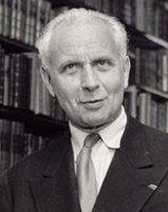
Louis Aragon
French writer and political activist who helped establish the Surrealist movement and joined the French Communist Party. He participated in the French Resistance during World War II and wrote the poem Il n'y a pas d'amour heureux, known in Turkish as Mutlu Aşk Yoktur.
Born on October 4, 1897
Died on December 24, 1982
Age at death: 85
Profession: Poet, Novelist, Essayist
Place of Birth: Paris, France
Place of Death: Paris, France
Louis Aragon was born on October 3, 1897, in Paris, France. He was a French poet, novelist, essayist, journalist, and political activist. He participated in the Dada movement and became one of the founders of Surrealism alongside André Breton and Philippe Soupault. He joined the French Communist Party in 1927 and participated in the French Resistance during World War II. His works include Le Paysan de Paris (1926), Les Cloches de Bâle (1934), Aurélien (1944), and La Semaine sainte (1958). His poem Il n'y a pas d'amour heureux is widely known in Turkey under the title Mutlu Aşk Yoktur.
Early Life and Education
Louis Aragon was born in Paris on October 3, 1897. His father was Louis Andrieux, a politician and former police prefect, and his mother was Marguerite Toucas-Massillon. As his parents were unmarried, his mother was presented to him as his older sister, while his maternal grandmother assumed the role of his mother. He learned the truth about his parentage in 1917.
He grew up in Paris and Neuilly-sur-Seine and attended the Lycée Carnot. In 1917, he began studying medicine in Paris. During World War I, he was mobilized as an auxiliary medical officer and served near the front, where he met fellow medical student André Breton. He received the Croix de Guerre for his wartime service.
After the war, Aragon abandoned his medical studies and concentrated on literature.
Dadaism and Surrealism
Louis Aragon began writing poetry at an early age. His first poems appeared in 1918 in the magazine Nord-Sud. In 1919, he worked with André Breton and Philippe Soupault on the literary magazine Littérature.
During this period, he participated in the Dada movement associated with Tristan Tzara. Dadaist writers challenged established artistic conventions, traditional literary forms, and the cultural values associated with World War I.
Aragon published his first poetry collection, Feu de joie, in 1920, followed by the novel Anicet ou le Panorama in 1921. He also published Le Libertinage in 1924.
In 1924, he became involved in the emerging Surrealist movement. He contributed to La Révolution surréaliste and published Une vague de rêves, a theoretical text exploring Surrealist writing.
His book Le Paysan de Paris (1926) combined observations of everyday urban life with dreams, imagination, and unusual associations. It became one of his principal works from the Surrealist period.
Communist Party and Political Writing
On January 6, 1927, Louis Aragon joined the French Communist Party. His political commitments gradually led him away from Surrealism.
He visited the Soviet Union and attended a revolutionary writers' conference in Kharkiv in 1930. His disagreements with André Breton and other Surrealists resulted in a definitive break in 1932.
Aragon worked for the Communist newspaper L'Humanité and contributed to the literary magazine Commune alongside Paul Nizan. He also attended the First Congress of Soviet Writers in 1934.
In 1935, he participated in the International Congress of Writers for the Defense of Culture in Paris. Two years later, he became co-director of the newspaper Ce soir with Jean-Richard Bloch.
His novels Les Cloches de Bâle (1934) and Les Beaux Quartiers (1936) examined French society and political conflicts. Les Beaux Quartiers won the Prix Renaudot in 1936.
Elsa Triolet and Personal Life
During the 1920s, Louis Aragon had a relationship with British writer and heiress Nancy Cunard. Following their separation in 1928, he attempted suicide while in Venice.
On November 6, 1928, he met Russian-born writer Elsa Triolet at the La Coupole café in Paris. Their relationship continued for more than four decades.
They married on February 28, 1939. Triolet was also a novelist and political activist. The couple worked together on literary and anti-fascist projects.
Aragon dedicated numerous poems to Elsa, including works in Les Yeux d'Elsa (1942), Le Roman inachevé (1956), and Elsa (1959).
In 1951, the couple settled at the Moulin de Villeneuve in Saint-Arnoult-en-Yvelines, where they maintained a home and writing retreat.
World War II and the French Resistance
Louis Aragon was mobilized again in 1939, following the outbreak of World War II. He served in the French Army during the German invasion of 1940 and received another military decoration.
During the occupation of France, he and Elsa Triolet participated in the French Resistance. They helped organize underground literary activities and contributed to clandestine publications.
In 1943, they helped establish the National Committee of Writers for southern France. Aragon published some Resistance poems under the pseudonyms François la Colère and Jacques Destaing.
His wartime poetry collections include Le Crève-cœur (1941), Les Yeux d'Elsa (1942), Le Musée Grévin (1943), and La Diane française (1944).
These works addressed war, occupation, resistance, France, and his relationship with Elsa Triolet.
Postwar Literary and Political Career
After the liberation of France, Louis Aragon continued working as a novelist, journalist, and Communist intellectual. He directed literary publications, including Les Lettres françaises, which he formally headed from 1953.
He became a member of the Central Committee of the French Communist Party during the early 1950s.
His major postwar works include the six-volume novel sequence Les Communistes (1949–1951), the poetry collection Le Roman inachevé (1956), and the historical novel La Semaine sainte (1958).
Later novels such as La Mise à mort (1965) and Blanche ou l'Oubli (1967) experimented with memory, identity, and narrative structure.
He participated in intellectual and political debates surrounding the May 1968 protests in France. That year, following the Soviet-led invasion of Czechoslovakia, Les Lettres françaises supported Czech writers and artists.
The Poem Il n'y a pas d'amour heureux
Louis Aragon wrote Il n'y a pas d'amour heureux (There Is No Happy Love) in 1943. The poem was included in La Diane française, published in 1944.
The poem addresses love, suffering, and the circumstances of wartime France. It was later set to music by Georges Brassens and performed by other French singers.
In Turkey, the poem became known as Mutlu Aşk Yoktur through its Turkish translation.
Later Years and Death
Elsa Triolet died on June 16, 1970. Louis Aragon continued writing and participating in cultural activities after her death.
In 1977, he donated his and Elsa's literary archives to the French National Centre for Scientific Research (CNRS).
Louis Aragon died in Paris on December 24, 1982, at the age of 85. He was buried alongside Elsa Triolet at the Moulin de Villeneuve in Saint-Arnoult-en-Yvelines.
Selected Works
Poetry1920 - Feu de joie (Fire of Joy)
1926 - Le Mouvement perpétuel (Perpetual Motion)
1931 - Persécuté persécuteur
1934 - Hourra l'Oural
1941 - Le Crève-cœur
1942 - Cantique à Elsa
1942 - Les Yeux d'Elsa (Elsa's Eyes)
1943 - Le Musée Grévin
1944 - La Diane française
1956 - Le Roman inachevé (The Unfinished Novel)
1959 - Elsa
1963 - Le Fou d'Elsa
Novels and Fiction
1921 - Anicet ou le Panorama
1924 - Le Libertinage
1926 - Le Paysan de Paris (Paris Peasant)
1934 - Les Cloches de Bâle (The Bells of Basel)
1936 - Les Beaux Quartiers (The Residential Quarter)
1942 - Les Voyageurs de l'impériale
1944 - Aurélien
1949–1951 - Les Communistes (Six Volumes)
1958 - La Semaine sainte (Holy Week)
1965 - La Mise à mort
1967 - Blanche ou l'Oubli
Essays and Prose
1924 - Une vague de rêves
1928 - Traité du style
1935 - Pour un réalisme socialiste
1946 - L'Homme communiste
1954 - La Lumière de Stendhal
There Is No Happy Love
Neither their strength, nor their weakness, nor their heart
And when they open their arms, their shadow becomes a cross
And when they embrace their happiness, they break it
Life is a strange and painful separation at every moment
There is no happy love
Life resembles these unarmed soldiers
Who dress and equip themselves for another fate
What good does it do them to rise early in the morning
When evening finds them idle and uncertain
Say these things, my life, and enough of all these tears
There is no happy love
My beautiful love, my sweet love, my bleeding wound
I carry you within me like a wounded bird
And those who watch us passing, without knowing
Repeat the words I weave behind me
Words that instantly came alive for your great eyes
There is no happy love
It is too late now to learn about life
Let our hearts weep together until morning
How much unhappiness is needed for the smallest song
How many regrets must pay for a single shiver
How many sobs are needed for a guitar melody
There is no happy love
There is no love that does not drown us in pain
There is no love that does not wound the heart
There is no love that leaves no mark upon us
And love of one's country is no different from love of you
There is no living love without tears
There is no happy love, and yet
Such is the love between us too
Louis Aragon
Source: Biyografiler.com
Frequently asked questions about Louis Aragon
Who is Louis Aragon?, Louis Aragon biography, Louis Aragon life story, Louis Aragon age, Louis Aragon facts, Louis Aragon birthplace, Louis Aragon photos, Louis Aragon videos, Louis Aragon career

Lamine Yamal
Professional footballer

Kylian Mbappe
Professional footballer

Brad Pitt
Actor

Erling Haaland
Professional footballer

Keanu Reeves
Actor

Leonardo DiCaprio
Actor

Loris Karius
Professional footballer

Louis Aragon
Poet, Novelist, Essayist

Louis Pasteur
Chemist, Biologist

Luca Toni
Professional footballer, Football Manager

Luc Besson
Film Director, Screenwriter

Luciano Benetton
Businessperson, Entrepreneur

Jensen Huang
Entrepreneur, CEO, Engineer

Lilly Wachowski
Film Director, Screenwriter

Liam Neeson
Actor
Loris Karius
Professional footballer

Oliver Kahn
Professional footballer

Prabowo Subianto
Politician, President, Military Commander