
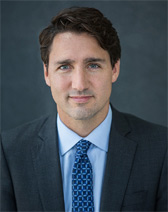
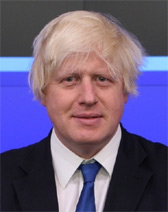
Justin Trudeau
Born on December 25, 1971
Age: 55
Profession: Politician
Place of Birth: Ottawa, Ontario, Canada
Justin Trudeau is the 23rd Prime Minister of Canada, a position he assumed after winning the federal elections held on October 19, 2015, and formally taking office on November 4, 2015. As the son of a former prime minister, he emerged as a defining political figure of his generation, gaining international recognition for his progressive agenda, commitment to multiculturalism, gender equality, and liberal democratic values.
Justin Pierre James Trudeau was born on December 25, 1971, in Ottawa, Ontario, Canada. His mother is Margaret Trudeau, and his father, Pierre Trudeau, served as Prime Minister of Canada during the periods 1969–1970 and 1980–1984. His parents divorced in 1984. He has siblings named Alexandre Trudeau, Michel Trudeau, and Sarah Elisabeth Coyne. Growing up in a highly political household deeply shaped his worldview and public identity.
Justin Trudeau began his early education at the French-language Collège Jean-de-Brébeuf. He graduated from McGill University in Montreal in 1994 and later completed his studies at the University of British Columbia in 1998. He continued his academic pursuits at the Université de Montréal, reflecting a sustained interest in education and public service.
After graduating in 1998, Justin Trudeau worked as a teacher in Vancouver, British Columbia. In 2007, he appeared in the Canadian historical film The Great War, directed by Brian McKenna, portraying the character of Talbot Papineau in a leading role. The film depicted Canada’s involvement in World War I and contributed to Trudeau’s public visibility beyond politics.
Following the death of his father in 2000, Justin Trudeau became increasingly active in politics. In 2008, he won the federal election in the Papineau riding and entered the House of Commons. In 2009, he was appointed as the Liberal Party’s critic for youth and multiculturalism, followed by his role as critic for citizenship and immigration in 2010. In 2011, he became the party’s critic for secondary education, youth, and amateur sports.
On April 14, 2013, Justin Trudeau was elected leader of the Liberal Party. Under his leadership, the party achieved a decisive victory in the general elections held on October 19, 2015, defeating the incumbent Conservative government led by Stephen Harper. Trudeau assumed office as Prime Minister on November 4, 2015, marking a clear ideological shift in Canadian politics.
On the global stage, Justin Trudeau positioned Canada firmly within the liberal international order. He developed close political and personal rapport with leaders such as Barack Obama, who openly praised Trudeau as a representative of a new generation of democratic leadership. Trudeau also worked closely with Angela Merkel and Emmanuel Macron on issues including climate change, migration, and the defense of multilateral institutions, particularly within the frameworks of the United Nations, the G7, the G20, and NATO. His interactions with leaders such as Boris Johnson further highlighted contrasting approaches to globalization and post-Brexit international relations.
At the 60th session of the United Nations, Justin Trudeau publicly stated, “I will continue to say out loud that I am a feminist.” Consistent with this declaration, he appointed women to 15 of the 30 cabinet positions in his first government, establishing a gender-balanced cabinet for the first time in Canadian history.
In 2016, during his tenure as prime minister, Justin Trudeau authorized the admission of 25,000 Syrian refugees into Canada, later announcing that this number would rise to 50,000. He represented Canada at the 2015 G20 Antalya Summit and the 2016 G7 Summit, reinforcing Canada’s role as an advocate for humanitarian policies and multilateral cooperation.
Justin Trudeau was re-elected as Prime Minister in the federal elections held on October 21, 2019, securing a second term despite a reduced parliamentary majority. His later years in office were marked by debates over economic management, climate policy, and Canada’s global positioning.
On January 6, 2025, Justin Trudeau announced his resignation from both the office of Prime Minister and the leadership of the Liberal Party. He remained in his roles on an interim basis until the party selected a new leader. On March 9, 2025, he formally stepped down as party leader at the Liberal Party convention, where Mark Carney was elected as his successor. Following this transition, Trudeau concluded his tenure as Prime Minister.
In his personal life, Justin Trudeau married Sophie Grégoire in 2005. The couple has three children: Xavier Trudeau, Ella-Grace Margaret Trudeau, and Hadrien Trudeau. Over the course of his political career, Justin Trudeau has remained a highly visible and often debated figure, symbolizing Canada’s liberal identity on the global stage while also attracting significant domestic criticism.
Filmography
2007 – The Great War (Talbot Papineau)
Source: Biyografiler.com
Frequently asked questions about Justin Trudeau
Who is Justin Trudeau?, Justin Trudeau biography, Justin Trudeau life story, Justin Trudeau age, Justin Trudeau facts, Justin Trudeau birthplace, Justin Trudeau photos, Justin Trudeau videos, Justin Trudeau career
Related Biographies

Lamine Yamal
Professional footballer

Erling Haaland
Professional footballer

Kylian Mbappe
Professional footballer

Austin Abrams
Actor

Bad Bunny
Rapper, Songwriter

Brad Pitt
Actor


Hongjoong
Singer, Rapper, Songwriter, Composer

Ludacris
Rapper, Actor

Kwon Eunbi
Singer

Sarah Wayne Callies
Actress, Screenwriter, Producer, Director

LaTavia Roberson
Singer, Actress, Entrepreneur

Mackenzie Davis
Actress
Lamine Yamal
Professional footballer

Jodie Foster
Actress
Erling Haaland
Professional footballer
Austin Abrams
Actor

Giorgia Meloni
Politician, Journalist