
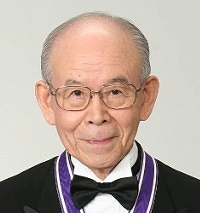
İsamu Akasaki
Japanese scientist and 2014 Nobel Prize in Physics laureate, internationally recognized for pioneering the development of efficient blue light-emitting diodes (LEDs), a breakthrough that made modern energy-saving white LED lighting possible.
Born on January 30, 1929
Died on April 1, 2021
Age at death: 92
Profession: Physicist, Engineer
Place of Birth: Chiran, Kagoshima Prefecture, Japan
Place of Death: Nagoya, Aichi Prefecture, Japan
Isamu Akasaki (January 30, 1929 – April 1, 2021) was a Japanese physicist, electrical engineer, and semiconductor researcher who played a central role in the development of efficient blue light-emitting diodes (LEDs). His research into gallium nitride (GaN) semiconductors helped overcome major technological obstacles that had prevented the production of practical blue LEDs for decades. In 2014, he received the Nobel Prize in Physics alongside Hiroshi Amano and Shuji Nakamura for their contributions to the invention of efficient blue light-emitting diodes, which enabled bright, energy-saving white light sources. His work helped establish the foundations of modern LED lighting, full-color electronic displays, and advanced semiconductor technologies. He held senior research positions at Nagoya University, Meijo University, and Matsushita Electric Industrial, contributing to semiconductor science for more than six decades.
Early Life and Background
Isamu Akasaki was born on January 30, 1929, in Chiran, a town in Kagoshima Prefecture on the island of Kyushu in Japan.
He grew up during a period of considerable political, industrial, and technological change in Japan. His childhood and adolescence coincided with the years preceding and during World War II.
Following the war, Japan began rebuilding its industrial and scientific institutions, with electronics and materials research becoming increasingly important to the country's economic development.
Akasaki developed an interest in science and pursued university studies in a field that would eventually lead him into semiconductor materials and electronic devices.
Education at Kyoto University
In 1952, Isamu Akasaki graduated from the Faculty of Science at Kyoto University. He studied chemistry, obtaining a Bachelor of Science degree.
His education provided a foundation in the physical and chemical properties of materials, knowledge that later became central to his research into semiconductor crystals.
Although his subsequent professional work was primarily associated with electrical and electronic engineering, his scientific background allowed him to approach semiconductor development through both materials science and device engineering.
After graduation, Akasaki entered industrial research rather than immediately continuing his academic studies.
Early Research Career at Kobe Kogyo Corporation
In 1952, Isamu Akasaki joined Kobe Kogyo Corporation, an electronics manufacturer that later became part of Fujitsu.
He worked as a research staff member until 1959, participating in the development and investigation of electronic materials.
His early assignments included research into phosphor materials, cathode-ray tube technology, and scintillators used to detect radiation.
These projects provided practical experience in materials processing, electronic device manufacturing, and the relationship between microscopic material properties and the performance of electronic components.
During this period, Akasaki developed knowledge of the technical challenges involved in producing materials with the consistency and quality required for commercial electronic applications.
Nagoya University and Doctoral Research
In 1959, Isamu Akasaki joined the Department of Electronics at Nagoya University.
Between 1959 and 1964, he served in academic research positions, including research associate, assistant professor, and associate professor.
His work focused on semiconductor materials and crystal growth, particularly the vapor-phase epitaxial growth of germanium.
Epitaxial growth is a process in which a crystalline layer is deposited on a substrate in a controlled manner. The technique is important in semiconductor manufacturing because the quality and structure of the resulting crystal influence the electrical and optical properties of electronic devices.
In 1964, Akasaki completed his doctoral research at Nagoya University and received a Doctor of Engineering degree in electronic engineering.
His doctoral work involved research into semiconductor crystal growth and the behavior of impurities during the epitaxial growth process.
Research at Matsushita Electric Industrial
After receiving his doctorate in 1964, Isamu Akasaki joined the Matsushita Research Institute Tokyo, associated with Matsushita Electric Industrial, the company later known as Panasonic.
He initially headed Basic Research Laboratory IV and subsequently became general manager of the Semiconductor Department.
He remained with the Matsushita research organization until 1981.
During these seventeen years, Akasaki conducted research into semiconductor crystals, electronic materials, and light-emitting devices.
Among his achievements were advances in high-quality gallium arsenide crystal growth and improvements in the performance of red light-emitting diodes based on gallium phosphide.
These investigations contributed to his understanding of the relationship between crystal quality, semiconductor conductivity, and light emission.
By the early 1970s, he had begun concentrating increasingly on the development of blue-emitting semiconductor devices.
Beginning of Blue LED Research
During the 1960s and 1970s, researchers had already developed light-emitting diodes that produced red and other relatively long-wavelength colors.
However, producing efficient blue light from semiconductor materials remained a major technological challenge.
Blue light requires photons with greater energy than red light, making the selection and development of appropriate semiconductor materials particularly difficult.
Isamu Akasaki recognized the potential of gallium nitride (GaN), a semiconductor material with properties suitable for producing blue and ultraviolet light.
Beginning around 1973, he pursued research intended to develop high-quality gallium nitride crystals and practical blue-emitting devices.
At the time, gallium nitride presented serious manufacturing difficulties. Researchers struggled to grow crystals with sufficiently low defect concentrations and to control their electrical conductivity.
These problems prevented the reliable fabrication of efficient blue LEDs.
Akasaki nevertheless continued investigating gallium nitride when many other researchers considered alternative semiconductor materials.
Gallium Nitride and Semiconductor Crystal Growth
One of the major obstacles in developing blue LEDs was the difficulty of producing high-quality gallium nitride crystals.
The material could not easily be grown in the large, uniform crystals required for effective semiconductor devices.
Structural defects in the crystal reduced electrical performance and made it difficult to generate light efficiently.
During his research at Matsushita, Isamu Akasaki investigated several crystal growth methods, including molecular beam epitaxy and hydride vapor-phase epitaxy.
In 1974, he succeeded in growing gallium nitride crystals using molecular beam epitaxy.
In 1978, his research group demonstrated a gallium nitride blue LED using hydride vapor-phase epitaxy. Although its efficiency remained too low for widespread practical use, the achievement demonstrated the potential of the material.
Akasaki concluded that improving crystal growth quality was essential before more advanced semiconductor devices could be produced.
This assessment shaped his subsequent research at Nagoya University.
Return to Nagoya University in 1981
In August 1981, Isamu Akasaki returned to Nagoya University as a professor in the Department of Electronics, Faculty of Engineering.
He remained in this position until March 1992.
At Nagoya University, he established a research group devoted to improving gallium nitride semiconductor materials and developing practical light-emitting devices.
Among the researchers who joined his laboratory was Hiroshi Amano, who would later share the 2014 Nobel Prize in Physics with Akasaki.
The research team concentrated on crystal growth, semiconductor doping, and the production of p-type and n-type gallium nitride.
These investigations addressed the fundamental scientific obstacles that had prevented the construction of efficient blue-emitting semiconductor junctions.
1985–1986 Breakthrough in Gallium Nitride Crystals
A major breakthrough occurred in 1985 when Isamu Akasaki and Hiroshi Amano developed a method for growing higher-quality gallium nitride crystals on sapphire substrates.
The technique involved introducing a thin aluminum nitride buffer layer between the sapphire substrate and the gallium nitride material.
This intermediate layer helped reduce defects and enabled the growth of gallium nitride crystals with significantly improved structural properties.
By 1986, the researchers had demonstrated the production of high-quality gallium nitride films using the buffer-layer technique.
The achievement provided a foundation for subsequent advances in semiconductor doping and device fabrication.
It also demonstrated that gallium nitride could be developed into a practical semiconductor material despite the difficulties that had previously limited its use.
Invention of the Gallium Nitride Blue LED
In 1989, Isamu Akasaki and his research team achieved a major advance by demonstrating a working gallium nitride p-n junction blue light-emitting diode.
A p-n junction is formed by combining two regions of semiconductor material with different electrical properties. When electrical current passes through the junction under suitable conditions, electrons and holes recombine and release energy in the form of light.
To achieve this result, Akasaki and Hiroshi Amano developed a method for producing p-type gallium nitride by introducing magnesium impurities and activating the material through electron-beam irradiation.
Combined with n-type semiconductor material, this approach allowed the creation of a functioning p-n junction capable of emitting blue light.
The 1989 breakthrough demonstrated a practical route toward high-brightness blue LEDs.
Further advances in gallium nitride technology during the early 1990s improved the efficiency and performance of blue-emitting devices.
Industrial development and commercialization followed, with high-brightness blue LEDs becoming commercially available during the 1990s.
The invention established a technological foundation for modern solid-state lighting and full-color displays.
Research Projects on Blue LEDs and Laser Diodes
From March 1987 to September 1990, Isamu Akasaki served as project leader for research and development involving gallium nitride-based blue light-emitting diodes.
The project received support from the Japan Science and Technology Agency (JST) and contributed to the refinement of the materials and manufacturing methods required for blue LED technology.
Between March 1993 and September 1999, he directed a further JST-supported project focused on short-wavelength gallium nitride-based semiconductor laser diodes.
Semiconductor laser diodes generate concentrated light and are used in optical communication, information storage, and other electronic technologies.
Research into gallium nitride and related semiconductor materials contributed to the development of blue and ultraviolet laser devices.
These advances subsequently became important for high-density optical data storage systems, including technologies associated with Blu-ray Disc.
Akasaki's research also supported progress in the design of heterostructures and quantum-well devices, which enabled improvements in semiconductor light-emission efficiency.
Meijo University and Later Academic Career
In April 1992, Isamu Akasaki joined Meijo University in Nagoya as a professor in the Faculty of Science and Technology.
He continued conducting research into gallium nitride semiconductors and related electronic devices.
Between April 1995 and March 1996, he served as a visiting professor at the Research Center for Interface Quantum Electronics at Hokkaido University.
From July 1996 to March 2001, he participated as a project leader in the Research for the Future Program supported by the Japan Society for the Promotion of Science (JSPS).
Between July 1996 and March 2004, he also directed research activities at Meijo University's High-Tech Research Center, supported by Japan's Ministry of Education, Culture, Sports, Science and Technology (MEXT).
These research programs focused on nitride semiconductors, crystal growth technologies, and advanced optoelectronic devices.
From November 1998, Akasaki was associated with the Finland Institute in Japan.
In 2004, he received the title of Distinguished Professor at Nagoya University, maintaining a formal connection with the institution where he had conducted much of his groundbreaking research.
In 2010, Meijo University appointed him a University Professor, and he subsequently became associated with its Research Center for Nitride Semiconductor Core Technologies, serving as director from 2011.
How LED Technology Works
LED stands for Light-Emitting Diode, an electronic semiconductor component that produces light when an electrical current passes through it.
Unlike conventional incandescent bulbs, which generate light by heating a filament, LEDs produce light through the movement and recombination of electrical charge carriers within semiconductor materials.
This process is known as electroluminescence.
Because LEDs do not depend on heating a filament to extremely high temperatures, they can convert a greater proportion of electrical energy into visible light.
LED lighting generally offers lower energy consumption, longer operating life, and greater durability than conventional incandescent lighting.
The development of efficient blue LEDs was particularly significant because it made practical white LED lighting possible.
Blue LEDs and the Development of White LED Lighting
Before the development of efficient blue LEDs, commercially available LEDs were primarily associated with red, orange, yellow, and green light.
White light can be generated by combining different colors of light or by using a blue LED with a phosphor coating that converts part of the blue light into longer wavelengths.
The combination creates light that appears white to the human eye.
The achievements of Isamu Akasaki, Hiroshi Amano, and Shuji Nakamura made efficient blue light sources available for these applications.
White LED lighting subsequently became widely used in homes, offices, factories, public streets, vehicles, and commercial buildings.
The technology also contributed to energy conservation by reducing the electricity required for artificial lighting.
Its long operating life reduced the frequency of lamp replacement and associated maintenance requirements.
Modern LED lighting has become an important component of energy-efficient building design and infrastructure development.
Applications in Displays and Electronic Devices
The development of blue LEDs also contributed to major advances in electronic display technology.
Full-color displays require the controlled combination of red, green, and blue light.
Efficient blue LEDs helped enable the production of full-color LED displays used in electronic signs, large video screens, information panels, and outdoor advertising.
LED technology also became important in television backlighting, computer monitors, smartphones, tablets, and other electronic devices.
Additional applications include vehicle lighting, traffic signals, medical equipment, industrial instruments, and optical communication systems.
The development of gallium nitride semiconductors also supported advances in power electronics and other technologies requiring efficient semiconductor materials.
2009 Kyoto Prize
In 2009, Isamu Akasaki received the Kyoto Prize in Advanced Technology.
The award recognized his pioneering research into gallium nitride semiconductors and the development of blue light-emitting devices.
The Kyoto Prize is an international award established by the Inamori Foundation to recognize contributions to science, technology, philosophy, and the arts.
Akasaki's recognition reflected the scientific importance of the gallium nitride research that had begun several decades earlier.
2014 Nobel Prize in Physics
On October 7, 2014, the Royal Swedish Academy of Sciences announced that Isamu Akasaki, Hiroshi Amano, and Shuji Nakamura would receive the Nobel Prize in Physics.
The award recognized their development of efficient blue light-emitting diodes, which enabled the production of bright and energy-saving white light sources.
Akasaki and Amano had collaborated at Nagoya University on the development of high-quality gallium nitride crystals and p-n junction blue LEDs.
Nakamura, a Japanese-born American scientist who had worked at Nichia Corporation, independently developed important advances in high-brightness blue LED technology.
The Nobel Committee emphasized the importance of the invention because efficient blue LEDs completed a technological requirement for practical white LED lighting.
The 2014 Nobel Prize was presented in Stockholm, Sweden, on December 10, 2014.
Akasaki was eighty-five years old when he received the award.
The recognition brought international attention to his decades of research into semiconductor materials and the challenges involved in producing blue light from gallium nitride.
Charles Stark Draper Prize and Other Honors
In 2015, Isamu Akasaki received the Charles Stark Draper Prize, presented by the National Academy of Engineering in the United States.
The award recognized the development of efficient blue LEDs and their contribution to modern lighting technology.
Akasaki shared the prize with Hiroshi Amano, Shuji Nakamura, Nick Holonyak Jr., and M. George Craford.
He also received the IEEE Edison Medal in 2011, one of the major honors awarded by the Institute of Electrical and Electronics Engineers.
That same year, he was awarded Japan's Order of Culture by Emperor Akihito for his contributions to science and technology.
His other distinctions included the Asahi Prize, Heinrich Welker Gold Medal, and the Medal with Purple Ribbon from the Japanese government.
In 2021, Akasaki was also named among the recipients of the Queen Elizabeth Prize for Engineering, recognizing the scientists and engineers whose work contributed to the development of modern LED lighting.
Personal Life
Isamu Akasaki was married to Ryoko Akasaki.
He spent much of his professional life in Nagoya, where he conducted research and taught at Nagoya University and Meijo University.
His scientific activities remained closely associated with the semiconductor research community in Japan, and he continued advising researchers and participating in academic work during his later years.
Death
Isamu Akasaki died on April 1, 2021, at a hospital in Nagoya, Aichi Prefecture, Japan, at the age of 92.
The cause of death was pneumonia.
Following his death, Japanese universities, scientific institutions, and international engineering organizations recognized his contributions to semiconductor research and the development of LED lighting.
His research had helped establish the technology underlying modern white LED lamps, blue semiconductor lasers, and numerous electronic display applications.
Major Scientific Contributions
1950s – Research into electronic materials, cathode-ray tube phosphors, and scintillators
1960s – Research into semiconductor crystal growth and vapor-phase epitaxy
1970 – Development of high-brightness red LEDs using gallium phosphide
1973 – Beginning of sustained research into gallium nitride-based blue light-emitting devices
1974 – Growth of gallium nitride crystals using molecular beam epitaxy
1978 – Demonstration of an early gallium nitride blue LED using hydride vapor-phase epitaxy
1985–1986 – Development of high-quality gallium nitride crystal growth using an aluminum nitride buffer layer
1989 – Demonstration of p-type gallium nitride and gallium nitride p-n junction blue LEDs
1990 – Advances in controlling n-type gallium nitride conductivity
1990s – Research supporting the development of efficient blue LEDs and short-wavelength semiconductor laser diodes
2000s – Continued development of nitride semiconductor research and optoelectronic technologies
Selected Awards and Honors
2021 – Queen Elizabeth Prize for Engineering, for contributions to LED lighting technology
2015 – Charles Stark Draper Prize, National Academy of Engineering
2014 – Nobel Prize in Physics, shared with Hiroshi Amano and Shuji Nakamura
2011 – Order of Culture, Japan
2011 – IEEE Edison Medal
2009 – Kyoto Prize in Advanced Technology
2002 – Order of the Rising Sun, Gold Rays with Neck Ribbon, Japan
2002 – Fujiwara Prize
2001 – Asahi Prize
1998 – IEEE Jack A. Morton Award
1998 – Rank Prize
1997 – Medal with Purple Ribbon, Government of Japan
1996 – IEEE/LEOS Engineering Achievement Award
1995 – Heinrich Welker Gold Medal, International Symposium on Compound Semiconductors
1991 – Chunichi Culture Award
Source: Biyografiler.com
Frequently asked questions about İsamu Akasaki
Who is İsamu Akasaki?, İsamu Akasaki biography, İsamu Akasaki life story, İsamu Akasaki age, İsamu Akasaki facts, İsamu Akasaki birthplace, İsamu Akasaki photos, İsamu Akasaki videos, İsamu Akasaki career
Related Biographies


Lamine Yamal
Professional footballer

Kylian Mbappe
Professional footballer

Brad Pitt
Actor

Erling Haaland
Professional footballer

Keanu Reeves
Actor

Leonardo DiCaprio
Actor

Louis Büchner
Physician, Philosopher, Writer

Louis Daguerre
Painter, Photographer

Louis de Broglie
Physicist, Researcher

Louis De Funes
Actor, Comedian, Screenwriter

Louis Douzette
Painter

Louise Glück
Poet

Jensen Huang
Entrepreneur, CEO, Engineer

Lilly Wachowski
Film Director, Screenwriter
Leonardo DiCaprio
Actor

Liam Neeson
Actor

Kristrun Frostadottir
Politician, Economist
Erling Haaland
Professional footballer