
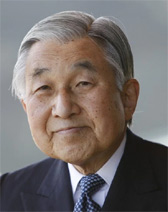
Akihito
125th Emperor of Japan (1989–2019), first Japanese emperor to abdicate in more than two centuries, and the monarch whose reign was known as the Heisei era.
Born on December 23, 1933
Age: 93
Profession: Former Emperor
Place of Birth: Tokyo, Japan
Akihito (born December 23, 1933) is the former Emperor of Japan, having served as the country's 125th emperor from January 7, 1989, until his abdication on April 30, 2019. A member of the Japanese imperial dynasty, traditionally known as the Yamato dynasty, he succeeded his father, Emperor Hirohito, following his death in 1989. His reign, officially known as the Heisei era, lasted more than thirty years and was associated with Japan's postwar constitutional monarchy, international diplomacy, and remembrance of World War II. On May 1, 2019, his eldest son, Naruhito, succeeded him as the 126th Emperor of Japan. Following his abdication, Akihito received the title Emperor Emeritus. In addition to his ceremonial responsibilities, he is recognized for his scientific research in ichthyology, particularly the classification and study of goby fish.
Early Life and Imperial Family Background
Akihito was born on December 23, 1933, at the Imperial Palace in Tokyo, Japan. His childhood title was Prince Tsugu (Tsugu-no-Miya).
He was the eldest son of Emperor Hirohito, also known posthumously as Emperor Shōwa, and Empress Kōjun, born Princess Nagako Kuni.
As a member of the Japanese imperial family, Akihito belonged to the hereditary imperial dynasty traditionally associated with the Chrysanthemum Throne.
He grew up with six siblings: Shigeko Higashikuni, known as Princess Teru; Sachiko, Princess Hisa; Kazuko Takatsukasa, known as Princess Taka; Atsuko Ikeda, known as Princess Yori; Masahito, Prince Hitachi; and Takako Shimazu, known as Princess Suga.
His eldest sister Shigeko was born in 1925, while his younger brother Masahito was born in 1935. Akihito was the first surviving son of Emperor Hirohito and consequently became the heir to the Japanese throne.
Childhood During World War II
Akihito spent his early childhood during the period when Japan was engaged in military expansion in East Asia and subsequently participated in World War II.
His father, Emperor Hirohito, occupied the throne during the conflict, and the imperial institution played a central role in Japan's political and ceremonial system.
In 1944, as Allied bombing raids increasingly threatened Japanese cities, Akihito was evacuated from Tokyo to a safer location in the countryside near Nikkō.
He was eleven years old during the final phase of the war. Although military traditions had historically influenced the upbringing of Japanese crown princes, he did not enter military service. His father did not authorize his participation in the armed forces.
Akihito remained outside Tokyo during the final months of the war and was in Nikkō when Japan surrendered in August 1945.
His childhood experiences of war, evacuation, and Japan's defeat later influenced his public interest in peace, historical remembrance, and reconciliation.
Postwar Education at Gakushūin
Following Japan's surrender in 1945, the country came under Allied occupation led by the United States. The occupation brought substantial changes to Japan's political institutions, education system, and constitutional structure.
Akihito continued his secondary education at Gakushūin, an institution historically associated with the education of members of the Japanese aristocracy and imperial family.
His education included Japanese history, literature, languages, and subjects intended to prepare him for future ceremonial responsibilities.
During the occupation, he also received English-language instruction from American educator Elizabeth Gray Vining, who was appointed as a tutor to the young crown prince.
Vining's teaching introduced him to aspects of American culture, literature, and educational methods. Her influence became part of the broader changes in the education of the imperial family after World War II.
Akihito developed an interest in sports, particularly tennis and horseback riding. He also became interested in natural sciences, an interest that later developed into extensive research in marine biology.
The Postwar Japanese Constitution and the Imperial Institution
The adoption of Japan's postwar constitution in 1947 fundamentally changed the constitutional position of the emperor.
Under the new constitution, political sovereignty was vested in the Japanese people rather than in the emperor.
The emperor became the symbol of the state and the unity of the people, with duties defined by the constitution and performed according to the advice and approval of the cabinet.
These duties included ceremonial appointments, receiving foreign ambassadors, participating in state ceremonies, and performing other constitutionally prescribed acts.
Unlike the constitutional arrangements associated with the prewar period, the emperor no longer exercised independent governmental authority.
This political framework shaped Akihito's education and later responsibilities as crown prince and emperor.
Appointment as Crown Prince in 1952
In November 1952, Akihito formally underwent his coming-of-age ceremony and investiture as Crown Prince of Japan.
The ceremony confirmed his position as heir to the Chrysanthemum Throne and marked the beginning of his official responsibilities as a representative of the imperial family.
That same year, he entered the Faculty of Political Science and Economics at Gakushūin University in Tokyo.
His university studies included political science and subjects associated with Japan's constitutional and administrative system.
He completed his university education in 1956. His studies were accompanied by additional instruction in Japanese history, constitutional law, and international affairs.
First Overseas Visit and Queen Elizabeth II's Coronation
In June 1953, Akihito made his first official overseas journey as Crown Prince of Japan.
He traveled to London, United Kingdom, to represent Japan at the coronation of Queen Elizabeth II at Westminster Abbey on June 2, 1953.
The visit occurred during a period when Japan was rebuilding diplomatic relationships with countries that had been its adversaries during World War II.
Following the coronation, Akihito traveled to additional countries in Europe and North America, participating in diplomatic and cultural engagements.
These visits contributed to his preparation for the international responsibilities of the Japanese imperial family.
Marriage to Michiko Shōda
On April 10, 1959, Akihito married Michiko Shōda, the daughter of businessman Hidesaburō Shōda, whose family was associated with the Japanese food manufacturing industry.
Michiko had studied at the University of the Sacred Heart in Tokyo and came from a wealthy but non-aristocratic family.
The couple reportedly met while playing tennis in Karuizawa, a mountain resort town in Nagano Prefecture.
The marriage attracted considerable public attention because Michiko was the first commoner to marry a Japanese crown prince in modern times.
Although Michiko had received her education at Catholic institutions, she was not formally a Catholic at the time of the marriage. Her marriage to Akihito took place according to Japanese imperial traditions associated with Shinto ceremonies.
The wedding was nationally televised and became a major public event in postwar Japan.
After their marriage, the couple carried out official duties together and traveled internationally as representatives of the Japanese imperial family.
Children and Family Life
Akihito and Michiko Shōda have three children: two sons and one daughter.
Their eldest son, Naruhito, was born on February 23, 1960. He subsequently became Crown Prince and succeeded his father as Emperor of Japan in 2019.
Their second son, Fumihito, Prince Akishino, was born on November 30, 1965. He became Crown Prince following Naruhito's accession to the throne.
Their daughter, Sayako Kuroda, was born on April 18, 1969. She was formerly known as Princess Nori before marrying Yoshiki Kuroda in 2005.
Under Japan's Imperial House Law, Sayako lost her imperial family status upon marrying a commoner.
Akihito and Michiko were noted for taking an active role in raising their children, departing from certain earlier traditions in which imperial children were largely raised by attendants and tutors.
Scientific Research and Ichthyology
In addition to his responsibilities as crown prince, Akihito developed a serious interest in marine biology and ichthyology, the scientific study of fish.
His research focused particularly on gobies, a group of small fish found in marine, freshwater, and brackish environments.
He studied their classification, anatomical characteristics, and distribution, contributing to scientific publications concerning goby species.
His research was associated with the Biological Laboratory of the Imperial Household and Japanese scientific institutions.
Akihito published numerous scientific papers and contributed to the identification and classification of fish species.
His work received recognition from ichthyologists in Japan and abroad, and he developed professional relationships with researchers in marine biology and taxonomy.
His scientific activities continued after he became emperor, making him an unusual figure among modern constitutional monarchs because of his sustained participation in academic research.
Emperor Hirohito's Final Illness
In September 1988, Emperor Hirohito became seriously ill, and his medical condition increasingly prevented him from performing official duties.
On September 18, 1988, the imperial household announced that the emperor's condition had deteriorated.
As Crown Prince, Akihito assumed an increased number of official responsibilities during his father's illness.
On September 22, 1988, he began performing certain state functions on behalf of the emperor under the constitutional arrangements governing the delegation of imperial duties.
Although he carried out these responsibilities, Akihito did not formally become emperor in September 1988. He remained crown prince until his father's death.
Accession to the Chrysanthemum Throne in 1989
On January 7, 1989, Emperor Hirohito died at the age of 87.
Following his father's death, Akihito immediately succeeded to the Chrysanthemum Throne as the 125th Emperor of Japan.
His accession marked the beginning of a new imperial era known as Heisei, meaning a period associated with peace.
The Heisei era officially began on January 8, 1989, the day after Hirohito's death.
Akihito's formal enthronement ceremony took place at the Imperial Palace in Tokyo on November 12, 1990.
The ceremony was attended by representatives from 158 countries, including monarchs, presidents, government officials, and diplomats.
His reign continued under Japan's postwar constitutional framework, in which the emperor performs ceremonial functions but does not exercise governmental authority.
Emperor of Japan During the Heisei Era
During his reign from 1989 to 2019, Akihito carried out ceremonial duties, received international visitors, and represented Japan at domestic and international events.
He regularly participated in state ceremonies, national commemorations, and public engagements alongside Empress Michiko Shōda.
The imperial couple visited numerous regions of Japan, meeting residents affected by natural disasters, economic difficulties, and other major events.
Akihito's public activities frequently emphasized sympathy toward victims of war and disasters, remembrance of historical suffering, and the importance of peace.
He also made international visits intended to strengthen cultural and diplomatic relationships between Japan and other countries.
War Remembrance and International Relations
Throughout his reign, Akihito participated in ceremonies commemorating those who died during World War II.
He visited sites associated with the war, including Okinawa, Hiroshima, Nagasaki, and other locations affected by military conflict.
His activities included meetings with survivors, families of victims, and people affected by wartime displacement.
Akihito also visited several countries in Asia and the Pacific that had experienced Japanese military occupation or wartime violence.
These visits were widely interpreted as part of his efforts to promote reconciliation and acknowledge the suffering associated with Japan's wartime history.
Although the emperor was constitutionally prohibited from engaging in political activity, his public statements and ceremonial actions contributed to discussions about historical memory and national identity.
Health Problems and Medical Treatment
Akihito experienced several significant health problems during his later years as emperor.
In December 2002, he was diagnosed with prostate cancer.
On January 18, 2003, he underwent surgery at the University of Tokyo Hospital to remove the prostate gland.
Following the operation, he received medical monitoring and treatment while gradually resuming official duties.
In February 2012, Akihito underwent coronary artery bypass surgery after examinations revealed narrowing of blood vessels supplying the heart.
The operation took place on February 18, 2012, at the University of Tokyo Hospital.
During periods of hospitalization and recovery, Crown Prince Naruhito temporarily performed certain official duties on his father's behalf.
These health problems contributed to public concern about the increasing demands of ceremonial responsibilities on an aging emperor.
2016 Abdication Announcement
In August 2016, Akihito delivered a nationally televised address in which he expressed concern about his ability to continue fulfilling his duties as emperor because of advancing age and declining physical strength.
The address did not directly request abdication, but it was widely understood as indicating his desire to step down from the throne.
At the time, Japanese law did not provide a general procedure for a living emperor to abdicate.
The government and parliament subsequently examined the legal arrangements necessary to permit Akihito to relinquish the throne.
In June 2017, Japan's parliament approved special legislation authorizing his abdication.
The legislation created a procedure specifically applicable to Akihito rather than establishing a permanent general rule allowing all future emperors to abdicate.
His decision was historically significant because no Japanese emperor had abdicated for more than two centuries.
Abdication on April 30, 2019
On April 30, 2019, Akihito formally abdicated the Chrysanthemum Throne after thirty years as Emperor of Japan.
The abdication ceremony took place at the Imperial Palace in Tokyo in the presence of members of the imperial family and senior government officials.
His departure from the throne marked the end of the Heisei era.
Akihito became the first Japanese emperor to abdicate since Emperor Kōkaku, who stepped down in 1817.
Following his abdication, he received the title Emperor Emeritus, while his wife Michiko became Empress Emerita.
Succession of Emperor Naruhito
On May 1, 2019, Akihito's eldest son, Naruhito, succeeded him as the 126th Emperor of Japan.
Naruhito's accession marked the beginning of the Reiwa era, succeeding the Heisei era associated with his father's reign.
Fumihito, Prince Akishino, Akihito's younger son, became first in line to the throne and was formally proclaimed Crown Prince in November 2020.
After the succession, Akihito withdrew from regular imperial duties and began a quieter life as Emperor Emeritus.
Life as Emperor Emeritus
Since his abdication in 2019, Akihito has continued living in Japan with Empress Emerita Michiko Shōda.
He has largely withdrawn from the public ceremonial duties associated with the imperial throne, which are now performed by Emperor Naruhito.
His activities have included private study, reading, scientific interests, and time spent with family.
As of October 2026, Akihito remains Emperor Emeritus of Japan, while his eldest son continues to serve as the country's reigning emperor.
Family Members
Parents:
Father – Hirohito (Emperor Shōwa)
Mother – Empress Kōjun (Princess Nagako Kuni)
Siblings:
Shigeko Higashikuni (Princess Teru; 1925–1961)
Sachiko, Princess Hisa (1927–1928)
Kazuko Takatsukasa (Princess Taka; 1929–1989)
Atsuko Ikeda (Princess Yori; born 1931)
Masahito, Prince Hitachi (born 1935)
Takako Shimazu (Princess Suga; born 1939)
Spouse:
Michiko Shōda (married April 10, 1959)
Children:
Naruhito (born February 23, 1960; Emperor of Japan since 2019)
Fumihito, Prince Akishino (born November 30, 1965)
Sayako Kuroda (born April 18, 1969)
Major Dates and Imperial Milestones
1933 – Born in Tokyo as Prince Tsugu
1944 – Evacuated from Tokyo during World War II
1952 – Invested as Crown Prince of Japan
1953 – Represented Japan at the coronation of Queen Elizabeth II
1956 – Completed his education at Gakushūin University
1959 – Married Michiko Shōda
1960 – Birth of eldest son Naruhito
1965 – Birth of second son Fumihito, Prince Akishino
1969 – Birth of daughter Sayako Kuroda
1988 – Assumed additional official duties during Emperor Hirohito's illness
1989 – Acceded to the throne as the 125th Emperor of Japan
1990 – Formal enthronement ceremony at the Imperial Palace
2003 – Underwent surgery for prostate cancer
2012 – Underwent coronary artery bypass surgery
2016 – Publicly expressed concerns about continuing imperial duties because of age and health
2017 – Special legislation authorizing his abdication approved by the Japanese parliament
2019 – Abdicated the throne on April 30
2019 – Succeeded by Emperor Naruhito on May 1
2019–present – Emperor Emeritus of Japan
Source: Biyografiler.com
Frequently asked questions about Akihito
Who is Akihito?, Akihito biography, Akihito life story, Akihito age, Akihito facts, Akihito birthplace, Akihito photos, Akihito videos, Akihito career

Lamine Yamal
Professional footballer

Erling Haaland
Professional footballer

Keanu Reeves
Actor

Kylian Mbappe
Professional footballer

Austin Abrams
Actor

Bad Bunny
Rapper, Songwriter

Alex Konanykhin
Entrepreneur, Investor

Alexis Tsipras
Politician, Former Prime Minister

Alan Arkin
Actor, Film Director

Alain Resnais
Film Director, Screenwriter

Alain Prost
Formula 1 Driver

Akon
Singer, Rapper

Adewale Akinnuoye-Agbaje
Actor, Former Model

John Healey
Politician
Erling Haaland
Professional footballer

Ursula von der Leyen
Politician, Physician

Christine Lagarde
Lawyer, Politician
Lamine Yamal
Professional footballer