
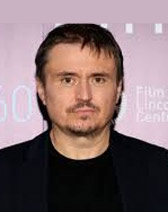
Cristian Mungiu
The Moral Architect of the Romanian New Wave
Born on April 27, 1968
Age: 58
Profession: Film Director, Screenwriter, Producer
Place of Birth: Iași, Romania
Cristian Mungiu is a Romanian film director, screenwriter, and producer widely regarded as one of the most important figures of the Romanian New Wave. Known for his restrained visual style, long takes, realistic performances, and morally complex stories, Cristian Mungiu has built a cinema centered on social pressure, bureaucracy, institutional failure, personal responsibility, and the quiet violence of everyday life. His films rarely offer simple answers; instead, they place viewers inside ethical dilemmas shaped by family, politics, religion, fear, and social systems.
Early Life and Education
Cristian Mungiu was born on April 27, 1968, in Iași, Romania. He is the son of Ostin Mungiu, a doctor and professor at Iași University, and Maria Mungiu, a teacher of Romanian language and literature. Growing up in an academic family gave Cristian Mungiu early exposure to literature, language, education, and intellectual debate.
He studied English language and literature at Alexandru Ioan Cuza University in Iași. Before turning fully to cinema, Cristian Mungiu worked as a teacher and journalist, gaining experience in print media, radio, and television. This background contributed to the observational quality of his later films, which often examine how institutions, language, silence, and social behavior shape individual lives.
After his early professional experience, he moved to Bucharest and studied film directing at the Caragiale National University of Theatre and Film. He graduated in 1998 and began his career by directing short films, gradually developing the austere and precise cinematic language that would define his mature work.
Early Career and First Feature
Cristian Mungiu first gained attention through short films before making his feature debut with Occident in 2002. The film examined migration, aspiration, and the desire of many Romanians to leave the country after the fall of communism. Its mixture of social observation and restrained irony introduced several themes that would continue throughout his career.
Occident was shown at international festivals and helped place Cristian Mungiu among the emerging Romanian filmmakers who were beginning to attract global attention. Alongside directors such as Cristi Puiu, Corneliu Porumboiu, and Radu Muntean, he became associated with a new cinematic movement marked by realism, moral ambiguity, and sharp social critique.
Breakthrough with 4 Months, 3 Weeks and 2 Days
Cristian Mungiu achieved worldwide recognition with 4 Months, 3 Weeks and 2 Days in 2007. Set during communist Romania, the film follows two young women as they navigate the fear and danger surrounding an illegal abortion. Through the story of Otilia and Găbița, played by Anamaria Marinca and Laura Vasiliu, Mungiu created one of the most powerful cinematic portraits of life under authoritarian pressure.
The film won the Palme d’Or at the Cannes Film Festival, making Cristian Mungiu the first Romanian director to receive the festival’s highest honor. Its international success brought unprecedented attention to Romanian cinema and established Mungiu as one of Europe’s leading auteurs.
Rather than using melodrama, Cristian Mungiu built the film through silence, tension, long takes, and moral discomfort. The result was a work that forced viewers to confront fear, complicity, vulnerability, and survival without offering easy judgment.
Later Films and Moral Tensions
After his Cannes triumph, Cristian Mungiu continued exploring individuals trapped between private conscience and public systems. In 2009, he contributed to Tales from the Golden Age, an anthology film inspired by urban legends from communist Romania. The project combined satire, memory, and political absurdity, showing another side of his interest in the legacy of authoritarian culture.
In 2012, he directed Beyond the Hills, a drama dealing with faith, institutional religion, personal dependency, and social neglect. The film starred Cristina Flutur and Cosmina Stratan, both of whom won acting honors at Cannes. Its stark portrayal of devotion, isolation, and spiritual authority reinforced Mungiu’s reputation for cinema built around ethical uncertainty.
In 2016, Cristian Mungiu released Graduation, a film focused on family, education, corruption, and compromise. Through the story of a father trying to secure his daughter’s future, the film examined how ordinary people justify moral concessions inside broken systems. Mungiu won the Best Director award at Cannes for this film.
His 2022 film R.M.N. explored xenophobia, ethnic tension, economic anxiety, and collective fear in a Transylvanian village. The film showed how communities react to outsiders and how social panic can expose hidden prejudices. With R.M.N., Cristian Mungiu expanded his focus from individual moral crisis to a wider portrait of contemporary European unease.
Fjord and Second Palme d’Or
In 2026, Cristian Mungiu returned to major international attention with Fjord, a Norwegian-set family drama starring Sebastian Stan and Renate Reinsve. The film examines migration, cultural conflict, religious values, parenting, child protection, and state intervention through the story of Romanian parents living in Norway.
Fjord won the Palme d’Or at the 2026 Cannes Film Festival, giving Cristian Mungiu his second win of the festival’s top prize after 4 Months, 3 Weeks and 2 Days. With this achievement, he joined the rare group of filmmakers who have won the Palme d’Or more than once.
The film strengthened Mungiu’s reputation as a director concerned with moral systems rather than simple villains. As in his earlier works, the central conflict of Fjord emerges not from spectacle, but from clashing values, institutional authority, family fear, and the difficulty of empathy across cultural borders.
Style and Themes
Cristian Mungiu is known for a cinematic style built on restraint, realism, and ethical pressure. His films often use long takes, naturalistic acting, controlled camera movement, and minimal music. Rather than guiding the audience toward a clear moral conclusion, he creates situations in which every choice carries emotional and social consequences.
His recurring themes include bureaucracy, corruption, authoritarian memory, migration, gender, religion, family obligation, and institutional power. His characters are rarely heroic in a conventional sense. They are ordinary people forced to act under pressure, often inside systems that punish honesty and reward compromise.
This approach places Cristian Mungiu among the most significant European directors of the 21st century. His work is frequently discussed alongside the films of Cristi Puiu, Corneliu Porumboiu, Michael Haneke, and Ken Loach, all of whom have examined social structures through rigorous cinematic form.
Personal Life
Cristian Mungiu married Izabela Coman in 1991. He has generally kept his private life away from public attention, allowing his films and festival presence to define his public image.
As a filmmaker, Cristian Mungiu remains closely associated with Romania’s post-communist cultural identity, but his later work has expanded into broader European questions about migration, identity, morality, and institutional control.
Films and Television
2002 – Occident – (Director / Screenwriter) – Feature Film
2007 – 4 Months, 3 Weeks and 2 Days – (Director / Screenwriter / Producer) – Feature Film
2009 – Tales from the Golden Age – (Screenwriter / Producer / Segment Director) – Anthology Feature Film
2012 – Beyond the Hills – (Director / Screenwriter / Producer) – Feature Film
2016 – Graduation – (Director / Screenwriter / Producer) – Feature Film
2022 – R.M.N. – (Director / Screenwriter / Producer) – Feature Film
2026 – Fjord – (Director / Screenwriter) – Feature Film
Source: Biyografiler.com
Cristian Mungiu Movies
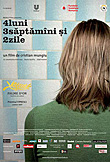
4 Luni, 3 Saptamani si 2 Zile
Release Date: January 25, 2008
Director: Cristian Mungiu
Writer: Cristian Mungiu
Cast: Anamaria Marinca, Laura Vasiliu, Vlad Ivanov, Alexandru Potocean, Ion Sapdaru
Frequently asked questions about Cristian Mungiu
Who is Cristian Mungiu?, Cristian Mungiu biography, Cristian Mungiu life story, Cristian Mungiu age, Cristian Mungiu facts, Cristian Mungiu birthplace, Cristian Mungiu photos, Cristian Mungiu videos, Cristian Mungiu career
Related Biographies


Lamine Yamal
Professional footballer

Sam Altman
Entrepreneur, Investor, CEO

Kylian Mbappe
Professional footballer

Alice Weidel
Politician, Economist

Erling Haaland
Professional footballer

Giorgia Meloni
Politician, Journalist


Hongjoong
Singer, Rapper, Songwriter, Composer

Ludacris
Rapper, Actor

Kwon Eunbi
Singer

Sarah Wayne Callies
Actress, Screenwriter, Producer, Director

LaTavia Roberson
Singer, Actress, Entrepreneur
Lamine Yamal
Professional footballer

Austin Abrams
Actor

Xi Jinping
Politician, Statesman, Head of State

Claudia Sheinbaum
President, Politician, Scientist, Academic

Colman Domingo
Actor, Director, Producer

Kaia Gerber
Model, Actress