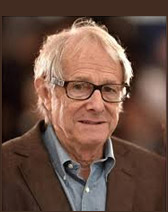
Ken Loach
A defining figure of social realist cinema and politically engaged filmmaking
Born on June 17, 1936
Age: 90
Profession: Film Director
Place of Birth: Nuneaton, Warwickshire, United Kingdom
Ken Loach, born Kenneth Loach on June 17, 1936, in United Kingdom’s Warwickshire region, in the town of Nuneaton, is widely regarded as one of the most influential directors in European cinema. Known for his deeply humanistic storytelling and uncompromising focus on social injustice, Ken Loach has built a career centered on themes such as poverty, unemployment, housing crises, and workers’ rights. His films, shaped by socialist ideals and a commitment to realism, have positioned him alongside major auteurs like Mike Leigh and Stephen Frears as a defining voice in British social realist cinema.
Early Life and Background
The son of an electrician, Ken Loach grew up in a working-class environment that would later profoundly influence his artistic perspective. He pursued higher education at St Peter's College, Oxford, where he studied law. During his university years, however, his interest gradually shifted toward performance and storytelling, particularly theater and acting.
After graduating in 1957, Ken Loach served for two years in the Royal Air Force. Upon completing his service, he turned decisively toward the arts, working as an actor in regional theater companies. His early exposure to working-class narratives and collective performance would later inform the collaborative and naturalistic style that became a hallmark of his filmmaking. In 1961, he joined the Northampton Repertory Theatre as an assistant director, marking the beginning of his transition into directing.
Career Beginnings in Television
Ken Loach began his professional directing career in 1963 when he joined the BBC, a pivotal institution in shaping postwar British television drama. During the 1960s, he directed several influential productions, including Z Cars, Diary of a Young Man, and the landmark television film Cathy Come Home (1966).
This latter work became a cultural turning point. Depicting the disintegration of a working-class family due to homelessness and unemployment, Cathy Come Home sparked widespread public debate in United Kingdom and contributed to the formation of housing charities and advocacy movements. The production was later ranked among the greatest British television programs by the British Film Institute, solidifying Ken Loach’s reputation as a socially conscious storyteller.
Breakthrough in Cinema
Ken Loach made his feature film debut with Poor Cow in 1967, but it was Kes (1969) that brought him international recognition. The film tells the story of a troubled boy who finds solace in training a kestrel, offering a poignant critique of the British education system and class inequality. Widely regarded as one of the greatest British films ever made, Kes received a nomination at the British Academy Film Awards.
His early cinematic work positioned him as a leading figure in politically engaged filmmaking, often compared with directors such as Jean-Luc Godard and Pier Paolo Pasolini for his ideological commitment and narrative realism.
Challenges and Political Tensions
The 1970s and 1980s proved to be a difficult period for Ken Loach. His openly political stance led to challenges in film distribution, censorship issues, and the shelving of several television projects. Despite these obstacles, he continued to produce significant works such as The Gamekeeper and Looks and Smiles.
His 1984 documentary Which Side Are You On? became particularly controversial during the era of Margaret Thatcher. The film, sympathetic to striking coal miners, was effectively suppressed, highlighting the tense relationship between Ken Loach’s cinema and governmental authority.
International Recognition and Artistic Resurgence
The 1990s marked a major resurgence in Ken Loach’s career, as he gained renewed international acclaim. Films such as Hidden Agenda (1990), Riff-Raff (1991), Raining Stones (1993), Ladybird Ladybird (1994), and Carla's Song (1996) reinforced his reputation as a master of social realism.
One of his most significant works from this period, Land and Freedom (1995), explored the Spanish Civil War and received both the FIPRESCI International Critics’ Prize and the Ecumenical Jury Award at the Cannes Film Festival. The film’s political depth and historical sensitivity further aligned Ken Loach with filmmakers like Costa-Gavras, known for politically charged cinema.
Major Works and Cannes Success
Ken Loach continued to explore labor issues and social inequality in the 2000s with films such as Bread and Roses (2000), focusing on immigrant cleaning workers in the United States, and The Navigators (2001), which examined the consequences of railway privatization in United Kingdom.
His global prestige reached its peak when he won the prestigious Palme d’Or at the Cannes Film Festival twice. The first came with The Wind That Shakes the Barley (2006), a historical drama about Irish resistance during the 1920s. A decade later, he won again with I, Daniel Blake (2016), a powerful critique of bureaucratic systems and welfare policies. These achievements placed him among a select group of directors, including Francis Ford Coppola and Michael Haneke, who have received the honor multiple times.
Other notable works from this period include The Angels' Share (2012), Jimmy's Hall (2014), and Sorry We Missed You (2019), all of which continued his exploration of economic hardship and systemic inequality in contemporary society.
Political Stance and Public Actions
Throughout his career, Ken Loach has remained a politically engaged artist. In 2009, he withdrew his film Looking for Eric from a festival in Melbourne as a form of protest against one of the event’s sponsors, citing concerns over political affiliations. He argued that art should not exist in the shadow of conflict.
In 2012, he refused a lifetime achievement award at the Turin Film Festival, using the platform to protest labor conditions affecting subcontracted workers at the National Cinema Museum. These actions reinforced his reputation as a filmmaker whose activism extends beyond the screen.
Personal Life
Ken Loach married Lesley Ashton on July 17, 1962. The couple has five children: Stephen Loach, Nicholas Loach, Hannah Loach, Emma Loach, and Jim Loach. Among them, Jim Loach followed in his father’s footsteps, establishing a career as a film and television director.
Filmography
Ken Loach’s extensive body of work spans both television and cinema, reflecting decades of consistent engagement with social and political themes.
Television Works
1962 – Z Cars – (Director) – (TV Series)
1964 – Diary of a Young Man – (Director) – (TV Series)
1965 – 3 Clear Sundays – (Director) – (TV Movie)
1965 – Up the Junction – (Director) – (TV Movie)
1965 – The End of Arthur's Marriage – (Director) – (TV Movie)
1965 – Coming Out Party – (Director) – (TV Movie)
1966 – Cathy Come Home – (Director) – (TV Movie)
1967 – In Two Minds – (Director) – (TV Movie)
1968 – The Golden Vision – (Director) – (TV Movie)
1969 – The Big Flame – (Director) – (TV Movie)
1971 – The Rank and the File – (Director) – (TV Movie)
1971 – After a Lifetime – (Director) – (TV Movie)
1973 – A Misfortune – (Director) – (TV Movie)
1975 – Days of Hope – (Director) – (Mini Series)
1977 – The Price of Coal – (Director) – (TV Movie)
1980 – Auditions – (Director) – (TV Movie)
1981 – A Question of Leadership – (Director) – (TV Movie)
1983 – The Red and the Blue – (Director) – (TV Movie)
1983 – Questions of Leadership – (Director) – (TV Movie)
1989 – The View from the Woodpile – (Director) – (TV Movie)
Feature Films and Documentaries
1967 – Poor Cow – (Director) – (Feature Film)
1969 – Kes – (Director) – (Feature Film)
1971 – The Save the Children Fund Film – (Director) – (Documentary)
1971 – Family Life – (Director) – (Feature Film)
1979 – Black Jack – (Director) – (Feature Film)
1980 – The Gamekeeper – (Director) – (Feature Film)
1981 – Looks and Smiles – (Director) – (Feature Film)
1984 – Which Side Are You On? – (Director) – (Documentary)
1986 – Fatherland – (Director) – (Feature Film)
1990 – Hidden Agenda – (Director) – (Feature Film)
1991 – Riff-Raff – (Director) – (Feature Film)
1993 – Raining Stones – (Director) – (Feature Film)
1994 – Ladybird Ladybird – (Director) – (Feature Film)
1995 – Land and Freedom – (Director) – (Feature Film)
1995 – A Contemporary Case for Common Ownership – (Director) – (Documentary)
1996 – Carla's Song – (Director) – (Feature Film)
1997 – The Flickering Flame – (Director) – (Documentary)
1998 – My Name Is Joe – (Director) – (Feature Film)
2000 – Bread and Roses – (Director) – (Feature Film)
2001 – The Navigators – (Director) – (Feature Film)
2002 – Sweet Sixteen – (Director) – (Feature Film)
2004 – Ae Fond Kiss... – (Director) – (Feature Film)
2005 – Tickets – (Director) – (Feature Film)
2006 – The Wind That Shakes the Barley – (Director) – (Feature Film)
2007 – It's a Free World... – (Director) – (Feature Film)
2009 – Looking for Eric – (Director) – (Feature Film)
2010 – Route Irish – (Director) – (Feature Film)
2012 – The Angels' Share – (Director) – (Feature Film)
2013 – The Spirit of '45 – (Director) – (Documentary)
2014 – Jimmy's Hall – (Director) – (Feature Film)
2016 – I, Daniel Blake – (Director) – (Feature Film)
2019 – Sorry We Missed You – (Director) – (Feature Film)
Source: Biyografiler.com
Frequently asked questions about Ken Loach
Who is Ken Loach?, Ken Loach biography, Ken Loach life story, Ken Loach age, Ken Loach facts, Ken Loach birthplace, Ken Loach photos, Ken Loach videos, Ken Loach career
Related Biographies

Lamine Yamal
Professional footballer

Sam Altman
Entrepreneur, Investor, CEO

Kylian Mbappe
Professional footballer

Alice Weidel
Politician, Economist

Erling Haaland
Professional footballer

Giorgia Meloni
Politician, Journalist


Hongjoong
Singer, Rapper, Songwriter, Composer

Ludacris
Rapper, Actor

Kwon Eunbi
Singer

Sarah Wayne Callies
Actress, Screenwriter, Producer, Director

LaTavia Roberson
Singer, Actress, Entrepreneur
Lamine Yamal
Professional footballer

Xi Jinping
Politician, Statesman, Head of State

Austin Abrams
Actor

Pedro Sanchez
Politician

Claudia Sheinbaum
President, Politician, Scientist, Academic

Colman Domingo
Actor, Director, Producer