
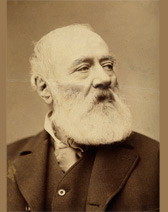
Antonio Meucci
Italian-born inventor and engineer known for developing early electrical voice-transmission devices called the telettrofono. He filed a patent caveat for his invention in 1871, five years before Alexander Graham Bell received his telephone patent. In 2002, the United States House of Representatives adopted a resolution honoring Meucci's contributions to the development of the telephone.
Born on April 13, 1808
Died on October 18, 1889
Age at death: 81
Profession: Inventor, Engineer
Place of Birth: Florence, Grand Duchy of Tuscany
Place of Death: Staten Island, New York, United States
Antonio Meucci, whose full name was Antonio Santi Giuseppe Meucci, was born on April 13, 1808, in Florence, in the Grand Duchy of Tuscany, now part of Italy. He was an Italian inventor and engineer known for his experiments in electrical voice transmission and the development of a communication device called the telettrofono, an early form of the telephone. During the 1850s and 1860s, he constructed several experimental devices intended to transmit human speech through electrical conductors. On December 28, 1871, he filed a patent caveat titled "Sound Telegraph" with the United States Patent Office. Financial difficulties prevented him from obtaining a full patent, while Alexander Graham Bell received a United States telephone patent in 1876. The priority of their inventions subsequently became the subject of legal disputes and historical debate. On June 11, 2002, the United States House of Representatives adopted a resolution recognizing Meucci's contributions to the invention of the telephone. He died on October 18, 1889, in Staten Island, New York, at the age of 81.
Early Life and Family
Antonio Meucci was born on April 13, 1808, in Florence, then part of the Grand Duchy of Tuscany. His father was Amatis Meucci, a government employee, and his mother was Maria Domenica Pepi. He grew up in a family of nine children.
Florence was a center of art, craftsmanship, and scientific education. Meucci became interested in mechanical devices and technical subjects during his youth.
In November 1821, at the age of 13, he was admitted to the Accademia di Belle Arti di Firenze (Florence Academy of Fine Arts).
At the academy, he studied chemistry, mechanics, physics, and subjects related to electricity and acoustics. His studies included the principles of machine construction and the operation of mechanical instruments.
Financial difficulties affected his education, and he began working while continuing to develop his technical knowledge. He also worked as an assistant in the Tuscan customs administration.
Work at Teatro della Pergola
Antonio Meucci subsequently found employment as a stage technician at the Teatro della Pergola in Florence.
He worked with theater machinery, stage equipment, lighting systems, and mechanical devices used in theatrical productions. He also assisted technician Artemio Canovetti.
In 1834, Meucci constructed an acoustic communication system connecting the theater stage with an upper control area.
The device operated through tubes that carried sound mechanically, following a principle similar to the speaking pipes used aboard ships.
Although this system did not transmit speech electrically, it provided Meucci with practical experience in transmitting voices between separate locations.
During the early 1830s, he also became involved in political activities connected with movements seeking greater independence and political change in the Italian states.
His political difficulties contributed to his decision to leave Tuscany in 1835.
Marriage to Esterre Mochi
Antonio Meucci married Esterre Mochi, also known as Ester Mochi, on August 7, 1834, in Florence.
Esterre worked as a costume designer at the Teatro della Pergola, where the couple met.
The marriage took place at the Basilica of Santa Maria Novella in Florence.
In October 1835, Antonio and Esterre accepted employment opportunities at a theater in Havana, Cuba, which was then under Spanish colonial administration.
The couple left Italy and began a new period of their lives in the Caribbean.
Years in Havana, Cuba (1835–1850)
In 1835, Antonio Meucci moved with his wife to Havana, Cuba.
He became a technical supervisor at the Teatro Tacón, one of the principal theaters in the Americas at the time.
His responsibilities included maintaining theatrical machinery, supervising technical installations, and assisting with improvements to the theater's equipment.
He also worked on technical projects outside the theater, including methods of water purification and electroplating.
During his years in Havana, Meucci developed an interest in the medical applications of electricity.
He experimented with electrotherapy, a practice that involved applying electrical currents to the body in attempts to treat pain and certain medical conditions.
Some of these experiments were associated with theories of animal magnetism developed by Franz Anton Mesmer, although Meucci's equipment relied on electrical batteries and conductors.
First Experiments in Electrical Voice Transmission
In 1849, while conducting electrotherapy experiments in Havana, Antonio Meucci observed a phenomenon that led him to investigate the possibility of transmitting the human voice through electricity.
According to his later testimony, he was applying electrical treatment to a patient when he noticed that sounds produced by the patient could be detected through connected electrical conductors.
He subsequently experimented with electrodes, wires, batteries, and acoustic components to investigate the transmission of sound.
Meucci called his experimental arrangement the "telegrafo parlante," meaning "speaking telegraph."
The experiments preceded the commercial development of the telephone, although the precise performance and intelligibility of the earliest apparatus cannot be independently established from surviving evidence.
His work in Havana provided the basis for the telephone experiments he continued after emigrating to the United States.
Immigration to the United States
In 1850, Antonio Meucci and his wife left Havana and moved to New York, United States.
They settled in Clifton on Staten Island, where Meucci lived for the remainder of his life.
He arrived with savings accumulated during his years working in Cuba and attempted to establish businesses while continuing his technical experiments.
Meucci founded a candle factory that manufactured candles using animal fat and other materials.
He also became involved with the Italian immigrant community in New York.
Among his acquaintances was Giuseppe Garibaldi, the Italian military leader associated with the movement for Italian unification.
Garibaldi stayed at Meucci's Staten Island home during the early 1850s. He also participated in activities connected with Meucci's candle-making business.
Meucci supported Italian nationalist circles and maintained connections with political developments in his native country.
Development of the Telettrofono
During the 1850s, Antonio Meucci continued experimenting with devices designed to transmit speech electrically.
His wife Esterre developed a serious form of rheumatic disease around 1854, which progressively limited her mobility.
Meucci constructed a communication system connecting rooms in their Staten Island home with his workshop and laboratory.
According to historical accounts and testimony, the arrangement allowed him to communicate with his wife while working in the basement or in a separate workshop.
The experimental system became known as the "telettrofono," also written as "teletrofono."
Its purpose was to transform sound vibrations into electrical variations, transmit them through a conductor, and reproduce audible vibrations at the receiving end.
Meucci worked with diaphragms, magnets, electromagnetic coils, and conductive wires in attempts to improve the clarity and range of transmitted speech.
Between approximately 1856 and 1870, he developed numerous variations of his apparatus. Historical studies attribute approximately thirty experimental designs to this period.
His experiments involved not only the transmission of sound but also the design of components necessary for practical communication over electrical circuits.
Electromagnetic Induction and Technical Experiments
The technical principles involved in Antonio Meucci's later telephone experiments were related to electromagnetic induction, discovered by scientist Michael Faraday in 1831.
Electromagnetic induction describes the generation of an electromotive force when the magnetic environment of a conductor changes.
In a magnetic telephone, vibrations of a diaphragm can produce corresponding changes in an electrical circuit, allowing sound information to travel through a wire.
Meucci experimented with the relationship between diaphragms, magnetic components, electrical conductors, and the reproduction of sound.
According to technical reconstructions of his work, he made improvements to the diaphragm and magnetic arrangement during the mid-1860s.
Some researchers have argued that his apparatus incorporated principles later used in telephone technology, although the exact capabilities of his individual prototypes remain disputed.
Meucci did not establish a commercially operating telephone network during his lifetime.
Attempts to Commercialize the Invention
As his experiments progressed, Antonio Meucci attempted to obtain financial support for the commercial development of the telettrofono.
He sought assistance from acquaintances and potential investors, including individuals with connections to Italian business circles.
Political instability in Italy during the years of unification complicated efforts to attract investors from his country of origin.
Financial problems also affected his Staten Island businesses. The candle factory did not provide sufficient resources to support prolonged experimental work and the costs associated with securing patents.
In December 1871, Meucci joined three Italian associates in establishing the Telettrofono Company.
The company was intended to finance further experiments, develop the apparatus, and pursue patent protection and commercial opportunities.
However, the venture did not secure enough capital to establish a functioning telephone business.
1871 Staten Island Ferry Accident
On July 30, 1871, Antonio Meucci was injured when a boiler explosion occurred aboard a ferry operating between Manhattan and Staten Island.
The accident caused numerous deaths and injuries. Meucci suffered serious burns and required an extended period of recovery.
His injuries prevented him from working normally and worsened his existing financial difficulties.
According to historical accounts, his wife sold household possessions and some of his electrical equipment to help pay expenses during his recovery.
The loss of equipment and continuing financial problems limited his ability to conduct experiments and demonstrate his apparatus to potential investors.
The 1871 Patent Caveat
On December 28, 1871, Antonio Meucci filed a patent caveat with the United States Patent Office in Washington, D.C.
The document, numbered 3335, was titled "Sound Telegraph."
A patent caveat was a preliminary legal notice indicating that an inventor intended to seek patent protection for an invention.
It was not equivalent to a full patent and did not grant the same exclusive rights.
The original caveat filing cost $20. A complete patent application would have required additional legal and administrative expenses.
Meucci's financial resources were insufficient to pursue a full patent application.
He renewed the caveat in 1872 and 1873 but was unable to pay the renewal fee in 1874.
Consequently, the caveat expired before Alexander Graham Bell filed his telephone patent application in 1876.
The technical descriptions contained in Meucci's caveat later became an important subject of historical and legal debate.
Dispute Involving Western Union
During the early 1870s, Antonio Meucci sought opportunities to test his telettrofono using existing telegraph lines.
He approached officials associated with the American District Telegraph Company in New York and supplied descriptions of his invention.
According to Meucci's later statements, he also provided drawings and other technical materials for examination.
He subsequently claimed that these materials had been lost or could not be returned.
Later accounts connected this episode with companies associated with Western Union, which became involved in the development and commercialization of telephone technology.
Some versions of the story allege that Meucci's technical materials influenced later telephone inventions.
However, the claim that Alexander Graham Bell personally found or copied Meucci's documents has not been conclusively established.
The surviving evidence does not support presenting the alleged theft of Meucci's invention as a proven historical fact.
Alexander Graham Bell and the Telephone Patent
On March 7, 1876, Alexander Graham Bell received United States Patent No. 174,465 for improvements in telegraphy, covering principles used in the electrical transmission of speech.
Bell's patent became central to the subsequent commercial development of the telephone.
By that time, Antonio Meucci had spent more than two decades experimenting with electrical communication devices.
Meucci maintained that his earlier work established his priority in developing an electrical apparatus capable of transmitting the human voice.
Questions about the relationship between Meucci's experiments, Bell's patent, and the work of other inventors, including Johann Philipp Reis and Elisha Gray, became subjects of legal proceedings and technical analysis.
Bell's patent established his legal rights under the United States patent system, but the broader historical question of priority has remained disputed.
Legal Proceedings and Patent Disputes
After Bell's telephone became commercially established, Antonio Meucci participated in efforts to challenge Bell's patent rights.
During the 1880s, disputes concerning the originality and validity of telephone patents were examined in American courts.
Meucci's earlier experiments and his 1871 caveat were presented as evidence by those challenging Bell's claims.
In 1887, the United States government pursued legal proceedings seeking to annul Bell's patent on allegations involving fraud and misrepresentation.
The case became part of a prolonged dispute involving competing inventors, businesses, and patent holders.
Although legal proceedings continued during Meucci's lifetime, no final court judgment established him as the sole inventor of the telephone.
Meucci died in 1889 before the dispute was conclusively resolved.
Bell's principal telephone patent expired in 1893. The remaining government proceedings were ultimately discontinued without a definitive ruling on the historical priority of the invention.
Death
Antonio Meucci died on October 18, 1889, in Clifton, Staten Island, New York, United States.
He was 81 years old.
His wife Esterre Mochi had died in 1884.
At the time of his death, Meucci had not obtained a full United States patent for his telettrofono and had not achieved significant commercial income from his telephone experiments.
He was buried in Staten Island, where his home later became associated with the Garibaldi-Meucci Museum.
Recognition by the United States House of Representatives
On June 11, 2002, the United States House of Representatives adopted House Resolution 269, honoring the life and achievements of Antonio Meucci and acknowledging his work in the invention of the telephone.
The resolution described his experiments in electrical voice communication, the apparatus installed in his Staten Island home, and his efforts to secure patent protection.
It also referred to his financial difficulties, the expiration of his 1871 patent caveat, and the legal disputes that followed Bell's patent.
The resolution was an expression of the House of Representatives' position. It was not a judicial ruling and did not invalidate Bell's expired patents.
Consequently, the resolution is properly understood as official recognition of Meucci's contributions rather than a legal determination that definitively settled every historical question concerning the invention of the telephone.
Other Inventions and Technical Work
Antonio Meucci's experiments were not limited to electrical voice communication.
During his professional life, he worked on water purification, electroplating, chemical processes, candle manufacturing, and the application of electricity to medical treatment.
He also investigated the construction of instruments using electrical conductors and electromagnetic components.
Although he did not secure a full patent for the telettrofono, he obtained United States patents for several other inventions.
These activities reflected his combined experience in chemistry, mechanics, acoustics, and electrical experimentation.
Source: Biyografiler.com
Frequently asked questions about Antonio Meucci
Who is Antonio Meucci?, Antonio Meucci biography, Antonio Meucci life story, Antonio Meucci age, Antonio Meucci facts, Antonio Meucci birthplace, Antonio Meucci photos, Antonio Meucci videos, Antonio Meucci career
Related Biographies

Lamine Yamal
Professional footballer

Kylian Mbappe
Professional footballer

Erling Haaland
Professional footballer

Keanu Reeves
Actor

Brad Pitt
Actor

Ronaldinho
Professional footballer

Chris Hansen
Journalist, Presenter

Elizabeth Holmes
Entrepreneur, CEO

Antonio Meucci
Inventor, Engineer

Antonio da Correggio
Painter

Antonio Costa
Politician, Lawyer, Former Prime Minister

Antony Blinken
Politician, Diplomat, Lawyer

Susie Wiles
Political Consultant

Stephen Miller
Consultant
Keanu Reeves
Actor

Nayib Bukele
Politician, Business Leader
Lamine Yamal
Professional footballer
Brad Pitt
Actor