
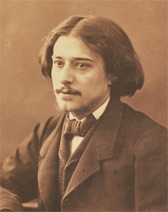
Alphonse Daudet
French writer associated with literary realism and naturalism, known for Letters from My Windmill, Tartarin of Tarascon, The Little Good-for-Nothing, Jack, and Sappho.
Born on May 13, 1840
Died on December 16, 1897
Age at death: 57
Profession: Novelist, Writer, Poet
Place of Birth: Nîmes, France
Place of Death: Paris, France
Alphonse Daudet was born on May 13, 1840, in Nîmes, France. He was a French novelist, short story writer, playwright, and poet whose works are associated with realism and naturalism. His fiction frequently drew on everyday life, social conditions, and the culture of southern France. He published his first poetry collection, Les Amoureuses, in 1858 and subsequently wrote The Little Good-for-Nothing (1868), Letters from My Windmill (1869), Tartarin of Tarascon (1872), Fromont Junior and Risler Senior (1874), Jack (1876), and Sappho (1884). He also worked as a journalist and wrote plays for the Parisian theater. His literary circle included Émile Zola, Gustave Flaubert, and Edmond de Goncourt. Daudet died in Paris on December 16, 1897, at the age of 57.
Early Life and Education
Alphonse Daudet was born into a family involved in the silk manufacturing business in Nîmes, southern France. His father, Vincent Daudet, was a silk merchant and manufacturer, and his mother was Adeline Reynaud.
In 1849, the family moved to Lyon after financial difficulties affected his father's business. Daudet attended school in Lyon, but the family's worsening financial circumstances eventually interrupted his education.
In 1856, he took a position as an assistant teacher at a school in Alès, in the Gard department. He disliked the work and left the position after several months. His experiences during this period later provided material for his autobiographical novel The Little Good-for-Nothing.
In November 1857, Daudet moved to Paris to live with his older brother, Ernest Daudet, who was working as a journalist.
Early Literary Career
After arriving in Paris, Alphonse Daudet began writing poetry and contributing articles to newspapers, including Le Figaro. He became acquainted with writers and artists in Parisian literary circles.
In 1858, he published Les Amoureuses (*The Women in Love*), a collection of poetry dedicated to Marie Rieu, a model with whom he had a long personal relationship.
The relationship later influenced his novel Sappho (1884), which examines a troubled romantic relationship between a younger man and an older woman.
In 1860, Daudet met Provençal poet Frédéric Mistral, whose writings and interest in the language and culture of southern France influenced his literary subjects.
That year, he also became private secretary to Charles de Morny, Duke of Morny, a prominent political figure during the reign of Napoleon III. He held the position until Morny's death in 1865.
Daudet continued writing during these years. In 1862, his play La Dernière Idole, written with Ernest L'Épine, was performed at the Odéon Theatre in Paris.
Letters from My Windmill and Tartarin of Tarascon
During the 1860s, Alphonse Daudet traveled in southern France and developed an interest in the landscapes, people, and traditions of Provence. He also visited Corsica and Algeria.
In 1869, he published Letters from My Windmill (*Lettres de mon moulin*), a collection of stories associated with Provençal village life, local traditions, and regional characters. Several stories had previously appeared in newspapers.
The collection includes The Secret of Master Cornille, Mr. Seguin's Goat, and The Priest of Cucugnan. Its stories combine descriptions of southern French life with humor, sadness, and elements of folklore.
In 1872, Daudet published Tartarin of Tarascon (*Les Aventures prodigieuses de Tartarin de Tarascon*), a comic novel about a provincial Frenchman who imagines himself a courageous adventurer.
The character had been developed from earlier sketches inspired partly by Daudet's travels in Algeria during the winter of 1861–1862.
Daudet returned to Tartarin in Tartarin on the Alps (1885) and Port-Tarascon (1890).
Novels and Literary Recognition
In 1868, Alphonse Daudet published The Little Good-for-Nothing (*Le Petit Chose*), a partly autobiographical novel reflecting his childhood, financial difficulties, and experiences as a young teacher.
His novel Fromont Junior and Risler Senior (*Fromont jeune et Risler aîné*), published in 1874, examines family relationships, business interests, marriage, and social ambition. The novel received an award from the Académie française.
In 1876, he published Jack, which follows a boy whose childhood and later life are affected by family neglect and difficult social circumstances.
His subsequent novels included The Nabob (*Le Nabab*, 1877), Kings in Exile (*Les Rois en exil*, 1879), and Numa Roumestan (1881).
In 1883, he published The Evangelist (*L'Évangéliste*), addressing religious influence and family relationships.
His 1884 novel Sappho portrays a romantic relationship marked by emotional conflict and differences in age and social position.
In The Immortal (*L'Immortel*, 1888), Daudet satirized literary ambition and the institutions of the French intellectual establishment.
War, Theater and Literary Relationships
Alphonse Daudet served as a volunteer during the Franco-Prussian War of 1870–1871. He also witnessed the political turmoil surrounding the Paris Commune in 1871 and left Paris during the disturbances.
His experiences of war influenced Monday Tales (*Contes du lundi*, 1873), a collection of stories concerning the conflict, its effects on ordinary people, and French society.
Daudet remained active in the theater throughout his career. His plays included The Last Idol (1862), The Elder Brother (1867), The Sacrifice (1869), and The Struggle for Life (1889).
In 1872, he wrote L'Arlésienne, a play about love, family conflict, and life in Provence. The production included incidental music composed by Georges Bizet.
Daudet maintained friendships with Émile Zola, Gustave Flaubert, and Edmond de Goncourt. His fiction also shows similarities to the work of British novelist Charles Dickens, particularly in its treatment of childhood and social hardship.
During his later years, he encouraged younger writers, including Marcel Proust. He traveled to London and Venice in 1895.
Personal Life and Family
In 1867, Alphonse Daudet married Julia Allard, who was also a writer. She assisted with his literary work, and the couple maintained connections with writers, artists, and journalists in Paris.
They had three children: Léon Daudet, born in 1867; Lucien Daudet, born in 1878; and Edmée Daudet, born in 1886.
Léon Daudet became a writer and journalist. Lucien Daudet also pursued a literary career.
Illness and Death
During his later years, Alphonse Daudet suffered from a progressive neurological condition associated with syphilis. The illness caused severe pain and increasingly affected his mobility and general health.
He underwent treatments at Lamalou-les-Bains and recorded aspects of his illness in notes that were published posthumously as In the Land of Pain (*La Doulou*).
Despite his deteriorating health, he continued writing novels, plays, and memoirs.
Alphonse Daudet died on December 16, 1897, in Paris, France, at the age of 57. He was buried in the Père Lachaise Cemetery.
Poetry
1858 – Les Amoureuses (The Women in Love)
1861 – La Double Conversion (The Double Conversion)
Novels and Short Stories
1862 – Le Roman du Chaperon-Rouge (The Story of Little Red Riding Hood)
1863 – Chapatin, le tueur de lions (Chapatin, the Lion Killer) – Early sketch associated with the Tartarin character
1868 – The Little Good-for-Nothing (*Le Petit Chose*)
1869 – Letters from My Windmill (*Lettres de mon moulin*)
1871 – Letters to an Absent Friend (*Lettres à un absent*)
1872 – Tartarin of Tarascon (*Les Aventures prodigieuses de Tartarin de Tarascon*)
1873 – Monday Tales (*Contes du lundi*)
1874 – Fromont Junior and Risler Senior (*Fromont jeune et Risler aîné*)
1874 – Artists' Wives (*Les Femmes d'artistes*)
1874 – Robert Helmont
1876 – Jack
1877 – The Nabob (*Le Nabab*)
1879 – Kings in Exile (*Les Rois en exil*)
1881 – Numa Roumestan
1883 – The Evangelist (*L'Évangéliste*)
1884 – Sappho (*Sapho*)
1885 – Tartarin on the Alps (*Tartarin sur les Alpes*)
1886 – La Belle-Nivernaise
1888 – The Immortal (*L'Immortel*)
1890 – Port-Tarascon
1892 – Rose and Ninette (*Rose et Ninette*)
1895 – The Little Parish (*La Petite Paroisse*)
1896 – The Burial of a Star (*L'Enterrement d'une étoile*)
1897 – La Fédor
1898 – The Head of the Family (*Soutien de famille*) – Published posthumously
Memoirs and Autobiographical Works
1888 – Memoirs of a Man of Letters (*Souvenirs d'un homme de lettres*)
1888 – Thirty Years in Paris (*Trente ans de Paris*)
1900 – First Journey, First Lie (*Premier voyage, premier mensonge*) – Published posthumously
1930 – In the Land of Pain (*La Doulou*) – Posthumous notes on his illness
Plays
1862 – The Last Idol (*La Dernière Idole*) – With Ernest L'Épine
1863 – The Absentees (*Les Absents*) – With Ernest L'Épine
1865 – The White Carnation (*L'Œillet blanc*) – With Ernest L'Épine
1867 – The Elder Brother (*Le Frère aîné*)
1869 – The Sacrifice (*Le Sacrifice*)
1872 – Lise Tavernier
1872 – L'Arlésienne – With incidental music by Georges Bizet
1889 – The Struggle for Life (*La Lutte pour la vie*)
1890 – The Obstacle (*L'Obstacle*)
1892 – The Liar (*La Menteuse*) – With Léon Hennique
Source: Biyografiler.com
Frequently asked questions about Alphonse Daudet
Who is Alphonse Daudet?, Alphonse Daudet biography, Alphonse Daudet life story, Alphonse Daudet age, Alphonse Daudet facts, Alphonse Daudet birthplace, Alphonse Daudet photos, Alphonse Daudet videos, Alphonse Daudet career
Related Biographies

Lamine Yamal
Professional footballer

Kylian Mbappe
Professional footballer

Keanu Reeves
Actor

Erling Haaland
Professional footballer

Brad Pitt
Actor

Bad Bunny
Rapper, Songwriter

Julian Assange
Activist, Computer Programmer

Jose Tolentino de Mendonça
Religious Leader, Priest

Joseph Stiglitz
Economist, Author

Jose Raul Mulino
President, Politician, Lawyer


Joseph Gordon Levitt
Actor, Director, Producer

David Yates
Film Director, Film Producer

Edith Piaf
Singer, Actress

Susie Wiles
Political Consultant

Jensen Huang
Entrepreneur, CEO

Gadi Eisenkot
Politician, Military Commander

Antonio Banderas
Actor