
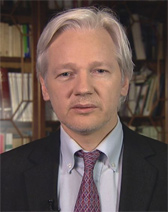
Julian Assange
Australian publisher and founder of WikiLeaks, known for publishing classified military and diplomatic documents and for his legal proceedings in the United Kingdom and United States.
Born on August 3, 1971
Age: 55
Profession: Activist, Computer Programmer
Place of Birth: Townsville, Queensland, Australia
Julian Assange, full name Julian Paul Assange, was born on July 3, 1971, in Townsville, Queensland, Australia. He is an Australian publisher, computer programmer, and internet activist who founded WikiLeaks in 2006. As the organization's editor-in-chief, he oversaw the publication of classified government documents, military records, and diplomatic correspondence. WikiLeaks gained international attention in 2010 after releasing documents concerning the wars in Afghanistan and Iraq, followed by more than 250,000 United States diplomatic cables. Assange was arrested in London in 2019 and spent five years in Belmarsh Prison while contesting extradition to the United States. On June 26, 2024, he pleaded guilty to one charge under the American Espionage Act as part of an agreement that allowed him to return to Australia.
Early Life and Education
Julian Assange was born on July 3, 1971, in Townsville, Queensland, Australia. His mother, Christine Ann Hawkins, was a visual artist. His biological father, John Shipton, was an anti-war activist whom his mother had met during protests against the Vietnam War. The couple separated before Assange was born.
When he was approximately one year old, his mother married theater director Brett Assange, who adopted Julian and gave him the surname Assange. The family operated a traveling theater company, and Julian spent much of his childhood moving between different Australian towns.
Following his mother's separation from Brett Assange, the family continued to change residences frequently. Assange attended numerous schools and received part of his education at home. Accounts of his childhood indicate that he attended approximately 37 schools.
He developed an early interest in mathematics, science, and computers. He later studied mathematics and physics at the University of Melbourne, although he did not complete a university degree.
Computer Programming and Hacking Activities
Julian Assange began experimenting with computer programming as a teenager. At approximately sixteen, he became involved in computer hacking under the pseudonym Mendax.
Along with two other hackers, he participated in a group known as International Subversives. The group gained unauthorized access to computer systems using telephone modems and other techniques available at the time.
In October 1989, a message containing the words "WANK" appeared on computers connected to NASA and other networks. The incident was associated with a computer worm rather than a proven individual action by Assange. His involvement in that particular incident has not been established.
In 1991, Australian police investigated Assange's unauthorized access to computer systems belonging to universities and organizations, including the Canadian telecommunications company Nortel.
In 1996, he pleaded guilty to 24 computer-related offenses in an Australian court. He was fined A$2,100. The court considered his actions serious but acknowledged that his motivation was primarily intellectual curiosity rather than financial gain.
Software Development
In 1993, Julian Assange helped establish Suburbia Public Access Network, one of Australia's early public internet service providers.
During the 1990s, he worked as a computer programmer and contributed to free and open-source software projects. His work included the development of Strobe, a network security scanner, and contributions to encryption and information-security software.
He also contributed research and technical information to Underground: Tales of Hacking, Madness and Obsession on the Electronic Frontier, a book written by Suelette Dreyfus and published in 1997. The book examined Australian and international hacking communities.
In 1999, Assange registered the domain name leaks.org, although it was not developed into the later WikiLeaks platform.
Founding of WikiLeaks
In 2006, Julian Assange founded WikiLeaks, an online publishing organization designed to receive and publish leaked documents. He served as its editor-in-chief and spokesperson.
The organization developed systems intended to protect the identities of people submitting documents. Its stated purpose was to make information about government activities, corporations, and other powerful institutions available to the public.
Assange described his political ideas in essays including Conspiracy as Governance (2006), which examined how secrecy and restricted information flows could sustain political organizations.
Among WikiLeaks' early publications were documents concerning the treatment of detainees at the Guantánamo Bay detention camp and allegations of extrajudicial killings in Kenya.
In 2009, Assange received an Amnesty International Media Award for reporting connected to human rights abuses in Kenya. He also received the Sam Adams Award in 2010.
WikiLeaks Disclosures in 2010
In April 2010, WikiLeaks published Collateral Murder, a video showing a July 2007 United States military helicopter attack in Baghdad, Iraq. Among those killed were two employees of the Reuters news agency, Namir Noor-Eldeen and Saeed Chmagh.
In July 2010, the organization released more than 90,000 military reports concerning the war in Afghanistan. The documents described military operations, civilian casualties, and assessments of the conflict.
In October 2010, WikiLeaks published approximately 400,000 classified American military reports concerning the Iraq War.
On November 28, 2010, WikiLeaks began releasing more than 250,000 diplomatic cables from the United States Department of State. The correspondence concerned American diplomatic relations with numerous countries, including Turkey.
Many of these documents had been supplied by American military intelligence analyst Chelsea Manning, who was subsequently prosecuted in the United States.
American officials argued that some disclosures threatened national security and endangered individuals mentioned in the documents. Assange and his supporters maintained that publishing the material served the public interest by revealing government activities that had previously been concealed.
Swedish Investigation and Arrest Warrant
In August 2010, Swedish authorities began investigating allegations of sexual offenses involving Julian Assange and two women. Assange denied the allegations and maintained that the sexual encounters had been consensual.
On November 30, 2010, Interpol issued a notice seeking his arrest in connection with the Swedish investigation. He was arrested in London on December 7, 2010, under a European arrest warrant and subsequently released on bail.
British courts approved his extradition to Sweden, but Assange appealed the decisions. He argued that he feared eventual extradition from Sweden to the United States.
Swedish prosecutors discontinued the investigation in May 2017 because they could not advance the proceedings while Assange remained in the Ecuadorian Embassy. The investigation was reopened in May 2019 and permanently discontinued in November 2019 because the available evidence had weakened with the passage of time. Assange was not convicted of any sexual offense in Sweden.
Asylum at the Ecuadorian Embassy
On June 19, 2012, Julian Assange entered the Embassy of Ecuador in London after exhausting his legal challenges against extradition to Sweden.
On August 16, 2012, Ecuador granted him political asylum. He remained inside the embassy for almost seven years because British authorities maintained that he could be arrested for breaching his bail conditions if he left.
In December 2017, Ecuador granted Assange citizenship. The decision was subsequently challenged and later revoked.
On April 11, 2019, Ecuador withdrew his asylum, allowing British police to enter the embassy and arrest him.
Imprisonment and United States Extradition Proceedings
On May 1, 2019, Julian Assange was sentenced to 50 weeks in prison for violating British bail conditions in 2012. He was held at HM Prison Belmarsh in London.
The United States sought his extradition on charges connected to the acquisition and publication of classified military and diplomatic records. American prosecutors eventually brought 18 charges against him, including offenses under the Espionage Act of 1917 and conspiracy to commit computer intrusion.
In January 2021, a British court refused his extradition to the United States because of concerns about his mental health and the risk of suicide under potentially restrictive prison conditions.
American authorities appealed and provided assurances concerning his possible detention conditions. In December 2021, the High Court of England and Wales overturned the earlier decision. The British government approved his extradition in June 2022.
Assange continued challenging the extradition through British courts. His lawyers argued that the prosecution threatened press freedom and that his activities involved obtaining and publishing information of public interest. American prosecutors maintained that his conduct included unlawful efforts to obtain classified information and disclosures that endangered individuals.
Release and Return to Australia in 2024
On June 24, 2024, Julian Assange was released from Belmarsh Prison after reaching a plea agreement with the United States Department of Justice.
On June 26, 2024, he appeared before a United States federal court in Saipan, Northern Mariana Islands. He pleaded guilty to one charge of conspiring to obtain and disclose classified national defense information, in violation of the Espionage Act.
The court sentenced him to 62 months in prison, equivalent to the time he had already served in the United Kingdom. Under the agreement, he was not required to serve any additional prison time.
Following the hearing, Assange returned to Australia on June 26, 2024, where he was reunited with his family.
Personal Life
Julian Assange married Teresa Assange in 1989. They had a son, Daniel Assange, born the same year. Their marriage later ended in divorce.
Assange subsequently formed a relationship with lawyer Stella Moris, also known as Stella Assange. The couple have two sons, Gabriel and Max.
On March 23, 2022, Assange and Stella Moris married during a ceremony at Belmarsh Prison in London.
Selected Publications and Awards
1997 - Underground: Tales of Hacking, Madness and Obsession on the Electronic Frontier (Research Contributor)2006 - Conspiracy as Governance (Essay)
2009 - Amnesty International Media Award
2010 - Sam Adams Award
2011 - Julian Assange: The Unauthorised Autobiography (Published without his final approval)
2012 - Cypherpunks: Freedom and the Future of the Internet (Co-author)
2014 - When Google Met WikiLeaks (Book)
Source: Biyografiler.com
Frequently asked questions about Julian Assange
Who is Julian Assange?, Julian Assange biography, Julian Assange life story, Julian Assange age, Julian Assange facts, Julian Assange birthplace, Julian Assange photos, Julian Assange videos, Julian Assange career

Lamine Yamal
Professional footballer

Kylian Mbappe
Professional footballer

Keanu Reeves
Actor

Erling Haaland
Professional footballer

Brad Pitt
Actor

Leonardo DiCaprio
Actor

Julian Assange
Activist, Computer Programmer

Jose Tolentino de Mendonça
Religious Leader, Priest

Joseph Stiglitz
Economist, Author

Jose Raul Mulino
President, Politician, Lawyer


Joseph Gordon Levitt
Actor, Director, Producer

Susie Wiles
Political Consultant

Gadi Eisenkot
Politician, Military Commander

Elizabeth Taylor
Actress

Alberto Ascari
Formula 1 Driver

Stephen Miller
Consultant

Michael Jordan
Professional Basketball Player