
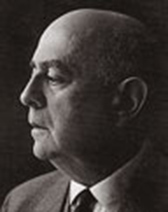
Theodor Wiesengrund Adorno
A central figure of the Frankfurt School and one of the most influential critics of modern culture and reason.
Born on September 11, 1903
Died on August 6, 1969
Age at death: 66
Profession: Philosopher, Sociologist, Professor
Place of Birth: Frankfurt, German Empire
Place of Death: Visp, Switzerland
Theodor Wiesengrund Adorno was a world-renowned German philosopher and one of the leading figures of twentieth-century critical theory. Born on September 11, 1903, in Frankfurt, he was the son of a Jewish wine merchant, Oskar Wiesengrund, and an Italian Catholic opera singer, Maria Calvelli-Adorno. His mother frequently performed on stage together with her pianist sister, and Adorno was considered musically gifted from an early age. He initially studied piano under Bernhard Sekles, a teacher known for training composers. While attending secondary school, he also worked privately with the German historian and cultural critic Siegfried Kracauer, a family friend. In 1921, he graduated from Kaiser Wilhelm Gymnasium and enrolled at the newly founded Johann Wolfgang Goethe University, where he completed his studies in philosophy and earned his doctorate within three years.
Between 1925 and 1928, Adorno lived in Vienna, where he studied composition with Alban Berg and received professional training as a pianist. In 1931, he began lecturing at Frankfurt University, and in 1933 his thesis on the aesthetics of Søren Kierkegaard was published. As early as 1928, Adorno had started working independently at the Institute for Social Research in Frankfurt, founded in 1923. A group of social scientists working at this institute formed what later became known as the Frankfurt School, and Adorno was among its core members. His lifelong friendship and intellectual partnership with Max Horkheimer, whom he had met in 1922 at the institute, played a decisive role in his career. Adorno published articles in the institute’s journal, Zeitschrift für Sozialforschung, and served as editor of the music journal Musikblätter des Anbruchs. Although the institute was originally established to study the works of Karl Marx, Adorno pursued a strongly interdisciplinary approach, ranging from the films of Charles Chaplin to the music of Arnold Schoenberg and the theories of Sigmund Freud.
Adorno never adopted a dogmatic worldview, yet the influence of his identity as a half-Jewish intellectual was always evident in his thought. During the Nazi period, he was forced into exile because of his Jewish background and went to Oxford. In 1937, he married Gretel Karplus; the couple had no children. The following year, he joined the Institute for Social Research in New York after it was also driven into exile by the Nazis. In the United States, Adorno continued his work on social critique alongside his colleagues.
While in America, Adorno worked for three years with Paul Lazarsfeld at the Princeton Radio Research Project and served as an assistant to Thomas Mann. Mann later drew on Adorno’s musical expertise while writing the novel Doctor Faustus. In 1947, Adorno and Horkheimer jointly published Dialectic of Enlightenment, a foundational work that marked a turning point toward a sustained critique of mass culture and the culture industry. In his major writings, Adorno also developed critical engagements with the ideas of Karl Popper and Martin Heidegger.
One of Adorno’s greatest difficulties in the United States was his conflict with editors, who frequently attempted to heavily revise his writing. After the end of World War II, he returned to Germany in 1949. In 1959, he became director of the Institute for Social Research in Frankfurt. The cultural criticism of the Frankfurt School exerted a strong influence on the New Left movements of the 1950s and 1960s. Although the school never formed a single unified doctrine, its members consistently produced critical analyses of modern capitalism, Soviet communism, and orthodox Marxism.
Between 1958 and 1969, Adorno served as professor of philosophy and sociology at Frankfurt University. In 1963, he was awarded the Goethe Prize. The final years of his life were marked by controversies surrounding an article he had written in the 1930s for a Nazi-affiliated journal, in which he had cited statements by Nazi propaganda minister Joseph Goebbels. Although Adorno described the article as a mistake, the debates persisted. He died of a heart attack on August 6, 1969, in Visp, Switzerland. His last major unfinished work, Aesthetic Theory, was published posthumously in 1970 after substantial editorial intervention; the 1997 edition is considered more faithful to his original manuscript.
Source: Biyografiler.com
Frequently asked questions about Theodor Wiesengrund Adorno
Who is Theodor Wiesengrund Adorno?, Theodor Wiesengrund Adorno biography, Theodor Wiesengrund Adorno life story, Theodor Wiesengrund Adorno age, Theodor Wiesengrund Adorno facts, Theodor Wiesengrund Adorno birthplace, Theodor Wiesengrund Adorno photos, Theodor Wiesengrund Adorno videos, Theodor Wiesengrund Adorno career
Related Biographies

Lamine Yamal
Professional footballer

Kylian Mbappe
Professional footballer

Erling Haaland
Professional footballer

Sam Altman
Entrepreneur, Investor, CEO

Bad Bunny
Rapper, Songwriter

Brad Pitt
Actor


Hongjoong
Singer, Rapper, Songwriter, Composer

Ludacris
Rapper, Actor

Kwon Eunbi
Singer

Sarah Wayne Callies
Actress, Screenwriter, Producer, Director

LaTavia Roberson
Singer, Actress, Entrepreneur
Erling Haaland
Professional footballer

Tim Berners Lee
Computer Scientist, Professor

Amber Heard
Actress, Model
Brad Pitt
Actor

Tim Roth
Actor, Director

Vladimir Putin
Politician, , Head of State