
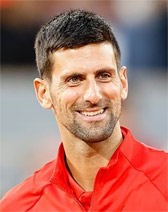
Novak Djokovic
Modern tennis’s most multilingual and intellectually distinctive champion
Born on May 22, 1987
Age: 39
Profession: Professional Tennis Player
Place of Birth: Belgrade, Serbia
Novak Djokovic is widely recognized as one of the most successful and influential athletes in the history of professional tennis. His career was shaped not in isolation but through sustained competition with some of the most iconic figures the sport has ever produced. The defining rivalries of the modern era played a central role in forging his mentality, tactical intelligence, and historical legacy.
Early Life and First Inspirations
Novak Djokovic was born on 22 May 1987 in Belgrade, Serbia, during a period of political instability in the Balkans. Growing up under conditions of uncertainty and economic difficulty, he developed resilience and discipline at an unusually young age. Tennis represented not only a sporting pursuit but also a path toward international opportunity.
As a child, Djokovic closely followed the careers of late-1990s tennis icons such as Pete Sampras and Andre Agassi. Their contrasting styles—Sampras’s dominance built on serve-and-volley precision and Agassi’s aggressive baseline play—formed Djokovic’s earliest understanding of how greatness could be expressed in different ways on the tennis court.
Entering a Federer-Dominated Landscape
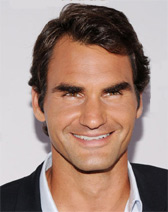
Novak Djokovic turned professional in 2003, at a time when men’s tennis was increasingly defined by the dominance of Roger Federer. Federer’s elegance, technical purity, and mental composure established a benchmark that younger players were expected to chase. For Djokovic, Federer represented both the ultimate standard and the principal obstacle to future dominance.
Early encounters with Federer were formative. Djokovic studied his shot selection, movement, and calm under pressure, gradually building the tactical foundation that would later allow him to challenge and frequently defeat him on the sport’s biggest stages.
The Rise of Nadal and a Defining Rivalry
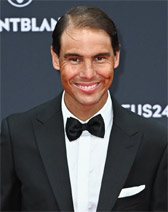
Parallel to Federer’s reign, another generational force emerged in Rafael Nadal. Nadal’s relentless intensity, physical endurance, and near-invincibility on clay introduced a new athletic paradigm. For Novak Djokovic, matches against Nadal became tests of physical durability and emotional control.
The rivalry between Djokovic and Nadal evolved into one of the most demanding in sports history. Their encounters—particularly at the Australian Open, French Open, and major ATP finals—were characterized by marathon rallies, extreme physical strain, and psychological endurance. Each match forced Djokovic to refine his defensive flexibility, return game, and mental resilience.
The Big Three Era
With Federer and Nadal, Novak Djokovic formed what came to be known as the “Big Three,” an era that redefined longevity and excellence in men’s tennis. Djokovic’s rivalry with Federer often revolved around precision, nerve, and decisive moments, especially in Wimbledon and US Open finals.
Against Nadal, the dynamic was more physical and attritional, demanding constant adaptation. Through repeated clashes with both rivals, Djokovic transformed himself into the most adaptable player of the era, capable of neutralizing radically different styles at the highest level.
Andy Murray and the Extended Elite Circle
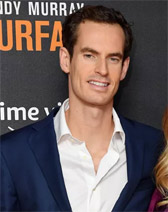
Beyond Federer and Nadal, Novak Djokovic’s career was closely intertwined with Andy Murray, whose tactical intelligence and defensive consistency made him one of Djokovic’s most frequent and familiar opponents. Their rivalry, shaped by years of junior and professional competition, was often cerebral, with long rallies and strategic depth defining their matches.
Another significant contemporary was Stan Wawrinka, whose explosive power and fearless shot-making allowed him to challenge Djokovic at critical moments. Wawrinka’s victories against Djokovic at major tournaments underscored that even during periods of dominance, Djokovic faced genuine threats from elite competitors.
Later Generations and Continued Adaptation
As Federer, Nadal, and Murray gradually reduced their schedules, Novak Djokovic faced a new generation of challengers, including Juan Martín del Potro, whose raw power tested Djokovic’s defensive mastery, and later figures such as Daniil Medvedev and Alexander Zverev. These encounters required further adaptation, proving Djokovic’s ability to evolve across eras.
His continued success against younger opponents highlighted the cumulative advantage gained from years of competition against the greatest players in tennis history.
Legacy Among the Greats
Novak Djokovic’s place in tennis history cannot be separated from the extraordinary opponents who shaped his journey. His achievements were forged through constant confrontation with Federer’s elegance, Nadal’s intensity, Murray’s resilience, and the broader elite circle that challenged him across two decades.
Career Statistics
Major Awards & Achievements
Source: Biyografiler.com
News about Novak Djokovic
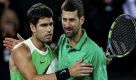
Carlos Alcaraz makes history at the Australian Open with epic final victory
Spanish star Carlos Alcaraz produced a historic performance at the Australian Open, defeating Serbian legend Novak Djokovic 3–1 in a gripping men’...
Alcaraz and Djokovic Set for Australian Open Final After Two Epic Semifinals
Carlos Alcaraz and Novak Djokovic will meet in the Australian Open final after producing two of the most dramatic semifinals Melbourne has seen in yea...
Frequently asked questions about Novak Djokovic
Who is Novak Djokovic?, Novak Djokovic biography, Novak Djokovic life story, Novak Djokovic age, Novak Djokovic facts, Novak Djokovic birthplace, Novak Djokovic photos, Novak Djokovic videos, Novak Djokovic career
Related Biographies

Lamine Yamal
Professional footballer

Erling Haaland
Professional footballer

Austin Abrams
Actor

Keanu Reeves
Actor

Kylian Mbappe
Professional footballer

Bad Bunny
Rapper, Songwriter


Hongjoong
Singer, Rapper, Songwriter, Composer

Ludacris
Rapper, Actor

Kwon Eunbi
Singer

Sarah Wayne Callies
Actress, Screenwriter, Producer, Director

LaTavia Roberson
Singer, Actress, Entrepreneur
Erling Haaland
Professional footballer

Alice Weidel
Politician, Economist
Austin Abrams
Actor

Susie Wiles
Political Consultant
Lamine Yamal
Professional footballer
Kylian Mbappe
Professional footballer