
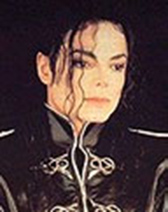
Michael Jackson
Born on August 29, 1958
Died on June 25, 2009
Age at death: 51
Profession: Singer, Songwriter
Place of Birth: Gary, Indiana, USA
Place of Death: Los Angeles, USA
Michael Jackson was an American pop music singer. His fame went far beyond the borders of the United States and he left a permanent mark on the history of world pop music; nearly all of his albums became hits and achieved some of the best sales figures of all time. With his unique, unmistakable dance style, his sensational private life, and the fresh energy he brought to the entertainment industry, he became a worldwide “pop idol” over the course of a music career that stretched from the 1970s to the present day.
Michael Jackson was born on August 29, 1958, in Gary, Indiana, USA. He was the eighth child in a family of ten children, and his full name was Michael Joseph Jackson. His father, Joseph Jackson, was a factory worker who was passionately devoted to music and played guitar in his spare time. After marrying Katherine (Scruse), and becoming a large family, he passed this interest on to his children as well.
In the early 1960s, his older brothers Jackie, Tito, and Jermaine formed a group called The Jackson Brothers, organized by their father, and began singing in clubs and entering competitions. Michael Jackson’s vocal and dance talent was noticed quickly. Although he was still very young, he was added to the group in 1964—together with his brother Marlon—especially because of his performance in solo songs. Now consisting of five members, the brothers changed the group’s name to The Jackson 5.
Until 1968, the group continued its amateur work in nightclubs and bars, and after winning first place at a competition held at the Apollo Theater in Harlem, New York, they caught the attention of Berry Gordy, the founder of Motown, then the most famous R&B record label. After signing with Motown in 1968 and moving to California, the group’s star began to rise rapidly. Under the management of Suzanne de Passe at the company, their first four singles—I Want You Back, ABC, The Love You Save, and I’ll Be There—reached number one on the charts.
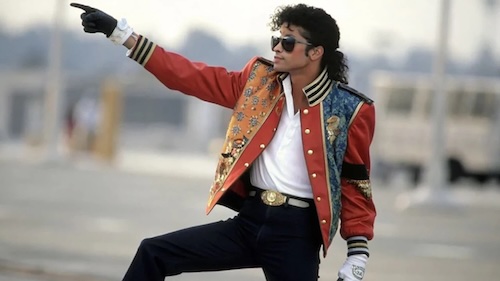
Following the path of soul music pioneers such as The O’Jays and James Brown, The Jackson 5 became the number one global representative of Black pop and soul vocal groups in the early 1970s. Michael Jackson, meanwhile, would blend this new musical style with his dancing, transform it into an original approach of his own, and ultimately run alone in his own lane.
After the group’s rapid rise, Michael Jackson stood out strongly with his powerful voice and distinctive dance style. Between 1971 and 1976, while still connected to The Jackson 5, he released his first solo works through Motown: Got To Be There, Ben, Music and Me, and Forever, Michael. By then, the road toward an individual career had opened for him.
In 1971, Walt Disney Pictures produced an animated series for the group and released it. The Jackson brothers, whose fame spread worldwide, began an international concert series in 1972 starting in England and sold out everywhere they went. On these world tours, Commodores and Lionel Richie appeared as opening acts for The Jackson 5.
From 1973 onward, as the group’s sales began to decline, Motown took control and started pressuring the Jacksons to record songs selected by the company. Going through difficult times, the group decided to leave the label in 1976 and signed with Epic Records. After this development, Motown filed a lawsuit against the Jacksons, claiming breach of contract. That same year, without the group’s knowledge, Motown released a compilation album titled The Jackson 5 Anthology. This development tightened tensions even further.
Because Jermaine Jackson was married to Berry Gordy’s daughter, he left the group due to the dispute between the parties and remained at Motown. Having lost the rights to the group name, the Jackson brothers replaced Jermaine with their youngest brother Randy and changed their name to The Jacksons. A new era was beginning for the renewed group, while Michael Jackson was advancing step by step toward the peak.
The Jacksons recovered quickly and continued rising in their careers between 1976 and 1984 with albums and singles largely built from their own material. The group released six new albums with their new company, and the 1978 album Destiny nearly exploded in popularity, becoming one of the Jackson brothers’ most successful albums. This album also held special importance for Michael Jackson, because the songs he composed received worldwide acclaim and entered the group’s classics. In this way, another talent of his—his ability to compose—became visible. Selling over two million copies, the album increased the fame of the group and especially of Michael.
By 1978, Michael Jackson would also enter a new kind of experience. He appeared together with Diana Ross—amid rumors of a romance—in the musical film The Wiz, playing the Scarecrow. At exactly this time, he crossed paths with Quincy Jones, who was arranging the music to be used in the musical. Jones would become one of the partners behind the pop star’s future success. While the film was in production, Jackson and Jones formed a highly compatible partnership and agreed to make Michael’s first fully independent solo album together.
Thus, in 1979, Michael Jackson’s first independent solo album, Off the Wall, was released by Epic Records with Quincy Jones as producer. Containing worldwide hit tracks such as Don’t Stop ’Til You Get Enough, She’s Out of My Life, Off the Wall, and Rock with You, the album reached incredible sales figures and would elevate Michael into an idol of pop music and the entertainment world, while beginning to bring him his first major awards.
In 1980, the album was honored with three American Music Awards: Best Soul/R&B Album (Off the Wall), Best Soul/R&B Male Artist, and Best Soul/R&B Single (Don’t Stop ’Til You Get Enough), and it also received many chart achievement awards. In February of the same year, Michael Jackson won his first Grammy Award in the category of Best Male R&B Vocal Performance with Don’t Stop ’Til You Get Enough. As Quincy Jones, a jazz musician, incorporated jazz elements into the album’s foundations, it was seen as natural; yet the inclusion of disco and funky rhythms as well led to the emergence of a new musical style that felt uniquely Michael. Naturally, this brought Jackson a singular and universal fame. The description “pop idol,” first attributed to him by his close friend Elizabeth Taylor and later becoming a widely used expression, began to be mentioned especially during these years.
Alongside the success of his solo album, Michael Jackson continued working with his brothers and released the group album Triumph in 1980. Once again, it was Michael who left his mark on Triumph with the songs he composed and the lyrics he wrote. The distinctive video for Can You Feel It also made a big impact, and Michael’s dance ability was recognized by millions of music lovers. In 1982, he performed the song Someone in the Dark, from the original soundtrack of the film E.T. (The Extra-Terrestrial), which would earn him a Grammy Award in the category of Best Recording for Children.
The year 1982 became almost a turning point for the pop star. The album that brought Michael Jackson to the position he is associated with today and turned him into a legend—Thriller, again produced by Quincy Jones—was released by Epic Records. Typically released one after another as singles, every song from the album became a hit, including Wanna Be Startin’ Somethin’, Billie Jean, and Beat It, and it broke records by reaching the highest sales figures of all time in music history.
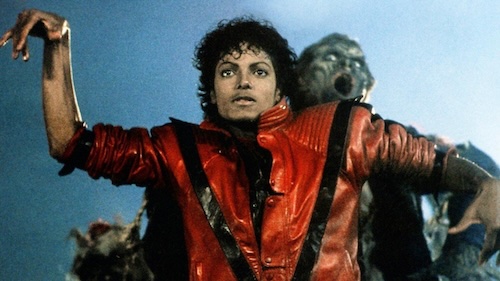
In addition to the songs, the striking, high-budget, short-film-like music videos created for four hit tracks generated enormous attention. With Billie Jean, MTV broadcast a Black singer’s music video for the first time. The 13-minute video for Thriller, designed around a fantastic story and turned into a visual feast through dance, exploded in popularity; due to demand, it was released in VHS format and achieved another seemingly unreachable sales record. The original dance choreographies Michael Jackson performed in the video became a source of inspiration for many young people.
Especially during Motown’s 25th anniversary celebration, when he performed Billie Jean, the foot-glide move known as the “moonwalk” went down in history as Jackson’s signature.
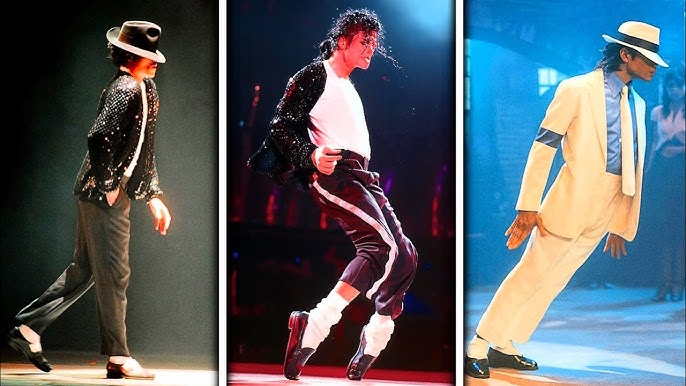
Staying at the top for 37 weeks and spending 122 weeks on the Billboard album chart, Thriller naturally brought many awards as well. In 1984, after being nominated in 12 categories, Michael Jackson left the Grammy Awards with 8 wins and held the record for the most awards won in a single night until Carlos Santana matched it in 2000 (seven awards went to Thriller, and one went to Someone in the Dark, which he had recorded in 1982). That same year, the album also won 8 American Music Awards, 4 American Video Awards, 3 MTV Video Music Awards, and an Award of Merit.
During this period, after signing a sponsorship deal with Pepsi-Cola and appearing with his brothers in the company’s commercials, an unfortunate incident happened to Michael Jackson. During the commercial shoot, fireworks caused his hair to catch fire, resulting in serious damage to his skin. Jackson held the company responsible for the physical harm and filed a compensation lawsuit. He donated the astronomical amount he won in the case to the hospital that treated him.
In 1984, while the Thriller dream was still continuing, he reunited with his brothers and released the album Victory. This album also included hit tracks written and composed by Michael. For Victory—one of the Jackson brothers’ most successful albums—a massive five-month international tour was organized. After Jackson announced that he would donate all tour proceeds, his name was added as a gesture to the Hollywood Walk of Fame.
In 1985, because he donated his song Beat It to be used in campaigns against drunk driving on television and in other media, he was invited to the White House by the U.S. president of the period, Ronald Reagan, as a thank-you gesture. In later years, as a famous global star, Michael Jackson would carry out many more social responsibility and humanitarian aid projects that created an even bigger impact. The most important of these was We Are the World, which he wrote together with Lionel Richie within the USA for Africa campaign, for people living at the edge of hunger and in need of help, especially in East Africa.
Still known as the best-selling single worldwide, the song was performed by more than 40 popular artists, including Stevie Wonder, Tina Turner, Diana Ross, Ray Charles, and Cyndi Lauper. Following this success, Richie and Jackson won the Grammy Award for Song of the Year with We Are the World.
The year 1985 did not pass only with praise for the star singer. Michael Jackson caused controversy by purchasing the largest share of ATV Music, which held the publishing rights to many famous songs and, in particular, more than 200 songs by The Beatles. The strongest reaction came from his close friend, songwriter Paul McCartney, who had organized the auction. This event marked the end of their friendship and especially their co-writing work. After these controversies, some press and media circles adopted a mocking tone toward the artist for a long time, spreading stories from claims that he tried to buy the bones of the Elephant Man to live longer, to criticism of his unusual behavior, and they began referring to him in an irritating way as “Wacko Jacko.”
In 1986, in the short film Captain EO, produced by George Lucas and directed by Francis Ford Coppola, Michael Jackson appeared on screen in the role of Captain EO. Although only 17 minutes long, the film cost approximately 17 million dollars and was the most expensive film ever made per minute at the time. For the film, shown at Disneyland, Jackson recorded two new tracks: Another Part of Me (later included on the album Bad) and We Are Here to Change the World.
In 1987, the pop star returned with the album Bad. It was the last Michael Jackson album produced by Quincy Jones and again carried the Epic Records label. Although its sales were below the artist’s expectations—around 30 million copies—singles such as I Just Can’t Stop Loving You, Bad, The Way You Make Me Feel, Man in the Mirror, and Dirty Diana simultaneously reached number one on the charts, creating a first.
After the album’s release, Jackson embarked on his first solo world tour, again sponsored by Pepsi, lasting as long as 16 months, and met fans by performing 123 concerts. During this period he also appeared in Pepsi commercials. After returning, a short-film-like 18-minute music video for Bad was directed by Martin Scorsese. However, the new image of Michael Jackson in the video became almost more talked about than the song itself, because there were striking and surprising changes in both his face and his skin tone.
The media claimed that he was whitening his skin because he was ashamed of being Black, and asserted that he had undergone many operations such as rhinoplasty, forehead lifting, and lip-thinning procedures. However, in his 1988 autobiography Moonwalk, the singer wrote that he had only had two cosmetic surgeries, and that a surgical procedure had also been performed for his skin due to wounds on his chin. Despite all these sensations, the video for Bad achieved strong sales figures.
The musical film Moonwalker, directed by Jerry Kramer and Colin Chilvers and featuring Kellie Parker, Sean Lennon, and Brandon Adams alongside Jackson, premiered in 1988 and received great public interest. The VHS edition of the film set a new record with one million copies sold. By this point, the star artist would be declared the king of pop, rock, and soul music, and—like Elvis Presley, The Beatles, and Frank Sinatra—he would become an idol who had reached worldwide fame and the very top.
After the film’s success, overwhelmed by paparazzi and rumors circulating about him, Michael Jackson left the family home in Hayvenhurst and purchased the Neverland ranch, a vast property spread over 2,700 acres, where he began living away from the public eye. Because he had been forced into working life at a very young age, he built an entirely separate world on the ranch—complete with an amusement park, a zoo, and even a large lake—in order to experience the childhood he longed for. However, in the years to come, the days when he would face allegations of sexually abusing young friends he hosted at his ranch were not far away.
In 1991, Jackson changed record companies and signed a contract with Sony for an astronomical amount. Based on a 15-year period and covering six albums and one film project, the contract drew major attention due to the economic return it provided to Michael Jackson. In November of that year, his new album Dangerous was released. The music video for the album’s hit track Black or White, directed by David Lynch, created a sensation. The clip contained references to violence, sexuality, and racism, and especially some scenes near the end drew severe criticism.
Because of the debate the clip caused in the media and public opinion, Michael Jackson released a press statement expressing his regret and had the controversial sections removed. Despite these sensations, the album—also producing hits such as Remember the Time, In the Closet, and Jam]—reached sales of 17 million. Jackson’s second world tour was followed closely by the press of nearly every country.
In 1992, MTV began broadcasting the channel’s first international contest, open to participants worldwide, with the prize being a dinner with Michael. The winners, in a highly popular competition, met the star artist during the filming of the music video for his single In the Closet. The following year, the ABC channel aired the visual biography The Jacksons: An American Dream, based on the true life stories of the Jackson brothers. Indeed, perhaps this was why the universal popularity of Michael and his brothers rested on a story that felt like a dream coming into close contact with the real facts of the world.
In the same year, Michael Jackson continued to carry out humanist projects within a social responsibility framework and established a fund called the Heal the World Foundation. The purpose of the foundation was to ensure that children could grow up with better and more equal living conditions and become beneficial members of their communities. The organization’s activity center was near Santa Ynez, California, and children in need were able to use the play areas at the star’s Neverland ranch.
In 1993, Michael performed a mini concert during the halftime show of the 27th Super Bowl and achieved the largest audience share that American television had seen up to that time, gathering roughly 100 million people in front of their screens. At the 35th Grammy Awards ceremony held in February, Jackson received the “Living Legend” award. In March, he was honored with the Humanitarian of the Year award by Soul Train.
In the same year, Jackson was brought to trial after being accused of sexually abusing children he hosted at Neverland. The source of the allegation was the statements of one of the children who had been at his ranch. The media repeatedly tried to connect the claims with the artist’s unusual personality, his changing appearance, and the playgrounds he had built in the ranch’s garden. At times, false witnesses appeared; new allegations were raised; when these were shown not to reflect the truth, the situation was then pursued through other developments. The chain of sensational cases shook the world press and especially the American press; even media organizations pursued their own strategies of smearing or defending him.
Toward the end of the year, Michael Jackson responded to the allegations via satellite broadcast from his ranch and stated that they were not true. In January 1994, in one of the cases that concluded, the court sentenced Jackson to a financial penalty. While the exact amount was not officially disclosed, information reflected in the press claimed it was 20 million dollars. However, this penalty was not compensated.
Toward the end of 1995, as these unpleasant allegations calmed somewhat, Michael Jackson married Lisa Marie Presley, the daughter of the legendary rock singer Elvis Presley. This marriage, lasting only 19 months, again caused major debate. After the marriage ended, Lisa Marie stated that various claims—such as that Michael was gay or that the ongoing abuse cases were being covered up—did not reflect reality, and she said that the King of Pop was a completely normal and healthy man.
Jackson released the first part of his new album HIStory: Past, Present and Future in June 1995. HIStory Begins was the beginning of the album series and consisted of 15 old hit tracks. The second part, HIStory Continues, was released with 15 new songs. The first single, Scream, achieved major chart success. The music video for this track—performed together with his sister Janet Jackson—became the most expensive video of all time. With Scream, the Jackson siblings won three awards in different categories at the MTV Video Music Awards.
The song They Don’t Care About Us, which drew criticism from the Jewish community for containing anti-Semitic expressions, became the fourth single from the HIStory album. In later versions, the anti-Semitic lyrics were changed in a way that fit the sound. After the album’s success, Michael went on another world tour in 1996. While concerts were still continuing, he married Deborah Jeanne Rowe and adopted two children: a son named Michael Joseph Jackson, Jr. (also known as Prince) and a daughter named Paris Katherine Jackson. Unable to sustain this marriage either, Jackson and Rowe divorced in 1999 amid controversy, with the most sensational aspect being the custody case involving the adopted children.
Debate about the King of Pop did not end there. At the 1996 Brit Awards ceremony, while performing Earth Song dressed in white and surrounded by many small children, Jackson faced claims that he saw himself as a Messiah because of a figure in which he stretched his arms between two trees.
In 1997, the famous pop singer released Blood on the Dance Floor: HIStory in the Mix, composed of remixes of hit tracks from the HIStory album. The album’s title track Blood on the Dance Floor, along with Is It Scary and Ghosts, drew great interest and achieved strong chart success. Michael dedicated the album to Elton John, who had helped him greatly. A 35-minute music video—written by Jackson and Stephen King and directed by Stan Winston—was made for Is It Scary and Ghosts. Still holding the distinction of being the longest music video in the world, it became an international success as well.
In 2001, Jackson released Invincible, which reached number one in the pop music charts of 13 countries. With hit singles such as You Rock My World, Cry, and Butterflies, he made a major impact on the market. However, even though he warned Tommy Mottola—the head of Sony Music—that he would not renew their contracts that were nearing expiration, tensions grew between Jackson and the company. Due to legal procedures, all promotions and single sales related to the album were canceled. Michael claimed that Mottola had behaved disrespectfully toward African American artists and used insulting language, and he stated that the company exploited Black artists for its own interests. Sony, on the other hand, argued that Jackson’s claims had no basis in truth.
In September 2001, in honor of the 30th anniversary of his solo career, Jackson held a celebration at Madison Square Garden. On this special night, he performed duets with many famous artists such as Usher, Whitney Houston, Destiny’s Child, James Ingram, Gloria Estefan, and Liza Minnelli, and he also gave a special performance with his brothers.
In 2002, while in Berlin for a concert, he caused another major controversy by dangling his small baby from the window of his hotel room. Attorney Gloria Allred of the California Bar filed a complaint with the California Child Protective Services and demanded that Jackson’s babies be taken under protection. These events led to the singer facing renewed scrutiny concerning past child abuse allegations.
In 2003, British journalist Martin Bashir released a work titled Living with Michael Jackson. Bashir and his team filmed the artist for 18 months. The work presented selected moments from this footage and shared information about the star’s private life in his own words. In the footage, Michael placing a child with cancer in his bedroom and laying him next to another child was not received positively and increased the rumors.
Also in 2003, Jackson announced that he would release an album titled Resurrection and promoted it with a short film. In March of the same year, despite media reports that the song Xscape would be released, it was canceled for unknown reasons. Instead, toward the end of the year, Number Ones, containing all of Jackson’s hit songs that reached the top, was released by Sony Records in CD and DVD formats and achieved sales of more than 8 million.
During the filming of the music video for the album’s only new track, One More Chance, Jackson was arrested for the third time over a child abuse allegation, but he was found innocent and released. In the same year, news appeared in the press claiming that Michael had changed his religion and converted to Islam. Later, in 2005, there were also reports that he had built a mosque.
In August 2004, VH1 aired a visual biography titled Man in the Mirror: The Michael Jackson Story, telling the artist’s life story. In response to renewed child sexual abuse allegations brought forward again against Jackson by Gavin Arvizo, the famous rap singer Eminem made references with his song Just Lose It. As controversies intensified, Michael felt compelled to make a statement.
In June 2005, after being acquitted of all ten cases opened against him, Jackson moved to Bahrain. There he spent his time composing new music and writing a song titled I Have This Dream dedicated to victims of Hurricane Katrina. The performance included artists such as Ciara, Snoop Dogg, Keyshia Cole, James Ingram, Jermaine Jackson, Shanice, Shirley Caesar, and The O’Jays. However, for unknown reasons, the song was never released.
With accusations never fully ending, Jackson faced another allegation in 2006—this time from a man claiming sexual assault—but he was acquitted. In February, the custody case between Jackson and his former wife Deborah Rowe concluded. The court issued a decision that limited the former spouses’ rights regarding the children and remained open to dispute. In March, the California Labor Department shut down Neverland ranch because insurance fees had not been paid and ordered the artist to pay compensation totaling 69,000 dollars—1,000 dollars per worker for 69 employees.
In April, Jackson made a one-album agreement with British music producer Guy Holmes, CEO of a music company called Two Seas, for an album planned to be released in 2007. In May 2006, in Tokyo, at the Video Music Awards organized by MTV’s Japan location, he received the Living Legend award. It was the first night in a long time that Michael appeared on television screens. In November, a collection titled Visionary: The Video Singles, containing more than twenty hit songs, was released by Sony Music. At the London office of Guinness World Records, Jackson received awards in eight categories, and at the World Music Awards he received the Diamond Award for surpassing 100 million sales.
Michael Jackson was found unconscious on June 25, 2009, at his mansion in Los Angeles. When interventions by his personal doctor and first-aid teams were not sufficient, he was taken to the Ronald Reagan UCLA Medical Center, where he died at 21:26.
Michael Jackson’s funeral was held on July 7, 2009, in Los Angeles, accompanied by a massive crowd of fans. Memorial events attended by celebrities such as Mariah Carey, Stevie Wonder, Usher, and many others were watched by millions of people worldwide.
The forensic statement released on August 28, 2009, listed the cause of Jackson’s death as homicide. The report revealed that Jackson had used three drugs at the same time—Propofol, Lorazepam, and Midazolam—which can harm the human body when combined. Following this report, an investigation was launched against Jackson’s personal therapist Conrad Murray.
Michael Jackson was preparing for what would have been his biggest world tour since the HIStory World Tour in 1997. Dying three weeks before the tour’s planned start, he nevertheless triggered one of the fastest surges in album sales in history as his albums came to hold nearly the entire U.S. Top 10 list at the same time.
Source: Biyografiler.com
Michael Jackson Photos


News about Michael Jackson
New Epstein Files Reference Emmanuel Macron as Global Contacts Come Under Scrutiny
Newly released documents related to disgraced financier Jeffrey Epstein have drawn attention after the name of French President Emmanuel Macron appear...
Epstein Files Released: Politicians, Royals, Celebrities and Business Leaders Named in Newly Unsealed Documents
The US Department of Justice has released the first batch of long-awaited Jeffrey Epstein documents, revealing a wide-ranging network of politicians, ...
Frequently asked questions about Michael Jackson
Who is Michael Jackson?, Michael Jackson biography, Michael Jackson life story, Michael Jackson age, Michael Jackson facts, Michael Jackson birthplace, Michael Jackson photos, Michael Jackson videos, Michael Jackson career
Related Biographies



Lamine Yamal
Professional footballer

Kylian Mbappe
Professional footballer

Sam Altman
Entrepreneur, Investor, CEO

Erling Haaland
Professional footballer

Alice Weidel
Politician, Economist

Giorgia Meloni
Politician, Journalist


Hongjoong
Singer, Rapper, Songwriter, Composer

Ludacris
Rapper, Actor

Kwon Eunbi
Singer

Sarah Wayne Callies
Actress, Screenwriter, Producer, Director

LaTavia Roberson
Singer, Actress, Entrepreneur

John Healey
Politician

Snoop Dogg
Rapper, Singer, Actor
Lamine Yamal
Professional footballer

Austin Abrams
Actor
Alice Weidel
Politician, Economist

Brad Pitt
Actor