
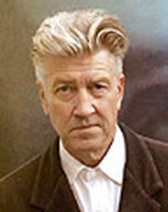
David Lynch
Born on January 20, 1946
Died on January 15, 2025
Age at death: 79
Profession: Film Director, Screenwriter, Producer
Place of Birth: Missoula, Montana, United States
Place of Death: United States
David Lynch was born on January 20, 1946, in the United States. His father was a research scientist working for the United States Department of Agriculture. Because of his father’s work, Lynch spent his childhood moving frequently between different states. During his school years, he developed an interest in scouting and, on his fifteenth birthday, accompanied John F. Kennedy as a scout during a presidential inauguration ceremony.
After graduating from a college in Virginia, David Lynch moved to Washington, D.C., where he enrolled at the Corcoran School of Art with the intention of becoming an artist. He later went to Boston and attended the School of the Museum of Fine Arts for one year. Along with his artist friend Jack Fisk, he was deeply influenced by German Expressionist painter Oskar Kokoschka. The two traveled to Germany hoping to work with him. Although Lynch planned to stay for three years, he returned to the United States after only fifteen days.
In 1966, David Lynch settled in Philadelphia and began studying at the Pennsylvania Academy of Fine Arts, where he advanced his work in painting and graphic arts. During this period, he created complex mosaic works in a style he called “Industrial Symphonies.” At the same time, he became increasingly interested in cinema and directed his first short film, Six Figures Getting Sick, in 1966. The film won the Academy’s annual competition. Encouraged by this success, H. Barton Wasserman supported Lynch’s next project, which he shot in his own home. In 1968, Lynch completed his second short film, The Alphabet.
In 1970, David Lynch abandoned painting entirely to focus on filmmaking. With a $5,000 grant from the American Film Institute, he directed The Grandmother. The film contained many of the motifs that would later become hallmarks of his cinema and occupies a significant place in his filmography.
In 1971, Lynch moved to Los Angeles and began working at the AFI Conservatory. With a $10,000 grant, he completed his first feature-length film, Eraserhead, in 1977. The film created an intensely mysterious atmosphere and was described by Lynch as “my Philadelphia story,” reflecting the danger, fear, and anxiety he experienced there, as well as his fears surrounding fatherhood. The film quickly achieved cult status. Stanley Kubrick later stated that Eraserhead was one of the best Lynch films.
In 1980, David Lynch directed The Elephant Man, which received seven Academy Award nominations and became a major box office success, bringing him international recognition. In 1984, he adapted Frank Herbert’s science fiction novel Dune for the screen. This was followed by Blue Velvet in 1986, which was nominated for the Academy Award for Best Picture. That year, Woody Allen publicly stated that the Oscar should have gone to Blue Velvet.
After winning the Palme d’Or at the Cannes Film Festival in 1990 with Wild at Heart, David Lynch began working on the television series Twin Peaks, which was broadcast in many countries and became a global phenomenon. He continued producing television projects until Lost Highway in 1997, a film that generated extensive discussion for its narrative structure, visual style, and music.
Following the cult success of Lost Highway, Lynch directed The Straight Story in 1999 and then returned with one of his most discussed films, Mulholland Drive, in 2001. This period was followed by online series such as Rabbits and Dumbland, as well as the short film Darkened Room. In 2003, he directed a documentary about his favorite music group, Rammstein.
One of the most complex figures in cinematic history and a master of film noir aesthetics, David Lynch was awarded the Lifetime Achievement Award by the Venice Film Festival jury. His final feature film was Inland Empire, starring Laura Dern and Jeremy Irons.
Diagnosed with emphysema in 2022, David Lynch died on January 15, 2025, in the United States, at the age of seventy-nine, due to a heart attack triggered by chronic obstructive pulmonary disease.
In His Own Words
Marriages
1st wife: Peggy Lynch (1967–1974)
2nd wife: Mary Fisk (1977–1987)
3rd wife: Mary Sweeney (2006–2007)
4th wife: Emily Stofle (m. 2009)
Awards
2001 – 54th Cannes Film Festival – Best Director (Mulholland Drive)
1990 – 43rd Cannes Film Festival – Palme d’Or (Wild at Heart)
1991 – 48th Golden Globe Awards – Best Television Series (Twin Peaks)
Selected Filmography
Director
2014 – Twin Peaks: The Missing Pieces
2006 – Inland Empire
2001 – Mulholland Drive
1999 – The Straight Story
1997 – Lost Highway
1992 – Twin Peaks: Fire Walk with Me
1990 – Twin Peaks (TV Series)
1990 – Wild at Heart
1986 – Blue Velvet
1984 – Dune
1980 – The Elephant Man
1977 – Eraserhead
Source: Biyografiler.com
David Lynch Movies
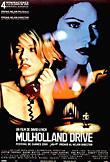
Mulholland Dr.
Release Date: October 19, 2001
Director: David Lynch
Writer: David Lynch
Cast: Naomi Watts, Laura Harring, Ann Miller, Dan Hedaya, Justin Theroux
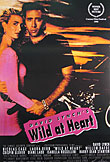
Wild At Heart
Release Date: August 17, 1990
Director: David Lynch
Writer: David Lynch, Barry Gifford
Cast: Nicolas Cage, Willem Dafoe, Crispin Glover, Laura Dern, J.E. Freeman, Diane Ladd, Calvin Lockhart
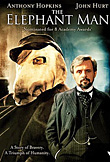
The Elephant Man
Release Date: October 10, 1980
Director: David Lynch
Writer: Eric Bergren, David Lynch
Cast: Anthony Hopkins, John Hurt, Anne Bancroft, John Gielgud, Wendy Hiller, Freddie Jones, Hannah Gordon, Helen Ryan, John Standing
Frequently asked questions about David Lynch
Who is David Lynch?, David Lynch biography, David Lynch life story, David Lynch age, David Lynch facts, David Lynch birthplace, David Lynch photos, David Lynch videos, David Lynch career
Related Biographies


Lamine Yamal
Professional footballer

Erling Haaland
Professional footballer

Austin Abrams
Actor

Keanu Reeves
Actor

Kylian Mbappe
Professional footballer

Bad Bunny
Rapper, Songwriter


Hongjoong
Singer, Rapper, Songwriter, Composer

Ludacris
Rapper, Actor

Kwon Eunbi
Singer

Sarah Wayne Callies
Actress, Screenwriter, Producer, Director

LaTavia Roberson
Singer, Actress, Entrepreneur
Kylian Mbappe
Professional footballer
Lamine Yamal
Professional footballer

Luiz Inacio Lula da Silva
Politician, President

John Healey
Politician

Zhang Yiming
Entrepreneur, Software Developer

Nicki Minaj
Rapper, Singer, Songwriter, Actress