
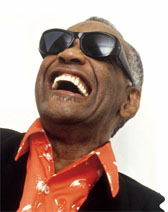
Ray Charles
Pioneer of soul music, rhythm and blues legend, and one of the most influential musicians of the 20th century.
Born on September 23, 1930
Died on June 10, 2004
Age at death: 74
Profession: Pianist, Musician, Singer, Composer
Place of Birth: Albany, Georgia, United States
Place of Death: Beverly Hills, California, United States
Ray Charles, born Ray Charles Robinson, was an American pianist, singer, composer, and rhythm and blues master who is universally recognized as one of the founding architects of soul music. By fusing gospel, blues, jazz, and rhythm and blues, he revolutionized popular music and permanently altered the sound of American culture.
Ray Charles was born on 23 September 1930 in Albany, Georgia, United States, the son of Bailey Robinson and Aretha Robinson. His early life was marked by tragedy. His younger brother George Robinson drowned after falling headfirst into a bathtub, an event that deeply traumatized him. At the age of seven, Ray Charles lost his sight due to glaucoma, though he never completely lost light perception.
After becoming blind, Ray Charles continued his education at the Florida School for the Deaf and the Blind, where he learned Braille and received formal musical training. There, he mastered piano and several other instruments, including organ, saxophone, trumpet, and clarinet. This institution marked the beginning of his lifelong relationship with music.
Both of Ray Charles’s parents died during his teenage years, forcing him into independence at an unusually early age. He worked as a musician throughout Florida before moving to Seattle, Washington, in 1947. In the late 1940s, his musical style reflected the influence of Nat King Cole and Charles Brown, blending smooth pop with rhythm and blues.
Ray Charles is widely credited as one of the most important figures in the development of soul music. His breakthrough came after signing with Atlantic Records, where he was strongly supported by Ahmet Ertegun. During this period, Ray Charles transformed gospel structures into secular music, a bold and controversial move that defined the soul genre.
In 1951, he achieved his first Top 10 hit with Baby, Let Me Hold Your Hand. He toured extensively with Lowell Fulson and collaborated with Guitar Slim in New Orleans. Working with R&B star Ruth Brown further sharpened his musical edge and stage presence.
Classic recordings such as This Little Girl of Mine, Drown in My Own Tears, Hallelujah I Love Her So, Lonely Avenue, and The Right Time established Ray Charles as a dominant force in rhythm and blues. In the early 1960s, he reached global superstardom with Unchain My Heart and the chart-topping I Can’t Stop Loving You in 1962.
In 1954, Ray Charles formed his own rhythm and blues ensemble. By 1961, he was performing internationally, including landmark concerts in France and at the Antibes Jazz Festival with a full orchestra. These performances solidified his status as a global music icon.
During the mid-1960s, Ray Charles struggled with drug addiction, leading to legal and personal challenges. His musical direction shifted toward pop with songs like Let’s Go Get Stoned. While some longtime fans longed for his earlier raw soul sound, Ray Charles remained focused on creating enduring music rooted in jazz and traditional American forms rather than chasing commercial trends.
In 1987, Ray Charles received the Grammy Lifetime Achievement Award, recognizing his monumental influence on music history. He is also a multiple Grammy Award winner and has been inducted into the Rock and Roll Hall of Fame, cementing his legacy as one of the greatest musicians of all time.
During the 1990s, Ray Charles remained culturally relevant, appearing in high-profile advertising campaigns, including for Diet Pepsi, and continuing to perform and record.
Ray Charles died on 10 June 2004 in Beverly Hills, California, due to liver disease. His life story reached a new generation through the biographical film Ray (2005), in which he was portrayed by Jamie Foxx, a performance that earned Foxx an Academy Award.
Legacy and Influence
Ray Charles influenced countless artists across soul, R&B, rock, jazz, and pop music. His fearless blending of sacred and secular sounds paved the way for generations of musicians and redefined artistic freedom in popular music.
Albums
1957 – Ray Charles
1957 – The Great Ray Charles
1958 – Yes Indeed!
1958 – Soul Brothers (with Milt Jackson)
1958 – Soul Meeting (with Milt Jackson)
1959 – Ray Charles at Newport
1959 – What’d I Say
1959 – The Genius of Ray Charles
1960 – The Genius Hits the Road
1960 – Dedicated to You
1961 – Ray Charles and Betty Carter
1961 – Genius + Soul = Jazz
1962 – Modern Sounds in Country and Western Music
1962 – Modern Sounds in Country and Western Music Volume Two
1963 – Ingredients in a Recipe for Soul
1964 – Sweet & Sour Tears
1964 – Have a Smile with Me
1965 – Live in Concert
1965 – Together Again
1966 – Crying Time
1966 – Ray’s Moods
1967 – Invites You to Listen
1968 – Portrait of Ray
1968 – I’m All Yours Baby!
1969 – Doing His Thing
1970 – Love Country Style
1970 – My Kind of Jazz
1971 – Volcanic Action of My Soul
1972 – A Message from the People
1974 – Come Live with Me
1975 – Renaissance
1977 – True to Life
1978 – Love & Peace
1979 – Ain’t It So
1980 – Brother Ray Is at It Again
1983 – Wish You Were Here Tonight
1984 – Do I Ever Cross Your Mind
1985 – The Spirit of Christmas
1987 – Live
1990 – Would You Believe?
1993 – My World
1996 – Strong Love Affair
Source: Biyografiler.com
Ray Charles Movies
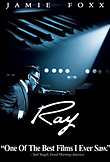
Ray
Release Date:
Director: Taylor Hackford
Writer: Taylor Hackford, James L. White
Cast: Jamie Foxx, Kerry Washington, Regina King, Clifton Powell, Harry Lennix, Bokeem Woodbine, Aunjanue Ellis, Sharon Warren, Curtis Armstrong, Larenz Tate
Frequently asked questions about Ray Charles
Who is Ray Charles?, Ray Charles biography, Ray Charles life story, Ray Charles age, Ray Charles facts, Ray Charles birthplace, Ray Charles photos, Ray Charles videos, Ray Charles career
Related Biographies

Lamine Yamal
Professional footballer

Sam Altman
Entrepreneur, Investor, CEO

Kylian Mbappe
Professional footballer

Erling Haaland
Professional footballer

Alice Weidel
Politician, Economist

Giorgia Meloni
Politician, Journalist


Hongjoong
Singer, Rapper, Songwriter, Composer

Ludacris
Rapper, Actor

Kwon Eunbi
Singer

Sarah Wayne Callies
Actress, Screenwriter, Producer, Director

LaTavia Roberson
Singer, Actress, Entrepreneur

Ilya Sutskever
Computer Scientist, Researcher

Lauren Cohan
Actress

Jenna Ortega
Actress

Sigmund Freud
Neurologist, Psychoanalyst

Xi Jinping
Politician, Statesman, Head of State

Alex Krizhevsky
Computer Scientist