
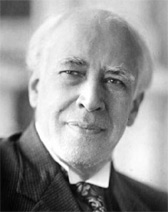
Konstantin Stanislavski
Russian theatre director, actor and co-founder of the Moscow Art Theatre. Creator of the Stanislavski System, an approach to actor training and realistic performance.
Born on January 17, 1863
Died on August 7, 1938
Age at death: 75
Profession: Actor, Director
Place of Birth: Moscow, Russia
Place of Death: Moscow, Soviet Union
Konstantin Stanislavski was a Russian theatre actor, director and acting teacher who developed the acting method known as the Stanislavski System. His approach to psychological realism, character development and actor training influenced modern theatre and provided a foundation for the development of Method Acting in the United States. He also co-founded the Moscow Art Theatre with Vladimir Nemirovich-Danchenko in 1898.
Early Life and Education
Konstantin Stanislavski was born on 17 January 1863 in Moscow, Russia, into a wealthy family involved in the textile manufacturing business. His birth name was Konstantin Sergeyevich Alekseyev. His father, Sergey Alekseyev, was a businessman who encouraged his children's interest in the arts. From an early age, Stanislavski had opportunities to attend the circus, opera, ballet and theatrical performances.
The family maintained a private theatre, where amateur productions were staged. In 1877, at the age of fourteen, Konstantin Stanislavski began acting in family theatrical performances. He later participated in vaudevilles, operettas, dramas and comedies while also working in the family business. He studied acting and singing with private teachers and developed his theatrical skills through amateur performances.
During his early career, he adopted the stage name Stanislavski to distinguish his theatrical activities from his family's business interests. His experience in amateur theatre led him to pursue acting and directing more seriously.
Society of Art and Literature
In 1888, Konstantin Stanislavski founded the Society of Art and Literature in Moscow together with theatre director Alexander Fedotov, opera singer and teacher Fyodor Komissarzhevsky, and artist Fyodor Sologub. The society was established to develop theatrical performances and provide opportunities for artists interested in literature, music, acting and other artistic disciplines.
Through the society, Stanislavski gained experience as both an actor and a director. He performed in productions of works by Alexander Pushkin, William Shakespeare, Molière and other playwrights. In 1889, he made his directing debut with Burning Letters, a play by Pyotr Gnedich.
In the same year, he married actress Maria Perevoshchikova, who performed under the stage name Maria Lilina. She subsequently participated in productions at the Society of Art and Literature and later became a member of the Moscow Art Theatre.
Founding of the Moscow Art Theatre
In June 1897, Konstantin Stanislavski met playwright and theatre director Vladimir Nemirovich-Danchenko at the Slavyansky Bazaar restaurant in Moscow. During their lengthy discussion, they developed plans for a theatre company that would move away from conventional acting styles and emphasize realistic performances, ensemble work and detailed rehearsals.
The two men founded the Moscow Art Theatre in 1898. The company opened on 14 October 1898 with a production of Tsar Fyodor Ioannovich by Aleksey Konstantinovich Tolstoy. Stanislavski directed productions and appeared in several plays, while Nemirovich-Danchenko contributed to the company's artistic and literary direction.
The theatre became closely associated with the works of Russian playwright Anton Chekhov. Its production of The Seagull in December 1898 received a positive reception after the play's unsuccessful first staging in Saint Petersburg in 1896. Stanislavski portrayed the writer Trigorin in the Moscow production.
Other works by Chekhov staged at the Moscow Art Theatre included Uncle Vanya (1899), Three Sisters (1901) and The Cherry Orchard (1904). Stanislavski directed these productions in collaboration with Nemirovich-Danchenko and other members of the theatre. His productions emphasized the psychological motivations of characters, natural dialogue and detailed interactions between actors.
The Moscow Art Theatre also staged works by Maxim Gorky, Henrik Ibsen, Leo Tolstoy and other European playwrights. Productions such as The Lower Depths and An Enemy of the People became part of the company's repertoire. The theatre continued operating through the political changes of the early twentieth century and the Russian Revolution of 1917.
Development of the Stanislavski System
Konstantin Stanislavski began systematically developing his approach to acting in 1906. He referred to his research as a grammar of acting and attempted to identify the principles through which performers could create believable characters and reproduce convincing behavior on stage.
His work became known as the Stanislavski System. It encouraged actors to understand a character's circumstances, motivations, objectives and actions rather than relying on exaggerated gestures or purely external expressions of emotion. Stanislavski believed that actors should examine the psychological and physical processes involved in creating a role.
One of the techniques associated with the System was emotional memory, through which actors could draw on remembered experiences to understand a character's emotional situation. Other principles included the magic if, given circumstances, concentration, objectives, physical actions and ensemble interaction.
Stanislavski developed these techniques through rehearsals, theatrical experiments and practical teaching. His work was influenced by contemporary studies of psychology and human behavior. Over time, he placed increasing emphasis on physical actions and the relationship between what a character does and what the character experiences internally.
The System was not intended to be a fixed collection of rules. Konstantin Stanislavski continued revising his methods throughout his career, testing his ideas with actors and students at the Moscow Art Theatre and its studios.
Theatre During the Russian Revolution
Konstantin Stanislavski worked as a theatre director before and after the Russian Revolution of 1917. His early productions developed within the tradition of psychological realism, while his later work took place under the cultural and political conditions of Soviet Russia.
Following the revolution, the Moscow Art Theatre experienced financial and organizational difficulties. Stanislavski continued working with the company while developing new training methods and participating in theatrical productions. His productions of contemporary Soviet plays, including Armoured Train 14-69, later formed part of the theatre's repertoire during the development of socialist realism.
In contrast to Stanislavski's emphasis on psychological realism, German playwright and director Bertolt Brecht developed Epic Theatre, which encouraged audiences to examine theatrical events critically rather than identify completely with the characters. Brecht drew on several theatrical traditions, including Chinese theatre. His approach developed separately from the Stanislavski System, although both became subjects of comparison in modern theatre studies.
Opera Direction and Later Productions
In 1918, Konstantin Stanislavski established an opera studio associated with the Bolshoi Theatre in Moscow. The studio later became an independent institution and was named the Stanislavski Opera Theatre in 1926. Through this work, he applied his acting principles to opera singers, emphasizing dramatic interpretation and the relationship between music, character and stage action.
Among his opera productions was Eugene Onegin by Russian composer Pyotr Ilyich Tchaikovsky, staged in 1922. Stanislavski worked to develop acting techniques that would allow opera performers to express their characters through both singing and dramatic performance.
He also participated in later productions at the Moscow Art Theatre, including Armoured Train 14-69 (1927), written by Vsevolod Ivanov, and Dead Souls (1932), based on the work of Nikolai Gogol and adapted for the stage by Mikhail Bulgakov. These productions belonged to different areas of his work in theatre and opera.
Source: Biyografiler.com
Frequently asked questions about Konstantin Stanislavski
Who is Konstantin Stanislavski?, Konstantin Stanislavski biography, Konstantin Stanislavski life story, Konstantin Stanislavski age, Konstantin Stanislavski facts, Konstantin Stanislavski birthplace, Konstantin Stanislavski photos, Konstantin Stanislavski videos, Konstantin Stanislavski career

Lamine Yamal
Professional footballer

Kylian Mbappe
Professional footballer

Keanu Reeves
Actor

Erling Haaland
Professional footballer

Brad Pitt
Actor

Leonardo DiCaprio
Actor

Konstantin Kacev
Painter

Konstantin Stanislavski
Actor, Director

Konstantin Savitsky
Painter

Konstantin Karamanlis
Former President, Lawyer

Konstantinos Tasoulas
President, Politician

Kelly LeBrock
Actress, Model

Khabane Lame
Social Media Influencer

Jensen Huang
Entrepreneur, CEO
Kylian Mbappe
Professional footballer

Kevin Warsh
Economist
Lamine Yamal
Professional footballer

Penelope Cruz
Actress