
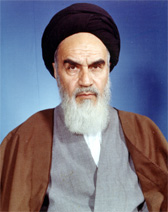
Khomeini
Supreme leader of the Iranian Islamic Revolution and founder of the Islamic Republic of Iran
Born on September 4, 1902
Died on June 3, 1989
Age at death: 87
Profession: Political Leader
Place of Birth: Khomeyn, Iran
Place of Death: Tehran, Iran
Ruhollah Khomeini, widely known as Imam Khomeini, was the political, legal, and spiritual leader of the Iranian Islamic Revolution and the founding Supreme Leader of the Islamic Republic of Iran. He remains one of the most influential and controversial figures in modern Middle Eastern history, reshaping Iran’s political structure, legal system, and social order through the establishment of a theocratic state governed by Shiʿa Islamic law.
Early Life and Background
Ruhollah Khomeini was born on September 24, 1902, in the city of Khomeyn, Iran. His birth name was Ruhollah, and his family name was Mustafavi. He was born into a wealthy and religious family. His father, Seyyid Mustafa, was a cleric who was killed when Khomeini was only five months old. His mother, Hajar, died when Khomeini was 15 years old, leaving him orphaned at a young age.
After the death of both his parents and his aunt, who had raised him, Khomeini grew up largely without close family support. In 1919, he traveled to the city of Arak to study Islamic sciences, where he became a student of Sheikh Abdulkarim Haeri. In 1922, he relocated to the religious city of Qom, which would become the central base of his clerical and political influence.
In 1930, he formally adopted the surname “Khomeini” in reference to his birthplace, marking the name under which he would later gain international recognition.
Religious Scholarship and Intellectual Work
Ruhollah Khomeini received extensive training in Islamic philosophy, logic, theology (kalam), jurisprudence (fiqh), mysticism (irfan), and other branches of Islamic sciences. Over several decades, he authored a large body of religious and philosophical works, ranging from jurisprudential treatises to mystical commentaries.
Despite the breadth of his scholarly output, Khomeini became widely known not primarily as a religious author, but as a cleric who openly opposed the monarchy of Mohammad Reza Shah Pahlavi, rejected Western influence in Iran, and uncompromisingly advocated for the implementation of Islamic law in state governance.
By the 1950s, Khomeini had attained the rank of Ayatollah, and in the early 1960s he was recognized as a Grand Ayatollah, placing him at the highest level of Shiʿa clerical hierarchy.
Marriage and Family
In 1929, at the age of 27, Ruhollah Khomeini married 15-year-old Betul Saqafi. The marriage produced several children, including Mostafa Khomeini, Zahra Mousavi, Sadiqeh, Farideh Mousavi, and Ahmad Khomeini.
Opposition to the Shah and Arrests
Ruhollah Khomeini emerged as a leading opponent of the Shah during the early 1960s, particularly criticizing land reforms that led to the confiscation of properties belonging to religious foundations. Following the bloody events of June 5, 1961, Khomeini delivered a speech condemning the regime, which resulted in his arrest and imprisonment in Tehran’s Ishratabad military prison.
After his release, he continued his opposition. In 1964, following a fierce speech against a capitulation bill granting legal immunity to American personnel in Iran, Khomeini was arrested again. This time, instead of imprisonment, he was exiled.
Exile in Turkey
On November 4, 1964, Ruhollah Khomeini was exiled to Turkey. He was initially taken to Ankara, where he stayed at the Bulvar Palas Hotel in room 514. Five days later, he was transferred to Bursa, where he resided in the home of Turkish military intelligence officer Colonel Ali Çetiner.
During his stay in Bursa, numerous incidents were reported reflecting cultural and ideological tensions. Khomeini objected to women appearing without head coverings in the household and refused to dine at the same table with uncovered female family members. These disputes created lasting strain between Khomeini and the host family.
Confined indoors for long periods, Khomeini grew restless and sought permission to walk outside wearing his clerical attire. Turkish authorities denied this, stating that religious garments were not permitted in public. After months of resistance, he eventually agreed to wear Western-style clothing. During this period, he began writing his controversial work Tahriru’l-Vesile.
Khomeini also entered the sea for the first and only time in his life while in Turkey. Initially disturbed by women swimming publicly at Florya Beach, he later swam privately at Kumla Beach under secluded conditions.
It was during his exile in Turkey that Khomeini allegedly began laying plans to overthrow the Shah. According to accounts, organizations formed under his direction and financial support carried out political assassinations, including the killing of Prime Minister Hassan Ali Mansur in 1965.
Exile in Iraq and France
After approximately one year in Turkey, Ruhollah Khomeini was transferred to Iraq, settling in the Shiʿa holy city of Najaf. From there, he continued issuing calls for the overthrow of the Shah and the establishment of an Islamic state.
On October 6, 1978, under pressure from the Shah, Iraqi leader Saddam Hussein expelled Khomeini, sending him to France. He settled in Neauphle-le-Château, a suburb of Paris, where his political activity intensified. His recorded speeches were widely distributed in Iran via cassette tapes, reaching a rapidly growing audience.
By late 1978, mass protests, strikes, and nationwide unrest forced Mohammad Reza Shah Pahlavi to leave Iran on January 16, 1979.
Return to Iran and Establishment of the Islamic Republic
Ruhollah Khomeini returned to Iran on February 1, 1979, where he was greeted by millions. Four days later, he appointed a provisional government. On March 1, 1979, he relocated to Qom.
In December 1979, a constitutional referendum formally established the Islamic Republic of Iran. Khomeini was appointed Supreme Leader for life, holding ultimate political and religious authority.
Governance and Policies
Following the revolution, Iran’s governance was fundamentally restructured. Religious jurists (ulema) assumed primary responsibility for state policy through the doctrine of Velayat-e Faqih. Islamic law became the legal foundation of the state.
Mandatory veiling for women was enforced, alcohol and Western music were banned, and punishments prescribed by Sharia law were implemented. Khomeini positioned himself as the final arbiter among competing political factions.
Foreign Policy and Major Crises
Khomeini adopted an uncompromising stance toward both the United States and the Soviet Union. With his approval, Iranian militants seized the U.S. Embassy in Tehran on November 4, 1979, taking 66 American hostages who were held until January 29, 1981.
From September 22, 1980, to August 20, 1988, Iran fought an eight-year war with Iraq following an invasion ordered by Saddam Hussein. The conflict resulted in massive casualties on both sides.
Salman Rushdie Fatwa
On February 14, 1989, Ruhollah Khomeini issued a death fatwa against British-based author Salman Rushdie and the publishers of his novel The Satanic Verses, offering a reward of three million U.S. dollars for Rushdie’s killing. The decree triggered international condemnation and long-lasting diplomatic consequences.
Death and Funeral
Ruhollah Khomeini died on June 3, 1989, in Tehran at the age of 87. His funeral was attended by an estimated 10 to 13 million people, making it one of the largest funerals in recorded history.
Controversial Writings
In the second volume of Tahriru’l-Vesile, page 241, Khomeini wrote a passage stating that sexual intercourse within permanent or temporary marriage before the age of nine was not permissible, but other forms of physical contact, including sexual touching, were allowed—even with infants. This passage remains one of the most controversial aspects of his written legacy.
Books and Written Works
- Sahur Duası Şerhi
- Re’su’l-Calût Hadisinin Şerhine Haşiye
- Akıl ve Cehl Ordusu Hadisinin Şerhi
- Fusûsu’l-Hikem Şerhine Haşiye
- Kırk Hadis Şerhi
- Namaz Âdâbı (Âdâbu’s-Salat)
- Kitabu’t-Tahâre (4 volumes)
- Kitabu’l-Bey’ (5 volumes)
- Tahriru’l-Vesile (2 volumes)
- İslâmî Hükümet ya da Velayet-i Fakîh
- Siyasî-İlahî Vasiyetname
- Sahife-i Nur (22 volumes)
- Şiir Divanı
Ruhollah Khomeini remains a central figure in Iranian history, embodying the fusion of religious authority and political power that continues to shape Iran’s domestic and international trajectory.
Source: Biyografiler.com
Frequently asked questions about Khomeini
Who is Khomeini?, Khomeini biography, Khomeini life story, Khomeini age, Khomeini facts, Khomeini birthplace, Khomeini photos, Khomeini videos, Khomeini career
Related Biographies

Lamine Yamal
Professional footballer

Erling Haaland
Professional footballer

Andrew Garfield
Actor

Kylian Mbappe
Professional footballer

Ilya Sutskever
Computer Scientist, Researcher

Sam Altman
Entrepreneur, Investor, CEO

Hoyt Richards
Model, Actor

Dieter Schwarz
Businessperson, Entrepreneur

Giovanni Ferrero
Businessperson

Cynthia Erivo
Singer, Actress, Songwriter, Producer

Mike Markkula
Businessperson, Entrepreneur

Carol Burnett
Actress, Singer

Olivia Rodrigo
Singer

Xi Jinping
Politician, Statesman, Head of State

Frida Kahlo
Painter

Alice Weidel
Politician, Economist

Cailee Spaeny
Actress, Singer

Avril Lavigne
Singer, Musician, Songwriter