
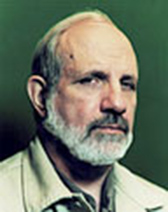
Brian De Palma
A defining auteur of American psychological thriller cinema and a leading figure of New Hollywood
Born on September 11, 1940
Age: 86
Profession: Film Director, Screenwriter
Place of Birth: New Jersey, United States
Brian De Palma is an American film director and screenwriter renowned for his stylized visual language and his persistent exploration of murder, obsession, voyeurism, violence, and psychological fragmentation. Emerging as one of the most distinctive voices of the New Hollywood generation, De Palma developed a cinematic identity that combined formal experimentation with provocative narrative themes.
Early Life and Education
Brian De Palma was born on September 11, 1940, in New Jersey, United States. He spent much of his childhood in Philadelphia, where he grew up in a middle-class household. His father was a surgeon, a profession that exposed De Palma early on to themes of precision, observation, and psychological tension, elements that would later permeate his films.
While studying at Columbia University, De Palma’s interest in cinema deepened significantly after encountering Citizen Kane and Vertigo. These films awakened his fascination with cinematic structure, visual manipulation, and subjective perception. In the late 1960s, he transferred to Sarah Lawrence College, where he shifted his academic focus toward theatre and filmmaking.
Artistic Influences and Cinematic Formation
During his formative years, Brian De Palma was profoundly influenced by European and avant-garde cinema. Directors such as Jean-Luc Godard, Michelangelo Antonioni, Andy Warhol, and most notably Alfred Hitchcock shaped his visual grammar and narrative sensibilities. Hitchcock’s use of suspense, voyeurism, and subjective camera perspective became a cornerstone of De Palma’s own style.
These influences culminated in his early experimental works, where De Palma began to merge political satire, psychological tension, and formal innovation. His cinema from this period reflects a director actively interrogating the language of film itself.
Early Career and Independent Cinema
In 1967, Brian De Palma directed his first significant thriller, Murder à la Mod, a low-budget film filled with overt Hitchcockian references. This project marked his initial attempt to synthesize homage with originality, establishing many of the thematic concerns that would define his later work.
With the discovery of Robert De Niro, De Palma directed his first feature-length film, The Wedding Party (1969). The collaboration signaled the beginning of a creative trajectory that would soon draw Hollywood’s attention. Following this debut, De Palma produced numerous documentaries and short films, refining his technical control and narrative confidence.
Breakthrough and Rise to Prominence
Brian De Palma achieved his first major critical breakthrough with the independent thriller Sisters (1973). The film demonstrated his mastery of suspense, split-screen techniques, and psychological ambiguity, firmly positioning him as one of the most promising directors of his generation.
This success was followed by Phantom of the Paradise (1974), which won the Grand Prize at the 1975 Avoriaz Film Festival. The film’s blend of rock opera, satire, and horror further showcased De Palma’s willingness to defy genre boundaries and visual conventions.
International Recognition and Iconic Films
Global recognition came with Carrie (1976), an adaptation of Stephen King’s novel. The film earned Academy Award nominations for Sissy Spacek and Piper Laurie and became a landmark in horror cinema. Its climactic final sequence remains one of the most referenced scenes in film history.
Throughout the late 1970s and 1980s, Brian De Palma continued to solidify his reputation with films such as Obsession, Dressed to Kill, and Blow Out, each expanding his exploration of paranoia, surveillance, and moral disintegration.
Hollywood Era and Major Productions
The 1980s marked De Palma’s transition into large-scale Hollywood productions. Scarface (1983), starring Al Pacino, became one of the most iconic crime films ever made, influencing popular culture, music, and fashion for decades despite its initially divisive reception.
He later directed The Untouchables (1987), a stylized gangster epic featuring Kevin Costner and Robert De Niro, and eventually helmed Mission: Impossible (1996), launching one of Hollywood’s most successful action franchises starring Tom Cruise.
Collaborations and Recurring Actors
Between the 1970s and 1980s, Brian De Palma frequently collaborated with performers such as Jennifer Salt, Amy Irving, Nancy Allen, William Finley, Charles Durning, and Gerrit Graham. His creative partnership with Nancy Allen extended beyond the screen, as they were married from 1979 to 1983.
These recurring collaborations contributed to the cohesive tone of De Palma’s filmography, allowing him to explore recurring themes through familiar faces and established creative trust.
Style and Thematic Concerns
Brian De Palma is widely recognized for his technically ambitious filmmaking, including split screens, long tracking shots, slow motion, and subjective camera movements. His narratives frequently examine voyeurism, surveillance, split identities, and the relationship between violence and spectatorship.
Often controversial, his work persistently challenges audiences to confront their own role as observers, positioning the camera itself as an ethical and psychological instrument.
Legacy and Influence
Brian De Palma remains one of the most influential auteurs in modern cinema. His films continue to serve as reference points for contemporary directors working in thriller, crime, and psychological drama genres.
As a leading figure of the New Hollywood movement alongside Martin Scorsese, Francis Ford Coppola, George Lucas, Steven Spielberg, Paul Schrader, and John Milius, De Palma’s contribution to American cinema is firmly cemented in film history.
Selected Filmography
- Murder à la Mod (1968)
- Greetings (1968)
- The Wedding Party (1969)
- Hi, Mom! (1970)
- Sisters (1973)
- Phantom of the Paradise (1974)
- Obsession (1976)
- Carrie (1976)
- Dressed to Kill (1980)
- Blow Out (1981)
- Scarface (1983)
- Wise Guys (1986)
- The Untouchables (1987)
- Mission: Impossible (1996)
- Femme Fatale (2002)
Source: Biyografiler.com
Brian De Palma Movies
Redacted
Release Date: November 16, 2007
Director: Brian De Palma
Writer: Brian De Palma
Cast: Patrick Carroll, Daniel Stewart Sherman, Ty Jones, Izzy Diaz
Mission : Impossible
Release Date: May 22, 1996
Director: Brian De Palma
Writer: David Koepp, Robert Towne
Cast: Tom Cruise, Jon Voight, Emmanuelle Béart, Henry Czerny, Jean Reno, Ving Rhames, Kristin Scott Thomas, Vanessa Redgrave, Dale Dye, Emilio Estevez, Karel Dobrý, Marcel Iureș, Ion Caramitru
Scarface
Release Date: December 9, 1983
Director: Brian De Palma
Writer: Oliver Stone
Cast: Al Pacino, Steven Bauer, Michelle Pfeiffer, Mary Elizabeth Mastrantonio, Robert Loggia, F. Murray Abraham
Frequently asked questions about Brian De Palma
Who is Brian De Palma?, Brian De Palma biography, Brian De Palma life story, Brian De Palma age, Brian De Palma facts, Brian De Palma birthplace, Brian De Palma photos, Brian De Palma videos, Brian De Palma career
Related Biographies




Lamine Yamal
Professional footballer

Erling Haaland
Professional footballer

Keanu Reeves
Actor

Kylian Mbappe
Professional footballer

Austin Abrams
Actor

Bad Bunny
Rapper, Songwriter


Hongjoong
Singer, Rapper, Songwriter, Composer

Ludacris
Rapper, Actor

Kwon Eunbi
Singer

Sarah Wayne Callies
Actress, Screenwriter, Producer, Director

LaTavia Roberson
Singer, Actress, Entrepreneur

Carlos Slim Helu
Businessperson, CEO
Austin Abrams
Actor
Kylian Mbappe
Professional footballer

Nicki Minaj
Rapper, Singer, Songwriter, Actress

Alexander Hamilton
Statesman, Lawyer, Economist

Bruce Lee
Actor, Philosopher