
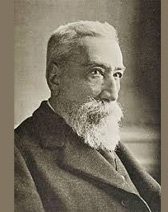
Anatole France
French novelist, poet, and literary critic who received the Nobel Prize in Literature in 1921. His works include The Crime of Sylvestre Bonnard, Thaïs, The Red Lily, Penguin Island, and The Gods Are Athirst.
Born on April 16, 1844
Died on October 12, 1924
Age at death: 80
Profession: Novelist, Poet, Essayist
Place of Birth: Paris, France
Place of Death: Saint-Cyr-sur-Loire, Indre-et-Loire, France
Anatole France, whose real name was Jacques Anatole François Thibault, was born on April 16, 1844, in Paris, France. He was a French novelist, poet, essayist, and literary critic associated with the classical tradition of French literature. His writings frequently combined irony, skepticism, historical subjects, and criticism of social and religious institutions. He gained literary recognition with The Crime of Sylvestre Bonnard (1881) and later published works including Thaïs (1890), The Red Lily (1894), Penguin Island (1908), and The Gods Are Athirst (1912). During the Dreyfus Affair, he publicly supported Alfred Dreyfus and became increasingly involved in political and social debates. He was elected to the Académie française in 1896 and received the Nobel Prize in Literature in 1921. He died on October 12, 1924, at the age of 80.
Early Life and Education
Anatole France was born on April 16, 1844, in Paris. His father, François Noël Thibault, was a bookseller, while his mother was Antoinette Gallas. The family operated a bookshop on the Quai Voltaire, specializing in works related to French history and the French Revolution.
Growing up among books, France developed an interest in literature, history, philosophy, and classical culture. He attended the Collège Stanislas in Paris, where he received an education based on the humanities.
After finishing school, he worked in publishing and bookselling. He later became associated with the publishing house of Alphonse Lemerre and began writing literary criticism and poetry.
In 1876, he obtained a position at the library of the French Senate, where he worked until 1890. This employment allowed him to continue his literary activities.
Early Poetry and Literary Career
Anatole France began his literary career as a poet influenced by Parnassianism, a movement associated with formal precision and classical subjects.
His early poetry reflected the literary interests of writers including Leconte de Lisle and other contributors to Le Parnasse contemporain.
In 1873, he published Golden Poems (*Les Poèmes dorés*), followed by The Corinthian Wedding (*Les Noces corinthiennes*) in 1876.
Although he later became better known for his prose, his early poetry established his interest in classical forms, historical imagery, and carefully constructed language.
Novels and Literary Recognition
In 1881, Anatole France published The Crime of Sylvestre Bonnard (*Le Crime de Sylvestre Bonnard*), a novel about an elderly scholar whose personal convictions lead him into conflict with established authority.
The book received the Montyon Prize from the Académie française in 1882.
His subsequent works included The Aspirations of Jean Servien (*Les Désirs de Jean Servien*, 1882), Balthasar (1889), and Thaïs (1890).
Thaïs tells the story of a courtesan in ancient Egypt who undergoes a religious conversion. The novel explores faith, desire, and the contradictions between spiritual ideals and human emotions. It later became the basis for the opera Thaïs by French composer Jules Massenet.
In 1892, France published At the Sign of the Reine Pédauque (*La Rôtisserie de la reine Pédauque*), followed by The Opinions of Jérôme Coignard (*Les Opinions de Jérôme Coignard*) in 1893.
These works feature Abbé Coignard, a learned and skeptical character whose conversations examine philosophy, religion, and social customs.
In 1894, he published The Red Lily (*Le Lys rouge*), a novel about romantic relationships and jealousy set partly in Florence, Italy.
His 1894 collection The Garden of Epicurus (*Le Jardin d'Épicure*) brought together reflections on morality, knowledge, religion, and human behavior.
The Dreyfus Affair and Political Involvement
During the late nineteenth century, Anatole France became increasingly involved in political and social questions.
He supported French army officer Alfred Dreyfus, who had been wrongfully convicted of treason in 1894. France was among the writers and intellectuals who demanded a review of the conviction during the Dreyfus Affair.
He also supported novelist Émile Zola, whose open letter J'Accuse…! challenged the conduct of French military and judicial authorities.
France addressed the political divisions of the period in Contemporary History (*Histoire contemporaine*), a sequence of four novels published between 1897 and 1901.
The series follows Monsieur Bergeret, a university professor whose observations of French society gradually lead him toward political involvement.
Its final volume, Monsieur Bergeret in Paris (*Monsieur Bergeret à Paris*, 1901), reflects the intellectual debates surrounding the Dreyfus Affair.
France subsequently expressed sympathy for socialism and participated in campaigns concerning secularism, social justice, and political reform.
Social Criticism and Later Novels
After 1900, Anatole France increasingly addressed political authority, social inequality, and religious institutions in his fiction.
In Crainquebille (1901–1902), he portrayed a street vendor who becomes the victim of an unjust legal accusation. France later adapted the story for the theater.
His novel Penguin Island (*L'Île des pingouins*, 1908) uses a fictional society of penguins transformed into human beings to satirize French history, politics, and religion.
In 1912, he published The Gods Are Athirst (*Les Dieux ont soif*), set during the Reign of Terror in the French Revolution. The novel follows a revolutionary judge whose commitment to political ideals becomes increasingly intolerant.
His 1914 novel The Revolt of the Angels (*La Révolte des anges*) presents a fictional rebellion in heaven while examining religious authority and political power.
During his later years, France expressed sympathy for socialist and communist ideas, although his political positions were not always identical to those of organized political movements.
Nobel Prize in Literature
In 1921, Anatole France received the Nobel Prize in Literature.
The Swedish Academy recognized his literary achievements, particularly his prose style, human sympathy, and treatment of French intellectual traditions.
France had previously been elected to the Académie française on January 23, 1896, occupying seat 38.
He continued writing and participating in public discussions during the final years of his life.
Personal Life
Anatole France married Marie Valérie Guérin de Sauville on April 28, 1877. Their daughter, Suzanne France, was born in 1881. The marriage ended in divorce in 1893.
In 1888, he began a relationship with Léontine Arman de Caillavet, a literary salon hostess in Paris. Their relationship continued for many years and influenced his novels Thaïs and The Red Lily.
In October 1920, he married Emma Laprévotte, with whom he remained until his death.
Death
Anatole France died on October 12, 1924, at his residence, La Béchellerie, in Saint-Cyr-sur-Loire near Tours, France. He was 80 years old.
He was buried at the Neuilly-sur-Seine Old Cemetery near Paris.
Poetry
1870 – La Mort d'un juste (The Death of a Righteous Man)
1873 – Golden Poems (*Les Poèmes dorés*)
1876 – The Corinthian Wedding (*Les Noces corinthiennes*)
Novels, Short Stories and Prose
1879 – Jocasta and the Famished Cat (*Jocaste et le chat maigre*)
1881 – The Crime of Sylvestre Bonnard (*Le Crime de Sylvestre Bonnard*)
1882 – The Aspirations of Jean Servien (*Les Désirs de Jean Servien*)
1883 – Honey-Bee (*Abeille*)
1886 – Our Children (*Nos enfants*)
1889 – Balthasar
1890 – Thaïs
1892 – Mother of Pearl (*L'Étui de nacre*)
1892 – At the Sign of the Reine Pédauque (*La Rôtisserie de la reine Pédauque*)
1893 – The Opinions of Jérôme Coignard (*Les Opinions de Jérôme Coignard*)
1894 – The Red Lily (*Le Lys rouge*)
1894 – The Garden of Epicurus (*Le Jardin d'Épicure*)
1895 – The Well of Saint Clare (*Le Puits de Sainte Claire*)
1897 – The Elm-Tree on the Mall (*L'Orme du mail*) – Contemporary History, Volume I
1897 – The Wicker-Work Woman (*Le Mannequin d'osier*) – Contemporary History, Volume II
1899 – The Amethyst Ring (*L'Anneau d'améthyste*) – Contemporary History, Volume III
1900 – Clio
1901 – Monsieur Bergeret in Paris (*Monsieur Bergeret à Paris*) – Contemporary History, Volume IV
1901 – The Crainquebille Affair (*L'Affaire Crainquebille*)
1902 – The Procurator of Judaea (*Le Procurateur de Judée*)
1903 – Comic History (*Histoire comique*)
1904 – On the White Stone (*Sur la pierre blanche*)
1908 – Penguin Island (*L'Île des pingouins*)
1908 – The Tales of Jacques Tournebroche (*Les Contes de Jacques Tournebroche*)
1909 – The Seven Wives of Bluebeard (*Les Sept Femmes de Barbe-Bleue et autres contes merveilleux*)
1912 – The Gods Are Athirst (*Les Dieux ont soif*)
1914 – The Revolt of the Angels (*La Révolte des anges*)
1921 – Marguerite
1921 – The Count Morin (*Le Comte Morin, député*)
Memoirs and Autobiographical Writing
1885 – The Book of My Friend (*Le Livre de mon ami*)
1899 – Pierre Nozière
1918 – Little Pierre (*Le Petit Pierre*)
1922 – The Bloom of Life (*La Vie en fleur*)
Plays
1898 – Au petit bonheur – One-act play
1903 – Crainquebille – Stage adaptation
1908 – The Comedy of the Man Who Married a Mute Woman (*La Comédie de celui qui épousa une femme muette*)
1928 – The Wicker-Work Woman (*Le Mannequin d'osier*) – Posthumous dramatic adaptation
Literary Criticism
1868 – Alfred de Vigny – Literary study
1871 – Le Parnasse contemporain – Poetry contributions
1888 – Le Château de Vaux-le-Vicomte
1913 – The Latin Genius (*Le Génie latin*) – Collection of literary prefaces
Political and Other Writings
1902 – Social Opinions (*Opinions sociales*)
1904 – The Black Party (*Le Parti noir*)
1906 – Towards Better Times (*Vers les temps meilleurs*) – Speeches and letters
1914 – On the Glorious Path (*Sur la voie glorieuse*)
Thirty Years of Social Life (*Trente ans de vie sociale*) – Posthumously collected political and social writings
Source: Biyografiler.com
Frequently asked questions about Anatole France
Who is Anatole France?, Anatole France biography, Anatole France life story, Anatole France age, Anatole France facts, Anatole France birthplace, Anatole France photos, Anatole France videos, Anatole France career
Related Biographies

Lamine Yamal
Professional footballer

Erling Haaland
Professional footballer

Keanu Reeves
Actor

Kylian Mbappe
Professional footballer

Bad Bunny
Rapper, Songwriter

Leonardo DiCaprio
Actor

Andy Wachowski
Film Director, Screenwriter

Andy Rubin
Computer Scientist, Entrepreneur, Investor

Andy Serkis
Actor, Film Director

Andy Burnham
Former Prime Minister, Politician

Andy Garcia
Actor, Film Director

Andre Brugiroux
Explorer, Writer

Amy Ryan
Actress

Ali Larter
Actress, Former Model

Ursula von der Leyen
Politician, Physician

Alfred de Musset
Poet, Novelist

Alfred Jarry
Writer, Novelist, Poet
Andy Garcia
Actor, Film Director