
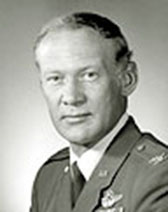
Aldrin Edwin Eugene
American astronaut and retired United States Air Force colonel who became the second person to walk on the Moon during the Apollo 11 mission on July 20, 1969.
Born on January 20, 1930
Age: 96
Profession: Astronaut
Place of Birth: Montclair, New Jersey, United States
Buzz Aldrin, born Edwin Eugene Aldrin Jr. on January 20, 1930, is an American former astronaut, military pilot, and aeronautical engineer. He served as the lunar module pilot of Apollo 11, the first mission to land humans on the Moon, and became the second person to walk on its surface, following Neil Armstrong, on July 20, 1969. Before the Moon landing, he participated in Gemini 12 (1966), conducting spacewalks that helped demonstrate techniques for working outside a spacecraft. A graduate of the United States Military Academy and the Massachusetts Institute of Technology (MIT), he also served as a fighter pilot during the Korean War. After leaving NASA in 1971 and retiring from the United States Air Force in 1972, he became an author, consultant, and advocate for human space exploration.
Early Life and Education
Buzz Aldrin was born on January 20, 1930, in Montclair, New Jersey. His father, Edwin Eugene Aldrin Sr., was an aviation pioneer and officer in the United States Army Air Service. His mother, Marion Moon Aldrin, was the daughter of an Army chaplain.
He grew up in Montclair with his two older sisters, Madeleine and Fay Ann. The nickname Buzz originated from a childhood pronunciation of the word "brother" as "buzzer" by one of his sisters. He later adopted Buzz as his legal first name in 1988.
After graduating from Montclair High School, Aldrin entered the United States Military Academy at West Point in 1947.
He graduated in 1951 with a Bachelor of Science degree in mechanical engineering, ranking third in his class. Following graduation, he entered the United States Air Force and began military pilot training.
Military Service During the Korean War
After receiving his pilot wings in 1952, Buzz Aldrin was assigned to fighter operations during the Korean War.
He flew F-86 Sabre jet fighters with the 51st Fighter-Interceptor Wing and completed 66 combat missions.
During the conflict, he was credited with shooting down two Soviet-designed MiG-15 fighter aircraft. His military decorations included the Distinguished Flying Cross and the Air Medal.
Following the war, Aldrin served as an aerial gunnery instructor at Nellis Air Force Base in Nevada. He also worked at the United States Air Force Academy and later served as a flight commander with the 36th Tactical Fighter Wing at Bitburg Air Base in West Germany, flying F-100 Super Sabre aircraft.
Doctorate at MIT and Orbital Rendezvous Research
In 1959, Buzz Aldrin entered the Massachusetts Institute of Technology to pursue advanced studies in astronautics.
He completed his Doctor of Science degree in 1963. His doctoral thesis, Line-of-Sight Guidance Techniques for Manned Orbital Rendezvous, examined methods for guiding spacecraft during orbital rendezvous.
His research concerned the calculations and procedures required for two spacecraft to approach and meet while traveling in orbit, an essential capability for subsequent spaceflight missions.
Aldrin subsequently returned to Air Force duties, working on projects related to orbital rendezvous and the Gemini Program.
Selection as a NASA Astronaut
In October 1963, Buzz Aldrin was selected as a member of NASA's third astronaut group. He was the first NASA astronaut selected with a doctoral degree.
His academic background in orbital mechanics contributed to his work on spacecraft rendezvous and docking procedures.
He initially served as backup pilot for Gemini 9A and later received an assignment as pilot of Gemini 12, the final crewed mission of the Gemini program.
Gemini 12 Mission
On November 11, 1966, Buzz Aldrin launched aboard Gemini 12 alongside mission commander Jim Lovell.
The four-day mission was designed to demonstrate orbital rendezvous, docking, and extravehicular activity, commonly known as spacewalking.
Aldrin conducted three periods of activity outside the spacecraft, totaling approximately five and a half hours. He used carefully planned movements, handholds, and underwater training techniques to reduce fatigue and improve performance.
The mission demonstrated that astronauts could carry out complex work in space when provided with suitable equipment, preparation, and procedures.
Gemini 12 returned to Earth on November 15, 1966, completing the Gemini program's crewed flights.
Apollo 11 and the First Moon Landing
In 1969, Buzz Aldrin was assigned as lunar module pilot for Apollo 11, the mission selected to attempt the first human landing on the Moon.
The three-member crew consisted of mission commander Neil Armstrong, command module pilot Michael Collins, and lunar module pilot Buzz Aldrin.
On July 16, 1969, the astronauts launched from Kennedy Space Center in Florida aboard a Saturn V rocket.
After entering lunar orbit, Armstrong and Aldrin transferred to the lunar module Eagle, while Collins remained aboard the command module Columbia.
On July 20, 1969, Eagle landed in the Sea of Tranquility on the lunar surface. Armstrong became the first person to step onto the Moon, followed approximately nineteen minutes later by Aldrin.
Although Aldrin had expressed an interest in being the first astronaut to step onto the lunar surface, NASA's mission procedures assigned the first exit to Armstrong.
During their time outside the lunar module, Armstrong and Aldrin collected geological samples, photographed the landing site, and deployed scientific equipment.
Aldrin spent approximately two hours and fifteen minutes working outside Eagle. The astronauts remained on the lunar surface for more than twenty-one hours before launching back into lunar orbit.
After rejoining Collins in Columbia, the crew returned to Earth. Apollo 11 splashed down in the Pacific Ocean on July 24, 1969.
Retirement from NASA and the Air Force
Following the Apollo 11 mission, Buzz Aldrin participated in public appearances and international visits with the other crew members.
In July 1971, he resigned from NASA and returned to Air Force duties as commandant of the Aerospace Research Pilot School at Edwards Air Force Base in California.
He retired from active military service in March 1972 with the rank of colonel, completing twenty-one years of service in the Air Force.
His combined spaceflight experience amounted to approximately 289 hours and 53 minutes, including nearly eight hours of extravehicular activity.
Personal Difficulties and Autobiography
After leaving NASA and the military, Buzz Aldrin experienced clinical depression and alcohol dependence.
He discussed these experiences publicly and described them in his autobiography, Return to Earth, published in 1973.
The book examined his military and spaceflight careers, the psychological pressures following the Apollo 11 mission, and his difficulties adjusting to life outside the astronaut program.
He later continued discussing mental health and addiction recovery in interviews and autobiographical writing, including Magnificent Desolation (2009).
Later Career and Space Exploration Advocacy
Following his retirement, Buzz Aldrin worked as a consultant, lecturer, and writer. He remained involved in discussions concerning human spaceflight and future missions beyond Earth orbit.
He advocated the development of technologies and transportation systems intended to support sustained human exploration of Mars.
Among his proposals was the Aldrin Cycler, a spacecraft trajectory concept designed to enable repeated travel between Earth and Mars using carefully calculated orbital paths.
His later publications included Men from Earth (1989), Mission to Mars (2013), and No Dream Is Too High (2016).
A lunar crater near the Apollo 11 landing site was named Aldrin in his honor. Asteroid 6470 Aldrin also bears his name.
Personal Life
Buzz Aldrin married Joan Ann Archer in 1954. They had three children: James Michael Aldrin, Janice Aldrin, and Andrew Aldrin. Their marriage ended in divorce in 1974.
In 1975, he married Beverly Van Zile. They divorced in 1978.
He married Lois Driggs Cannon in 1988. Their marriage ended in divorce in 2012.
On January 20, 2023, his ninety-third birthday, Aldrin married Anca Faur, a chemical engineer and business executive. She died in October 2025.
Awards and Honors
1950s – Distinguished Flying Cross, for combat service during the Korean War
1967 – Harmon International Trophy, for achievements in spaceflight
1969 – Presidential Medal of Freedom, awarded to the Apollo 11 crew
1969 – Robert J. Collier Trophy, awarded to the Apollo 11 crew
1969 – NASA Distinguished Service Medal
1971 – Inducted into the International Space Hall of Fame
2009 – Congressional Gold Medal, awarded to the Apollo 11 astronauts and John Glenn
Space Missions
1966 – Gemini 12 (Pilot; November 11–15, 1966)
1969 – Apollo 11 (Lunar Module Pilot; July 16–24, 1969)
Selected Books
1973 – Return to Earth (Autobiography)
1989 – Men from Earth
2000 – Reaching for the Moon
2009 – Magnificent Desolation: The Long Journey Home from the Moon
2013 – Mission to Mars: My Vision for Space Exploration
2016 – No Dream Is Too High: Life Lessons from a Man Who Walked on the Moon
Source: Biyografiler.com
Frequently asked questions about Aldrin Edwin Eugene
Who is Aldrin Edwin Eugene?, Aldrin Edwin Eugene biography, Aldrin Edwin Eugene life story, Aldrin Edwin Eugene age, Aldrin Edwin Eugene facts, Aldrin Edwin Eugene birthplace, Aldrin Edwin Eugene photos, Aldrin Edwin Eugene videos, Aldrin Edwin Eugene career
Related Biographies

Lamine Yamal
Professional footballer

Brad Pitt
Actor

Erling Haaland
Professional footballer

Kylian Mbappe
Professional footballer

Leonardo DiCaprio
Actor

Sam Altman
Entrepreneur, Investor, CEO

Michael Bay
Film Director, Producer

Michael Ballack
Former Professional Footballer

Mia Wasikowska
Actress

Michael Emerson
Actor

Mikhail Gorbachev
Politician, Head of State

Mesut Barzani
Politician

Angelina Jolie
Actress, Director, Human Rights Activist

Acun Ilıcalı
Producer, TV Personality, Media executive, Businessperson

Andrea Bocelli
Singer, Musician

Dostoevsky
Novelist, Essayist

George Clooney
Actor

Mads Mikkelsen
Actor