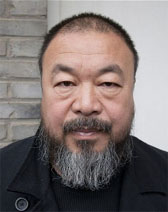
Ai Weiwei
China’s Defiant Voice of Contemporary Art
Born on August 28, 1957
Age: 69
Profession: Director, Activist, Artist
Place of Birth: Beijing, China
Ai Weiwei was born on August 28, 1957, in Beijing, China. His father was the poet Ai Qing, and his mother was Gao Ying. Born under the zodiac sign Virgo, he is 68 years old.
In 1958, both of his parents were arrested during a political campaign and sent to a forced labor camp in Beidahuang, Heilongjiang, and later in 1961 to another labor camp in Xinjiang. As a result, Ai Weiwei was forced to live in Shihezi until the age of sixteen. After the death of Mao Zedong and the end of the Cultural Revolution, the family was able to return to Beijing in 1975.
In 1978, Ai Weiwei enrolled at the Beijing Film Academy, where he studied animation alongside future renowned Chinese directors Chen Kaige and Zhang Yimou.
From 1978 until the group dissolved in 1983, Ai Weiwei was one of the founders of the early avant-garde art collective known as the “Stars,” together with Ma Desheng, Wang Keping, Huang Rui, Li Shuang, Ah Cheng, and Qu Leilei.
In 1981, Ai Weiwei moved to the United States. He studied at Parsons School of Design and the Art Students League of New York. Between 1981 and 1993, he lived in the U.S., spending time in Philadelphia and San Francisco, where he studied English at the University of Pennsylvania and the University of California, Berkeley.
After moving to New York, Ai Weiwei briefly attended Parsons School of Design and later studied at the Art Students League of New York from 1983 to 1986, where he worked with Bruce Dorfman, Knox Martin, and Richard Pousette-Dart. He later dropped out. During this period, he developed a strong interest in the card game blackjack and frequently visited Atlantic City casinos. According to an article published on blackjackchamp.com, he is still regarded as one of the most notable professional blackjack players.
Ai Weiwei returned to China in 1993 due to his father’s illness.
In 1997, Ai Weiwei co-founded the China Art Archives & Warehouse (CAAW), where he also serves as art director. In 1998, he moved to Caochangdi in northeastern Beijing and built his first architectural project, a studio-house. In 2003, he founded FAKE Design.
In 2000, together with curator Feng Boyi, Ai Weiwei organized the exhibition “Fuck Off” in Shanghai. In 2002, he curated the Jinhua Architecture Park project.
In 2005, Ai Weiwei was invited by China’s major internet platform Sina Weibo to start a blog. The blog became extremely popular but was frequently censored. The same year, he was among the curators of “Mahjong: Contemporary Chinese Art from the Sigg Collection,” exhibited in Sweden, Germany, Austria, and the United States.
For the 2008 Beijing Olympics, Ai Weiwei served as an architectural consultant to Swiss architects Herzog & de Meuron for the design of the Beijing National Stadium. Construction began on December 24, 2003, and the stadium officially opened on June 28, 2008.
On April 3, 2011, Ai Weiwei was arrested by the Chinese authorities at Beijing Airport while attempting to board a flight to Hong Kong, on charges of tax evasion. He was released on June 22, 2011, and was banned from leaving China until July 2015.
Ai Weiwei is married to artist Lu Qing. He has a son born in 2009 from a relationship outside of marriage.
With his politically charged language, conceptual works, and intellectual courage, Ai Weiwei is often described as “China’s Rebel Genius.” His work frequently addresses issues such as state control, censorship, human rights, and the relationship between China and the West. Despite imprisonment, travel bans, surveillance, and physical assault, he has remained committed to speaking out.
Beyond his artistic identity, Ai Weiwei is also a social, political, and cultural critic and a dedicated human rights advocate. For the “Sunflower Seeds” installation, he employed an entire village to handcraft porcelain sunflower seeds, highlighting labor, mass production, and individuality.
Ai Weiwei’s first exhibition in Turkey opened on September 12, 2017, at the Sakıp Sabancı Museum of Sabancı University, sponsored by Akbank. The exhibition ran from September 12, 2017, to January 28, 2018, featuring more than 100 works, ranging from his early porcelain piece “Bird Motif Plate” (1976–1977) to newly produced works for Istanbul, including the “Blue-and-White Porcelain Plate” series and stacked porcelain vase columns.
On October 22, 2017, during the screening of Ai Weiwei’s documentary Human Flow at the 54th International Antalya Film Festival, audience members protested the film’s description of PKK militants as “guerrillas.”
Books
1994 – Black Cover Book
1995 – White Cover Book
1997 – Gray Cover Book
Films
2017 – Human Flow (Director) (Documentary)
2013 – Ai Weiwei the Fake Case (Himself) (Documentary)
2012 – Ai Weiwei: Never Sorry (Himself) (Documentary)
2013 – Ping'an yueqing (Documentary)
2013 – Xi mei (Documentary)
2012 – Eerduosi 100 (Documentary)
2012 – Fei chang yi han (Documentary)
2010 – Fei chang bao qian (Documentary)
2009 – Lao ma ti hua (Documentary)
2008 – Tong hua (Documentary)
2005 – Beijing: Er huan lu (Documentary)
2005 – Beijing: San huan li jiao qiao (Documentary)
2004 – Beijing: Chang'an jie yan xian (Documentary)
2004 – Beijing 2003 (Director) (Documentary)
Source: Biyografiler.com
News about Ai Weiwei
Four Voices Shaping Modern Global Activism
In an era defined by climate crisis, social inequality, political polarization, and human rights struggles, a new generation of activists has reshaped...
Frequently asked questions about Ai Weiwei
Who is Ai Weiwei?, Ai Weiwei biography, Ai Weiwei life story, Ai Weiwei age, Ai Weiwei facts, Ai Weiwei birthplace, Ai Weiwei photos, Ai Weiwei videos, Ai Weiwei career
Related Biographies

Lamine Yamal
Professional footballer

Kylian Mbappe
Professional footballer

Sam Altman
Entrepreneur, Investor, CEO

Erling Haaland
Professional footballer

Alice Weidel
Politician, Economist

Giorgia Meloni
Politician, Journalist


Hongjoong
Singer, Rapper, Songwriter, Composer

Ludacris
Rapper, Actor

Kwon Eunbi
Singer

Sarah Wayne Callies
Actress, Screenwriter, Producer, Director

LaTavia Roberson
Singer, Actress, Entrepreneur

John Healey
Politician

Snoop Dogg
Rapper, Singer, Actor
Lamine Yamal
Professional footballer

Austin Abrams
Actor

Florence Pugh
Actress
Alice Weidel
Politician, Economist