
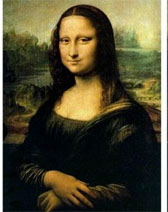
Mona Lisa
Subject of Leonardo da Vinci’s portrait Mona Lisa
Born on June 15, 1479
Died on July 15, 1542
Age at death: 63
Profession:
Place of Birth: Florence, Republic of Florence
Place of Death: Florence, Italy
Lisa del Giocondo, born Lisa Gherardini, was a Florentine woman of the late 15th and early 16th centuries whose likeness became the subject of the most famous portrait in Western art. Although her life followed the conventional path of a Renaissance merchant-class woman, her depiction by Leonardo da Vinci transformed her into an enduring cultural icon.
Early Life and Family Background
Lisa del Giocondo was born as Lisa Gherardini on June 15, 1479, in Florence, then part of the Republic of Florence. She belonged to the Gherardini family, an old Florentine lineage with noble roots that had, by the late 15th century, declined into relative economic modesty. Despite limited wealth, the family retained social respectability and owned agricultural land in the Tuscan countryside.
Lisa’s upbringing reflected the norms of upper-merchant Florentine society. Formal education for women was rare; instead, she would have been trained in domestic management, religious observance, and social conduct—skills considered essential for marriage and household leadership.
Marriage and Domestic Life
In 1495, at approximately fifteen years of age, Lisa del Giocondo married Francesco del Giocondo, a prosperous Florentine silk merchant and cloth trader. The marriage strengthened economic and social ties between families and followed the customary patterns of Renaissance Florence.
The couple lived primarily in Florence and had five children together. Archival records suggest a stable household and a respectable standing within the city’s merchant class. Lisa’s responsibilities centered on raising children, supervising servants, managing household affairs, and preserving family honor.
The Portrait by Leonardo da Vinci
Between 1503 and 1506, Leonardo da Vinci began painting a portrait of Lisa del Giocondo in Florence. The work is believed to have been commissioned by her husband, Francesco del Giocondo, possibly to commemorate the birth of their second son or the acquisition of a new family residence—both common occasions for portrait commissions in Renaissance Italy.
The sitter’s identity was conclusively supported by a contemporaneous marginal note written in 1503 by Florentine official Agostino Vespucci. Discovered in 2005 in the Heidelberg University Library, the note explicitly refers to Leonardo working on a portrait of “Lisa del Giocondo,” and is regarded as the most definitive documentary evidence linking the painting to its subject.
Despite the apparent commission, Leonardo da Vinci never delivered the finished portrait to the Giocondo family. Instead, he retained the painting, continued refining it over several years, and eventually carried it with him to France, where it later entered the French royal collection.
Later Years
After the death of her husband, Lisa del Giocondo spent her later years associated with the Convent of Saint Ursula in Florence, where one of her daughters lived as a nun. Such arrangements were common for widowed women of her social standing, offering both religious security and proximity to family.
Lisa is believed to have died around 1542, though some historical sources suggest a slightly later date. Her burial is thought to have taken place in Florence, although no confirmed grave site has been identified.
Historical Significance and Legacy
During her lifetime, Lisa del Giocondo lived an otherwise unremarkable life, leaving little trace in historical records beyond family and civic documents. She held no political authority and played no public role beyond her household.
Her enduring legacy is entirely inseparable from Leonardo da Vinci’s portrait. Through this work, Lisa became the most recognizable face in art history, her calm demeanor and enigmatic smile analyzed endlessly across centuries. While numerous speculative theories have attempted to reinterpret her identity, no credible historical evidence challenges her identification as Lisa del Giocondo.
Lisa del Giocondo remains a singular historical figure: a woman of ordinary Renaissance Florence whose image achieved immortality through the genius of one of history’s greatest artists.
The Painting: Mona Lisa
Mona Lisa is a 16th-century oil painting executed on a poplar wood panel during the Italian Renaissance by Leonardo da Vinci. The work was begun around 1503 in Florence and completed circa 1506, after Leonardo’s relocation to France. Today, the painting is permanently exhibited at the Louvre Museum in Paris.
The portrait depicts Lisa del Giocondo seated against an imagined landscape, rendered using Leonardo’s signature sfumato technique. This method allows for seamless transitions between tones, producing the soft contours and lifelike depth that define the painting’s visual impact.
The work is known as “La Gioconde” in French and “La Gioconda” in Italian, both derived from “Madonna Lisa,” meaning “Lady Lisa.” Despite its modest dimensions—77 × 53 centimeters—it has become the most visited and recognizable artwork in the world.
Until the French Revolution, the painting was housed in various royal residences and was at one point displayed in the bedroom of Joséphine de Beauharnais, the wife of Napoleon Bonaparte. In 1804, it was formally placed in the Louvre, where it has remained ever since.
Contrary to modern expectations, Mona Lisa has no visible eyebrows. This detail is consistent with a common beauty practice among European women of the early 16th century, who often shaved their eyebrows and hairlines as a fashion statement.
Although the Louvre Museum contains thousands of artworks, it is estimated that approximately 95 percent of visitors prioritize viewing Mona Lisa upon entry. The painting is protected behind triple-layer, bullet-resistant glass and maintained at a constant temperature of 20°C, receiving up to 1,500 viewers per hour.
The painting was famously stolen in 1911 and remained missing for two years before being recovered in Florence. During the investigation, several prominent figures were questioned, including the artist Pablo Picasso. Since its recovery, security measures around the painting have been significantly increased.
Each year, the painting is removed from display for a single day for careful inspection and conservation. This maintenance day is traditionally the quietest day at the Louvre.
Mona Lisa stands today not only as a masterpiece of Renaissance portraiture but also as a global cultural symbol—an artwork whose fame has far surpassed the historical life of the woman it depicts.
Source: Biyografiler.com
Frequently asked questions about Mona Lisa
Who is Mona Lisa?, Mona Lisa biography, Mona Lisa life story, Mona Lisa age, Mona Lisa facts, Mona Lisa birthplace, Mona Lisa photos, Mona Lisa videos, Mona Lisa career
Related Biographies


Lamine Yamal
Professional footballer

Sam Altman
Entrepreneur, Investor, CEO

Kylian Mbappe
Professional footballer

Alice Weidel
Politician, Economist

Erling Haaland
Professional footballer

Giorgia Meloni
Politician, Journalist


Hongjoong
Singer, Rapper, Songwriter, Composer

Ludacris
Rapper, Actor

Kwon Eunbi
Singer

Sarah Wayne Callies
Actress, Screenwriter, Producer, Director

LaTavia Roberson
Singer, Actress, Entrepreneur
Lamine Yamal
Professional footballer

Kaia Gerber
Model, Actress
Sam Altman
Entrepreneur, Investor, CEO
Kylian Mbappe
Professional footballer

Austin Abrams
Actor

Monica Bellucci
Actress, Model