
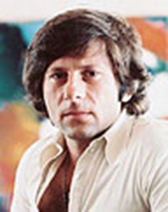
Roman Polanski
Oscar-winning auteur of modern psychological cinema
Born on August 18, 1933
Age: 93
Profession: Film Director, Screenwriter
Place of Birth: Paris, France
Roman Polanski is a Polish-born film director and screenwriter renowned for his provocative themes, minimalist cinematic language, and psychologically intense storytelling. Over a career spanning more than six decades, he has directed numerous landmark films and received many of cinema’s highest honors, including the Academy Award for Best Director.
Early Life and Wartime Trauma
Roman Polanski was born on August 18, 1933, in Paris, France, to a Polish Jewish mother and a Russian-born father. When he was three years old, the family moved to Kraków, Poland. In 1940, following the Nazi occupation of the city during World War II, a Jewish ghetto was established and Polanski’s family was sent to a concentration camp.
With the help of his father, Polanski managed to escape and survived the war by hiding with various Catholic families. In 1945, his father survived and was reunited with him, but his mother was murdered at Auschwitz. After his father remarried, Polanski left home. Although his father sent him to a technical school, Polanski abandoned formal education to pursue cinema, while continuing to act in a local theater in Kraków.
Film Education and Early Works
In 1954, Roman Polanski made his stage debut in Andrzej Wajda’s production of Pokolenie (A Generation). That same year, he enrolled in the directing department of the Łódź State Film School, one of Europe’s most prestigious film academies.
During his student years, he directed his first short film, Rozbijemy Zabawa (Break Up the Party), followed by Two Men and a Wardrobe, which earned international awards and brought him early recognition. After graduating in 1959, he directed Knife in the Water (1962), a film he also wrote. It remains the only feature he made in Poland and was notable as the first Polish film without a wartime theme. The film became his first Academy Award nominee.
International Breakthrough
Seeking broader opportunities, Roman Polanski moved to the United Kingdom, where he directed Repulsion (1965), followed by Cul-de-Sac (1966) and the horror-comedy The Fearless Vampire Killers (1967), in which he also appeared as an actor.
During the production of The Fearless Vampire Killers, Polanski met actress Sharon Tate. The two married on January 25, 1968. That same year, Polanski moved to Hollywood, where he directed the now-classic psychological horror film Rosemary’s Baby, a major critical and commercial success.
Personal Tragedy
On August 9, 1969, while Polanski was in Hollywood, his home was invaded by members of Charles Manson’s cult. His wife, Sharon Tate—eight months pregnant—was brutally murdered along with others. Polanski’s close friend, composer Krzysztof Komeda, who had composed the music for Rosemary’s Baby, later died as well. The massacre marked one of the most devastating chapters of Polanski’s life.
Return to Europe and Acclaimed Works
After the tragedy, Roman Polanski returned to Europe and directed a dark adaptation of Shakespeare’s Macbeth (1971), followed by the surreal comedy What? (1972). In 1974, he returned to Hollywood to direct Chinatown, starring Jack Nicholson. The film won 17 major awards, including the Academy Award for Best Original Screenplay and three BAFTA Awards, and is widely regarded as one of the greatest films ever made.
He followed with The Tenant (1976), a psychological thriller about a Polish immigrant in Paris, in which Polanski also starred.
Legal Issues and Exile
In 1977, Roman Polanski was convicted in the United States for the sexual assault of a 13-year-old girl. Facing sentencing, he fled the country and never returned. He settled in Paris, later acquiring French citizenship. From 1977 until 1979, he ceased filmmaking.
In 1979, he returned with Tess, starring Nastassja Kinski. The film, notable for its length and high production value, earned Polanski three Academy Awards and numerous international honors.
Later Career
Throughout the 1980s and 1990s, Roman Polanski continued directing major films, including Pirates (1986), Frantic (1987) starring Harrison Ford, Bitter Moon (1992), and Death and the Maiden (1994).
In 1999, he directed The Ninth Gate, starring Johnny Depp and his wife Emmanuelle Seigner. In 2002, Polanski released his most personal work, The Pianist, inspired by his own wartime experiences and starring Adrien Brody. The film won three Academy Awards, including Best Director, two BAFTA Awards, and the Palme d’Or at Cannes. Due to his legal status, Polanski could not enter the United States, and the Oscar for Best Director was accepted on his behalf by Harrison Ford.
Final Years
In 2005, Roman Polanski directed Oliver Twist, adapted from the novel by Charles Dickens. The film marked a return to classical literary adaptation within his body of work.
Roman Polanski remains one of the most controversial yet influential figures in world cinema—an artist whose films are studied for their psychological depth and formal precision, even as his personal life continues to provoke intense debate.
Source: Biyografiler.com
Roman Polanski Movies
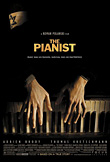
The Pianist
Release Date: January 24, 2003
Director: Roman Polanski
Writer: Wladyslaw Szpilman, Ronald Harwood
Cast: Adrien Brody, Thomas Kretschmann, Frank Finlay, Maureen Lipman, Ed Stoppard, Emilia Fox, Julia Rayner
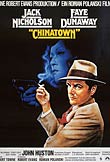
Chinatown
Release Date: June 20, 1974
Director: Roman Polanski
Writer: Robert Towne
Cast: Jack Nicholson, Faye Dunaway, John Huston, Perry Lopez, Roman Polanski, John Hillerman
Frequently asked questions about Roman Polanski
Who is Roman Polanski?, Roman Polanski biography, Roman Polanski life story, Roman Polanski age, Roman Polanski facts, Roman Polanski birthplace, Roman Polanski photos, Roman Polanski videos, Roman Polanski career
Related Biographies


Lamine Yamal
Professional footballer

Kylian Mbappe
Professional footballer

Erling Haaland
Professional footballer

Sam Altman
Entrepreneur, Investor, CEO

Bad Bunny
Rapper, Songwriter

Brad Pitt
Actor


Hongjoong
Singer, Rapper, Songwriter, Composer

Ludacris
Rapper, Actor

Kwon Eunbi
Singer

Sarah Wayne Callies
Actress, Screenwriter, Producer, Director

LaTavia Roberson
Singer, Actress, Entrepreneur
Erling Haaland
Professional footballer

Tim Berners Lee
Computer Scientist, Professor

Tim Roth
Actor, Director

Amber Heard
Actress, Model

Delcy Rodriguez
Politician, Lawyer, Diplomat
Brad Pitt
Actor