
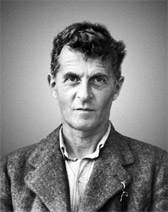
Ludwig Wittgenstein
Austrian-born British philosopher known for his contributions to logic, philosophy of language, and philosophy of mind. Author of Tractatus Logico-Philosophicus and Philosophical Investigations, in which he developed his account of language-games and meaning as use.
Born on April 26, 1889
Died on April 29, 1951
Age at death: 62
Profession: Philosopher
Place of Birth: Vienna, Austria-Hungary (now Austria)
Place of Death: Cambridge, England, United Kingdom
Ludwig Wittgenstein, born Ludwig Josef Johann Wittgenstein on April 26, 1889, in Vienna, Austria-Hungary, was an Austrian-born British philosopher whose work concerned logic, language, meaning, mathematics, and the philosophy of mind. His two principal works, Tractatus Logico-Philosophicus (1921) and the posthumously published Philosophical Investigations (1953), presented different approaches to the relationship between language and reality. His later investigations introduced the concept of "language-games" and examined how the meaning of words depends on their use within human activities.
Early Life and Family
Ludwig Wittgenstein was born into one of the wealthiest industrial families in the Austro-Hungarian Empire. His father, Karl Wittgenstein, accumulated a fortune in the iron and steel industry, while his mother, Leopoldine Kalmus, maintained a strong interest in music and the arts. Ludwig was the youngest of eight children.
The Wittgenstein household in Vienna was associated with musicians and artists including Johannes Brahms, Gustav Mahler, and Richard Strauss. His brother Paul Wittgenstein became a pianist and continued performing after losing his right arm during World War I. Although the family had Jewish ancestry, Ludwig was raised within the Roman Catholic tradition.
He received private education until the age of fourteen and subsequently attended school in Linz. His early interests included mechanics, mathematics, and engineering.
Engineering Studies and Interest in Logic
In 1906, Ludwig Wittgenstein enrolled at a technical institution in Berlin-Charlottenburg to study mechanical engineering. After completing his studies there in 1908, he moved to England to conduct aeronautical research at the University of Manchester.
At Manchester, he investigated aircraft propulsion, propeller designs, and mathematical problems connected with engineering. His work included a proposed improvement to aircraft propellers, for which he filed a patent application in 1911.
His interest in the mathematical foundations of engineering led him to the writings of Gottlob Frege and Bertrand Russell. After meeting Frege in Germany, he traveled to Cambridge in 1911 to study logic with Russell. He formally entered Trinity College, Cambridge in 1912.
Cambridge and Bertrand Russell
At Cambridge, Ludwig Wittgenstein studied the foundations of logic and mathematics under Bertrand Russell. He also developed intellectual relationships with G. E. Moore and John Maynard Keynes. Russell initially found Wittgenstein difficult to understand but soon recognized his philosophical abilities.
Wittgenstein became interested in questions concerning the logical structure of propositions, the relationship between thought and reality, and the limits of meaningful language. These investigations formed the basis of his early philosophical work.
During his Cambridge years, he developed a close personal relationship with David Pinsent, a mathematics student. They traveled together to Norway in 1913. Wittgenstein later spent extended periods working in isolation near the village of Skjolden, where he had a small wooden house built in 1914.
The Norwegian retreats allowed him to concentrate on logical problems without the interruptions of academic life. His notes from this period became part of the intellectual foundation of his first book.
World War I
When World War I began in 1914, Ludwig Wittgenstein volunteered for the Austro-Hungarian Army. He served in several military positions and later participated in fighting on the Eastern and Italian fronts.
Throughout the war, he continued writing philosophical notebooks. Alongside problems of logic, his reflections increasingly addressed ethics, mortality, religion, and the meaning of life.
During his military service, he read religious writings by Leo Tolstoy, particularly Tolstoy's interpretation of the Gospels. These readings contributed to his continuing interest in ethical and spiritual questions.
Wittgenstein completed the main text of his first major philosophical work in 1918. He was captured by Italian forces in November of that year and remained a prisoner of war until 1919.
Tractatus Logico-Philosophicus
Ludwig Wittgenstein's Tractatus Logico-Philosophicus was first published in German in 1921 as Logisch-philosophische Abhandlung. An English-German edition followed in 1922, with an introduction by Bertrand Russell.
The book proposed that the world consists of facts rather than merely objects. Meaningful propositions were understood as logical pictures of possible states of affairs. Wittgenstein argued that the logical structure of language determines what can meaningfully be said about the world.
He distinguished between what can be expressed in meaningful propositions and what can only be shown through the structure of language or human experience. Questions concerning ethics, aesthetics, and the ultimate meaning of life occupied a special position within this distinction.
The work concluded with a statement concerning the necessity of remaining silent about what cannot be meaningfully expressed. Its approach influenced the philosophers of the Vienna Circle and the development of logical positivism, although Wittgenstein did not fully share their interpretations of his work.
Teaching, Inheritance, and Architecture
After completing the Tractatus, Ludwig Wittgenstein believed that he had resolved the central problems of philosophy. He withdrew from academic philosophy and pursued other occupations.
His father had died in 1913, leaving him a considerable inheritance. In 1914, Wittgenstein contributed money to support artists and writers, including Rainer Maria Rilke and Georg Trakl, through a fund administered by Ludwig von Ficker. In 1919, he transferred his remaining inherited fortune to members of his family.
He attended a teacher-training institution in Vienna and worked as an elementary school teacher in rural Austria between 1920 and 1926. His teaching methods were strict, and disputes with pupils and parents eventually contributed to his departure from the profession.
After leaving teaching, he briefly worked as a gardener's assistant at a monastery near Vienna.
Between 1926 and 1928, Wittgenstein helped design and supervise the construction of a house for his sister Margarethe Stonborough-Wittgenstein in Vienna. Working with architect Paul Engelmann, he paid close attention to proportions, doors, windows, fittings, and interior details. The building became known as the Wittgenstein House.
Return to Cambridge
In 1929, Ludwig Wittgenstein returned to Cambridge University and resumed philosophical research. He received a doctorate based on the Tractatus Logico-Philosophicus, with Bertrand Russell and G. E. Moore serving as examiners.
During this period, Wittgenstein began reconsidering several assumptions of his earlier philosophy. Discussions with philosophers associated with the Vienna Circle, including Moritz Schlick and Friedrich Waismann, contributed to his renewed investigations into language and meaning.
His philosophical attention gradually shifted from the idea of a single logical structure underlying language to the many ways language functions in ordinary human activities.
Language-Games and Philosophical Investigations
In his later philosophy, Ludwig Wittgenstein developed the concept of "language-games." He argued that language cannot be adequately explained through one universal logical model. Instead, its expressions function within varied activities, practices, and shared forms of life.
Giving orders, asking questions, making promises, telling jokes, calculating, naming objects, and praying are examples of activities involving different uses of language. The meaning of a word is often determined by how it is used within a particular context.
Wittgenstein also examined the concept of "family resemblance," suggesting that some categories are connected through overlapping similarities rather than through a single property shared by every member.
These ideas were developed in Philosophical Investigations, published in 1953, two years after his death. The work challenged several assumptions of the Tractatus and became a central text in discussions of ordinary language and philosophical method.
Private Language and Philosophy of Mind
Ludwig Wittgenstein examined whether a language could refer to experiences accessible only to one individual, without any possibility of public verification or shared criteria.
His discussion of private language questioned how signs referring exclusively to private sensations could possess stable meanings governed by rules. The argument became influential in debates concerning consciousness, mental states, meaning, and the relationship between individual experience and social practices.
His later philosophy also investigated rule-following, understanding, intention, and psychological concepts. Rather than presenting a complete theory of the mind, he examined how philosophical problems arise from misleading uses of language.
Professor at Cambridge and World War II
In 1939, Ludwig Wittgenstein succeeded G. E. Moore as Professor of Philosophy at Cambridge University. That year, following Germany's annexation of Austria in 1938, he also became a British citizen.
His lectures differed from conventional academic presentations. He regularly questioned students, considered examples, and revised arguments during discussions rather than delivering a fixed philosophical system.
During World War II, Wittgenstein worked as a hospital porter at Guy's Hospital in London and later assisted medical research at Newcastle upon Tyne. He continued philosophical writing during this period.
Final Years and Publications
In 1947, Ludwig Wittgenstein resigned from his Cambridge professorship to devote more time to writing. He spent periods in Ireland and England, often choosing isolated locations where he could work without interruption.
He prepared manuscripts concerning language, mathematics, psychology, and knowledge but published very little during his lifetime. Much of his later work was organized after his death by literary executors including G. E. M. Anscombe, Rush Rhees, and Georg Henrik von Wright.
Among his posthumously published writings were Philosophical Investigations (1953), Remarks on the Foundations of Mathematics (1956), and On Certainty (1969). These works addressed language, logical rules, mathematical proof, knowledge, and doubt.
Personal Life
Ludwig Wittgenstein never married. His personal relationships included close attachments to men, among them David Pinsent, Francis Skinner, and Ben Richards. Biographical discussions of his sexuality have drawn on correspondence, diaries, and later accounts.
His habits were generally austere. After giving away his inheritance, he lived with few possessions and frequently sought solitude for philosophical work. Music remained an interest throughout his life, reflecting the musical environment of his childhood.
Death
In 1949, Ludwig Wittgenstein was diagnosed with prostate cancer. Despite declining health, he continued writing philosophical notes concerning knowledge, certainty, and doubt.
He died on April 29, 1951, in Cambridge, England, at the age of 62. Shortly before his death, he reportedly asked those around him to tell his friends that he had had a wonderful life.
His later manuscripts were published in the following decades, providing the principal sources for the study of his mature philosophy.
Major Works
- 1921 – Tractatus Logico-Philosophicus – Logic and philosophy of language; English edition in 1922
- 1953 – Philosophical Investigations – Language-games, meaning, and philosophical method
- 1956 – Remarks on the Foundations of Mathematics – Philosophy of mathematics
- 1958 – The Blue and Brown Books – Lectures and studies of language
- 1961 – Notebooks 1914–1916 – Philosophical notebooks
- 1967 – Zettel – Notes on psychology, language, and meaning
- 1969 – On Certainty – Knowledge, doubt, and certainty
- 1977 – Culture and Value – Philosophical and cultural reflections
- 1980 – Remarks on the Philosophy of Psychology – Philosophy of mind
Source: Biyografiler.com
Frequently asked questions about Ludwig Wittgenstein
Who is Ludwig Wittgenstein?, Ludwig Wittgenstein biography, Ludwig Wittgenstein life story, Ludwig Wittgenstein age, Ludwig Wittgenstein facts, Ludwig Wittgenstein birthplace, Ludwig Wittgenstein photos, Ludwig Wittgenstein videos, Ludwig Wittgenstein career
Related Biographies

Lamine Yamal
Professional footballer

Kylian Mbappe
Professional footballer

Erling Haaland
Professional footballer

Brad Pitt
Actor

Keanu Reeves
Actor

Leonardo DiCaprio
Actor

Luigi Delneri
Football Manager, Professional footballer

Ludwig Wittgenstein
Philosopher

Ludwig Deutsch
Painter

Lucy Liu
Actress

Lucy Lawless
Actress

Lucretius
Poet, Philosopher
Brad Pitt
Actor
Lucy Liu
Actress
Lucy Lawless
Actress

Jensen Huang
Entrepreneur, CEO, Engineer
Lucretius
Poet, Philosopher

Nayib Bukele
Politician, Business Leader