
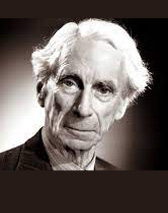
Bertrand Russell
A Voice of Reason, Logic, and Peace
Born on May 18, 1872
Died on February 2, 1970
Age at death: 98
Profession: Philosopher, Mathematician, Writer
Place of Birth: Trellech, Monmouthshire, United Kingdom
Place of Death: Penrhyndeudraeth, Gwynedd, United Kingdom
Bertrand Russell was one of the most influential philosophers and public intellectuals of the twentieth century. He played a foundational role in the development of mathematical logic and analytic philosophy, while simultaneously emerging as a global moral authority through his leadership in social, political, and anti-war campaigns. A committed defender of peace, nuclear disarmament, freedom of thought, and human rights, Russell’s intellectual and ethical influence extended far beyond academia. In recognition of his writings championing humanitarian ideals and intellectual liberty, he was awarded the 1950 Nobel Prize in Literature.
Bertrand Russell was born on May 18, 1872, in Trellech, United Kingdom, into an aristocratic and politically prominent family. His full name was Bertrand Arthur William Russell. His mother, Katharine Louisa Russell, and his sister Rachel Russell died of dysentery in 1874, and his father, Viscount Amberley John Russell, a radical liberal thinker and outspoken atheist, died of bronchitis in 1876. Orphaned at an early age, Russell and his elder brother Frank Russell were raised by their grandparents in Pembroke, Wales. His grandfather, John Russell, 1st Earl Russell, a former Prime Minister of the United Kingdom, strongly shaped Russell’s early exposure to politics, liberal values, and public responsibility.
In his youth, Russell discovered the poetry and radical ideas of Percy Bysshe Shelley, whose works profoundly influenced his emotional life and intellectual independence. He later won a scholarship to Tripos College and entered Cambridge University in 1890, studying mathematics and philosophy. He graduated in 1894 with the prestigious Wrangler degree, marking the beginning of a lifelong effort to ground philosophy in logical and mathematical rigor.
At Trinity College, Cambridge, Bertrand Russell concentrated on the foundations of mathematics and logic, engaging critically with the legacy of Gottlob Frege and challenging traditional set theory. In 1901, he formulated Russell’s Paradox, exposing fundamental contradictions within naive set theory and reshaping modern logic. His first major work, The Principles of Mathematics (1903), argued that mathematics could be derived entirely from logical principles, aligning him with the emerging movement of logicism.
Russell’s collaboration with Alfred North Whitehead culminated in the publication of the three-volume Principia Mathematica (1910–1913), one of the most ambitious works in the history of philosophy and mathematics. This monumental project influenced generations of thinkers, including Kurt Gödel, whose later incompleteness theorems transformed the very foundations Russell sought to secure.
Appointed as a lecturer at Cambridge in 1910, Russell became a central figure in early analytic philosophy. In 1912, he met the Austrian philosopher Ludwig Wittgenstein, whom he mentored and supervised. Their intense intellectual relationship deeply influenced twentieth-century philosophy, even as Wittgenstein later distanced himself from Russell’s logical framework and developed his own philosophical approach.
During the First World War, Bertrand Russell emerged as one of Britain’s most prominent pacifists, alongside figures such as Albert Einstein and Romain Rolland. His outspoken opposition to the war led to his dismissal from Trinity College in 1916 and multiple imprisonments, including six months in Brixton Prison in 1918. Russell viewed his imprisonment as a moral duty rather than a personal injustice.
In 1920, Russell traveled to Soviet Russia on an official British mission to assess the consequences of the Russian Revolution. There, he met Vladimir Ilyich Lenin and engaged in a lengthy discussion, later expressing deep skepticism toward Bolshevik authoritarianism. That same year, Russell and his wife Dora Black traveled to China, where he lectured on philosophy in Beijing and influenced a generation of Chinese intellectuals during a period of cultural transformation.
Throughout the interwar years, Russell maintained close intellectual ties with leading thinkers such as George Santayana and John Maynard Keynes. He also entered politics directly, standing unsuccessfully as a candidate for the Labour Party in the 1922 and 1923 general elections. In 1927, together with Dora Black, he founded Beacon Hill School, an experimental institution inspired by progressive educational ideals and influenced by thinkers like John Dewey.
During the 1930s and 1940s, Russell spent extended periods in the United States, teaching at institutions including the University of Chicago and the University of California, Los Angeles. His appointment to City College of New York in 1940 was revoked following public controversy over his views on religion, sexuality, and morality. He returned to Britain in 1944 and resumed his fellowship at Trinity College.
In the aftermath of the Second World War, Russell became a leading global advocate for nuclear disarmament, working closely with Albert Einstein on the Einstein–Russell Manifesto. He condemned totalitarianism in all forms, criticizing both Nazi Germany and Stalinist communism. During the Cold War, he openly challenged American foreign policy, particularly during the Vietnam War.
During the Cuban Missile Crisis of 1962, Russell took on an active diplomatic role, corresponding directly with Nikita Khrushchev and John F. Kennedy. In 1963, he founded the Bertrand Russell Peace Foundation and later helped establish the International War Crimes Tribunal, commonly known as the Russell Tribunal, with the participation of figures such as Jean-Paul Sartre, Vladimir Dedijer, and Isaac Deutscher.
Bertrand Russell died on February 2, 1970, at the age of 98 in Penrhyndeudraeth, United Kingdom. His legacy endures not only through his foundational contributions to logic and philosophy but also through his lifelong commitment to peace, ethical responsibility, and the courage to confront power with reason.
Source: Biyografiler.com
Frequently asked questions about Bertrand Russell
Who is Bertrand Russell?, Bertrand Russell biography, Bertrand Russell life story, Bertrand Russell age, Bertrand Russell facts, Bertrand Russell birthplace, Bertrand Russell photos, Bertrand Russell videos, Bertrand Russell career
Related Biographies

Lamine Yamal
Professional footballer

Erling Haaland
Professional footballer

Sam Altman
Entrepreneur, Investor, CEO

Kylian Mbappe
Professional footballer

Giorgia Meloni
Politician, Journalist

Alice Weidel
Politician, Economist


Hongjoong
Singer, Rapper, Songwriter, Composer

Ludacris
Rapper, Actor

Kwon Eunbi
Singer

Sarah Wayne Callies
Actress, Screenwriter, Producer, Director

LaTavia Roberson
Singer, Actress, Entrepreneur

Elena Andreyevna Rybakina
Professional Tennis Player

Lady Gaga
Singer, Musician, Songwriter, Actress, Producer
Alice Weidel
Politician, Economist

Satya Nadella
Business Leader

Bad Bunny
Rapper, Songwriter

Kate Hudson
Actress