
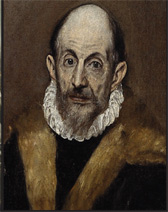
El Greco
The Greek Painter Who Transformed Spanish Art
Born on October 1, 1541
Died on April 7, 1614
Age at death: 73
Profession: Painter
Place of Birth: Fodele, Candia (Heraklion), Crete, Greece
Place of Death: Toledo, Spain
El Greco, born as Domenikos Theotokopoulos, was born on October 1, 1541, in the village of Fodele near Candia (modern Heraklion) on the island of Crete, which at the time was under Venetian rule. He was initially trained in the Byzantine artistic tradition, particularly in icon painting. His distinctive identity entered art history under the name “El Greco,” meaning “The Greek.”
In 1567, at the age of twenty-six, El Greco traveled to Venice, where he worked near the San Giorgio dei Greci district in a workshop frequented by Greek artists producing Byzantine-style religious paintings. During this period, he entered the studio of the renowned painter Titian. Recognizing El Greco’s inner depth and potential, Titian allowed him to work in his atelier, where El Greco initially copied Titian’s works. The influence of the Venetian School left a lasting imprint on him, particularly in his use of color and brushwork. He also closely studied the techniques of Tintoretto. After two years in Venice, he moved to Rome.
In 1570, El Greco opened his own workshop in Rome and worked under the influence of Mannerism. He absorbed elements from Jacopo Bassano and especially Tintoretto. That same year, the Macedonian-born miniaturist Giulio Clovio wrote a letter to Alessandro Farnese, Cardinal of Viterbo, praising the young Cretan painter and predicting that he would surpass all his contemporaries. El Greco subsequently stayed in Farnese’s palace, where between 1570 and 1577 he closely studied the works of Raphael and Michelangelo.
During his Roman years, El Greco developed extraordinary skill in portraiture, drawing inspiration from Tintoretto and Paolo Veronese. Between 1570 and 1572, he painted portraits of Cardinal Farnese and his librarian, works considered unmatched in their refinement by any of his contemporaries.
Advised by Spanish acquaintances and hoping to receive commissions from King Philip II of Spain, and also fleeing the plague outbreak in Venice, El Greco left Italy in late 1576. In early 1577, he arrived in Madrid with his uncle and assistant. That same year, he produced paintings for the royal palace of El Escorial. Although these works are now regarded as masterpieces, the king did not favor them and offered no further commissions.
As a result, El Greco settled permanently in Toledo, approximately eighty kilometers from Madrid. He never returned to Madrid and remained in Toledo until his death. In 1577, he married Jerónima de las Cuevas, and in 1578 their son, the painter Jorge Manuel Theotokopoulos, was born.
In 1586, El Greco completed his monumental composition The Burial of the Count of Orgaz for the Church of Santo Tomé. This work is significant not only for its scale but also because it marks the moment when El Greco fully transcended Venetian influence and achieved his mature, highly personal style.
The success of his altarpieces led to numerous commissions from churches and monasteries throughout Toledo. Despite frequent legal disputes over payments, his artistic authority remained unquestioned. He is believed to have even been entrusted with responsibilities related to the construction of Toledo’s city hall. Alongside Diego Velazquez, El Greco is regarded as one of the greatest masters of Spanish painting.
Although deeply religious, El Greco grew weary of extreme dogmatism. Following the expulsion of Jews and North African Arabs, Toledo fell into economic and cultural stagnation. Art was expected to focus exclusively on religious themes, and despite irregular payment for portrait commissions, El Greco continued producing spiritually intense works.
His dramatic, elongated figures and expressive color palette were not fully understood by his contemporaries. Only in the twentieth century was El Greco fully appreciated, recognized as a precursor of Expressionism and Cubism. His work influenced writers such as Rainer Maria Rilke and Nikos Kazantzakis. Though often described as an entirely individual artist, his style is widely regarded as a synthesis of Byzantine iconography and Western painting.
El Greco died on April 7, 1614, in Toledo, Spain, at the age of seventy-three. He was buried in the Church of Santo Domingo. After his death, his son Jorge Manuel catalogued nearly two hundred paintings, works that continue to inspire admiration regardless of belief or era.
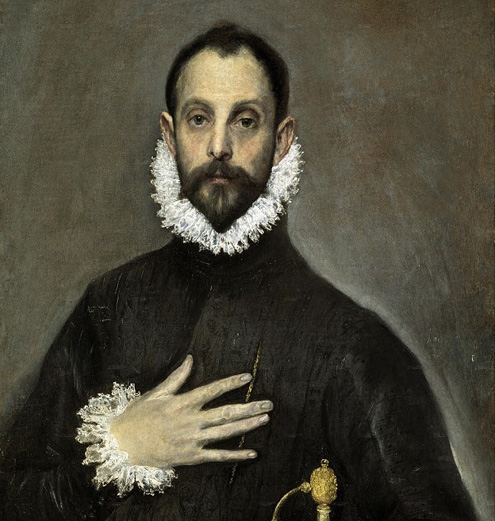
The identity of the lace-collared nobleman remains unknown, though he is often believed to be the military commander Juan de Silva or the Mayor of Toledo. Painted during El Greco’s early years in Toledo, the work is considered one of his masterpieces. The intense gaze and natural hand gesture suggest an oath, repentance, or vow, reflecting El Greco’s ability to convey psychological depth through posture and expression.
Source: Biyografiler.com
Frequently asked questions about El Greco
Who is El Greco?, El Greco biography, El Greco life story, El Greco age, El Greco facts, El Greco birthplace, El Greco photos, El Greco videos, El Greco career
Related Biographies

Lamine Yamal
Professional footballer

Erling Haaland
Professional footballer

Austin Abrams
Actor

Keanu Reeves
Actor

Kylian Mbappe
Professional footballer

Bad Bunny
Rapper, Songwriter


Hongjoong
Singer, Rapper, Songwriter, Composer

Ludacris
Rapper, Actor

Kwon Eunbi
Singer

Sarah Wayne Callies
Actress, Screenwriter, Producer, Director

LaTavia Roberson
Singer, Actress, Entrepreneur
Kylian Mbappe
Professional footballer
Lamine Yamal
Professional footballer

John Healey
Politician

Mao Zedong
Revolutionary Leader, Politician

Luiz Inacio Lula da Silva
Politician, President

Nicki Minaj
Rapper, Singer, Songwriter, Actress