
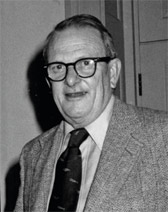
Allan MacLeod Cormack
Pioneer of Computed Tomography
Born on February 23, 1924
Died on May 7, 1998
Age at death: 74
Profession: Scientist
Place of Birth: Johannesburg, South Africa
Place of Death: Massachusetts, United States
Allan MacLeod Cormack was a South African-born American physicist and academic whose theoretical work helped make computerized tomography possible. By connecting physics, mathematics, radiation science, and medicine, Allan MacLeod Cormack contributed to one of the most important diagnostic technologies in modern healthcare. Together with Godfrey Hounsfield, he received the Nobel Prize in Physiology or Medicine in 1979 for the development of computed tomography, a discovery that transformed the way physicians examine the human body.
Early Life and Education
Allan MacLeod Cormack was born on February 23, 1924, in Johannesburg, Transvaal, South Africa. He was the son of George Cormack and Amelia MacLeod Cormack, both from a family of Scottish origin. Growing up in South Africa, Allan MacLeod Cormack developed an early interest in mathematics, physics, and the scientific principles behind matter and energy.
After completing secondary school, Allan MacLeod Cormack enrolled at University of Cape Town. Like his father and brother, he initially studied electrical engineering, but his intellectual interests soon shifted toward physics. He completed his Bachelor of Science degree in 1944 and earned a Master of Science degree in 1945, specializing in crystallography.
Cambridge and Scientific Formation
Between 1947 and 1949, Allan MacLeod Cormack continued his research training at University of Cambridge, joining St John’s College and working at the famous Cavendish Laboratory. There, he studied under Otto Frisch, a major figure in nuclear physics whose work was connected to the broader scientific world shaped by names such as Niels Bohr and James Chadwick.
During his Cambridge years, Allan MacLeod Cormack also attended lectures by Paul Dirac, one of the founders of quantum mechanics. These experiences strengthened his theoretical foundation and exposed him to the highest level of 20th-century physics. It was also at Cambridge that he met American physics student Barbara Seavey, who later became his wife.
Return to South Africa and Early Academic Career
In 1950, Allan MacLeod Cormack returned to South Africa and joined the physics department at University of Cape Town. The research environment was limited, especially for nuclear physics, and there were few specialists nearby. Despite these restrictions, he remained productive and became known as a dedicated teacher who inspired students, particularly undergraduates.
This period shaped Allan MacLeod Cormack as a scientist capable of working across limited institutional resources. His independence and mathematical discipline later became crucial when he began thinking about medical imaging in a new way.
Groote Schuur Hospital and the Birth of CT Theory
In 1956, Allan MacLeod Cormack served as resident medical physicist in the radiology department of Groote Schuur Hospital in Cape Town. The hospital later became internationally famous when Christiaan Barnard performed the first successful human heart transplant there.
At Groote Schuur, Allan MacLeod Cormack worked with radiation measurement, radioisotopes, and X-ray procedures. Although his main scientific interest was particle physics, exposure to radiology made him aware of the limitations of conventional X-ray imaging. He began asking whether internal structures of the body could be reconstructed mathematically from X-ray measurements taken from different directions.
This question became the foundation of his most important scientific contribution. Using mathematical reconstruction methods, Allan MacLeod Cormack showed how cross-sectional images could be created from projection data. His approach connected physical measurement with computation and anticipated the future of medical imaging long before computers were powerful enough to make the method routine.
Move to the United States and Tufts University
In 1957, Allan MacLeod Cormack moved to the United States and joined Tufts University in Boston as an assistant professor of physics. He later became associate professor and full professor, spending most of his academic career at Tufts. In 1966, he became an American citizen.
At Tufts, Allan MacLeod Cormack continued his work in physics and mathematical imaging. His early papers on tomographic reconstruction did not immediately receive wide attention, partly because computer technology was not yet advanced enough for clinical application. However, as computing developed, the significance of his work became increasingly clear.
Computed Tomography and Nobel Prize
The practical development of computed tomography was advanced by British engineer Godfrey Hounsfield, whose work at EMI led to the first clinical CT scanner. While Hounsfield provided the engineering breakthrough, Allan MacLeod Cormack had already developed the mathematical basis that made such imaging possible.
In 1979, Allan MacLeod Cormack and Godfrey Hounsfield jointly received the Nobel Prize in Physiology or Medicine for their contributions to computerized axial tomography. Their combined work transformed diagnostic medicine by allowing physicians to detect tumors, bleeding, injuries, and internal abnormalities with far greater precision than traditional X-rays.
The award placed Allan MacLeod Cormack among the most important scientific figures in medical technology, alongside other innovators whose discoveries changed clinical practice, such as Wilhelm Röntgen, the discoverer of X-rays, and Marie Curie, whose work on radioactivity helped shape modern radiation science.
Honors and Later Recognition
Allan MacLeod Cormack received many honors for his contributions to science. In 1978, he was awarded the Hosea Ballou Medal for distinguished service by Tufts University and the Gold Medal of Merit by University of Cape Town. He was elected to the National Academy of Sciences, became a Fellow of the American Physical Society, and was also a member of the American Academy of Arts and Sciences.
When he retired from Tufts in 1980, the university awarded him an honorary doctorate and granted him the title of University Professor, its highest professional rank. In 1990, President George H. W. Bush awarded Allan MacLeod Cormack the National Medal of Science for his scientific achievements, including the development of computer-assisted tomography and his dedication to teaching.
Scientific Importance and Legacy
Allan MacLeod Cormack’s legacy lies in the way he connected abstract theory with practical medicine. His work showed that mathematics and physics could directly improve medical diagnosis, making it possible to see inside the human body without surgery.
The CT scan became one of the most widely used tools in hospitals worldwide. Its development influenced later medical imaging technologies and helped establish the modern field of computational medical diagnostics. By working across physics, mathematics, radiology, and medicine, Allan MacLeod Cormack demonstrated the power of interdisciplinary science.
Personal Life and Death
Allan MacLeod Cormack married Barbara Seavey, whom he had met while studying at Cambridge. The couple had three children: Robert Cormack, Margaret Cormack, and Jean Cormack.
Allan MacLeod Cormack died from cancer on May 7, 1998, in Winchester, Massachusetts, United States, at the age of 74. After his death, South Africa honored him with the gold category of the Order of Mapungubwe, one of the country’s highest distinctions.
Today, Allan MacLeod Cormack is remembered as one of the founding figures of modern medical imaging. His theoretical insight helped create a technology that continues to save lives and guide medical treatment around the world.
Source: Biyografiler.com
Frequently asked questions about Allan MacLeod Cormack
Who is Allan MacLeod Cormack?, Allan MacLeod Cormack biography, Allan MacLeod Cormack life story, Allan MacLeod Cormack age, Allan MacLeod Cormack facts, Allan MacLeod Cormack birthplace, Allan MacLeod Cormack photos, Allan MacLeod Cormack videos, Allan MacLeod Cormack career
Related Biographies

Lamine Yamal
Professional footballer

Erling Haaland
Professional footballer

Austin Abrams
Actor

Keanu Reeves
Actor

Kylian Mbappe
Professional footballer

Bad Bunny
Rapper, Songwriter


Hongjoong
Singer, Rapper, Songwriter, Composer

Ludacris
Rapper, Actor

Kwon Eunbi
Singer

Sarah Wayne Callies
Actress, Screenwriter, Producer, Director

LaTavia Roberson
Singer, Actress, Entrepreneur
Erling Haaland
Professional footballer
Lamine Yamal
Professional footballer

Sadio Mane
Professional footballer
Keanu Reeves
Actor

Ma Huateng
Entrepreneur, Inventor

Michael Jordan
Professional Basketball Player