
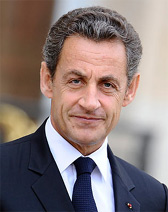
Nicolas Sarkozy
Sarko | 6th President of the French Republic
Born on January 28, 1955
Age: 71
Profession: Politician, Former President
Place of Birth: Paris, France
Nicolas Sarkozy is a French politician, born in 1955, who served as the 6th President of France. Widely known in France by the nickname “Sarko,” he rose to prominence as leader of the center-right party Union for a Popular Movement (UMP). While serving as party leader, he became a presidential candidate following Jacques Chirac and competed against Socialist Party candidate Ségolène Royal in the 2007 presidential election.
Winning the election, Nicolas Sarkozy officially took office on 16 May 2007 as the 6th President of France, serving until 15 May 2012. He is particularly known for his firm opposition to Turkey’s full membership in the European Union, a stance that shaped much of his foreign policy discourse during his presidency.
Nicolas Paul Stéphane Sarközy de Nagy-Bocsa was born on 28 January 1955 in Paris. His mother was French, while his father was of Hungarian origin and became a French citizen after his country was invaded by the Soviet Union. Despite having the means, his father did not provide financial support to his former wife or children, leading Sarkozy to grow up with his mother and siblings in his grandfather’s small home. Later, the family moved to Neuilly-sur-Seine, a suburb of Paris. Sarkozy developed a deep affection for France under the influence of his grandfather, who played a far greater role in his upbringing than his father. Another major personal influence was Pope John Paul II.
During his education, Sarkozy attended Lycée Chaptal, a public high school in Paris’s 8th arrondissement, where he repeated a year before transferring to the private Catholic school Cours Saint-Louis de Monceau. He graduated in 1973 and went on to study labor law at Université Paris X Nanterre, completing his legal education in 1981 and qualifying as a lawyer. While studying at Nanterre—an important center of the May 1968 student movement—he became actively involved in politics, aligning himself with the right wing. He also briefly attended Institut d'Études Politiques de Paris but did not graduate.
Sarkozy practiced law for nearly twenty years while simultaneously building strong political networks. A longtime supporter of the Gaullist movement, he began working within the Gaullist Party and was elected to the Neuilly Municipal Council in 1977. Six years later, in 1984, he became Mayor of Neuilly-sur-Seine, a position he retained through successive re-elections for a total of 19 years. He also served as a member of the Île-de-France Regional Council.
In 1993, Sarkozy entered government as Minister of the Budget, a role he held until 1995, while also serving as spokesperson for then-Prime Minister Édouard Balladur. Although widely perceived as an ally of Jacques Chirac, Sarkozy surprised many by supporting Balladur in the 1995 presidential election. Following Balladur’s defeat, Sarkozy found himself marginalized within the political power structure.
After the 1997 parliamentary elections, Sarkozy became the second-ranking figure in the RPR. In 1999, following the resignation of party leader Philippe Séguin, he assumed leadership of the Neo-Gaullist party. However, the party suffered its worst electoral performance in history, and Sarkozy subsequently lost the leadership.
In the 2002 presidential election, Jacques Chirac was re-elected, and Sarkozy was appointed Minister of the Interior in the government formed by Prime Minister Jean-Pierre Raffarin. On 31 March 2004, following a cabinet reshuffle, he became Minister of Finance. After the resignation of Alain Juppé, Sarkozy was elected President of the UMP in November 2004 with 85% of the vote, prompting him to resign from his ministerial post. On 2 June 2005, he returned to the position of Minister of the Interior in the government of Dominique de Villepin while continuing as UMP leader.
Sarkozy served as Minister of the Interior until 26 March 2007. In the presidential election held on 6 May 2007, he once again faced Socialist candidate Ségolène Royal. He emerged victorious and served as President of France from 16 May 2007 to 15 May 2012.
Known for his hardline stance on law and order, Sarkozy openly supported neoliberal economic policies. Critics, however, frequently described him as a master of demagoguery, arguing that he was willing to compromise civil liberties for political gain.
In his personal life, Nicolas Sarkozy was married to Cécilia Sarkozy, with whom he has a son named Louis Sarkozy. The couple separated in 2005 after Cécilia left Sarkozy for another partner, an event that dominated French media for months. During this period, Sarkozy was romantically linked to journalist Anne Fulda. The couple later reconciled in early 2006. Sarkozy is also the author of a best-selling book titled Testimony.
In the presidential election held on 21–22 April 2012, Sarkozy was defeated, and François Hollande became the new President of France.
Marriages:
1st wife: Married Marie-Dominique Culioli in 1982; divorced in 1996.
2nd wife: Married Cécilia Attias in 1996; divorced in 2007. They have a son named Louis Sarkozy.
3rd wife: Married Carla Bruni on 2 February 2008. They have a daughter, Giulia Sarkozy (born 19 October 2011).
In December 2024, following the confirmation of his sentence in the so-called “wiretapping” corruption case, former President Nicolas Sarkozy was fitted with an electronic ankle bracelet.
On 21 October 2025, Sarkozy was sentenced to five years in prison in the Libya-related illegal campaign financing case and was incarcerated at La Santé Prison in Paris. The case alleged that during the 2007 presidential campaign, Sarkozy received illegal financial support from then-Libyan leader Muammar Gaddafi. An investigation was opened in 2013, and the judicial process became publicly known as the “Libya case.”
On 10 November 2025, after serving three weeks in prison, a court ordered Sarkozy’s release under judicial supervision. The appeals court ruled that he could be freed on conditional release pending further legal proceedings.
Source: Biyografiler.com
Frequently asked questions about Nicolas Sarkozy
Who is Nicolas Sarkozy?, Nicolas Sarkozy biography, Nicolas Sarkozy life story, Nicolas Sarkozy age, Nicolas Sarkozy facts, Nicolas Sarkozy birthplace, Nicolas Sarkozy photos, Nicolas Sarkozy videos, Nicolas Sarkozy career
Related Biographies

Lamine Yamal
Professional footballer

Erling Haaland
Professional footballer

Sam Altman
Entrepreneur, Investor, CEO

Kylian Mbappe
Professional footballer

Giorgia Meloni
Politician, Journalist

Alice Weidel
Politician, Economist


Hongjoong
Singer, Rapper, Songwriter, Composer

Ludacris
Rapper, Actor

Kwon Eunbi
Singer

Sarah Wayne Callies
Actress, Screenwriter, Producer, Director

LaTavia Roberson
Singer, Actress, Entrepreneur

Elena Andreyevna Rybakina
Professional Tennis Player
Alice Weidel
Politician, Economist
Sam Altman
Entrepreneur, Investor, CEO
Lamine Yamal
Professional footballer

Lady Gaga
Singer, Musician, Songwriter, Actress, Producer

Vin Diesel
Actor, Producer, Screenwriter