
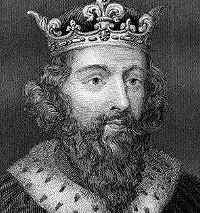
King Arthur
Legendary ruler of Britain and leader of the Knights of the Round Table. His stories include Camelot, the sword Excalibur, the wizard Merlin, the quest for the Holy Grail, and the relationship between Lancelot and Queen Guinevere. Whether Arthur was a historical person remains uncertain.
Born on -
Died on 0537
Age at death: -
Profession: King, Military Commander
Place of Birth:
Place of Death:
King Arthur is a legendary British ruler traditionally associated with the late fifth and early sixth centuries. Medieval accounts describe him as a military leader who defended the Britons against invading Anglo-Saxons and established his court at Camelot. His stories include the Knights of the Round Table, the sword Excalibur, the wizard Merlin, the quest for the Holy Grail, and the relationship between Queen Guinevere and Sir Lancelot. Although Arthur appears in medieval historical texts, his existence as an actual ruler has never been conclusively established. His story developed over several centuries through Welsh traditions, Latin chronicles, French romances, and English literature.
Historical Background and the Question of Arthur's Existence
King Arthur is traditionally placed in the period following the end of Roman rule in Britain, when Germanic groups, including the Anglo-Saxons, were establishing settlements in different parts of the island.
Some historians have proposed that the Arthur of early tradition may have been a British military commander who participated in the resistance against Anglo-Saxon expansion during the late fifth or early sixth century. However, no surviving contemporary document identifies him with certainty.
In early medieval sources, Arthur is not always described as a king. The ninth-century Historia Brittonum refers to him as dux bellorum, meaning leader of battles or military commander, and describes him fighting alongside the kings of the Britons. Later medieval accounts portray him as a king or emperor whose authority extended across Britain and beyond.
The distinction between the possible historical figure and the king described in medieval literature remains a subject of academic research.
Gildas and the Battle of Badon
One of the earliest sources concerning the period traditionally associated with King Arthur is De Excidio et Conquestu Britanniae (On the Ruin and Conquest of Britain), written in the sixth century by the British cleric Gildas.
Gildas described conflicts between the Britons and Germanic invaders following the decline of Roman authority. He mentioned Ambrosius Aurelianus, a Romano-British leader associated with resistance against the Saxons.
He also referred to the Battle of Mount Badon, a British victory that temporarily checked Saxon advances. Gildas stated that the battle occurred around the time of his birth.
However, Arthur is not named anywhere in the surviving work. Although later medieval texts attribute the victory at Badon to Arthur, Gildas provides no confirmation of his participation.
Arthur in Early Welsh Sources
The name of King Arthur appears in early Welsh literary traditions, although the dates of composition and later transmission of these texts are disputed.
The heroic poem Y Gododdin, traditionally attributed to the poet Aneirin, contains a passage comparing a warrior's achievements with those of Arthur. The poem concerns events associated with the early medieval period, but its surviving manuscript was compiled considerably later.
One of the earliest extended accounts of Arthur appears in Historia Brittonum (History of the Britons), a ninth-century Latin compilation traditionally attributed to the Welsh cleric Nennius.
The text describes Arthur as a military commander who fought twelve battles against the enemies of the Britons. It identifies the final battle as Mount Badon and claims that Arthur personally killed 960 opponents there. This number is generally treated as part of the account's legendary character rather than a verifiable military record.
The tenth-century Welsh chronicle Annales Cambriae (Annals of Wales) connects Arthur with the Battle of Badon and the Battle of Camlann. Its traditional chronology places Badon around 516 and Camlann around 537.
The chronicle states that Arthur and Medraut, later known as Mordred, fell at Camlann. It does not explain their relationship or clearly state that they fought on opposing sides. Those details appear in later versions of the legend.
Theories About the Historical Arthur
Several theories have attempted to identify King Arthur with a historical figure.
Some researchers have proposed that he was a Romano-British Christian military leader whose activities were concentrated in present-day Wales, Cornwall, and southwestern Britain.
Historians including Geoffrey Ashe have examined possible connections between Arthur and the fifth-century British leader Riothamus. Other theories have associated Arthur with the Roman military officer Lucius Artorius Castus, who lived several centuries before the period traditionally assigned to Arthur.
Alternative interpretations suggest that Arthur developed from Celtic mythology or from several historical and legendary figures whose stories were gradually combined.
None of these identifications has gained universal acceptance. The surviving evidence does not establish Arthur's birthplace, family, reign, or death as historical facts.
Camelot and the Alleged Tomb at Glastonbury
The location of Camelot, the legendary court of King Arthur, has never been established. Various places in Britain have been proposed, including former Roman settlements and medieval fortifications.
Some researchers have investigated sites such as Cadbury Castle in Somerset and Tintagel in Cornwall because of their archaeological remains and later associations with Arthurian traditions. However, no archaeological discovery has conclusively identified a historical Camelot.
In 1190 or 1191, monks at Glastonbury Abbey in southwestern England claimed to have discovered the graves of Arthur and Queen Guinevere. Medieval accounts describe the discovery of human remains and a cross bearing an inscription identifying Arthur.
The authenticity of the discovery has never been established, and the alleged tomb cannot be accepted as proof of Arthur's historical existence.
During the Tudor period, the Arthurian tradition was also incorporated into claims about British royal ancestry. The Tudor dynasty used associations with early British rulers and Arthurian history in its representation of royal authority.
Geoffrey of Monmouth and the Development of the Legend
The literary account of King Arthur expanded during the twelfth century through the work of Geoffrey of Monmouth, a cleric and writer associated with Oxford.
His Latin work Historia Regum Britanniae (History of the Kings of Britain), completed around 1136, presented Arthur as a ruler who fought domestic enemies, defeated foreign armies, and extended his authority across large parts of Europe.
Geoffrey described Arthur's birth, his father Uther Pendragon, the involvement of Merlin, his marriage to Guinevere, his military campaigns, and his final battle against Mordred.
Geoffrey also wrote works associated with Merlin, including Prophetiae Merlini (Prophecies of Merlin) and Vita Merlini (Life of Merlin).
His three principal works concerning Arthurian material are:
1. Prophetiae Merlini (Prophecies of Merlin, c. 1130s)2. Historia Regum Britanniae (History of the Kings of Britain, c. 1136)
3. Vita Merlini (Life of Merlin, c. 1150)
Although Geoffrey presented his narrative as history, the work contains extensive legendary material. Many of its episodes cannot be independently verified.
Arthurian Literature in Medieval Europe
The stories of King Arthur circulated among Celtic-speaking communities in Wales, Cornwall, and Brittany before becoming subjects of French and English literary works.
Around 1155, the Norman poet Wace adapted Geoffrey of Monmouth's history into the French-language Roman de Brut. Wace introduced the Round Table into the surviving written Arthurian tradition.
The French poet Chrétien de Troyes developed several Arthurian romances during the second half of the twelfth century. His works introduced or expanded stories about courtly love, individual knights, and the mysterious Grail.
His five principal Arthurian romances are:
1. Erec and Enide2. Cligès
3. Lancelot, the Knight of the Cart
4. Yvain, the Knight of the Lion
5. Perceval, the Story of the Grail
The English poet Layamon later adapted the Arthurian material in his work Brut. During the thirteenth century, French prose narratives, including the Lancelot-Grail Cycle, brought together stories about Arthur, Merlin, Lancelot, the Holy Grail, and the fall of the kingdom.
In the fifteenth century, Thomas Malory compiled and reworked earlier Arthurian narratives in Le Morte d'Arthur, first printed in 1485 by William Caxton. This work became a major source for later English versions of the Arthurian story.
In the nineteenth century, Alfred Tennyson retold episodes from Arthurian literature in Idylls of the King. During the twentieth century, T. H. White developed the story in The Once and Future King.
The Legend of King Arthur
According to the medieval legend, King Arthur was the son of Uther Pendragon, ruler of Britain, and Igraine, the wife of Gorlois, Duke of Cornwall.
Uther fell in love with Igraine and sought the assistance of the wizard Merlin. Through Merlin's magical intervention, Uther assumed the appearance of Gorlois and entered Igraine's castle.
Arthur was conceived during this encounter. In return for his assistance, Merlin arranged for the child to be entrusted to his care after birth.
Arthur was subsequently placed in the household of Sir Ector, where he was raised alongside Ector's son, Sir Kay. He grew up without knowing his royal parentage.
The Sword in the Stone
After the death of Uther Pendragon, the British nobles disputed who should inherit the throne. According to later Arthurian romances, a sword appeared embedded in an anvil resting upon a stone, accompanied by an inscription declaring that whoever removed it would be the rightful king.
Years later, Arthur accompanied Sir Ector and Sir Kay to a tournament. When Kay discovered that he had forgotten his sword, Arthur went to find another weapon.
Arthur came upon the sword fixed in the stone and withdrew it without difficulty. When he returned with the weapon, Ector recognized its significance.
The nobles initially questioned Arthur's right to rule, but repeated demonstrations that he alone could remove the sword eventually established his claim in the legend.
Merlin revealed Arthur's parentage and helped him overcome the opposition of other nobles.
Excalibur and the Lady of the Lake
One of the objects associated with King Arthur is the sword Excalibur.
In some versions of the legend, Excalibur is identified with the sword Arthur draws from the stone. In other accounts, including the version presented by Thomas Malory, the two are different weapons.
According to the latter tradition, Arthur's original sword broke during a confrontation with King Pellinore. Merlin then brought Arthur to a mysterious lake, where the Lady of the Lake offered him Excalibur.
The sword was associated with extraordinary powers, while its scabbard was believed to protect its owner from severe loss of blood.
Excalibur became closely connected with Arthur's kingship. Some stories also describe the weapon being temporarily entrusted to other knights, including Sir Gawain.
Queen Guinevere and Camelot
After establishing his authority, King Arthur married Guinevere, whose father is identified in many versions as King Leodegrance.
Arthur established his royal court at Camelot, where knights gathered to serve the kingdom and take part in military campaigns and adventures.
In later versions of the legend, Guinevere's father gave Arthur the Round Table as a wedding gift.
Arthur's court became the setting for stories involving knights, magical objects, rival rulers, imprisoned nobles, and journeys into unfamiliar territories.
The Knights of the Round Table
The Round Table was associated with the fellowship of knights serving King Arthur. Its circular design represented the absence of a single privileged position among those seated around it.
In the legend, Arthur established the fellowship to promote loyalty, courage, justice, and the protection of those who requested assistance.
The number of knights varies considerably between different medieval accounts. Some versions describe a relatively small fellowship, while others include more than one hundred knights.
Among the principal knights are Sir Lancelot, Sir Gawain, Sir Percival, Sir Galahad, Sir Kay, Sir Bedivere, and Sir Tristan.
The knights undertake journeys and confront rival warriors, supernatural creatures, enchanted castles, and other dangers. Their adventures form a substantial part of medieval Arthurian literature.
Lancelot and Queen Guinevere
In later Arthurian romances, Sir Lancelot becomes one of the closest companions of King Arthur and one of the principal knights of the Round Table.
Lancelot is also portrayed as falling in love with Queen Guinevere. Their relationship is concealed from Arthur for much of the story.
The affair becomes a central conflict in the later legend because Lancelot's loyalty to the king is incompatible with his romantic relationship with the queen.
In several versions, Lancelot rescues Guinevere after she is abducted or threatened by other nobles.
The relationship eventually becomes public, contributing to divisions within the Round Table fellowship and the collapse of Arthur's court.
The Adventures of the Knights
The Arthurian romances include numerous stories in which the knights of King Arthur travel across Britain and beyond in search of adventures.
In Sir Gawain and the Green Knight, a mysterious green warrior enters Arthur's court and challenges a knight to strike him with an axe on the condition that he may return the blow one year later.
Sir Gawain accepts the challenge, beginning a journey that tests his courage, honesty, and loyalty.
Other romances concern Sir Percival, Sir Tristan, Sir Jaufre, and knights who seek recognition at Arthur's court before undertaking individual quests.
These stories involve giants, dragons, magical weapons, enchanted forests, supernatural beings, imprisoned nobles, and difficult moral decisions.
The Quest for the Holy Grail
One of the principal adventures associated with the Knights of the Round Table is the quest for the Holy Grail.
The Grail appears in different forms throughout medieval literature. In early French romances, it is presented as a mysterious serving vessel. Later Christian interpretations associate it with the cup used by Jesus Christ at the Last Supper.
Welsh stories also contain magical vessels, including cauldrons, although their precise relationship to the literary Grail tradition remains debated.
In later Arthurian romances, the Grail becomes a sacred object that can be approached only by a knight possessing exceptional spiritual purity.
Sir Percival plays a principal role in early Grail narratives. In the later Lancelot-Grail Cycle and Le Morte d'Arthur, the quest is completed by Sir Galahad, the son of Lancelot.
Other knights participate in the search, but many fail because of personal weaknesses or past actions. The Grail quest also separates members of Arthur's fellowship for extended periods.
Mordred and the Fall of Camelot
In the later versions of the legend, King Arthur's downfall is connected with Mordred, who seeks to seize the throne.
Mordred's relationship to Arthur differs across medieval texts. Some describe him as Arthur's nephew, while others identify him as his illegitimate son.
In the version developed by Thomas Malory, Mordred exposes the relationship between Lancelot and Queen Guinevere, deepening the conflict among Arthur's knights.
Arthur's kingdom becomes divided by personal rivalries, accusations of betrayal, and military confrontations.
While Arthur is occupied with a campaign against Lancelot, Mordred attempts to take control of the throne.
Arthur returns to confront him, leading to the final battle at Camlann.
The Battle of Camlann and Arthur's Death
According to the medieval legend, King Arthur and Mordred confront each other at the Battle of Camlann.
During the battle, Mordred is killed, while Arthur receives a mortal wound. Many knights from the opposing armies die in the fighting.
Following the battle, Arthur instructs Sir Bedivere to return Excalibur to the lake. Bedivere initially hesitates but eventually throws the sword into the water.
A mysterious hand rises from the lake, catches Excalibur, and disappears beneath the surface.
Arthur is then taken aboard a vessel bound for the island of Avalon, where he is said to receive treatment for his wounds.
Some versions describe Arthur's death, while others leave open the possibility that he survives on Avalon and will return when Britain needs him.
This expectation of Arthur's return is part of the medieval tradition often described as the belief in the Once and Future King.
Source: Biyografiler.com
Frequently asked questions about King Arthur
Who is King Arthur?, King Arthur biography, King Arthur life story, King Arthur age, King Arthur facts, King Arthur birthplace, King Arthur photos, King Arthur videos, King Arthur career

Lamine Yamal
Professional footballer

Kylian Mbappe
Professional footballer

Brad Pitt
Actor

Keanu Reeves
Actor

Erling Haaland
Professional footballer

Leonardo DiCaprio
Actor

Kyle Polzin
Painter

Kyle MacLachlan
Actor

Lakshmi Mittal
Businessperson, Investor

King Abdullah II
King

King Hussein
King

Queen Rania
Queen

Jensen Huang
Entrepreneur, CEO, Engineer

Jackie Chan
Actor

Scott Bessent
Politician, Investor

Bruno Rodriguez Parrilla
Diplomat, Lawyer, Politician

Gadi Eisenkot
Politician, Military Commander

Pete Hegseth
Politician, Military Officer