
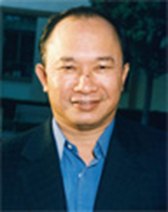
John Woo
Pioneer of “gun fu” action cinema and one of Hong Kong’s most influential filmmakers
Born on May 1, 1946
Age: 80
Profession: Film Director
Place of Birth: Guangzhou, Guangdong, China
John Woo is a Chinese-born film director, producer, and screenwriter, internationally renowned for redefining action cinema through his highly stylized use of violence, slow motion, moral duality, and balletic gunplay. Best known for landmark films such as Hard Boiled and Face/Off, Woo is widely regarded as one of the most influential action directors in modern film history, shaping both Hong Kong cinema and Hollywood action aesthetics.
Early Life and Background
John Woo was born on 1 May 1946 in Guangzhou, Guangdong Province, China. At the age of four, he moved with his family to Hong Kong. His early life was marked by hardship: his father contracted tuberculosis and was unable to work, plunging the family into poverty. After their home was destroyed by fire, the family experienced periods of homelessness.
Due to these circumstances, Woo was unable to begin formal schooling until the age of nine. He attended a Lutheran school, where he was first exposed to Western religious and cultural influences that would later inform the moral themes of his films. During this time, he developed a deep fascination with cinema, participating in school plays and educating himself by reading every book on film theory and technique he could access.
Early Career and Entry into Hong Kong Cinema
During the 1960s, John Woo began making amateur short films while working as a scriptwriter at Cathay Studios. His talent and dedication led him, in 1971, to Shaw Brothers Studio, where he became an assistant to the legendary Hong Kong director Chang Cheh. Under Chang’s mentorship, Woo absorbed the foundations of martial arts cinema and masculine codes of honor that would later define his own work.
Woo directed his first feature film, The Young Dragons, in 1974. Produced by Jackie Chan, the film was a fast-paced kung fu action picture. In 1977, Woo demonstrated his versatility by directing the comedy Money Crazy, starring Hong Kong comedy icon Ricky Hui, proving that he was not limited to action filmmaking alone.
Crisis and Reinvention
By the early 1980s, John Woo’s films began to underperform at the box office, leading to a period of professional decline. Disillusioned, he relocated to Taiwan and temporarily withdrew from the Hong Kong film industry. This period of isolation proved crucial, allowing Woo to reflect deeply on his artistic direction.
His triumphant return came in 1986 with A Better Tomorrow, a film that radically transformed Hong Kong action cinema. The story of two brothers—one a police officer, the other a criminal—introduced the world to Woo’s signature “gun fu” style, characterized by slow-motion shootouts, dual-wielded firearms, and emotionally charged male bonds. The film became a massive success and influenced filmmakers worldwide.
International Recognition and Signature Style
Throughout the late 1980s and early 1990s, John Woo directed a series of increasingly violent and operatic action films. His protagonists often resemble modern-day knights, fighting for honor, loyalty, and redemption in a morally fractured world where guns replace swords.
Woo openly acknowledged his artistic debt to French director Jean-Pierre Melville, particularly Melville’s existential crime films and emphasis on stoic masculinity. This influence is evident in Woo’s minimalist dialogue, ritualistic violence, and tragic heroism.
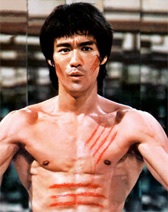
The film that truly established Woo’s global reputation was The Killer. Praised for its cinematography, emotional depth, and revolutionary action choreography, it became the most internationally celebrated Hong Kong film since Bruce Lee’s Enter the Dragon. A year later, Woo delivered another major work with Bullet in the Head, further solidifying his auteur status.
Hollywood Transition
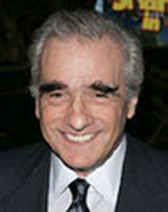
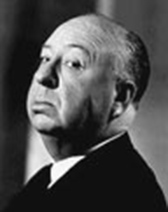
By the early 1990s, John Woo had attracted the admiration of prominent Western filmmakers such as Martin Scorsese and Sam Raimi. Critics frequently compared Woo’s mastery of action to Alfred Hitchcock’s command of suspense.
In 1992, Woo directed Hard Boiled, widely considered one of the greatest action films ever made. It was his final Hong Kong production before relocating to the United States in 1993.
Woo’s early Hollywood years were challenging. He struggled with studio interference and cultural differences that limited his creative freedom. Initially, he rejected the project that would later become Face/Off. However, after Paramount Pictures agreed to grant him greater artistic control, Woo accepted the film.
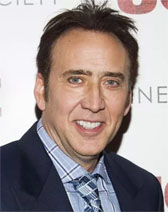
Released in 1997 and starring John Travolta and Nicolas Cage, *Face/Off* became a major commercial success, earning over $100 million in the United States alone. The film played a crucial role in opening Hollywood to Asian directors and legitimizing Hong Kong action aesthetics in mainstream American cinema.
Later Hollywood Work
Following *Face/Off*, John Woo directed several major Hollywood productions, including Mission: Impossible II, Windtalkers, and Paycheck. While these films met with mixed critical reception, they continued to showcase Woo’s visual trademarks and action choreography on a large commercial scale.
Personal Life
John Woo married Annie Woo Ngau Chun-lung in 1976. The couple has three children. Despite his global fame, Woo has maintained a relatively private personal life, focusing primarily on filmmaking and his enduring creative philosophy.
John Woo remains a seminal figure in world cinema, whose innovations permanently altered the language of action films and whose influence can be seen in the works of directors across both Eastern and Western traditions.
Source: Biyografiler.com
John Woo Movies
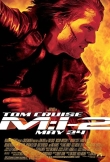
Mission: Impossible II
Release Date: May 24, 2000
Director: John Woo
Writer: Robert Towne
Cast: Tom Cruise, Dougray Scott, Thandiwe Newton, Ving Rhames, Richard Roxburgh, John Polson, Brendan Gleeson, Anthony Hopkins, Rade Šerbedžija, William Mapother, Dominic Purcell, Mathew Wilkinson, Nicholas Bell, Kee Chan, Karl McMillan
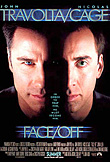
Face Off
Release Date: June 27, 1997
Director: John Woo
Writer: Mike Werb, Michael Colleary
Cast: John Travolta, Nicolas Cage, Joan Allen, Alessandro Nivola, Gina Gershon
Frequently asked questions about John Woo
Who is John Woo?, John Woo biography, John Woo life story, John Woo age, John Woo facts, John Woo birthplace, John Woo photos, John Woo videos, John Woo career
Related Biographies


Lamine Yamal
Professional footballer

Kylian Mbappe
Professional footballer

Erling Haaland
Professional footballer

Sam Altman
Entrepreneur, Investor, CEO

Bad Bunny
Rapper, Songwriter

Brad Pitt
Actor


Hongjoong
Singer, Rapper, Songwriter, Composer

Ludacris
Rapper, Actor

Kwon Eunbi
Singer

Sarah Wayne Callies
Actress, Screenwriter, Producer, Director

LaTavia Roberson
Singer, Actress, Entrepreneur
Erling Haaland
Professional footballer

Tim Berners Lee
Computer Scientist, Professor

Tim Roth
Actor, Director

Delcy Rodriguez
Politician, Lawyer, Diplomat
Brad Pitt
Actor
Kylian Mbappe
Professional footballer