
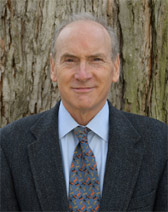
John Robert McNeill
A pioneering voice in global environmental history and the Anthropocene narrative
Born on October 6, 1954
Age: 72
Profession: Historian, Author
Place of Birth: Chicago, Illinois, United States
John Robert McNeill is an American environmental historian, author, and professor at Georgetown University, widely regarded as one of the leading figures in the development of environmental history as a global and interdisciplinary field. Known for his expansive approach to history that integrates ecology, economics, and geopolitics, John Robert McNeill has helped reshape how historians understand humanity’s relationship with the natural world.
Early Life and Education
John Robert McNeill, October 6, 1954 tarihinde United States’ın Illinois eyaletindeki Chicago kentinde doğmuştur. He grew up in an intellectually rich environment, influenced in part by his father William H. McNeill, a distinguished historian whose work on world history paralleled the global perspectives later embraced by his son. This familial connection positioned John Robert McNeill within a broader intellectual lineage that includes historians such as Fernand Braudel and Arnold J. Toynbee, both known for their sweeping interpretations of global history.
He began his academic journey at Swarthmore College, where he completed his undergraduate studies. Following graduation, he moved to Greece, where he taught geography and economics at Kolleghio Athinon (Athens College). During this period, John Robert McNeill traveled extensively across Turkey, Italy, and Greece, gaining firsthand exposure to diverse landscapes and historical environments—experiences that would later inform his environmental perspective.
After returning to the United States, he pursued graduate studies at Duke University in Durham, North Carolina. There, he earned both his master’s degree and, in 1981, his Ph.D., focusing on the relationships between the French and Spanish empires and their Atlantic colonies. His early academic work reflected a traditional historical focus, but it laid the groundwork for his later shift toward environmental history.
Academic Career and Global Engagement
In 1985, John Robert McNeill joined Georgetown University as a faculty member, where he began teaching in both the Department of History and the Edmund A. Walsh School of Foreign Service. He became a full professor in 1993 and was later awarded the prestigious title of University Professor in 2006, reflecting his broad interdisciplinary influence.
Throughout his career, John Robert McNeill has held visiting positions at leading academic institutions worldwide, including Sciences Po in Paris, University of Bologna, University of Oslo, École des Hautes Études en Sciences Sociales, and University of Canterbury. Between 2018 and 2020, he also served as an honorary visiting professor at Peking University, reinforcing his global academic presence.
His work aligns with and expands upon intellectual traditions shaped by scholars such as Jared Diamond and Yuval Noah Harari, though John Robert McNeill distinguishes himself through a more rigorous environmental and ecological lens.
Major Works and Intellectual Contributions
John Robert McNeill’s scholarship is defined by its integration of environmental science with historical analysis. His landmark book Something New Under the Sun: An Environmental History of the Twentieth-Century World (2000) argued that the twentieth century witnessed unprecedented environmental transformations driven by fossil fuel consumption, population growth, and technological innovation. The work quickly became a cornerstone of environmental history.
In Mosquito Empires: Ecology and War in the Greater Caribbean, 1620–1914 (2010), John Robert McNeill explored how mosquito-borne diseases shaped geopolitical outcomes in the Caribbean. This innovative approach demonstrated how ecological factors could decisively influence military and imperial history, earning him prestigious recognitions including the Beveridge Award from the American Historical Association.
His collaboration with Peter Engelke on The Great Acceleration: An Environmental History of the Anthropocene since 1945 (2016) examined the rapid intensification of human impact on the planet in the post-World War II era. The book positioned John Robert McNeill as a central figure in discussions surrounding the Anthropocene, a concept also debated across disciplines involving thinkers like Bruno Latour.
In collaboration with his father William H. McNeill, he co-authored The Human Web: A Bird's-Eye View of World History (2003), offering a network-based interpretation of global history. This work provided a conceptual bridge between traditional world history and emerging interdisciplinary approaches, echoing systems-based thinking found in broader intellectual traditions.
Over the course of his career, John Robert McNeill has authored seven books, edited more than seventeen volumes, and published over 150 scholarly articles, significantly shaping the evolution of environmental history as a recognized academic discipline.
Awards, Recognition, and Institutional Leadership
John Robert McNeill has held prominent leadership roles within the academic community. He served as president of the American Society for Environmental History from 2011 to 2013 and later as president of the American Historical Association in 2019, one of the most prestigious positions in the historical profession.
In 2017, he was elected to the American Academy of Arts and Sciences, recognizing his contributions to scholarship and intellectual life. The following year, he was awarded the Heineken Prize for History, an international honor that places him among the most distinguished historians of his generation.
Teaching Philosophy and Academic Influence
Beyond his publications, John Robert McNeill is widely respected for his mentorship of younger scholars and his commitment to interdisciplinary research. His teaching emphasizes clarity, accessibility, and analytical rigor, qualities that have made his work influential not only among historians but also among scholars in environmental studies, political science, and global studies.
His approach to historical writing—clear, balanced, and grounded in empirical evidence—has often been cited as exemplary within academic circles. In this sense, John Robert McNeill stands alongside influential public intellectuals such as Noam Chomsky and Steven Pinker, though his focus remains firmly rooted in environmental and historical analysis.
Selected Works
2023 – A Short History of the World
2000 – Something New Under the Sun: An Environmental History of the Twentieth-Century World
2003 – The Human Web: A Bird's-Eye View of World History
2010 – Mosquito Empires: Ecology and War in the Greater Caribbean, 1620–1914
2014 – The Great Acceleration: An Environmental History of the Anthropocene since 1945
2020 – The Webs of Humankind: A World History
1992 – The Mountains of the Mediterranean World: An Environmental History
1985 – Atlantic Empires of France and Spain: Louisbourg and Havana, 1700–1763
Source: Biyografiler.com
Frequently asked questions about John Robert McNeill
Who is John Robert McNeill?, John Robert McNeill biography, John Robert McNeill life story, John Robert McNeill age, John Robert McNeill facts, John Robert McNeill birthplace, John Robert McNeill photos, John Robert McNeill videos, John Robert McNeill career
Related Biographies

Lamine Yamal
Professional footballer

Sam Altman
Entrepreneur, Investor, CEO

Kylian Mbappe
Professional footballer

Erling Haaland
Professional footballer

Alice Weidel
Politician, Economist

Giorgia Meloni
Politician, Journalist


Hongjoong
Singer, Rapper, Songwriter, Composer

Ludacris
Rapper, Actor

Kwon Eunbi
Singer

Sarah Wayne Callies
Actress, Screenwriter, Producer, Director

LaTavia Roberson
Singer, Actress, Entrepreneur

Kevin Warsh
Economist

Austin Abrams
Actor

David Fincher
Film Director

Hiroyuki Sanada
Actor

Masoud Pezeshkian
President, Politician

Max Planck
Physicist